
 Siti Muinah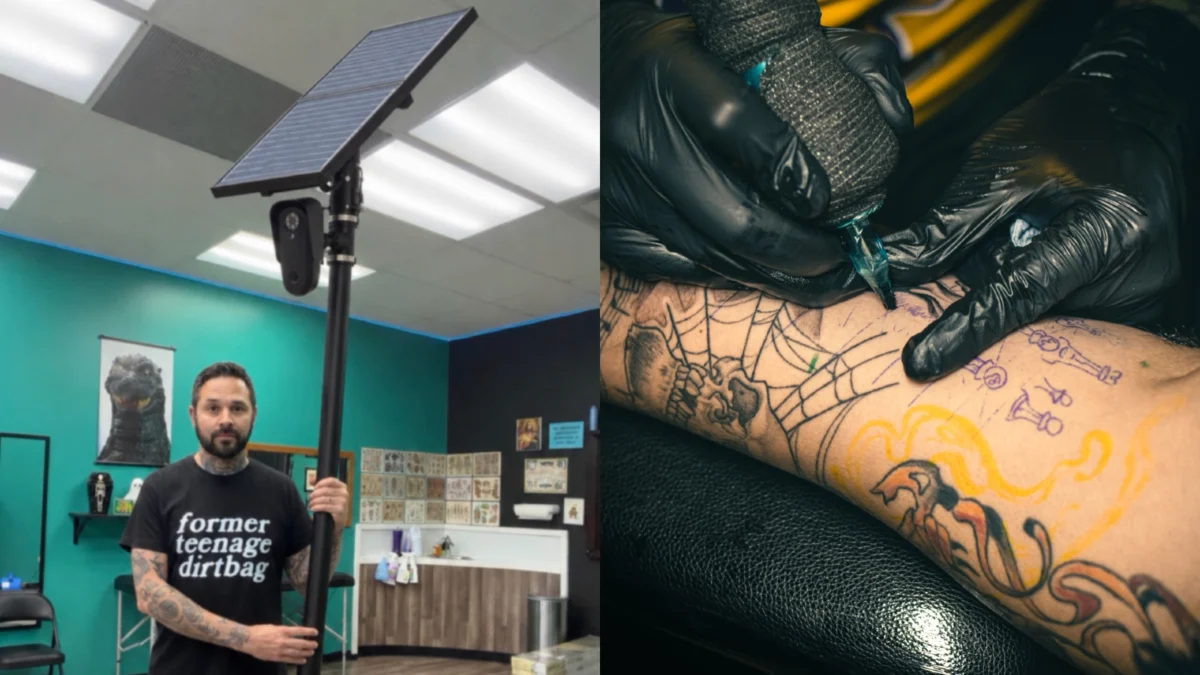
In the quiet town of New Baltimore, Michigan, the intersection of body art and civil liberties has become an unlikely flashpoint for a burgeoning national debate. Steven Jean, the proprietor of "The Alien Body Shop," recently found himself at the center of a digital firestorm after a seemingly off-the-cuff Instagram post went viral, garnering over two million views. The post, which featured Jean wielding a Flock Safety automated license plate reader (ALPR) with the caption, "Free tattoo with every Flock camera," was intended as a piece of biting social commentary. However, the response he received exposed a deep, simmering resentment toward the rapid expansion of private, AI-driven surveillance in American suburbs.
The Genesis of the Viral Post: Satire Meets Reality
The catalyst for this controversy was a short, punchy video posted by Jean. In it, the tattoo artist, known for his edgy aesthetic, displayed a piece of hardware that has become a lightning rod for privacy advocates across the United States: a Flock Safety camera. These devices, which utilize sophisticated artificial intelligence to capture and log vehicle license plates, make, model, and color, have been deployed in thousands of neighborhoods, often facilitated by homeowners’ associations and local police departments seeking to automate crime detection.
Jean’s post was, by his own admission, a work of "satirical entertainment." In the world of social media, hyperbole is the currency of engagement, and Jean sought to leverage that to highlight what he perceives as the creeping ubiquity of the surveillance state. "Free tattoo with every Flock camera" was a cheeky nod to the public’s frustration with being tracked by private, for-profit technology companies.
However, the internet rarely distinguishes between the tongue-in-cheek and the literal. Almost immediately, the comment section of The Alien Body Shop’s Instagram page morphed into a bulletin board for anti-surveillance activism.
Chronology of the Escalation
The timeline of this incident reflects the velocity of modern digital outrage:
- Initial Post: Steven Jean uploads the video, intending to spark a conversation about privacy rights in New Baltimore.
- Viral Surge: Within 48 hours, the video reaches an audience of over two million, crossing geographic boundaries from Michigan to the national stage.
- The Misinterpretation: Users begin sending Jean direct messages and photos. Some show damaged hardware; others feature videos of users actively tampering with or dismantling cameras in their local areas.
- The Legal Warning: The situation reaches a critical juncture when an individual contacts Jean, claiming to have been arrested for vandalism directly related to the "De-Flock" sentiment fueled by the post.
- The Clarification: Realizing the potential for legal liability and genuine harm, Jean issues a public statement urging his followers to refrain from illegal activities.
"I’ve had people send me pictures of damaged Flock cameras, videos of themselves damaging Flock cameras," Jean told CBS News. "It’s all about obeying the law and having a good time."
The Flock Safety Ecosystem: A Technical Breakdown
To understand the intensity of the reaction to Jean’s post, one must understand the technology at the center of it. Flock Safety is a private, for-profit technology company that has fundamentally altered the landscape of community policing. Unlike traditional CCTV, which requires a human monitor to review footage, Flock cameras are "smart."
These devices scan every vehicle that passes within their field of view. The data is instantly processed via AI to extract metadata: the state, the plate number, the vehicle make, and even distinct features like bumper stickers or roof racks. This data is then stored in a searchable database. For law enforcement, it is a dream; for privacy advocates, it is a nightmare.
The core of the controversy lies in the "passive" nature of the surveillance. Most citizens are tracked regardless of their involvement in any criminal activity. Every time a law-abiding citizen drives to the grocery store or a doctor’s appointment, their location and movement patterns are logged, potentially for years. While Flock Safety maintains that the data is used to solve crimes, critics argue that the lack of oversight and the ease of access for law enforcement creates a "surveillance dragnet" that violates the spirit, if not the letter, of the Fourth Amendment.
Supporting Data: The Rising Tide of Public Skepticism
The incident at The Alien Body Shop is not an isolated event; it is a symptom of a broader movement often referred to as "De-Flock." Across the country, communities are beginning to push back against the installation of these cameras.
Data from recent municipal hearings in states like Texas, Florida, and Michigan suggests a growing trend of residents demanding that their local government councils cancel contracts with private surveillance firms. A recent report indicated that in some jurisdictions, residents have successfully lobbied for "privacy zones," where the deployment of ALPRs is restricted to specific high-crime areas rather than residential intersections.
Furthermore, the launch of new websites—some designed specifically to let drivers check whether their license plate has been queried in the Flock database—highlights the anxiety surrounding the lack of transparency. These tools allow the public to peek behind the curtain of the "black box" of AI surveillance, and what they see has not been comforting to the average driver.
Official Responses and Corporate Stance
Flock Safety has remained largely defensive in the face of this criticism. The company frequently highlights the "success stories" of their technology, pointing to cases where stolen vehicles were recovered or missing persons were located due to the real-time data provided by their cameras.
However, legal experts have raised concerns about the company’s liability. If a private entity logs the movements of millions of citizens, does that data become a permanent record of private life? The legal framework governing private-sector surveillance is notoriously murky. While police must obtain warrants for certain types of surveillance, the use of third-party, privately-owned data allows them to bypass traditional constitutional protections.
In response to the New Baltimore incident, local law enforcement has reminded the public that Flock cameras are considered public property in some contexts and private property in others. In either case, the destruction of these devices constitutes criminal mischief or vandalism, which carries significant legal penalties.
Implications: The Future of Surveillance and Dissent
The story of the Michigan tattoo shop serves as a microcosm for a larger, unfolding constitutional struggle. As technology moves faster than the legislative process, the burden of defining the limits of privacy has fallen onto the shoulders of the public.
1. The Erosion of Anonymity
The most significant implication is the loss of "anonymity in public." Historically, one could travel through a city without being tracked, provided they were not being specifically targeted by police. Today, that luxury is vanishing. The implication for civil discourse is profound: if citizens believe they are being watched, they may change their behavior, refrain from attending protests, or limit their association with certain groups—a phenomenon known as the "chilling effect."
2. The Privatization of Policing
When private companies provide the infrastructure for law enforcement, the lines between public safety and corporate profit become blurred. Flock Safety’s business model depends on the ubiquity of its cameras. This creates an inherent incentive for the company to lobby for more, not fewer, cameras in public spaces.
3. The Danger of Viral Misinformation
Jean’s experience highlights the volatility of modern discourse. A joke made in a small shop in Michigan became a catalyst for potential criminal behavior across the country. This demonstrates the power of digital platforms to amplify sentiment, but it also underscores the danger of failing to provide clear, actionable alternatives to the systems people oppose.
Conclusion: A Call for Dialogue
Steven Jean’s "Free tattoo" stunt was never meant to trigger a wave of vandalism, yet it succeeded in doing something far more important: it forced a local conversation into the national spotlight. The reaction to his post proves that the public is not merely indifferent to the rise of automated surveillance. They are watching, they are concerned, and they are looking for ways to push back.
As we move forward, the debate will likely shift from the streets—where cameras are being vandalized—to the halls of state legislatures, where the rules of the road will be written. Whether this technology becomes a standard feature of modern life or is reined in by strict privacy regulations remains to be seen. What is clear, however, is that the "De-Flock" movement is no longer a fringe sentiment; it is a signal that the public is demanding a seat at the table when it comes to deciding what kind of future they want to live in—one of absolute transparency, or one where privacy is still a fundamental right.
For now, The Alien Body Shop remains open for business, but the cameras outside—and the debate they represent—remain a permanent, if controversial, fixture of the landscape.


 Asro
Asro
 Laily UPN

 Nana
Nana
 Lina Hope
 Evan Lee Salim
 Ali Ikhwan