
 Siti Muinah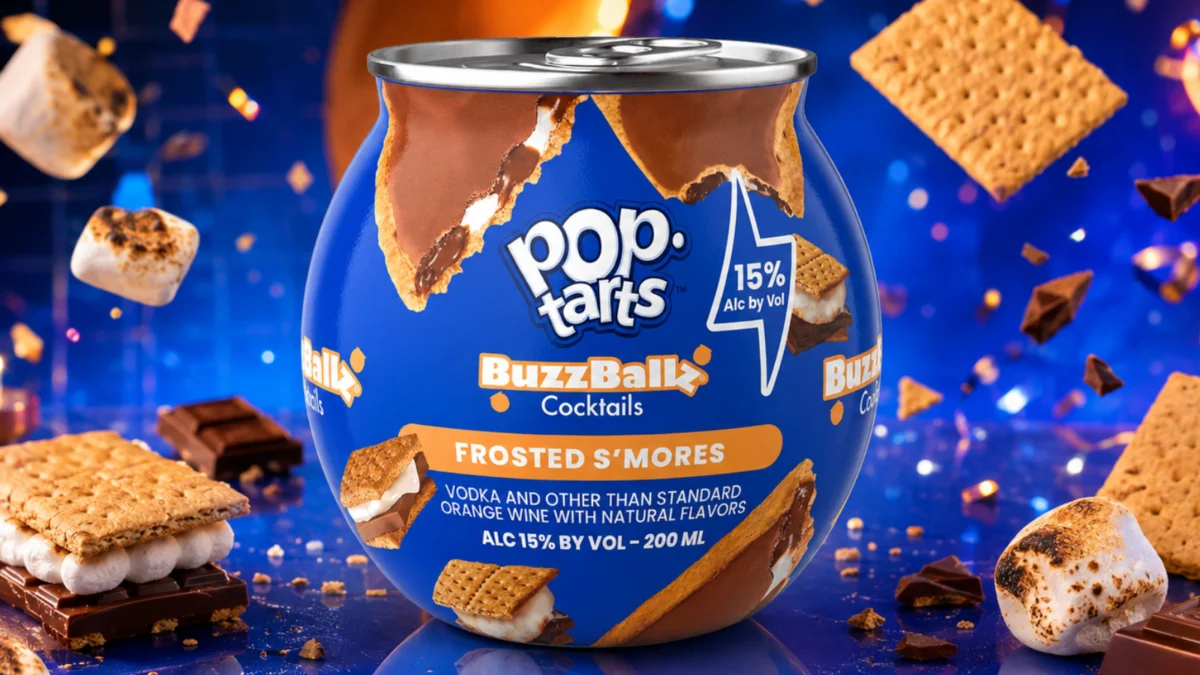
In a significant pivot, Mars—the parent company of the iconic Pop-Tarts brand—has officially terminated its controversial partnership with BuzzBallz, the pre-mixed cocktail manufacturer known for its high-potency, round-container beverages. The decision, which comes just one month after the collaboration’s August debut, marks a rapid retreat following intense scrutiny from advocacy groups, public health officials, and child safety organizations who argued that the co-branded product dangerously blurred the lines between childhood comfort food and adult alcohol consumption.
The collaboration, which featured “Frosted S’mores” and “Frosted Brown Sugar Cinnamon” flavored cocktails at 15% alcohol by volume (ABV), has now been shelved, with all future marketing efforts canceled.
The Genesis of the Collaboration
The partnership was initially positioned as a bold experiment in cross-category branding. When it launched in mid-August, the marketing strategy relied heavily on the nostalgic equity of Pop-Tarts. The products were sold in the signature sphere-shaped packaging synonymous with BuzzBallz, but featured the distinct, vibrant blue branding and imagery of the beloved breakfast pastry.
Retailing at a suggested price point of $3.99 per 200ml container, the products were designed to catch the eye of consumers in the impulse-buy sections of liquor stores and convenience outlets. For many industry observers, it appeared to be a textbook example of "brand stretching"—an attempt to inject a sense of playfulness into the crowded ready-to-drink (RTD) cocktail market. However, the alignment of a high-alcohol spirit base with a brand explicitly marketed to children and adolescents created immediate friction.
Chronology of the Controversy
The timeline of this ill-fated venture was remarkably short, defined by a rapid progression from corporate launch to public outcry and ultimate dissolution.
- Mid-August 2026: BuzzBallz and Pop-Tarts announce their limited-edition collaborative cocktails, introducing "Frosted S’mores" and "Frosted Brown Sugar Cinnamon" flavors to the market.
- Late August 2026: Retail rollout begins. Almost immediately, consumer watchdogs and alcohol policy groups identify the branding as a major public safety concern.
- Early September 2026: A coalition of over 30 public health organizations and non-profits, spearheaded by the US Alcohol Policy Alliance (USAPA), mobilizes to challenge the partnership.
- Mid-September 2026: Formal meetings take place between Mars executives and leadership from the USAPA. Public pressure mounts as headlines questioning the ethics of the marketing strategy gain traction.
- Late September 2026: Mars officially announces the termination of the partnership, the cessation of production for the co-branded line, and the cancellation of all future marketing campaigns.
The Ethical and Public Health Implications
The core of the backlash centered on the concept of "brand transference." Critics argued that by utilizing the visual language of a childhood staple, the products risked desensitizing younger demographics to the dangers of alcohol consumption.
The Argument Against "Kid-Friendly" Alcohol
Mike Marshall, CEO of the US Alcohol Policy Alliance, was a vocal critic throughout the process. Following the announcement of the partnership’s end, he issued a stark critique: "Using one of America’s most recognizable childhood food brands to help sell a high-alcohol product should never have happened. Childhood brands should not become tools for normalizing or promoting alcohol consumption."
Public health experts have long cautioned against the "candy-fication" of alcohol. With the explosion of the RTD sector—ranging from hard seltzers to spirit-based cocktails—the competition for shelf space has led brands to adopt increasingly colorful, flavor-forward, and youth-adjacent branding. The Pop-Tarts/BuzzBallz collaboration was viewed by many as the tipping point, where the aesthetic of a product intended for a school lunchbox was applied to a beverage that carries a higher alcohol content than standard beer or wine.
Regulatory and Social Responsibility
The incident has ignited a wider conversation about self-regulation within the food and beverage industries. Mars, a global powerhouse in the confectionery space, has built its reputation on family-centric products. The move to end the partnership is being interpreted by industry analysts as a defensive measure to protect the broader brand equity of Pop-Tarts. If a brand becomes associated with the "sexualization or alcoholization of childhood," the long-term damage to consumer trust can be irreparable.
Supporting Data and Market Context
To understand why this partnership was so contentious, one must look at the current landscape of the RTD market. According to recent market research, the RTD category is the fastest-growing segment in the alcohol industry. As companies fight for market share, they are increasingly looking toward "mash-ups"—combining established food brands with alcohol to drive social media buzz and impulse purchases.
However, the 15% ABV of the BuzzBallz products is notable. In the United States, standard beers typically sit between 4% and 6% ABV. A 200ml container of a 15% ABV drink delivers a significant amount of alcohol in a small, easily consumed package. When paired with flavors like "Brown Sugar Cinnamon," the masking of the taste of ethanol becomes a primary concern for pediatricians and alcohol abuse prevention specialists.
The USAPA’s letter to Mars highlighted that these products, while technically sold in regulated environments, could easily find their way into the hands of minors if they are mistaken for non-alcoholic novelties or if their visual familiarity lowers the perceived risk of consumption.
Official Responses and Corporate Strategy
In the wake of the public outcry, Mars issued statements signaling a regretful withdrawal. While the company has not provided a detailed breakdown of the internal decision-making process, the confirmation that production has halted is a definitive end to the project.
There remains some ambiguity regarding the original scope of the release. Mars has suggested that the line was always intended as a "limited release," raising the question of whether the backlash merely accelerated a planned end-date or if the project was genuinely cut short. Regardless of the internal schedule, the public narrative is clear: the company yielded to external pressure, and more importantly, they have committed to avoiding similar alcohol co-branding partnerships in the future.
This is a significant policy shift. By explicitly ruling out future deals of this nature, Mars is setting a precedent that other CPG (Consumer Packaged Goods) giants may be forced to follow.
Looking Forward: The Future of Brand Collaborations
The BuzzBallz brand itself is no stranger to eccentric marketing. From releasing giant cocktail-shaped swimming pools to selling a $35,000 diamond engagement ring modeled after its signature sphere, the brand has built its identity on disruption and high-visibility stunts. However, the Pop-Tarts experience suggests that while disruption is a successful strategy for a niche alcohol brand, it can be a liability for legacy food brands.
As we look to the future, the fallout from this collaboration serves as a cautionary tale for brand managers. The synergy between a "fun" brand and an "alcohol" brand is fraught with regulatory and reputational risk. As advocacy groups grow more sophisticated in their digital monitoring and mobilization efforts, companies can no longer rely on the assumption that a novel collaboration will be universally received as harmless fun.
For now, the Pop-Tarts/BuzzBallz era has come to an abrupt close. It stands as a landmark case in the intersection of corporate responsibility and consumer marketing, likely to be studied by brand strategists for years to come. The message is clear: when the lines between the grocery aisle and the liquor store are blurred, public health and brand reputation are the two forces most likely to collide.

 Nana Wu
 Lina Irawan
 Neng Nana

 Lina Hope
 Sagoh
Sagoh
 Iffa Jayyana