 Lina Hope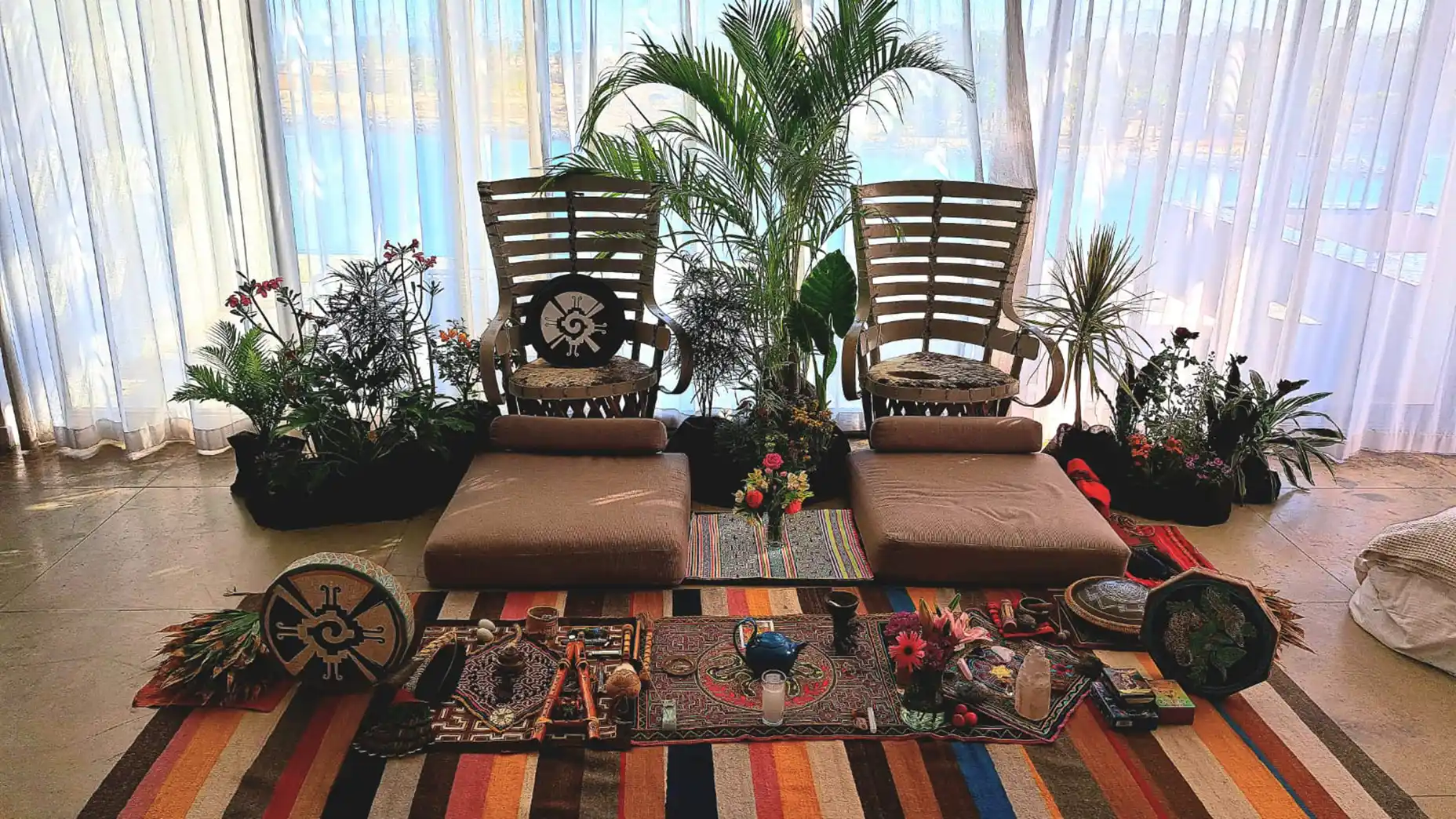
By: Josh Sens | September 30, 2026
Golf has long been framed as a game of internal conflict. It is a sport where the most dangerous hazards are not the deep-faced bunkers of St. Andrews or the water-laden carries of TPC Sawgrass, but rather the internal landscape of the player’s own mind. For decades, the industry has relied on swing coaches, sports psychologists, and high-tech launch monitors to bridge the gap between intent and execution. But for GOLF Top 100 Teacher Christopher Smith, these traditional methods were merely scratching the surface.
In a bold, albeit controversial, move that challenges the boundaries of traditional golf instruction, Smith has pioneered a unique hybrid retreat: a synthesis of high-end golf coaching and traditional Amazonian ayahuasca ceremonies.
The Philosophy: Beyond the Mechanics of the Swing
For more than 35 years, Christopher Smith has navigated the world of professional golf instruction. Throughout his tenure, he has observed a recurring pattern: players possessing pristine mechanics who nonetheless crumble under pressure. They suffer from the "yips," irrational fear on the tee box, and a persistent inability to quiet the mental chatter that sabotages performance.
"Sound mechanics can calm the heebie-jeebies, and sports psychology has its place," Smith explains. "But often, the source of the fear is buried deeper in the subconscious, beyond the reach of conventional cognitive behavioral therapy or range-based drills."
Enter ayahuasca—the potent, psychoactive brew derived from the Banisteriopsis caapi vine and the Psychotria viridis shrub. While the substance has been utilized by Indigenous Amazonian cultures for centuries for spiritual healing, its introduction into the luxury golf market represents a radical shift in how we conceive of "performance enhancement." Smith emphasizes that this is not a recreational pursuit. Rather, he views the experience as a tool for psychological excavation—a way for golfers to identify the traumas and negative patterns that manifest as technical flaws on the course.
A Chronology of the Transformation
The genesis of these retreats did not happen overnight. Smith’s personal journey with the medicine began in the early 2010s. Having experienced the profound, mind-expanding potential of the brew during his own personal exploration, he began to draw parallels between the "ego-dissolution" often reported in psychedelic experiences and the "flow state" required for elite athletic performance.
By 2023, Smith formalized his curriculum. Recognizing that the regulatory environment in the United States prohibits the use of ayahuasca, he pivoted to Mexico, where the retreats are legally facilitated. Since that inception, he has hosted two to three cohorts annually, refining a process that balances the intensity of the psychedelic experience with the technical rigors of the golf swing.
The Retreat Experience: Luxury and Inner Work
These are not "roughing-it" jungle excursions. Participants spend five nights at a curated, high-end seaside estate in Los Cabos, Mexico. The environment is designed for comfort, safety, and introspection.
The structure of the retreat is deliberate:
- Pre-Screening: Because ayahuasca interacts with various pharmaceuticals and health conditions, all potential participants undergo a rigorous medical and psychological vetting process.
- The Ceremonies: Over the course of the stay, guests participate in three guided ceremonies led by an experienced shaman. These are held in private, secure indoor spaces with professional practitioners on-site at all times.
- The Integration: The focus is not on playing golf while under the influence of the medicine—a dangerous and counterproductive idea—but on the post-ceremony "integration." Smith utilizes the 18-hole rounds at the Puerto Los Cabos Golf Club as a laboratory, where participants work to translate the clarity gained during the ceremonies into their physical movements on the course.
"The goal is to move away from self-sabotage," says Smith. "Whether it’s a player stuck in a toxic relationship or one who has tied their entire identity to a low handicap, the medicine helps them see the bigger picture. When they return to the course, they often find they are kinder to themselves, more compassionate, and significantly more fearless."

Supporting Data and Ethical Considerations
While proponents of psychedelic therapy point to a growing body of clinical research—including studies from institutions like Johns Hopkins and Imperial College London—that suggests ayahuasca can be effective in treating treatment-resistant depression, anxiety, and PTSD, the application in a sports context is novel.
Critics in the traditional golf establishment remain skeptical. The "woo-woo" label is one that Smith is well aware of, yet he remains undeterred by the stigma. He argues that if professional athletes are willing to spend thousands on cryotherapy, hyperbaric chambers, and biomechanical analysis, then investing in the emotional health of the golfer is simply the next frontier of human performance.
The financial investment is significant: $8,999 per person. This price point reflects not only the high-end accommodations but also the presence of specialized medical and spiritual practitioners. For the next retreat, scheduled for November 17-22, 2026, the spots are limited, reflecting the high-touch, individual nature of the coaching.
Implications for the Future of Golf Instruction
The existence of the "AyaGolf" retreat, as it has become known, raises broader questions about the future of the sport. As golf continues to struggle with issues of accessibility and high barrier-to-entry, the "mental game" industry is ballooning. If Smith’s model gains traction, it could signal a shift where top-tier coaching moves beyond the driving range and into the realm of radical self-discovery.
However, it also sets a precedent for how the golf industry manages risk. By taking his clients to Mexico, Smith sidesteps the legal hurdles of the U.S. Controlled Substances Act, but he remains subject to the scrutiny of the global golf community. Will this become a niche service for the elite, or is it a precursor to a more mainstream integration of plant medicine into athletic training? For now, the verdict remains out, but for those who have attended, the results—according to Smith—are nothing short of transformative.
Industry Dispatches: Beyond the Retreat
While Smith’s project commands attention, the landscape of the golf industry is shifting in other ways this autumn:
1. The Death of the Tee-Time Broker
In a significant victory for public golf, California has officially signed legislation aimed at curbing the influence of third-party tee-time brokers. For years, municipal courses have been plagued by automated bots that scrape booking systems and resell prime slots at inflated prices. Governor Gavin Newsom’s signature marks a turning point, prohibiting unauthorized middlemen from listing or selling municipal tee times. This move is expected to democratize access to the state’s 200-plus public courses, ensuring that the local player has a fair chance at a weekend round without the "brokerage tax."
2. The Legacy of Dye at PGA National
In South Florida, the iconic PGA National Resort continues its evolution with the addition of the "Triple Stick Golf Club." Designed by Scot Sherman—a long-time collaborator of the legendary architect Pete Dye—the course serves as a tribute to the "Dye-style" of design. With railroad-tie bulkheads, flat-bottomed bunkers, and a challenging par-70 layout, the course draws its name from a fusion of Dye’s famous "Crooked Stick" and the childhood nickname of designer Davis Love III, "Tripp." It is a testament to the enduring influence of the Dye philosophy, which continues to shape how modern architects approach the intersection of strategic difficulty and aesthetic drama.
3. Yale’s Renovation Under Scrutiny
In the world of classic architecture, the Yale Golf Course finds itself at the center of a brewing controversy. Despite a $30 million restoration led by acclaimed architect Gil Hanse, a recent feature in The Athletic has brought to light ongoing maintenance failures and alleged mismanagement. For years, the C.B. Macdonald/Seth Raynor design has been a "bucket list" course for golf purists, but the reported neglect—ranging from poor turf conditions to structural decay—has finally reached a tipping point of public discourse. While internal grumbling among golf historians is common, the mainstream coverage may force the university to treat its historic asset with the stewardship it deserves.
Josh Sens is a GOLF Magazine contributor and editor. His work has been anthologized in The Best American Sportswriting. He is also the co-author, with Sammy Hagar, of "Are We Having Any Fun Yet: The Cooking and Partying Handbook."

 Iffa Jayyana
 Neng Nana
 Nana Wu
 Sagoh
Sagoh