
 Neng Nana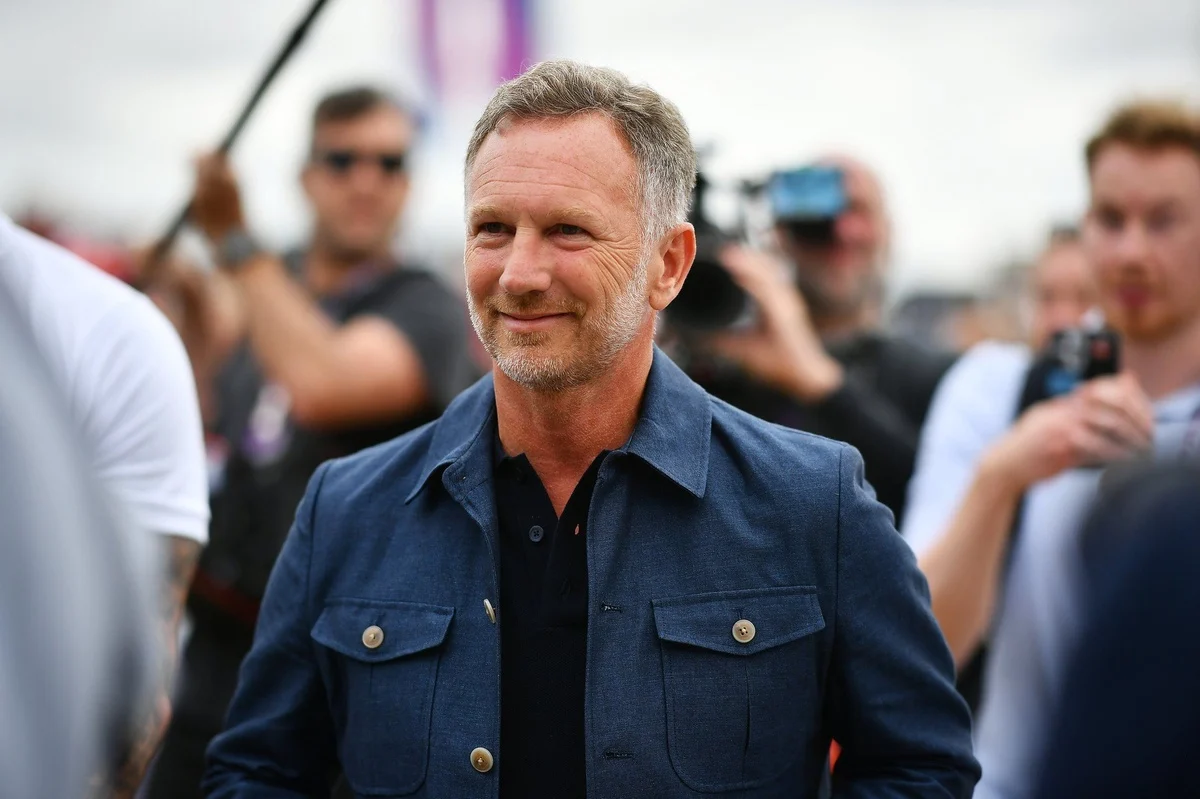
LONDON — Formula 1 is a sport perpetually fueled by high-stakes politics, paddock whispers, and strategic posturing. But few scenarios capture the imagination quite like the prospect of the Scuderia Ferrari—the most storied and pressurized team in motorsport history—adding another alpha personality to its ranks.
The latest rumor mill went into overdrive following comments made by former Red Bull Racing mastermind Christian Horner to The Times, in which he openly admitted that a leadership role at Maranello would be "the dream." Horner further noted that Ferrari is the only team for which he would accept a non-ownership management position at this stage of his illustrious career.
However, former Haas F1 team principal Guenther Steiner has poured cold water on the speculation. Appearing on The Red Flags Podcast, Steiner offered a characteristically blunt assessment of the situation: not only is a Horner-Ferrari union unlikely to happen under current conditions, but the notion of Horner working alongside current Ferrari Team Principal Fred Vasseur is an absolute non-starter.
Main Facts: The Horner-Ferrari Speculation and Steiner’s Verdict
The core narrative revolves around Horner’s future aspirations and the rigid structural realities of Formula 1 team management.
- Horner’s "Plan B": According to Steiner, Horner is actively maneuvering to engineer a return to the Formula 1 pit wall after finding his primary pathways blocked. Having previously maintained that he would only return to a team if he held equity or ownership stakes, Horner’s recent comments regarding a non-ownership role at Ferrari signal a strategic pivot.
- The Vasseur Factor: Fred Vasseur currently occupies the hot seat at Maranello, having taken over leadership ahead of the 2023 season and successfully steering the team through a high-profile restructuring—including the landmark signing of seven-time World Champion Lewis Hamilton for 2025.
- Steiner’s Assessment: Steiner has firmly dismissed any possibility of Vasseur and Horner sharing power or working in a dual-leadership capacity at Ferrari, pointing out that Vasseur is a deeply accomplished principal in his own right, under contract, and fundamentally unsuited to report to or share authority with a personality as dominant as Horner.
- The Publicity Angle: With characteristic dry humor, Steiner also suggested that Horner’s timely comments to the press serve a dual purpose: keeping his name relevant in the F1 market while providing a helpful promotional boost for his upcoming book.
Chronology: How the Rumor Mill Reached Boiling Point
To understand how the motorsport world arrived at this juncture, it is essential to trace the sequence of events that brought Horner’s future and Ferrari’s leadership structure into sharp focus.
1. The Red Bull Era and Post-Power Shift Dynamics
For nearly two decades, Christian Horner was synonymous with Red Bull Racing, guiding the Milton Keynes-based outfit through multiple eras of championship dominance. However, behind-the-scenes political maneuvering, internal power struggles, and corporate shifts within the Red Bull empire drastically altered the landscape. Speculation regarding Horner’s long-term tenure began to swirl as the team faced technical departures and fierce competition on track.
2. The Interview with The Times
The rumor gained undeniable momentum when Horner sat down with The Times. Asked about his career trajectory and whether he could ever envision himself leading another iconic organization, Horner didn’t shy away from the spotlight. He explicitly pointed to Maranello, describing a leadership role at Ferrari as "the dream." Crucially, he added that Ferrari is the single team in the modern grid where he would be willing to step into a traditional, non-ownership employee-management role.
3. The Paddock Reaction and The Red Flags Podcast Appearance
As media outlets and fans dissected what a "Horner-Ferrari" axis would mean for the sport—particularly with Lewis Hamilton arriving in red—industry insiders weighed in. Speaking on The Red Flags Podcast, Guenther Steiner dismantled the fantasy, explaining the hard logistical and psychological realities of F1 team hierarchies. Steiner argued that Horner’s pivot toward Ferrari is simply a calculated adjustment of his career strategy.
Supporting Data & Context: The Anatomy of F1 Leadership
To contextualize why Steiner is so adamant that Horner and Vasseur cannot coexist, one must examine the operational blueprint of modern Formula 1 teams and the specific dynamics of Scuderia Ferrari.
The Myth of the Dual-Leadership Structure
In Formula 1, operational clarity is paramount. Modern F1 operations employ hundreds—sometimes thousands—of engineers, aerodynamicists, mechanics, and strategists. A successful team requires a unified vision channeled through a single Team Principal who acts as the ultimate arbiter between the technical department, the commercial side, and the corporate board (in Ferrari’s case, Stellantis and Exor).
History shows that dual-leadership models or forced "super-teams" in management rarely succeed. When egos and competing management styles collide within the same executive suite, it invariably trickles down to the factory floor and the pit wall, creating factionalism.

Fred Vasseur’s Standing at Maranello
Fred Vasseur has steadily rebuilt Ferrari into a consistent race-winning force. Under his watch, the Scuderia has focused on operational stability, eradicating the toxic internal politics that historically plagued the team during less successful decades. Vasseur enjoys the backing of Ferrari leadership and has successfully positioned the team as an attractive destination for top-tier engineering talent and drivers alike—culminating in the coup of signing Lewis Hamilton alongside Charles Leclerc.
Steiner emphasized this point, noting:
"Fred in himself is a very successful guy. But first of all, I don’t know that Fred wants to leave or that he has to leave. In the end, Fred has got a contract… there is not space for the two of them."
Christian Horner’s Strategic Requirements
Throughout his career, Horner has operated with immense autonomy at Red Bull, backed by a unique management structure that allowed him to wield significant influence. Moving to a team like Ferrari—steeped in corporate oversight, Italian media scrutiny, and a deeply entrenched internal culture—would require a massive cultural adjustment for Horner. Furthermore, his insistence on equity or absolute control in past negotiations makes a subordinate or peer-level role alongside Vasseur highly improbable.
Official Responses and Paddock Perspectives
The reaction from the broader Formula 1 community has been a mix of amusement, skepticism, and tactical analysis.
While Ferrari has not officially commented on Horner’s remarks—maintaining a strict focus on their ongoing championship campaigns and the integration of upcoming personnel—sources close to the Maranello outfit suggest that the management structure is closed to outside disruption. Vasseur himself has frequently reiterated his commitment to long-term stability at Ferrari, emphasizing that continuous improvement relies on protecting the harmony of the existing workforce.
Steiner’s perspective, meanwhile, carries significant weight given his years on the F1 pit wall dealing with turbulent team dynamics, ownership changes, and the relentless pressure of the media spotlight. By highlighting Horner’s tactical shift—moving from a demand for equity to entertaining a prestigious salaried role—Steiner exposed the pragmatic nature of F1’s top-tier executive market.
Steiner also injected a dose of levity into the serious political chess match, noting the promotional timing of Horner’s media footprint:
"The other thing, there’s nothing bad for him in it as well. He’s releasing a book so it will help the sale of that one, or maybe not, we don’t know, but at least it’s a little bit of publicity."
Implications for the Future of Formula 1
Steiner’s dismissal of the Horner-Vasseur pairing carries several broader implications for the future direction of the Formula 1 grid:
- Stability at Ferrari: For now, Ferrari is banking entirely on continuity. Disrupting the Vasseur-led management team just as they reap the rewards of long-term planning and secure legendary driver talent would run counter to everything the Scuderia has tried to build over the last few years.
- Horner’s Next Chapter: As Horner evaluates his options for a return to the sport, he faces a shrinking pool of vacancies that meet his criteria for autonomy and competitive potential. If equity stakes are off the table elsewhere, he may have to redefine what his ideal post-Red Bull chapter looks like.
- The Perpetual Silly Season: Beyond the drivers, the F1 executive market remains a theater of constant intrigue. Comments made in interviews—whether strategic trial balloons or promotional tours—will continue to keep the paddock guessing as team principals and executives position themselves for the next seismic shift in the sport’s power dynamics.
Ultimately, while the idea of Christian Horner walking through the iconic gates of Maranello makes for compelling headlines, Guenther Steiner’s verdict remains the most grounded reality check: Formula 1 is big, but it is simply not big enough for both Christian Horner and Fred Vasseur to steer the ship at Ferrari together.

 Nana Wu
 Suro Senen

 Lina Hope

 Sagoh
Sagoh
 Iffa Jayyana