
 Asep Darmawan
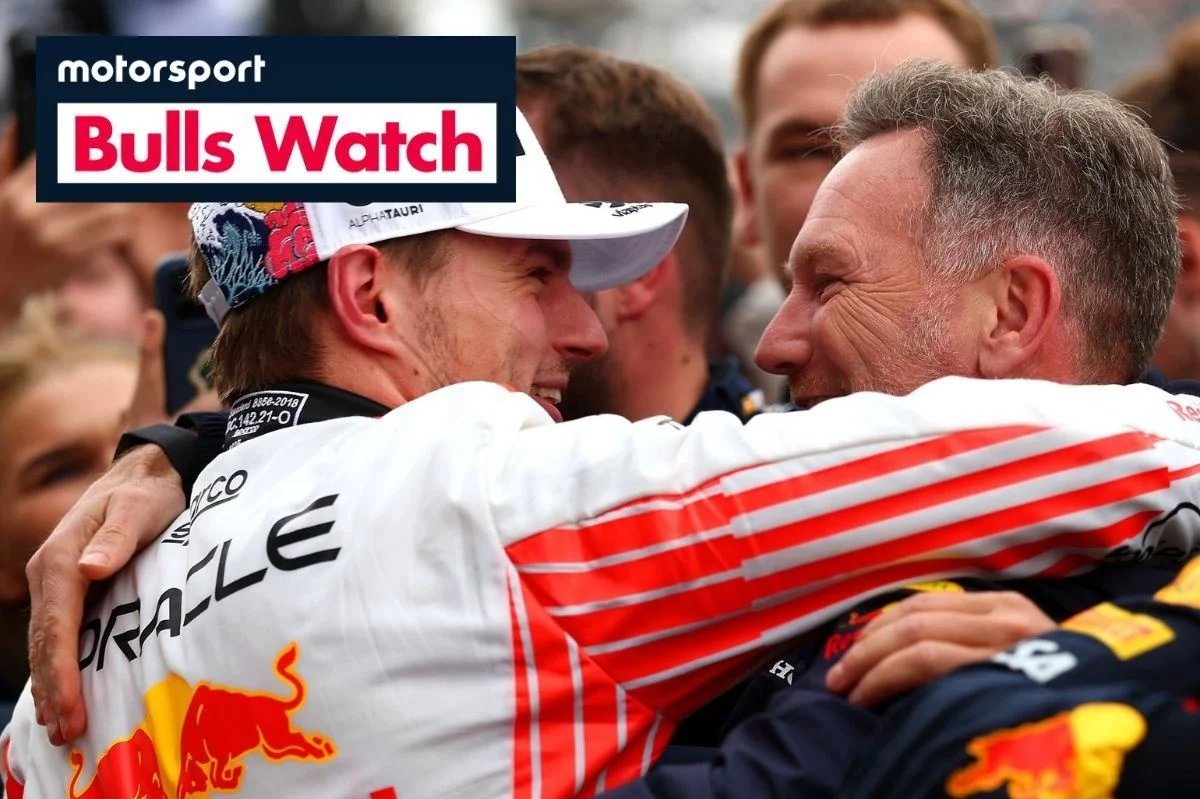
For the better part of the last half-decade, the Formula 1 paddock has fixated on a singular, recurring drama: the revolving door at Red Bull Racing. From Pierre Gasly and Alex Albon to Sergio Perez and the subsequent pressure cooker facing his successors, the narrative surrounding the team’s second car has been defined by a brutal,
repeating cycle. Talented drivers arrive with glittering junior resumés or proven Grand Prix victories, only to find themselves floundering seconds behind Max Verstappen, struggling for survival, and ultimately facing demotion or dismissal.
For years, fans, pundits, and rival team principals debated the root cause. Was it psychological? Was Max Verstappen simply an otherworldly generational talent operating on a plane entirely detached from his peers? Or was Red Bull deliberately tailoring its machinery around its star driver, leaving his teammates out in the cold?
According to former Red Bull Racing Team Principal Christian Horner, the truth is rooted deep within the engineering department. Speaking candidly on the High Performance podcast, Horner pulled back the curtain on the technical reality of the Milton Keynes squad, revealing that the infamous "curse" of the second Red Bull seat is not a psychological barrier, but the inevitable consequence of a car designed to satisfy Verstappen’s abnormal, highly specific physical inputs.
Main Facts: Unpacking the Verstappen Advantage
At the core of Horner’s revelation is a fundamental engineering truth: Formula 1 car development is a relentless pursuit of lap time, and lap time is dictated by driver feedback. When a driver of Verstappen’s caliber can extract maximum performance out of a fundamentally sharp, aggressive, and loose-handling car, the team’s development trajectory inevitably follows.
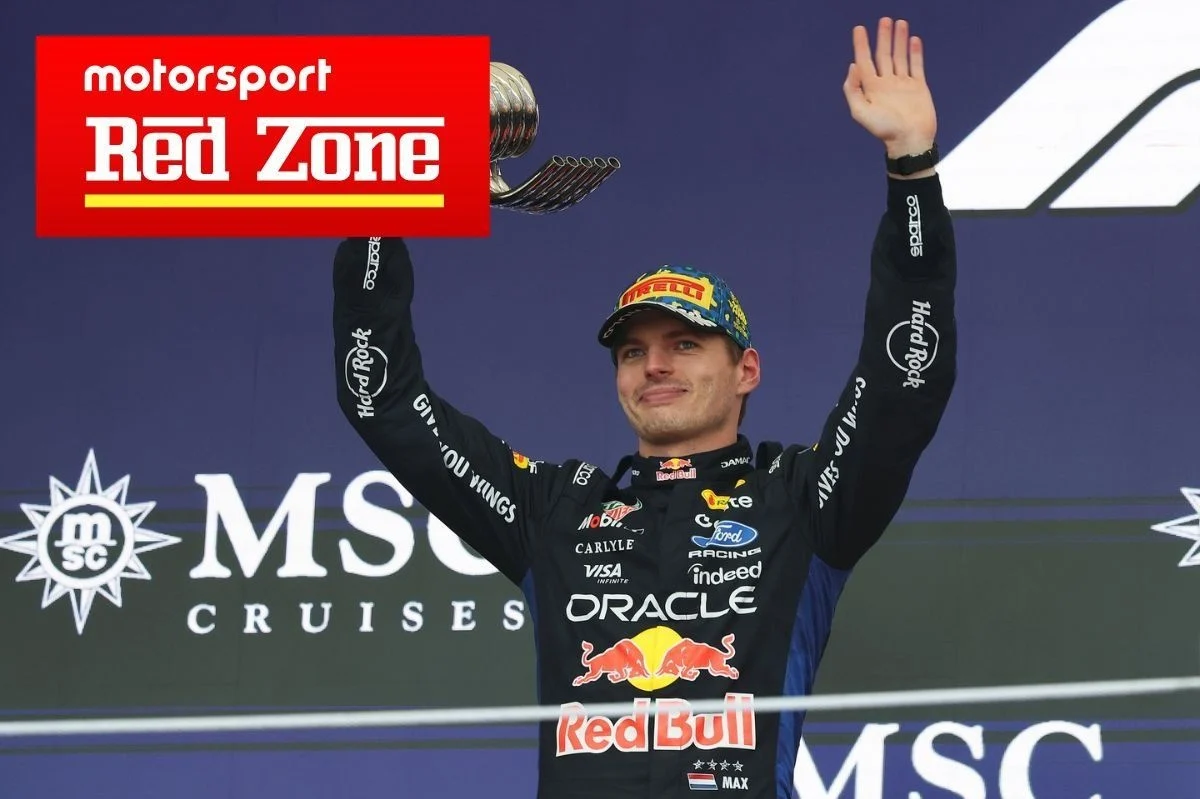
"Max is tremendously demanding for what he wants, and he has a skill that is abnormal," Horner explained during his podcast appearance, reflecting on the dynamics that built Red Bull’s recent championship-winning dynasty.
In modern Formula 1, a car’s handling balance is a delicate tightrope walk between understeer (where the front tires lose grip and the car pushes wide) and oversteer (where the rear tires lose grip, causing the back end to step out). Most drivers require a predictable, neutral, or slightly understeering compromise. This predictability allows them to build immense confidence through high-speed corners, knowing precisely when they can apply the throttle on exit without inviting a sudden, race-ending spin.
Verstappen, however, operates on an entirely different spectrum. Rather than seeking a stable safety net, the Dutch driver possesses an exceptional, almost uncanny ability to artificially balance a loose, sliding rear end in real-time. This allows him to demand hyper-responsive steering geometry that rotates the car aggressively the moment he turns the wheel into a corner apex.
"He demands more and more front end from the car, and he can just cope with whatever the rear does in pursuit of that goal," Horner noted.
Because Verstappen’s ceiling of performance is astronomically high when the car is set up this way, the engineering department’s tools, simulation data, and upgrade paths naturally gravitate toward his preferences. Every aerodynamic tweak and mechanical adjustment aimed at maximizing corner-entry rotation inherently exacerbates the instability at the rear—creating a machine that is, by conventional definitions, profoundly unbalanced.
Chronology: The Anatomy of a Modern F1 Struggle
To understand how this technical phenomenon manifests on the track, one must trace the timeline of the second Red Bull seat through the hybrid and ground-effect eras.
2016–2018: The Ascent of Verstappen and the Daniel Ricciardo Exit
When Verstappen was promoted to Red Bull from Toro Rosso ahead of the 2016 Spanish Grand Prix—where he immediately became the youngest winner in F1 history—he shared the garage with Daniel Ricciardo. Ricciardo, known for his late-braking prowess and smooth style, initially matched and often outfoxed the young Dutchman. However, as the team’s aerodynamic philosophy evolved to harness Verstappen’s preference for a razor-sharp front end, Ricciardo found himself increasingly uncomfortable with the car’s handling traits, ultimately prompting his shock departure to Renault ahead of the 2019 season.

2019–2020: The Gasly and Albon Trials
With Ricciardo gone, Red Bull initiated its rotating cast of junior drivers. Pierre Gasly was promoted for 2019 but immediately struggled with a rear end that felt snap-oversteer prone and untrustworthy. Unable to lean into the car’s hyper-responsive front architecture, Gasly’s confidence evaporated, and he was demoted back to Toro Rosso by the summer break.
His replacement, Alex Albon, faced the exact same developmental trajectory. While Albon managed better results through sheer grit, he frequently noted how punishing the car was to drive on the limit compared to his rivals. By the end of 2020, Albon too was replaced, paving the way for the recruitment of veteran Sergio Perez.
2021–2024: The Perez Paradox
Sergio Perez arrived at Red Bull as a seasoned race winner renowned for tire management and racecraft. Initially, Perez adapted well, winning races in Baku and Monaco. However, as Red Bull developed the ground-effect generation of cars (introduced in 2022) to maximize front-end downforce and mid-corner rotation, the gap between Verstappen and Perez widened dramatically.
While Verstappen claimed dominant back-to-back world titles, Perez often found himself fighting to escape Q1. The more the upgrades targeted apex rotation, the more twitchy and unpredictable the rear of the RB19 and RB20 became for the Mexican driver, mirroring the exact technical trap Horner later described.
Supporting Data: The Physics of an "Unbalanced" Car
To appreciate why standard driving styles fail in a Verstappen-tailored Red Bull, one must examine the vehicle dynamics at play:
- Corner Entry vs. Corner Exit: A car configured for maximum front-end bite features high front downforce, stiff front suspension settings, and a forward aerodynamic balance. This makes the front tires bite instantly upon steering input. For Verstappen, this is a blessing; he uses micro-corrections of the steering wheel and throttle to catch the sliding rear before it can snap. For a driver relying on a stable rear platform, this creates constant mid-corner anxiety.
- Telemetry Discrepancies: Data analysis from past seasons consistently showed that while Verstappen’s minimum speed at the apex of corners was exceptionally high due to the sharp rotation, his teammates were forced to brake earlier and heavier, waiting for the car to settle before getting back on the power. This hesitation costs tenths of a second per corner—which, over the length of a Grand Prix circuit, compounds into a devastating multi-second deficit.
- Simulator and Wind Tunnel Bias: Modern F1 teams rely heavily on driver feedback to correlate wind tunnel data with on-track performance. If a team’s primary data provider (Verstappen) demands more front-end responsiveness, the aerodynamicists will design updates that deliver it. Consequently, the car evolves away from a neutral setup into an elite, highly specialized weapon that only its master can fully exploit.
Official Responses and Paddock Reactions
Horner’s candid admission on the High Performance podcast has sparked widespread discussion across the Formula 1 community, validating what many technical analysts have suspected for years.
"Inevitably, your engineering department, your tools, your development focus goes down the route of creating that characteristic in a car, which others found difficult to handle," Horner admitted.
Rival team principals have often pointed to this dynamic when discussing Red Bull’s intra-team disparity. Mercedes and Ferrari engineers have frequently noted that building a car around a single driver’s hyper-specific demands creates a high-risk operational environment. While it yields maximum performance when paired with a generational talent like Verstappen, it leaves the organization vulnerable if that driver ever departs, as the second car requires a completely different driving vernacular to extract its potential.
Former drivers and pundits have similarly weighed in, noting that stepping into a Red Bull alongside Verstappen is arguably the toughest assignment in motorsport history. It is not merely a contest of raw speed; it is an asymmetrical warfare against an engineering philosophy engineered entirely against a traditional driver’s instincts.
Implications: What This Means for Red Bull’s Future
As Formula 1 hurtles toward sweeping new engine and aerodynamic regulations, Horner’s revelation carries profound strategic implications for Red Bull Racing:
- Driver Recruitment Strategy: Red Bull can no longer simply drop a talented rookie or a veteran into the second seat and expect them to adapt. Future lineups must either possess the unique, aggressive driving style required to master a sharp front-end platform, or the team must consciously broaden its developmental focus to create a more forgiving operating window.
- The Post-Verstappen Era: Should Verstappen ever decide to leave Red Bull for another outfit, the team faces a significant technical reckoning. A car developed exclusively to match Verstappen’s neural reflexes and car control could prove entirely alien to a new generation of drivers, forcing the engineering department to rebuild its foundational design philosophy from scratch.
- Engineering Philosophy Shift: Moving forward, Red Bull’s technical team—operating under new leadership structures following internal shifts—may look to balance their development paths. Ensuring that a car is adaptable across diverse driving styles is critical for winning Constructors’ Championships, where points from both cars are an absolute necessity.
Ultimately, Christian Horner’s transparency has demystified one of the modern era’s most enduring F1 puzzles. The second Red Bull seat was never cursed by bad luck or psychological weakness; it was simply crushed beneath the weight of a brilliant engineer building the ultimate machine for a driver who plays by physics’ most extreme rules.

 Nana
 Raul Delapena Setiawan
 Layla Zulfa
 Nila Kartika Wati
 Ammar Sabilarrohman

 Nana Muazin

 Reynand Wu