
 Nila Kartika Wati
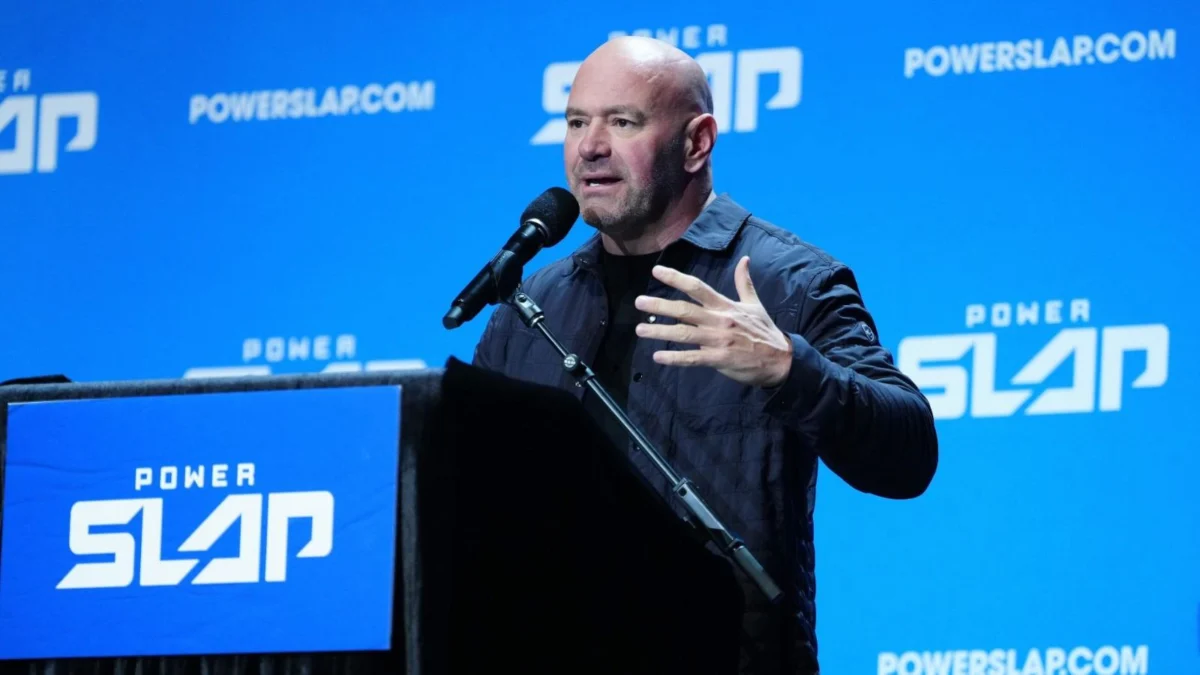
In a bizarre collision between professional combat sports and the litigious world of intellectual property, Dana White’s Power Slap—the controversial combat promotion that has dominated headlines for its face-slapping brutality—is now locked in a high-stakes standoff with a parody offshoot known as Power Spank. The dispute, which pits the financial might of the UFC’s leadership against the unconventional Lingerie Fighting Championships (LFC), has transcended a mere branding squabble, evolving into a battle over the limits of creative expression, fair use, and the legal definition of parody.
The Genesis of the Dispute: Power Slap vs. Power Spank
Since its inception in January 2023, Power Slap has sought to institutionalize the raw, visceral act of bare-handed, unprotected striking. Spearheaded by UFC CEO Dana White, the promotion has weathered significant criticism from medical professionals and neurological experts who decry the repetitive, unblocked head trauma inherent in the sport. Despite the backlash, White has successfully integrated the brand into the mainstream combat sports ecosystem, complete with high-end production values and streaming deals.
In October 2026, the Lingerie Fighting Championships (LFC) launched Power Spank in Clearwater, Florida. The event, which serves as an overt caricature of White’s organization, swaps the concussive face-slaps of the original for a contest focused on striking the backside. The inaugural event featured a diverse lineup of participants, including professional MMA fighters and adult entertainers, all vying for a modest $500 grand prize. The tournament was eventually won by a contestant operating under the moniker "Bebe."
While the LFC frames the event as a tongue-in-cheek critique of the hyper-masculine, high-impact culture of Power Slap, the legal counsel for White’s promotion sees the branding as a direct infringement on their intellectual property.
Chronology of the Conflict
The friction between the two organizations moved from the stage to the courtroom-adjacent arena in late October. The timeline of the escalation is as follows:
- January 2023: Dana White officially launches Power Slap, bringing it into the mainstream sports spotlight.
- Early October 2026: The Lingerie Fighting Championships (LFC) debuts Power Spank in Clearwater, Florida. The event is marketed as a humorous take on the Power Slap format.
- Late October 2026: Legal representatives for Power Slap serve the LFC with a formal cease-and-desist letter. The letter demands an immediate cessation of the use of the name "Power Spank," citing trademark infringement and potential consumer confusion.
- November 10, 2026: LFC CEO Shaun Donnelly issues a public statement refusing to comply with the cease-and-desist demands. Donnelly explicitly invokes the First Amendment, framing the event as protected parody.
- November 2026: Both parties remain in a state of pre-litigation posturing. While no formal lawsuit has been filed in federal court at the time of this writing, legal experts anticipate that a clash over trademark dilution is likely if both parties remain steadfast.
The Defense of Parody: Shaun Donnelly’s Stand
At the heart of the LFC’s refusal to back down is a defiant stance on free speech. Shaun Donnelly, the CEO of LFC, has been vocal about his intent to challenge Power Slap on legal grounds should the matter escalate to a full-blown lawsuit.
"We respect Power Slap and its founders, but we will not be bullied into abandoning protected speech," Donnelly stated in an official press release. "We will defend our right, and the right of every American, to free speech, and if that takes us to the Supreme Court, we are prepared to go."
Donnelly’s argument rests on the principle of parody as a form of social commentary. By mocking the "same energy and theatrics" of the original sport, the LFC argues that Power Spank provides a cultural critique of what they view as a dangerous and excessive spectacle. Donnelly went further, providing a provocative justification for the creation of the brand: he claims the event was conceived after an LFC athlete was hospitalized following an appearance in Power Slap.
"Power Spank is our answer: same energy, same theatrics, none of the brain damage," Donnelly remarked. "And let’s be honest, a spank is a lot more fun to watch than a slap."
The Legal Landscape: Trademark vs. First Amendment
The legal battle ahead—should it materialize—will likely hinge on the "likelihood of confusion" standard common in trademark law. Attorneys for Power Slap will argue that the similarity in branding could lead consumers to believe there is an affiliation or endorsement between the two companies. Because Power Slap operates as a professional, regulated (though controversial) sport, any association with the LFC’s brand could be seen as diluting the "serious" nature of the UFC-adjacent promotion.
Conversely, the LFC’s defense relies heavily on the "Rogers test," a legal framework often used in cases where trademark rights clash with artistic expression. If the LFC can prove that their use of the name is artistically relevant and not intentionally misleading, they may be shielded by the First Amendment.
"Parody is a powerful, yet notoriously difficult, legal defense," says intellectual property attorney Marcus Thorne, who is not involved in the case. "The court must weigh whether the name ‘Power Spank’ is a legitimate commentary on ‘Power Slap,’ or if it is simply a clever way to siphon brand equity from a popular, well-funded property. If the LFC can prove that their intent is fundamentally critical—that they are mocking the absurdity of face-slapping—they stand a chance. If a jury views it as a simple cash-grab using a similar name, they are in trouble."
Implications for the Combat Sports Industry
This dispute highlights a broader trend within the combat sports world: the rise of "gimmick" fighting. As the barrier to entry for digital broadcasting drops, and as influencers and niche organizations look for ways to capture viral attention, the line between professional competition and performance art has blurred significantly.
If Power Slap succeeds in silencing Power Spank, it could set a chilling precedent for other fringe organizations that rely on parody or satire to build their brands. It would effectively grant major promotions the power to "trademark-block" any creative work that critiques their business model.
However, if the LFC prevails, it could open the floodgates for a wave of satirical combat promotions. This would force major organizations like the UFC and Power Slap to be more litigious, potentially leading to a cluttered legal landscape where every new promotion is met with a flurry of cease-and-desist orders.
The Silence from Las Vegas
Notably absent from this discourse is Dana White himself. The UFC CEO, known for his acerbic wit and direct communication style, has remained conspicuously silent regarding the Power Spank dispute. This silence could be interpreted in several ways: either he views the LFC as an irrelevant entity unworthy of his public acknowledgement, or his legal team has advised him to remain quiet to avoid complicating the potential litigation.
As it stands, the LFC has confirmed that it intends to continue hosting Power Spank events at its scheduled US stops. They are currently reviewing their options, including preemptive legal filings to protect their brand.
For the moment, the spectacle continues. While the world watches to see if this will be resolved in a courtroom or simply fade into the background of a crowded media cycle, one thing is clear: the collision between the "slap" and the "spank" has created the most intriguing legal drama in the history of alternative combat sports. The coming months will determine whether the First Amendment offers a strong enough shield for the LFC, or if the sheer financial and legal weight of Dana White’s organization will bring the parody to a swift, definitive end.

 Asep Darmawan
 Laily UPN
 Ammar Sabilarrohman
 Nana Muazin
 Reynand Wu
 Sagoh