
 Ali Ikhwan
By Josh Berhow
September 25, 2026
The ghosts of 2024 have officially returned to haunt the United States Presidents Cup team.
In a performance that will be dissected by golf historians and scrutinized by team leadership for years to come, the International squad orchestrated a near-miraculous Friday session at Medinah Country Club. By sweeping all five foursomes (alternate-shot) matches, the visitors turned a deficit into a commanding 7-3 lead, leaving the American side reeling and echoing the same unnerving feelings they experienced two years ago in Montreal.
For U.S. Captain Brandt Snedeker, the afternoon was a masterclass in tactical failure. For the International team, it was a display of resilience, precision, and an undeniable refusal to bow to the American dominance that has defined this event for over two decades.
The Anatomy of the Collapse: A Chronological Breakdown
The day began with a flicker of hope for the Americans. Early in the session, the U.S. pairings looked poised to consolidate their Thursday momentum, holding narrow leads across the board. However, the Medinah layout—a venue notorious for its ability to punish even the slightest lapses in focus—began to expose the seams in the American armor.
The Shift at the Turn
By 4:00 p.m. local time, the narrative had shifted dramatically. As the fifth match of the day made the turn, the Internationals held leads in four of the five matches, with the final pairing knotted in a deadlock. Despite a brief moment of optimism when Wyndham Clark converted a clutch birdie putt on the 12th hole to put the Americans ahead, the surge proved illusory.
Match-by-Match Breakdown
- Matsuyama/Im vs. Henley/Bridgeman: The first point of the day went to the Internationals. Hideki Matsuyama, playing with his customary stoicism, drained a pivotal long par save on the 16th hole. When Jacob Bridgeman’s par attempt rimmed out, the match ended 3 and 2. For Henley and Bridgeman, the disappointment was profound, as they were the only two U.S. players who sat out Thursday, hoping to bring fresh legs to the fight.
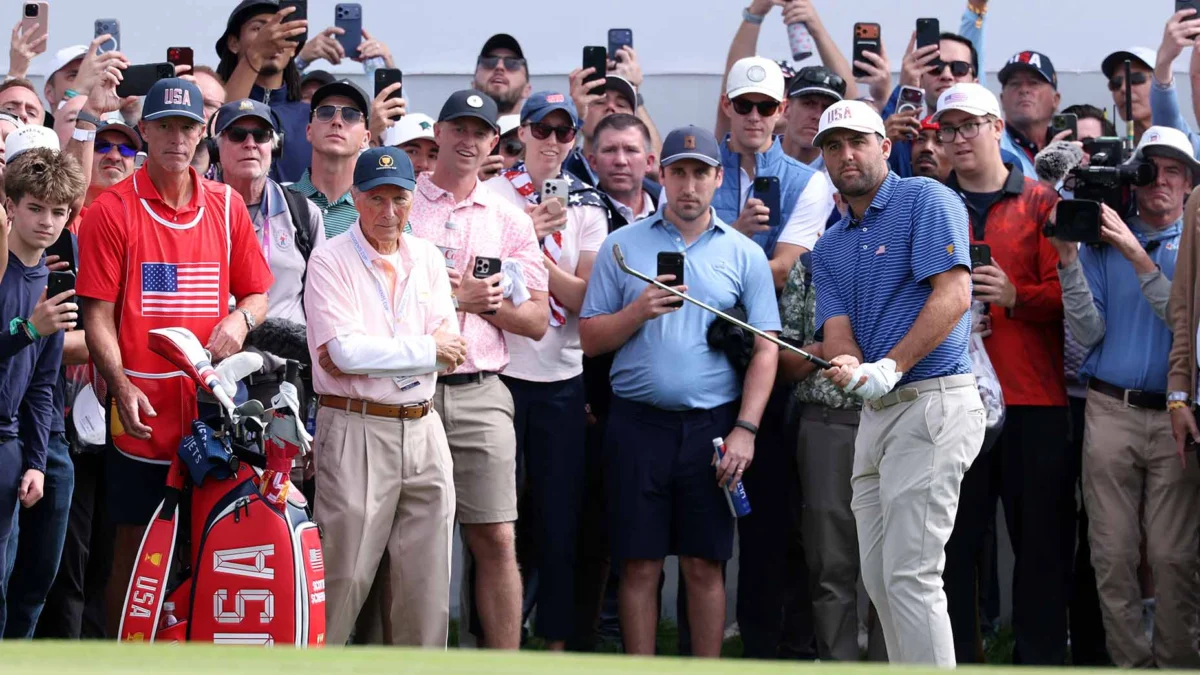
- Taylor/Conners vs. Scheffler/Burns: In the leadoff spot, Scottie Scheffler and Sam Burns—who had broken their long-standing losing streak as a pair just 24 hours prior—found themselves unable to reclaim the momentum. The Canadian duo of Nick Taylor and Corey Conners displayed grit, surviving a tense 18th hole where Taylor’s approach shot danced dangerously close to the cup. A conceded par, followed by a missed birdie putt from Burns, sealed a 1-up victory for the Internationals.
- Fox/Lee vs. Morikawa/Clark: This match proved to be the psychological tipping point. Ryan Fox and Min Woo Lee, playing with a flair that energized the international contingent, strung together back-to-back birdies on the 15th and 16th holes. The momentum shift was palpable, and the 1-up win effectively extinguished any remaining American optimism for the afternoon.
- Scott/Bezuidenhout vs. Thomas/Young: Perhaps the most shocking result of the day was the 3-and-2 defeat of Justin Thomas and Cameron Young. Thomas, a stalwart of American team golf, had never lost a foursomes match in his career (entering the day 4-0-2). The pair’s inability to card a single birdie highlighted the erratic nature of the U.S. performance under the pressure of the alternate-shot format.
- Kim/Kim vs. Cantlay/Schauffele: The final dagger came from the pairing of Tom Kim and Si Woo Kim. They dismantled the veteran duo of Patrick Cantlay and Xander Schauffele 4 and 3. The match reached a bitter conclusion when Schauffele, usually a model of composure, saw his short-range putt lip out, preventing the match from continuing to the 16th.
Supporting Data: Historical Context and Statistical Anomalies
This Friday sweep is not merely a statistical outlier; it is a profound historical event. It marks only the seventh time in the history of the Presidents Cup that a team has swept an entire session. Even more notably, this is the first time such a feat has been accomplished in consecutive tournaments.
The 1998 Parallel
The 7-3 lead now held by the International team mirrors the largest margin they have ever possessed through two sessions. The last time they held a 7-3 edge was in 1998—the only year in the tournament’s history that the International side emerged victorious. While the Americans have won 10 consecutive Presidents Cups, the current deficit is the largest they have faced on home soil after Friday since 2005.
The "Foursomes" Hurdle
The alternate-shot format has long been the great equalizer in team golf, and Friday proved why. The American struggle to find rhythm in a format that demands seamless communication and complementary play was evident. When your stars are not making birdies—as was the case with Thomas and Young—the margin for error shrinks to zero. The U.S. team’s inability to close out holes, combined with the Internationals’ aggressive putting, created a perfect storm.

Official Responses and Tactical Implications
The post-round atmosphere in the U.S. team room was reportedly somber. Captain Brandt Snedeker, tasked with navigating a team that has lived in the shadow of total dominance for years, now faces the most difficult 48 hours of his career.
The Captain’s Dilemma
Snedeker will be forced to reconsider his pairings for Saturday’s four-ball and foursomes sessions. The decision to keep Scheffler and Burns in the leadoff spot for two consecutive days will certainly be debated. While the captain’s intent was to build a "hot hand," the result has been a stagnant lead-off performance that failed to set the tone for the rest of the squad.
"We didn’t execute," Snedeker said during a brief press availability. "We had opportunities to turn these matches around, but in this format, you can’t afford to have mental lapses. We are in a hole, there is no denying that, but we have two days of golf left to play. Our focus must shift entirely to tomorrow morning."
The International Perspective
Conversely, the International team is riding a wave of unprecedented momentum. Their performance at Medinah suggests a team that is no longer intimidated by the American pedigree. By playing with a chip on their shoulder and a high degree of tactical discipline, they have transformed the tournament from a presumed coronation of the U.S. team into a genuine dogfight.
Implications for the Weekend: Can the U.S. Rally?
The implications of a 7-3 deficit are severe. While the Presidents Cup is a marathon—consisting of eight matches on Saturday and 12 singles matches on Sunday—the psychological damage of a two-year pattern of Friday collapses cannot be ignored.
The Road Ahead
The Americans are historically resilient; they are 13-1-1 all-time in this event and have won 10 straight. However, those statistics are tethered to a history that is currently being rewritten. If the International team can maintain their current intensity, they are on track to break the longest winning streak in the history of the sport.
The Saturday Pivot
Saturday’s schedule will feature four four-ball matches in the morning and four foursomes in the afternoon. For the United States, the morning session is now a "must-win." A failure to gain significant ground on Saturday morning could effectively end the tournament before the final singles matches even begin on Sunday.
The "Medinah Miracle" for the Internationals is currently in its second chapter. For the American side, the task is simple but daunting: they must stop the bleeding, abandon the complacency that comes with 10 straight titles, and find the grit that turned them into the world’s most feared team in the first place.
As the sun sets on Medinah, the reality is clear: the Presidents Cup is no longer a formality. It is a battle, and for the first time in a long time, the Americans are looking up at the leaderboard, wondering if the magic has finally run out.

 Nila Kartika Wati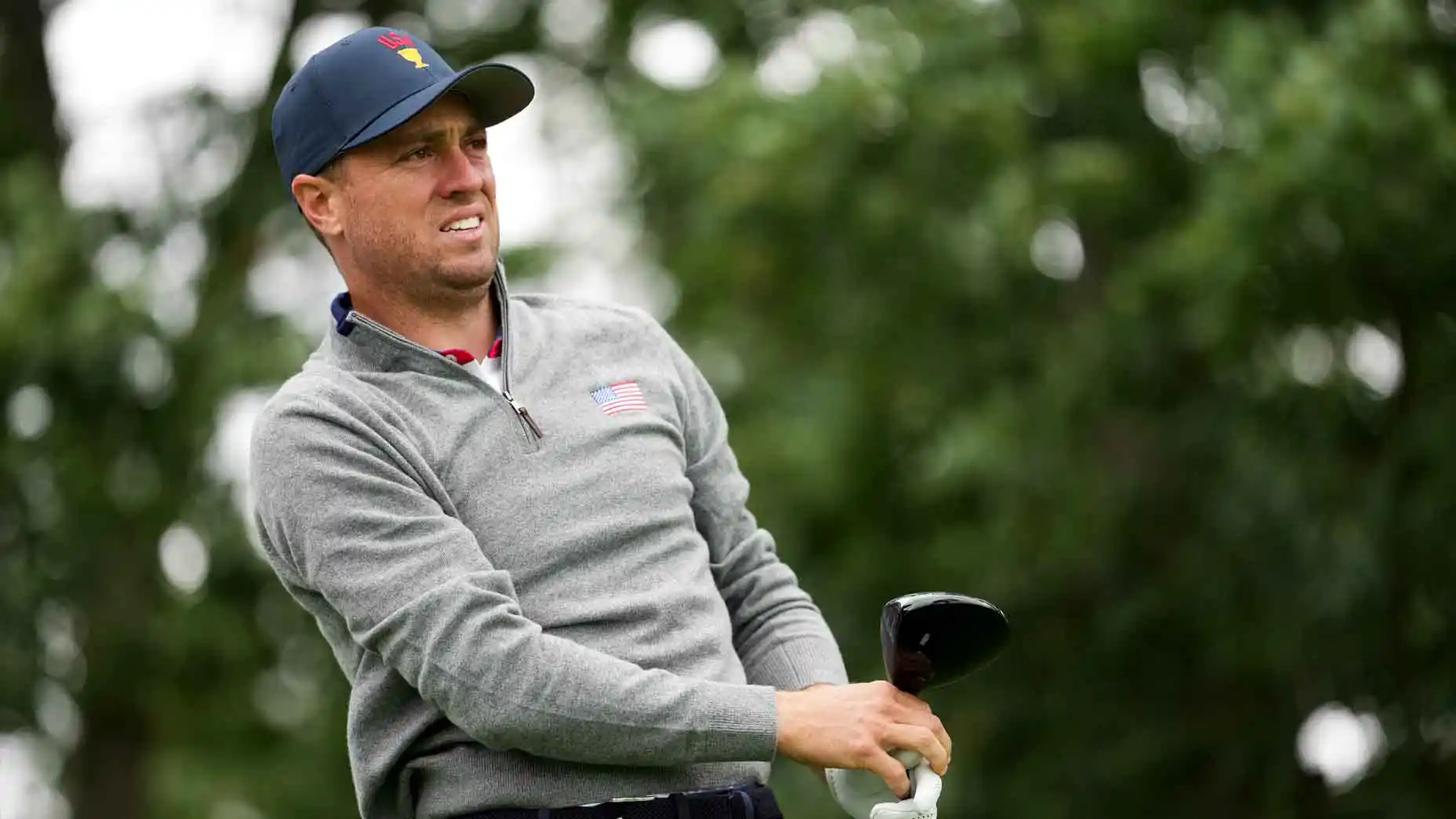
 Dwi Wanna
 Neng Nana
 Nana
Nana
 Lina Hope
 Siti Muinah