
 rifanmuazin
The atmosphere at the 2026 U.S. Short Course World Championship Trials has shifted from competitive intensity to a full-blown spectacle of speed. Following a historic opening night that saw two world records shattered, the momentum carried into the third finals session, confirming that American swimming is not just preparing for the global stage—it is setting the benchmark for it.
The session began with the promise of more records, and by the end of the evening, the pool deck was buzzing with the realization that the depth of talent currently representing the United States is perhaps the greatest it has ever been. With U.S. Open records falling in the morning prelims and a palpable tension surrounding automatic qualification for the World Championship roster, the evening session delivered on every expectation.
The 400 IM: A Statement from Josh Bey
The night opened with the men’s 400 individual medley, a grueling test of versatility that pitted rising stars against one another in a race of attrition. The field was led by Ryan Erisman, Noah Cakir, and Indiana’s Josh Bey.
The early stages of the race were defined by a blistering butterfly leg, with Cakir touching in 54.86 to hold a slim lead over Erisman (55.10) and Bey (55.12). However, the race dynamics shifted dramatically during the transition into the breaststroke—the event’s traditional "separator." Bey utilized a monstrous breaststroke split of 1:06.42 to blow the field wide open, creating a three-second gap between himself and his closest competitor.
While Erisman clawed back ground during the final freestyle leg, splitting a 56.09 to Bey’s 56.68, the lead proved insurmountable. Bey touched the wall in 4:00.05, a staggering 15-second improvement over his morning swim and a time that currently sits as the sixth-fastest in the world this year. Erisman secured the silver in 4:02.28, holding off a charging Cakir, who took third in 4:03.62. This race served as a masterclass in pacing, marking Bey as a primary contender for international podiums.
Chronology of Competition: Beyond the IM
The remainder of the session proceeded at a breakneck pace, highlighting the intense pressure of "Priority 1" qualification spots.
In the women’s 100-meter backstroke, Regan Smith continued her dominant week. Coming off a victory in the 200 butterfly, Smith entered the final as the top seed, challenged by the formidable trio of Claire Curzan and world record holder Katharine Berkoff. Smith’s technical precision in the underwater phases was the deciding factor, as she navigated the technical nuances of the short-course pool to secure her second event qualification for the upcoming World Championships.
The men’s 50-meter backstroke provided the evening’s biggest "what-if" moment. Johnny Crush entered the final as the only swimmer to crack the 23-second barrier during prelims, clocking a 22.95. However, the narrative centered on lane eight. Adam Chaney, who narrowly escaped disaster in the morning after a slip on the start, arrived in the final with everything to prove. As one of the most decorated short-course sprint backstrokers in history, Chaney’s presence in the outside lane forced the field to maintain a high tempo from the opening whistle.
In the women’s 200 IM, the rivalry between Kate Douglass and Alex Walsh reached a new level of sophistication. Both swimmers cruised through the morning heats, but with Torri Huske refining her schedule to focus on two events rather than three, the intensity in the final was unmatched. The battle for the podium was a showcase of tactical swimming, with Stanford’s Lucy Bell also pushing the veterans to their limits.
The Sprint Revolution: 100 Freestyle and 50 Fly
The men’s 100 freestyle acted as a high-stakes arena for automatic qualification. The narrative was centered on the head-to-head battle between Jack Alexy and Chris Guiliano, both of whom had already eclipsed the U.S. Open record in the morning. However, the presence of veteran Caeleb Dressel in lane one turned the event into a strategic chess match. Dressel, having demonstrated significant form on the previous night, functioned as the ultimate spoiler, forcing Alexy and Guiliano to ignore their own pace and swim to the lane beside them.
Simultaneously, the women’s 50 butterfly solidified Gretchen Walsh as the clear favorite. Having entered the final with a one-second lead over her closest competitor, Claire Curzan, Walsh’s underwater efficiency was again on display. The battle for the runner-up position proved to be the more contentious fight, as Alex Shackell, Caroline Larsen, and Torri Huske looked to punch their tickets to the international stage.
A New Era for the 200 Butterfly
Perhaps the most anticipated event of the entire meet—and the next few years of American swimming—was the men’s 200 butterfly. The race featured a collision of generations: Ilya Kharun, the reigning short-course world champion and U.S. Open record holder, against Luca Urlando, the reigning long-course world champion.
The inclusion of Tyler Ray, who has been a standout performer throughout the trials, added a layer of unpredictability. This race is widely viewed as the start of a multi-year rivalry that will define the men’s butterfly event on the global circuit. The technical skill required to maintain a rhythm in a short-course 200 fly is immense, and tonight’s final demonstrated that the American depth in this discipline is currently unparalleled.
Supporting Data and Technical Metrics
The data emerging from these trials suggests a significant shift in training methodologies among the U.S. elite. The 15-second drop from Josh Bey’s morning swim to his evening final in the 400 IM is a testament to the "taper and peak" philosophy currently employed by top-tier collegiate programs.
- Men’s 400 IM Winning Split Analysis:
- Josh Bey: 55.12 (Fly) / 31.10 (Back) / 1:06.42 (Breast) / 56.68 (Free) = 4:00.05
- Ryan Erisman: 55.10 (Fly) / 30.55 (Back) / 1:09.29 (Breast) / 56.09 (Free) = 4:02.28
These figures, combined with the U.S. Open records set by Jack Alexy (100 free) and Van Mathias (50 breast), indicate that the conversion from Long Course (50m pool) to Short Course (25m pool) is being executed with extreme precision by American swimmers.
Official Perspectives: The Quest for 24.95
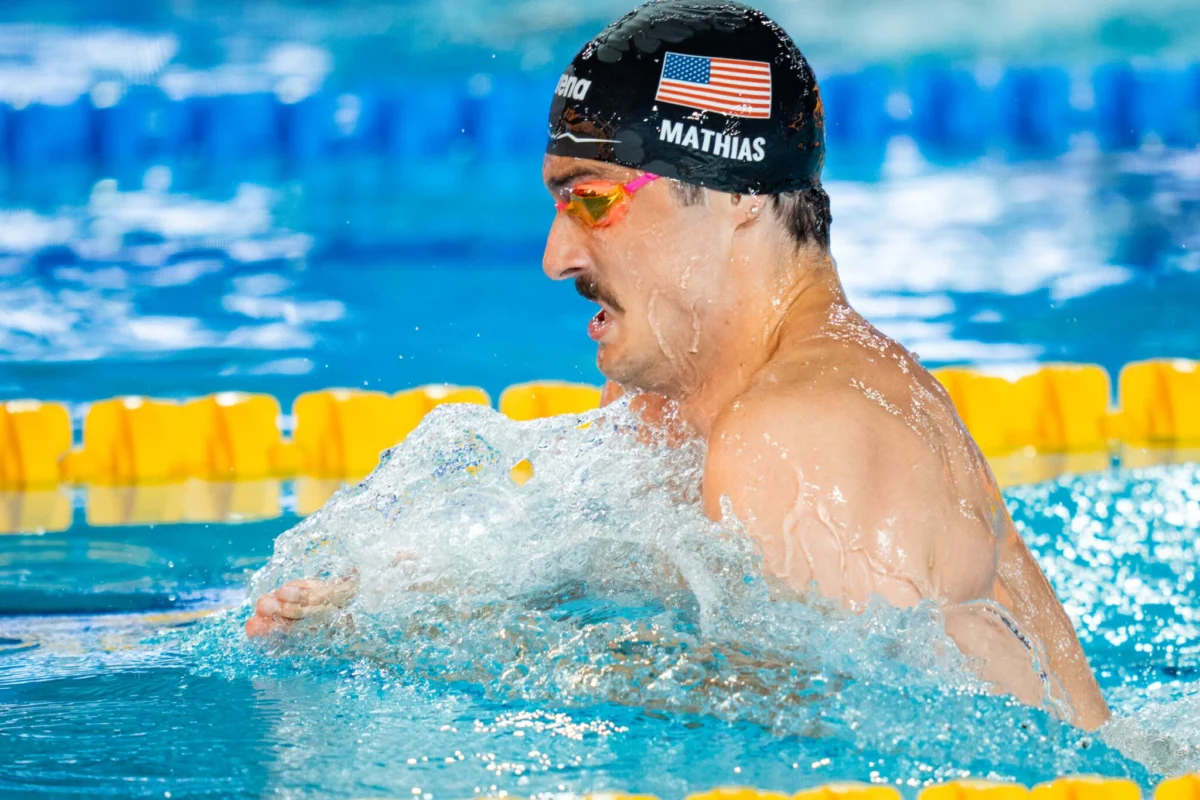
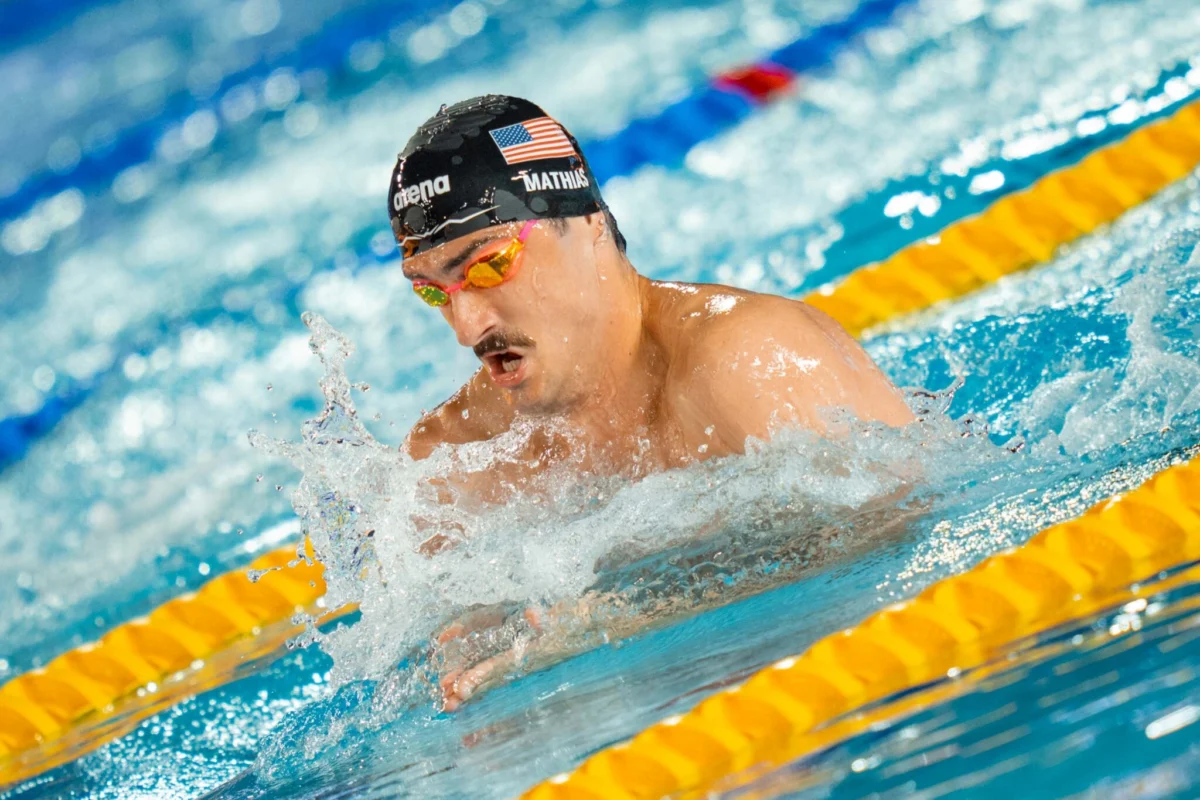
The final event of the evening, the men’s 50 breaststroke, saw Van Mathias attempt to chase down the ghosts of the past. Having broken the American and U.S. Open records in the morning, the goal for the evening was Emre Sakci’s 2021 world record of 24.95.
Mathias noted in post-race comments that the transition from the 100-meter breaststroke—where he claimed a world record the previous night—to the 50-meter sprint required a shift in explosive power. "The 100 is about rhythm; the 50 is about raw, unfiltered acceleration," Mathias stated. While he fell just short of the 24.95 benchmark, his performance confirmed his status as the current world leader in breaststroke sprinting.
Implications for the World Championship Roster
The implications of this session are profound. With the "Priority 1" system in place, the top two finishers in the 100 freestyle and 200 freestyle have secured their positions for the upcoming World Championships. This has effectively raised the stakes, as any error in the turn or the start now carries the weight of a missed international opportunity.
The depth displayed by the women’s 200 freestyle field—featuring heavyweights like Simone Manuel, Claire Weinstein, and Alex Shackell—demonstrates that the United States is building a relay pool capable of dominance. The intensity seen in the prelims of the 200 freestyle, where Liberty Clark entered with a one-second lead, suggests that the final will be a tactical battle where the relay spots are decided by mere fractions of a second.
As the trials continue, the focus turns to maintaining this pace. The coaching staffs are looking not only at podium finishes but at the "split data"—analyzing how these swimmers hold their underwater speed under the pressure of a major championship environment. For the fans, the message is clear: the American swimming machine is in peak condition, and the upcoming World Championships promise to be a coronation of this current generation’s talent.

 Asep Darmawan
 Basiran

 Ammar Sabilarrohman
 Nila Kartika Wati
 Jia Lissa

 Ali Ikhwan
 Lina Hope