
 Ammar Sabilarrohman
Published October 30, 2026
For skiers and snowboarders along the American East Coast, planning a winter holiday often feels like a compromise. You either resign yourself to long-haul flights out west—dealing with major time zone shifts, exorbitant airfares, and overcrowded mega-resorts—or settle for the icy, unpredictable conditions of local weekend hills.
Yet, just a short drive or a brief, direct flight across the Canadian border lies a world-class winter sanctuary that shatters this false dichotomy. Québec offers an unmatched blend of dependable deep powder, wild and varied topography, historic European-style architecture, and a rich culinary culture. Best of all? It requires zero time zone adjustments and offers a favorable currency exchange rate for U.S. travelers.
Winter in Québec is so deeply embedded in the culture, and the conditions are so reliably exceptional, that it feels like it should be arduous to reach. Instead, it is practically on the doorstep of the Northeastern United States, waiting to redefine your expectations of a ski vacation.
Main Facts: The Anatomy of a Québec Winter
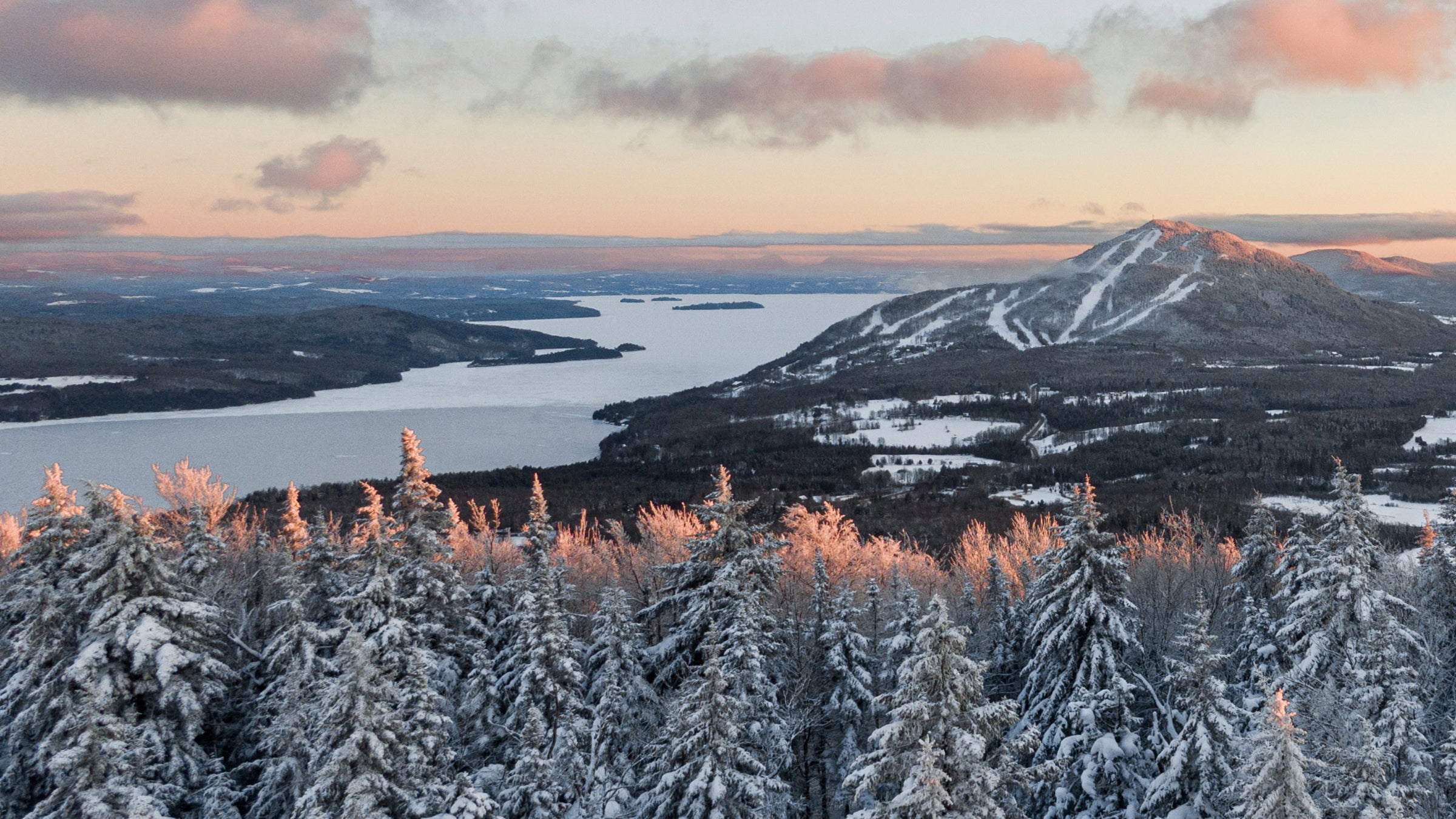
To understand the scale of Québec’s winter offering, one must look at the numbers. Canada’s largest and proudly French-speaking province boasts some of the highest annual snowfall totals in the country, routinely logging up to 250 inches of snow per year. This precipitation falls in every imaginable variety: feather-light deep powder, meticulously groomed tracks, and pristine corduroy.
This abundance of snow blankets more than 70 ski resorts spread across vibrant mountain towns and vast wilderness areas. Accessibility is a major selling point:
- Montréal is a mere 90-minute flight or a comfortable six-hour drive from Boston.
- New York City travelers can touch down in Québec City in less than two hours by air.
Furthermore, the province’s geography provides an incredible diversity of terrain. Whether you are seeking sheer vertical drops plunging toward majestic rivers, tight tree-skiing lines in secluded state-of-mind forests, or gentle, family-friendly slopes paired with world-class dining, Québec delivers across four distinct regional personalities.
Chronology of a Destination: From 17th-Century Settlement to Modern Ski Haven
The story of Québec’s winter appeal is centuries in the making, tracing a unique timeline that bridges Old World heritage with modern outdoor recreation.
The Historic Foundation (17th–19th Centuries)
Long before the invention of the modern alpine ski, Québec was shaped by European settlers who established fortified outposts along the St. Lawrence River. The founding of Québec City in 1608 brought 17th-century French colonial architecture—characterized by narrow cobblestone streets, heavy masonry, turrets, and flagstone courtyards—to North America. This architecture survived the centuries, preserving a European ambiance that today provides a dramatic backdrop for modern winter travelers.
The Mid-20th Century: The Birth of Eastern Skiing
As recreational skiing gained momentum in North America following the Second World War, Québec’s entrepreneurs and mountaineers recognized the potential of the Laurentian Mountains and the Eastern Townships. Towns like Mont Tremblant began transforming from quiet logging and farming communities into Alpine-style villages. Poma lifts and rope tows paved the way for grand lodges, establishing a robust, European-inspired après-ski culture decades before mega-resorts commercialized the sport in the American West.
The Contemporary Era (2026 and Beyond)
Today, Québec’s ski industry represents a seamless marriage of heritage and high-tech infrastructure. Resorts have invested heavily in cutting-edge snowmaking technology, high-speed lift networks, and interconnected trail systems. At the same time, regional tourism initiatives—such as the L’EST GO Pass in the Eastern Townships and coordinated multi-resort packages via platforms like maneige.ski—have modernized how skiers navigate the province. The result is a thriving, cross-border winter tourism ecosystem that continues to draw record numbers of international visitors seeking authentic cultural immersion alongside top-tier powder.
Supporting Data: Regional Breakdowns and Resort Highlights
Québec’s massive size means skiable terrain unfolds in nearly every direction. To make the most of a trip, visitors generally choose among four distinct geographic zones, each offering its own unique flavor, terrain profile, and cultural touchstones.
+--------------------------------------------------------------------------+
|                       QUÉBEC SKI REGIONS AT A GLANCE                     |
+----------------------+--------------------------+------------------------+
| Region               | Key Highlight            | Top Resorts To Visit   |
+----------------------+--------------------------+------------------------+
| Charlevoix           | Big Mountain Scenery,    | Le Massif de           |
|                      | River Views              | Charlevoix,            |
|                      |                          | Mont Grand-Fonds       |
+----------------------+--------------------------+------------------------+
| Québec City          | Urban Culture Meets      | Mont-Sainte-Anne,      |
|                      | Historic Charm           | Stoneham               |
+----------------------+--------------------------+------------------------+
| Laurentians          | Alps-Style Villages,     | Mont Tremblant,        |
|                      | Luxury & Après           | Mont-Blanc,            |
|                      |                          | Sommet Saint-Sauveur   |
+----------------------+--------------------------+------------------------+
| Eastern Townships    | Budget Resort Hopping,   | Bromont, Mont Sutton,  |
|                      | Tree Skiing              | Owl’s Head,            |
|                      |                          | Mont-Orford            |
+----------------------+--------------------------+------------------------+
1. Charlevoix: Big Mountain Scenery and Maritime Snow
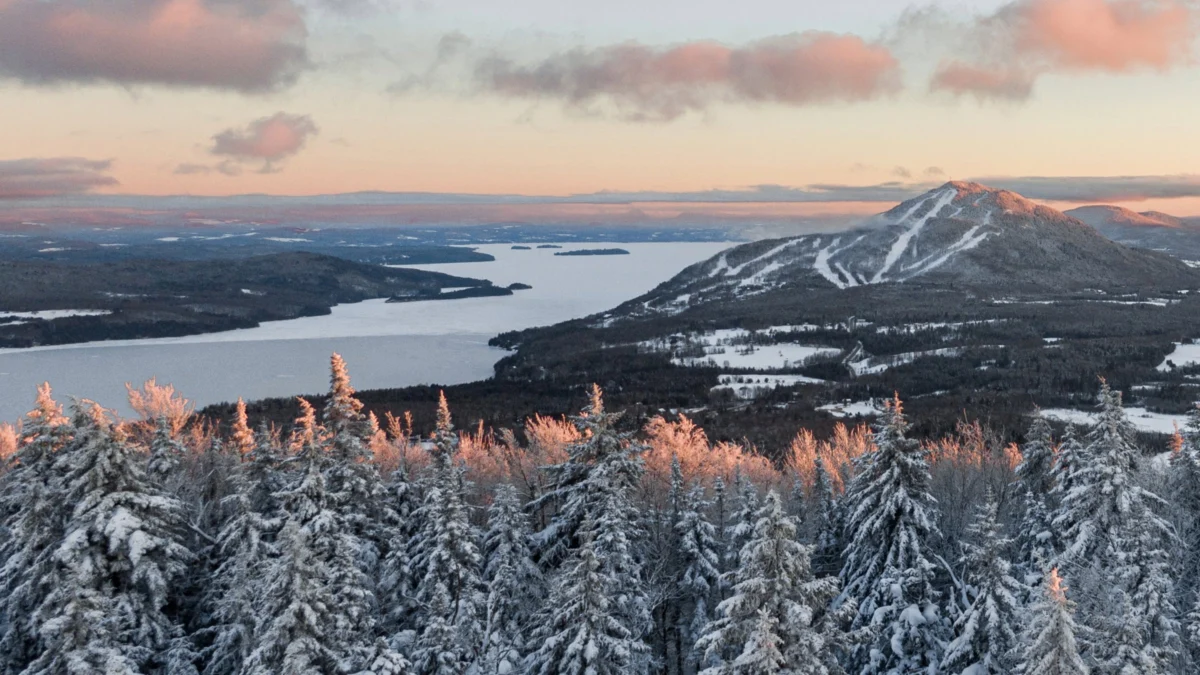
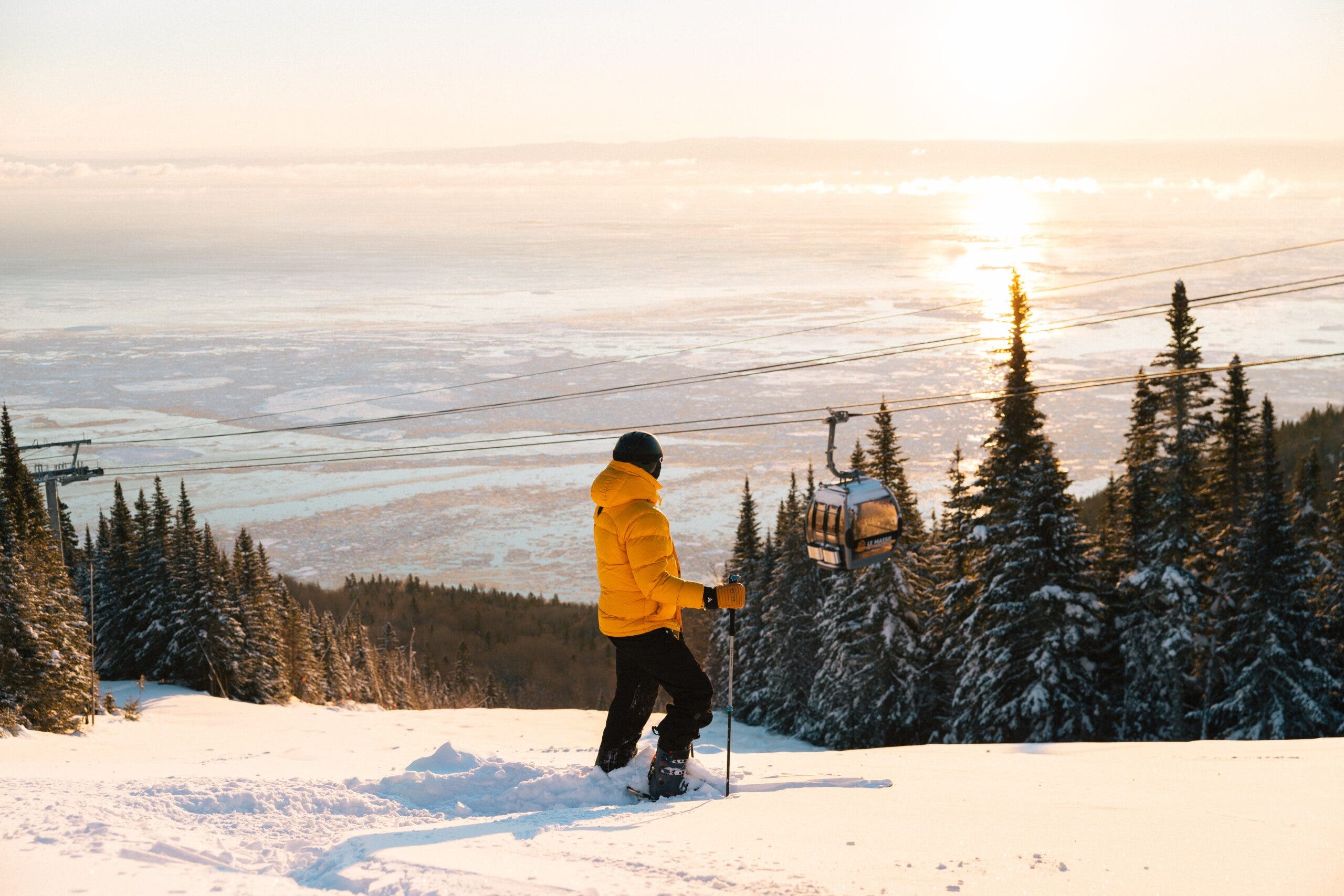
Northeast of Québec City, Charlevoix offers a visual and physical spectacle unlike anywhere else in Eastern North America. Here, steep alpine slopes tower directly over the freezing expanse of the St. Lawrence River, creating dramatic mountain-meets
-water vistas.
- The Snow: Charlevoix benefits from a buttery maritime snowpack driven inland off the river, laying down deep accumulations in plunging valleys and sweeping bowls.
- Key Resorts: Le Massif de Charlevoix boasts the biggest vertical drop east of the Canadian Rockies, challenging experts with its steep, untamed terrain. For a more intimate vibe, Mont Grand-Fonds offers a compact layout, laid-back atmosphere, and varied terrain suited for all ability levels.
2. Québec City: History, Culture, and Night Skiing
For travelers who refuse to choose between world-class skiing and vibrant arts, dining, and culture, using Québec City as a base camp is the ultimate strategy.
- The Vibe: An evening walk through downtown Québec City feels like wandering through a snow-draped fairytale. The city’s food and bar scenes effortlessly blend centuries-old French culinary traditions with modern, innovative flair.
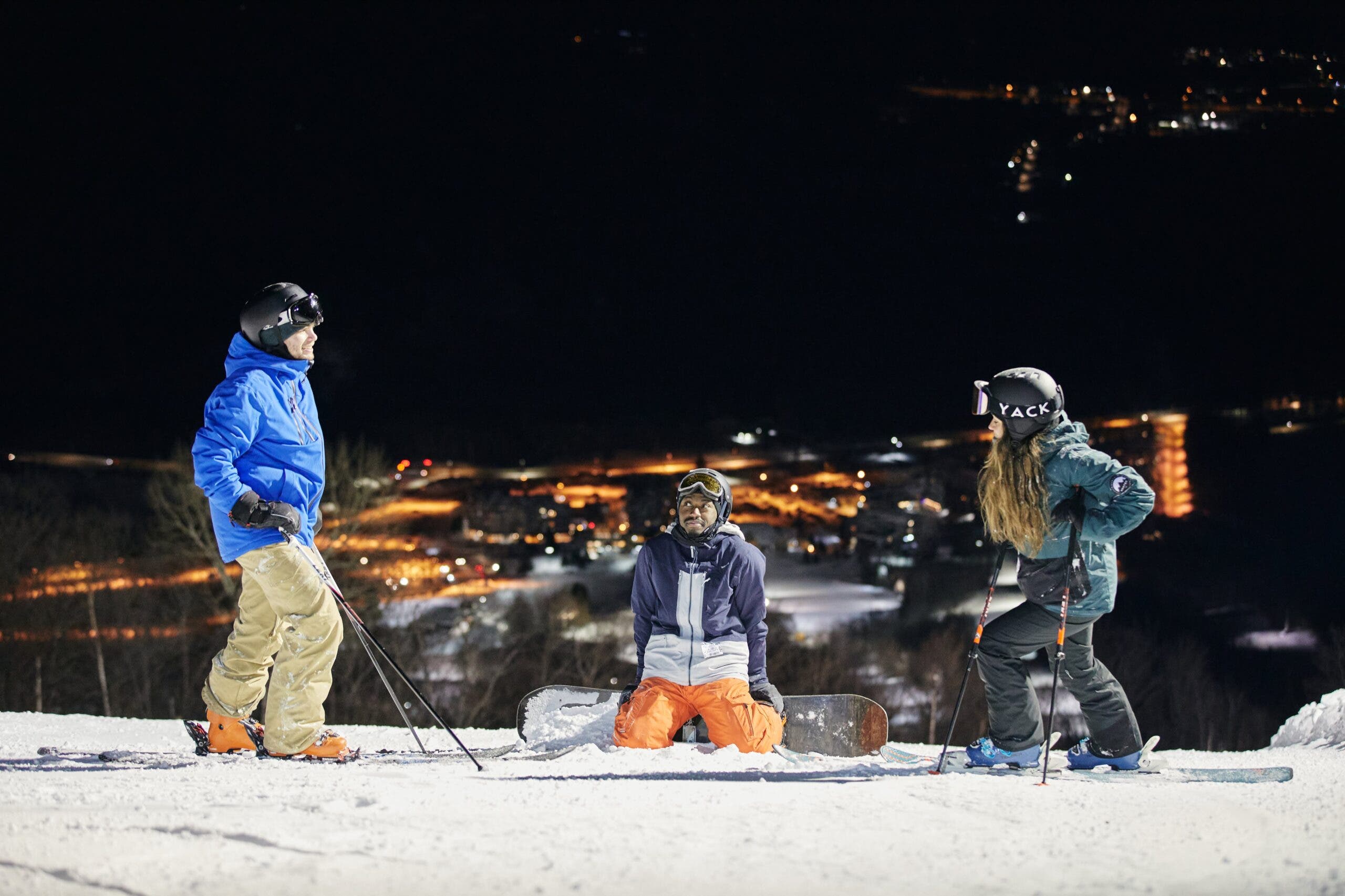
- Key Resorts: Situated just 30 minutes from the city center, Mont-Sainte-Anne allows visitors to maximize their daytime ski hours—including exceptional night skiing—before returning to the city for a world-class dinner in a 17th-century fortification.
3. The Laurentians: Luxury Resorts and Historic Après-Ski
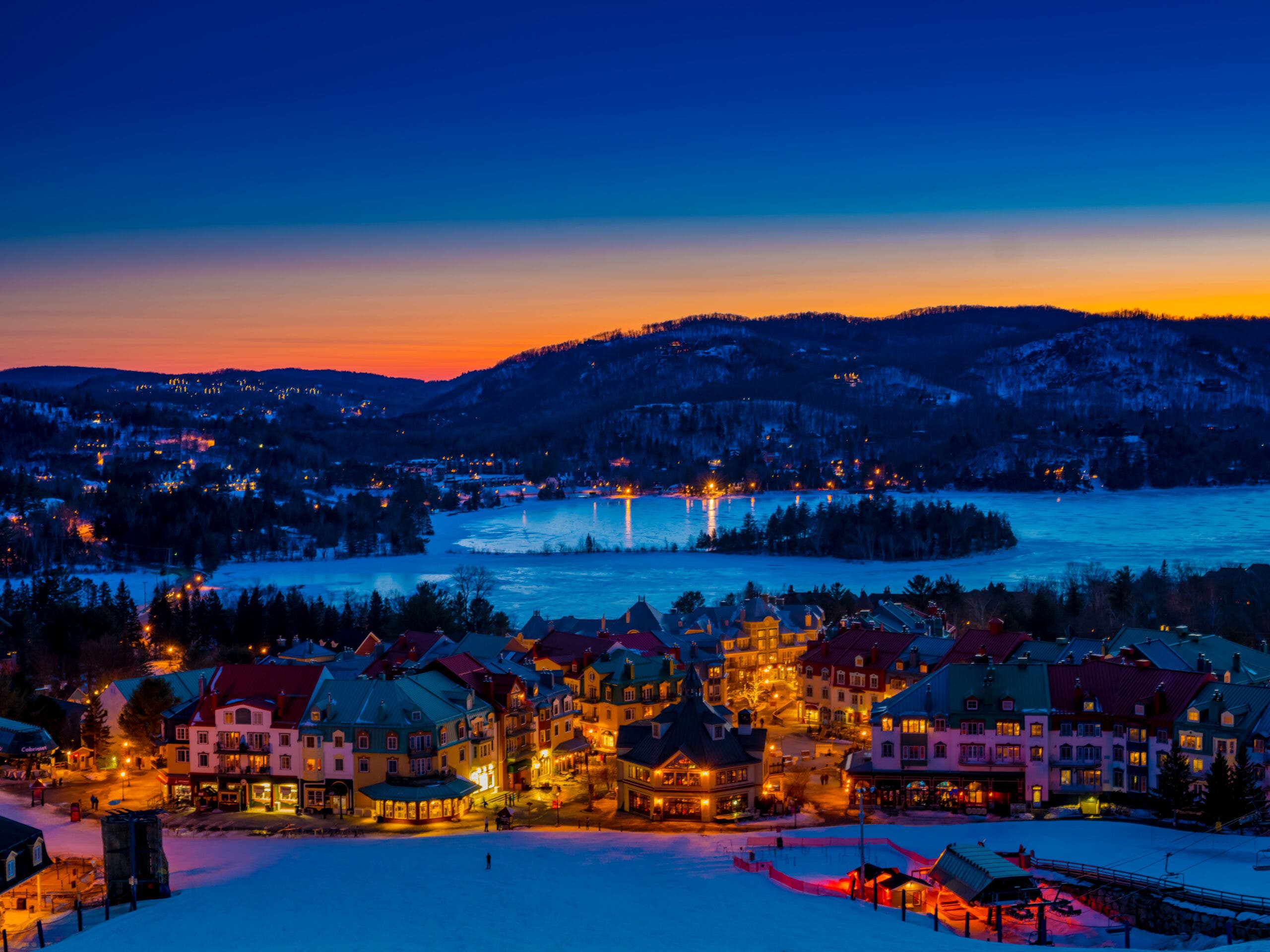
Located just north of Montréal, the Laurentian Mountains are speckled with charming, Alps-style villages that support North America’s most robust and historic après-ski tradition.
- The Amenities: Visitors will find classy accommodations, European-style spas, gourmet bistros, and a thriving microbrewery scene nestled right at the base of the mountains.
- Key Resorts: Mont Tremblant delivers a massive variety of terrain, ranging from gentle, sunlit cruisers to steep-and-deep expert runs. Meanwhile, neighboring Mont-Blanc and Sommet Saint-Sauveur offer quieter, family-friendly atmospheres paired with extensive five-star night skiing operations.
4. The Eastern Townships: Resort-Hopping on a Budget
Tucked into the lush, forested hills southeast of Montréal, the Eastern Townships feature a dense concentration of ski areas, making it the premier destination for resort-hopping.
- The Value: With the regional L’EST GO Pass, skiers can secure discounted lift tickets across four of the zone’s top mountains.
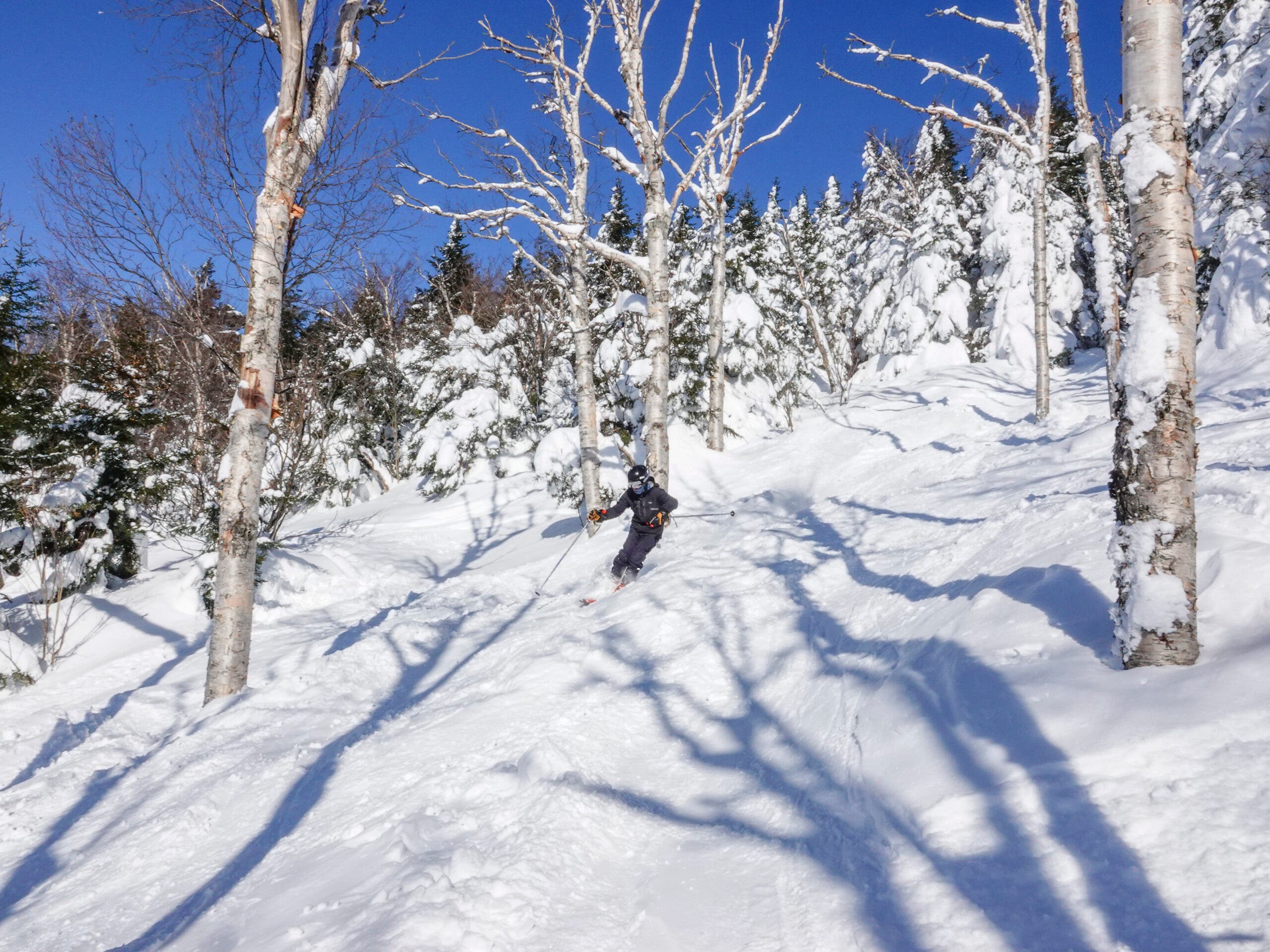
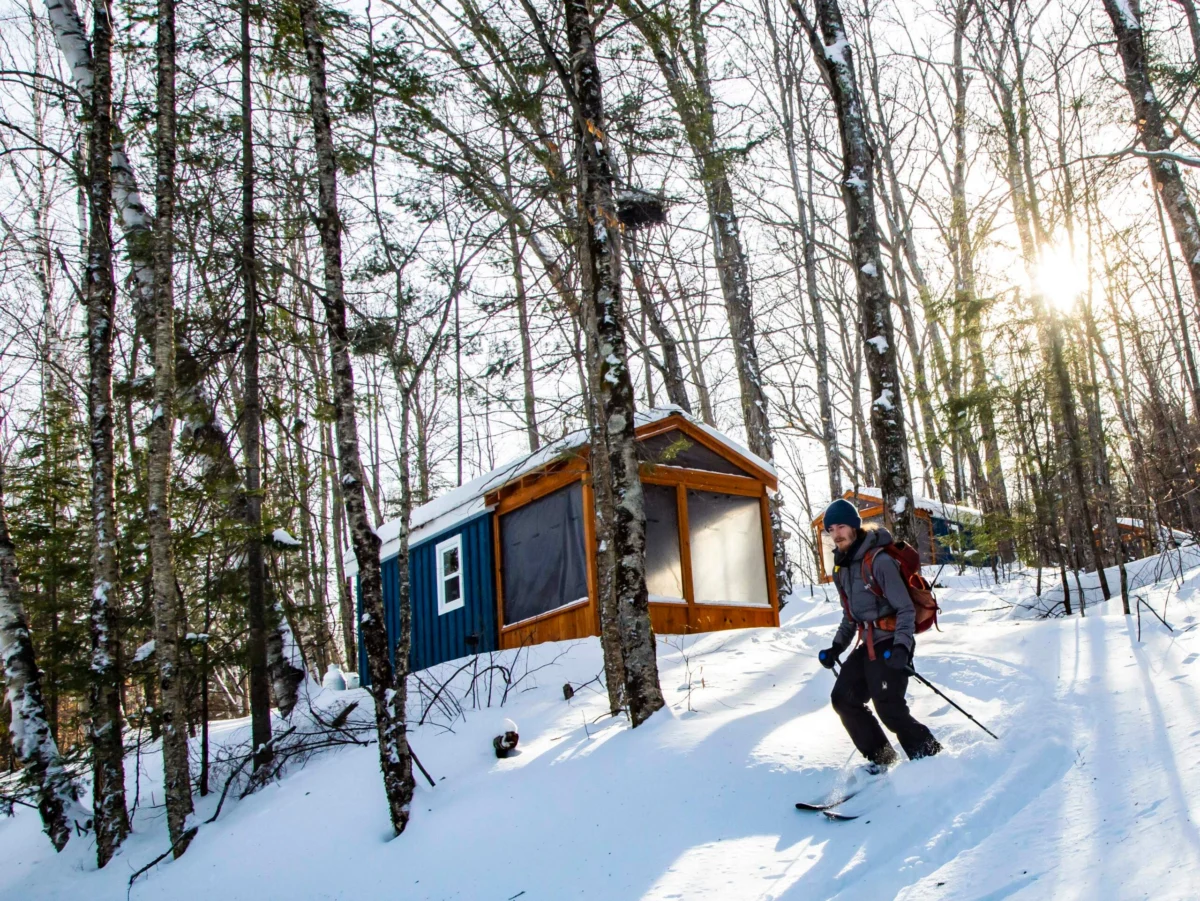
- Key Resorts: Bromont is a local favorite offering more than 90 illuminated runs for extensive night skiing. For those who prefer the deep solitude of untouched woods, Mont Sutton delivers world-class tree skiing with a wild, organic feel. Family-focused Owl’s Head and high-elevation Mont-Orford round out the region with reliable snowpacks and unpretentious charm.
Official Perspectives and Tourism Insights
Regional tourism boards and industry advocates emphasize that Québec’s enduring appeal lies not just in its physical topography, but in its cultural authenticity.
According to representatives from Bonjour Québec and provincial ski associations, the province’s unique identity—rooted in its French language, rich culinary heritage, and dynamic craft beverage industry—creates an immersive vacation experience that cannot be replicated anywhere else on the continent.
Furthermore, economic factors play a critical role in shaping the modern winter tourism landscape. Tourism officials note that the exchange rate between the U.S. dollar and the Canadian dollar grants American travelers significant purchasing power. Accommodations, dining, and multi-day lift tickets offer exceptional value compared to domestic hotspots in Colorado, Utah, or California.
To capitalize on these economic advantages, regional organizations—including the provincial umbrella organization Maneige (maneige.ski)—actively coordinate cross-border ski packages and promotional lodging offers, ensuring travelers can customize budget-friendly getaways tailored to their exact preferences.
Implications for Travelers: Squeezing More Out of Winter
The implications of choosing Québec for your next winter escape are profound. For Northeastern skiers, it eliminates the logistical fatigue of cross-country travel while dramatically upgrading the cultural quality of the trip.
Instead of visiting a corporate, master-planned resort village devoid of indigenous history, travelers to Québec immerse themselves in a living culture defined by joie de vivre—a deep-seated passion for local flavors, festive celebrations, and taking winter fun seriously. When you leave the urban centers behind, the historic brick and mortar quickly give way to snow-flocked evergreens, rolling white pastures, traditional French-Canadian barns, and dramatic peaks rising like 5,000-foot beacons on the horizon.
Ultimately, Québec proves that you do not need to endure a grueling cross-country journey to find deep powder, dramatic vertical drops, and extraordinary culinary adventures. By combining unmatched proximity, deep historical roots, superior value, and world-class terrain, Québec remains North America’s most rewarding and complete winter destination.

 Lina Irawan
 Neng Nana

 Nila Kartika Wati

 Jia Lissa

 Ali Ikhwan

 Lina Hope

 Raul Delapena Setiawan