
 rifanmuazin
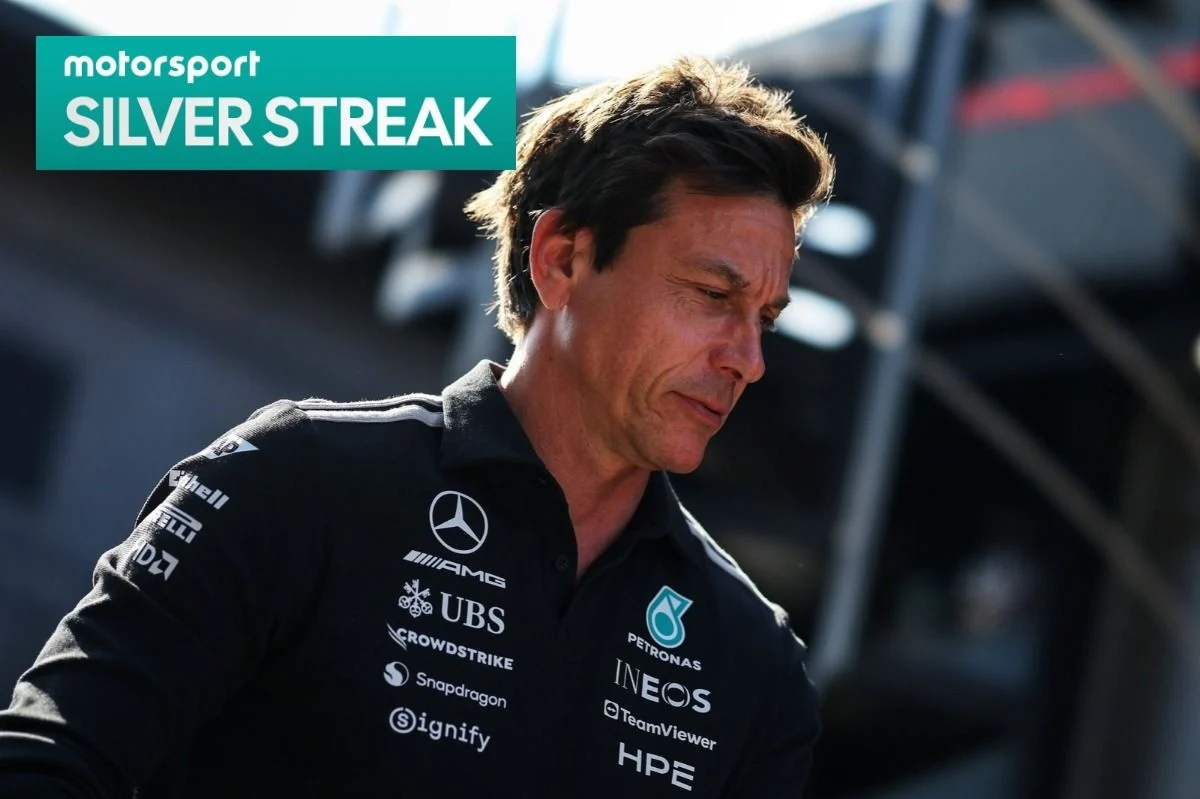
LONDON — Running a billion-dollar Formula 1 operation is an exercise in high-stakes filtering. Every single day, the inboxes of team principals like Mercedes’ Toto Wolff are bombarded with digital portfolios, highlight reels, and impassoned emails from ambitious "karting dads" swearing blind that their pre-teen progeny is the reincarnation of Ayrton Senna.
Separating genuine generational talent from well-funded, heavily marketed mediocrity is a ruthless commercial and sporting imperative. Get it wrong, and millions of dollars—along with precious championship points—are squandered. Get it right, and you secure the foundational stone of a multi-year dynasty.
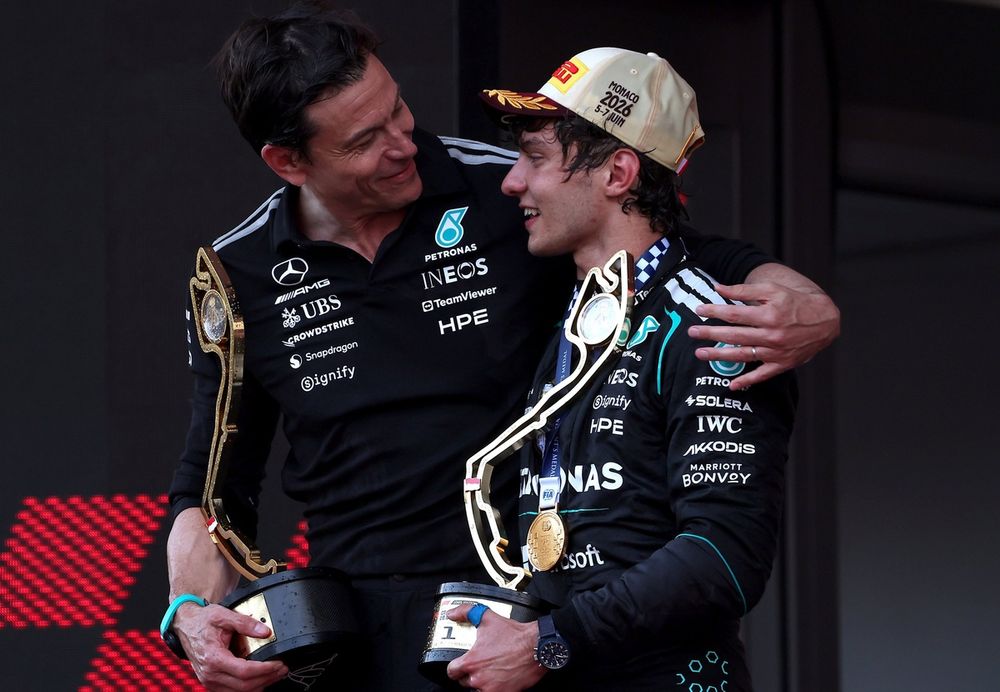
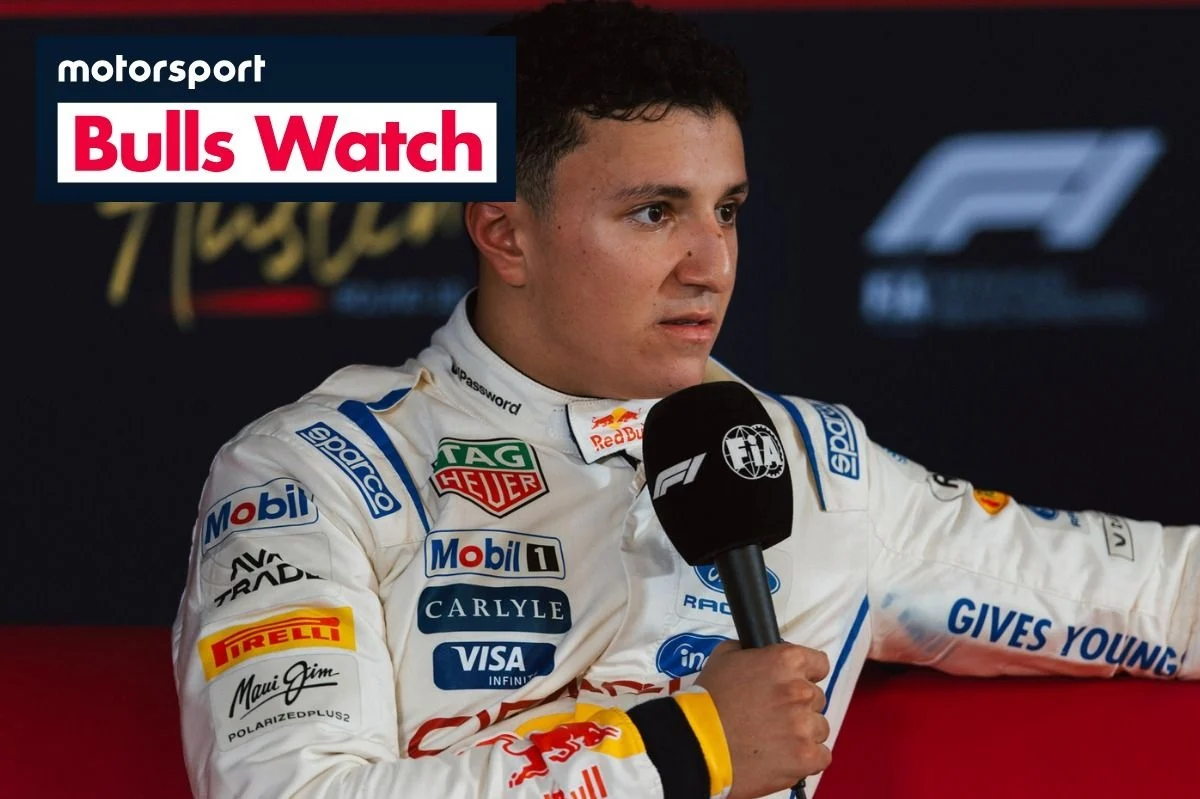
Right now, Wolff’s stringent scouting methodology is being validated in the most public and emphatic manner possible. Andrea Kimi Antonelli, the crown jewel of the Mercedes junior driver academy, is currently tearing through his sophomore campaign in the pinnacle of motorsport, standing on the precipice of clinching the 2026 Formula 1 World Championship at the upcoming United States Grand Prix.
As Antonelli closes in on motorsport immortality in just his second season in the big leagues, the wider world is left wondering: how do talent evaluators actually separate the pretenders from the future world champions?
Answering that question, Wolff recently sat down for an episode of the Cheeky Pint podcast hosted by John Collison. During the candid interview, the Mercedes team boss pulled back the velvet curtain on the team’s secretive scouting process, dropping unfiltered insights into the rare alchemy required to make it to the grid—and why sheer speed is often the least of a team’s worries.
Main Facts: The Anatomy of a Modern F1 Prodigy
At its core, the scouting framework utilized by top-tier outfits like Mercedes goes far beyond looking at lap times on a timesheet. While raw pace is the non-negotiable entry ticket, modern Formula 1 is an unforgiving ecosystem governed by complex engineering feedback loops, intense corporate politics, and high-pressure media environments.
According to Wolff, unearthing a champion requires evaluating a complex trifecta of traits:
- Instinctual Car Control: The ability to manipulate a vehicle intuitively at the absolute limit, particularly in adverse weather conditions.
- Emotional and Social Intelligence: The capacity to manage professional relationships with mechanics, engineers, sponsors, and media entities without toxic behavioral traits derailing team chemistry.
- Neurological Sensibility: A nearly superhuman, genetically coded tactile connection with the machinery that allows a driver to articulate vehicle dynamics in a way that defies conventional engineering logic.
When these elements align—as they have with Antonelli and historically with multi-time world champions like Lewis Hamilton—a team possesses an asset capable of shifting the balance of power in the sport.
Chronology of a Discovery: From Regional Karts to the World Championship Stage
The journey from a local karting track in Italy to fighting for a Formula 1 world title is a decade-long crucible. Understanding how drivers like Antonelli ascend requires tracing the precise evolutionary milestones enforced by top-flight talent scouts.
Phase 1: The Wet-Weather Eye Test (Ages 7–12)
Long before telemetry data, wind-tunnel numbers, and multi-million-dollar simulator sessions come into play, the evaluation process begins trackside with a pair of eyes and a stopwatch. Wolff explains that the initial screening does not require complex algorithms; it relies on observable car placement and fearlessness.
"You can see when someone is comfortable in the kart, you know, going at 100 kilometres an hour in the rain, and that kid does his first lap and comes across the corner, you know, sideways, you know, OK, there are the ingredients for being good at it," Wolff told the Cheeky Pint podcast.
This visual assessment looks for micro-corrections, fluidity, and absolute confidence in low-grip scenarios. A child who hesitates in the wet rarely develops into a driver capable of threading an F1 car through the spray at Spa-Francorchamps or Interlagos.
Phase 2: The Junior Formula Gauntlet (Ages 13–18)
Once raw talent is identified, drivers graduate into junior single-seater formulas—Formula 4, Formula Regional, and Formula 2. This is where the initial field of thousands is aggressively thinned out. Here, scouts monitor how drivers adapt to aerodynamic downforce, Pirelli rubber degradation, and wheel-to-wheel combat under FIA supervision.
It is also the stage where behavioral screening intensifies. As competition tightens, the psychological cracks in prodigies often begin to show.
Phase 3: The F1 Baptism of Fire
For Antonelli, the graduation to Mercedes was swift and heavily scrutinized. Thrust into a race seat to replace departing giants, his rookie season served as a high-speed laboratory. By surviving the steep learning curve of modern ground-effect F1 machinery, Antonelli transitioned from a promising prospect to a ruthless competitor capable of mounting a championship challenge by his sophomore year.
Supporting Data: The High-Attrition Reality of Motorsport
The mythos of Formula 1 suggests that if you are fast enough, doors will magically open. The reality on the ground is starkly different. Out of tens of thousands of active kart racers globally, only 20 seats are available in Formula 1 at any given time. The attrition rate is staggering.
Industry metrics and team scouting logs highlight several sobering statistics regarding junior driver pipelines:
- Sub-1% Conversion: Less than 1% of karters who win national championships ever secure an official test driver role in F1, let alone a permanent race seat.
- Behavioral Disqualification: Team principals consistently report that approximately 30% to 40% of drivers who possess the necessary lap-time speed are ultimately discarded due to toxic interpersonal dynamics, poor sponsor relations, or a refusal to accept constructive engineering criticism.
- The Sophomore Leap: Historically, drivers who manage to secure points-scoring consistency in their debut F1 season see a 60% higher probability of fighting for podiums by year two—a trajectory mirrored perfectly by Antonelli’s 2026 campaign.
Official Responses: Toto Wolff on the "Toxic Prodigy" Problem
One of the most revealing aspects of Wolff’s podcast appearance was his blunt assessment of why highly talented junior drivers frequently vanish into obscurity long before they ever sniff the paddock of an FIA Formula 3 event. In a sport where egos routinely clash, talent alone is an insufficient shield against professional termination.
"Underneath the stopwatch, there needs to be technical ability to set your car up in the right way, interact with the engineers, have some kind of social competence of making sure you have sponsors, treat them well," Wolff stated candidly.
The Mercedes team principal did not mince words regarding the psychological profile required to survive in the corporate and mechanical pressure cooker of F1.
"You know, there have been extremely talented kids that never went anywhere because they were just simply bad people or not intelligent enough."
In modern Formula 1, a driver is not merely an athlete; they are the public face of a multi-national corporate entity. They must interface with chief executive officers, address hundreds of international journalists, and maintain the morale of a 1,000-person factory workforce. A driver who alienates their mechanics or creates a toxic political environment within the garage represents a net negative to the team, regardless of how many tenths they can extract in a qualifying lap.
Implications: The Unteachable Gene and the Future of F1
If navigating the politics and social demands of the sport represents the intellectual half of the equation, the physical mastery of the machine requires something that cannot be taught in a classroom or simulated on a computer. It requires what Wolff describes as a genetic predisposition—an innate, almost otherworldly physical connection to the car’s physics.
To illustrate this rare phenomenon, Wolff invoked one of the most successful drivers in the history of the sport: his former talisman, Lewis Hamilton.
Recalling a technical debrief that baffled the team’s top aerodynamicists and vehicle dynamics engineers, Wolff shared a quote from Hamilton that left the technical department questioning the laws of physics.
"Lewis once said something when talking about the car, ‘The car understeers from the front axle to where I sit,’" Wolff recalled, laughing at the memory.
For classical engineers schooled in physics and vehicle dynamics, the statement was technically nonsensical. Understeer originates at the front axle; the driver sits near the center of the car. How could a vehicle exhibit understeer behind the front tires?
"Well, that’s the middle of the car; how can that understeer?" Wolff recounted the engineers asking in sheer confusion. "And the engineers couldn’t really identify what he meant, but that is what his body told him."
This hypersensitive tactile awareness—the ability to feel microscopic shifts in weight distribution, tire slip angles, and chassis flex through the seat of their pants—is what separates a race winner from a legend.
"If a driver is able to have that fundamental underlying layer of ability, then that becomes unbeatable," Wolff concluded. "But that is genetics."
What This Means for the Grid
As Andrea Kimi Antonelli prepares for the United States Grand Prix with a championship trophy within arm’s reach, the lessons outlined by Toto Wolff serve as a blueprint for the future of motorsport talent acquisition.
The era of the purely instinctual, rough-around-the-edges racing driver is dead. The modern F1 champion must be a hybrid athlete: part diplomat, part data scientist, possessing the social grace to manage global sponsors, the emotional intelligence to lead a garage of weary mechanics, and the genetic wiring of a mutant who can feel chassis dynamics before the telemetry screens even register them.
For the karting dads still spamming team principals’ inboxes, the message is clear: being fast on a Sunday morning is merely the price of admission. Surviving the meat grinder of Formula 1 requires the complete package—and as Toto Wolff has proven, spotting that rare combination is an art form unto itself.

 Iffa Jayyana

 Neng Nana
 Ammar Sabilarrohman
 Muslim

 Pevita Pearce
 Siti Muinah

 Basiran