
 Lina Hope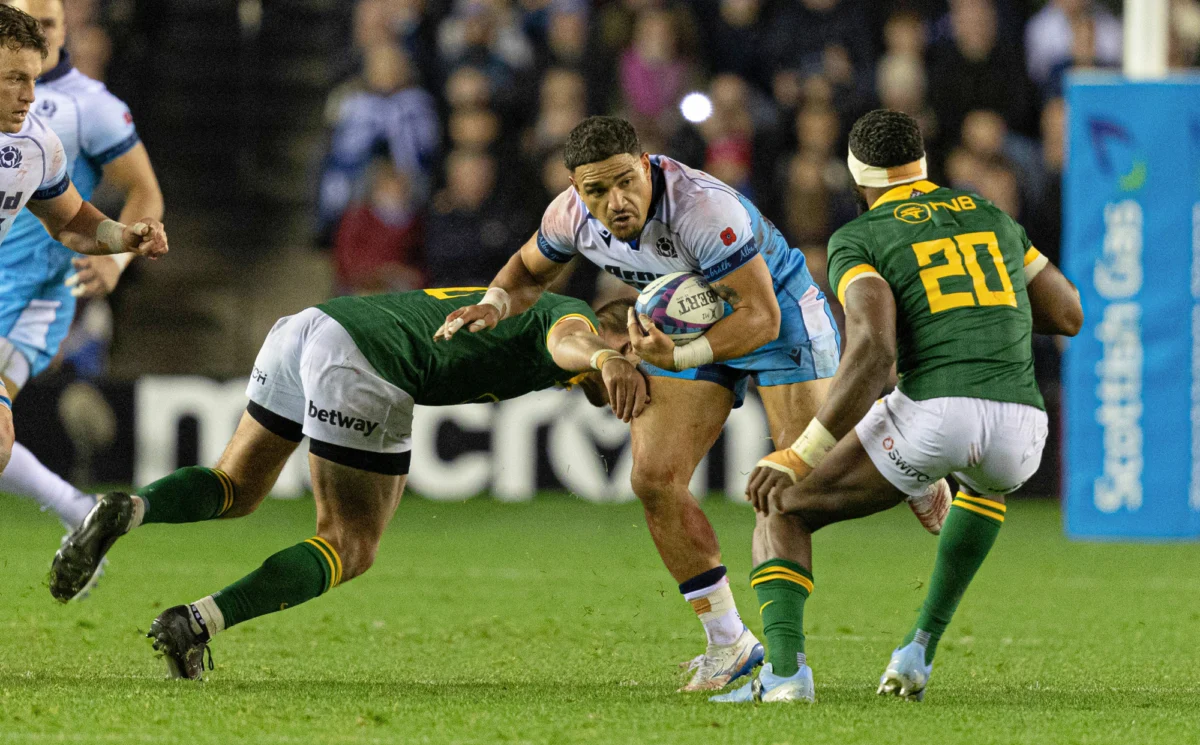
In the pantheon of international rugby, few challenges are as formidable—or as potentially defining—as a trip to Loftus Versfeld to face the South African Springboks. This Saturday, 11 July 2026, Gregor Townsend’s Scotland side faces the ultimate litmus test in the modern game. Fresh from a clinical, seven-try dismantling of Argentina in the Nations Championship, the Scots arrive in Pretoria with momentum. However, they now collide with the undisputed heavyweights of the world game, a team whose forward-oriented physical dominance and tactical depth have set the global standard.
The Magnitude of the Challenge
For Scotland, this is more than just another Nations Championship fixture; it is an attempt to exorcise a ghost that has haunted them for sixteen years. Not since 2010 have the Scots managed to topple the Springboks, a losing streak that underscores the sheer gulf in experience and physical conditioning between the two nations.
South Africa enters the contest as the clear favorite, despite head coach Rassie Erasmus’s penchant for experimentation. The Springboks possess a squad with such profound depth that even a "second-string" selection carries the pedigree of world-class performers. With an intimidating, immovable forward pack and a backline capable of exploiting the smallest defensive lapses, the Boks are a team with almost zero perceptible weaknesses. For Townsend’s men, the mission is simple yet Herculean: they must play the game of their lives to bridge the divide between ambition and reality.
Chronology and Pre-Match Context
The build-up to this encounter has been dominated by the return of key personnel and the tactical maneuvering of the coaching staffs.
The Argentine Springboard: Scotland’s 47-38 victory over the Pumas last weekend was a statement of intent. After enduring the frustration of letting a 21-0 lead evaporate against the same opposition in November, the Scots showcased a newfound ruthlessness. Their attacking efficiency was on full display, providing the team with a psychological boost heading into the high-altitude pressure cooker of Pretoria.
The Erasmus Rotation: While many nations would treat a match against Scotland as a must-win to be approached with a full-strength side, Rassie Erasmus has opted for a measured rotation. Ten changes to the starting line-up from the squad that defeated England last Saturday might suggest complacency to the uninitiated, but the reality is far more clinical. The inclusion of players like Handré Pollard and the continued presence of captain Pieter-Steph du Toit ensures that the structural integrity of the Springbok machine remains intact.
The Russell Factor: The biggest news for the touring side is the return of Finn Russell. After missing the climax of the Gallagher Premiership season due to a persistent calf injury, the maestro is back at fly-half. His ability to manipulate defensive lines with his vision and kicking game will be Scotland’s primary weapon. Alongside captain Sione Tuipulotu, Russell provides the creative spark necessary to disrupt the Springbok defensive line.
Supporting Data: The Tale of the Tape
When analyzing the matchup, the statistics highlight the specific areas where the game will be won or lost.
- The Set-Piece Battle: South Africa’s dominance at the scrum and lineout is legendary. With the likes of Boan Venter and Johan Grobbelaar leading the front row, Scotland’s pack—featuring the returning Zander Fagerson—will face a brutal interrogation. If Scotland cannot secure parity in the set-piece, they will be starved of the ball required for Russell to orchestrate his attacks.
- Territorial Control: Loftus Versfeld is notorious for its altitude. The ball travels further, and the air is thinner, placing an immense burden on the lungs and legs of the players. South Africa is adept at utilizing tactical kicking to force teams into their own half, forcing errors through relentless pressure.
- The Discipline Gap: In high-stakes international rugby, the penalty count is often the deciding factor. Pierre Brousset, the man in the middle, will be looking for technical precision in the breakdown. Scotland must avoid the temptation to overcommit at the ruck, as the Springboks thrive on winning turnovers that translate instantly into long-range scoring opportunities.
Official Responses and Tactical Outlook
Gregor Townsend has been vocal about the need for "intelligent aggression" from his side. In his pre-match briefing, he emphasized that while the Springboks are physical, they are also prone to tactical shifts that can be countered if the Scots remain disciplined.
Rassie Erasmus, ever the strategist, has remained coy about the tactical implications of his rotated side. "We are building a squad for the future," Erasmus noted in his press conference. "Every player wearing the jersey knows the expectation. We don’t focus on the opponent’s streak or our own history; we focus on the execution of our own plan."
The late change to the team sheet—Ethan Hooker replacing Canan Moodie on the wing—was described by the Springbok camp as a precautionary measure to manage minor muscle fatigue, highlighting the squad’s "next man up" mentality.
Tactical Implications: The Key Battles
- Pollard vs. Russell: This is the cerebral battle of the match. Handré Pollard brings a level of tactical stability and reliable place-kicking that rarely falters. Conversely, Russell brings unpredictability. The fly-half who manages the game better—controlling the tempo and minimizing unforced errors—will likely secure the win for their team.
- The Breakdown: With Rory Darge and Jack Dempsey starting for Scotland, the visitors have a mobile and industrious back row. They will need to work in tandem to slow down the quick-ball recycling that the Boks rely on. If they can disrupt the service to Embrose Papier, Scotland stands a fighting chance.
- The Impact Players: Both benches are laden with game-changers. For South Africa, the inclusion of Grant Williams and Elrigh Louw in the second half will likely serve as a hammer blow to a tiring Scottish defensive line in the final quarter. Scotland will need their replacements, such as Stafford McDowall and Magnus Bradbury, to provide high-intensity impact to keep the scoreboard ticking.
Viewing Information and Global Access
For fans eager to witness this clash, the match kicks off at 4.40pm BST (5.40pm local time).
- United Kingdom: Fans can stream the match for free via ITVX or watch on terrestrial channel ITV1. Pre-match analysis begins at 4.20pm.
- Ireland: Virgin Media Television holds the rights, offering free streaming via Virgin Media Play.
- France: TMC and the TF1+ streaming service provide full coverage for French supporters.
- South Africa: SuperSport remains the home of the Springboks for local viewers.
- United States: The match is available via RugbyPass TV, which requires a simple registration.
- Australia and New Zealand: Access is provided through Stan Sport and Sky Sport respectively, requiring subscription packages.
For those traveling or currently residing in regions with restricted access, the use of a reputable VPN (such as NordVPN) remains a common, legal method to maintain access to home-country broadcast services, ensuring that no fan has to miss what promises to be one of the most intriguing fixtures of the year.
Conclusion: A Defining Moment
As the sun sets over Pretoria on Saturday evening, the narrative will move from the press room to the pitch. Scotland is not just playing for a win; they are playing for respect and the belief that they can compete with the absolute best in the world on the hardest stage of all. The Springboks, meanwhile, have a legacy to maintain and a new generation of talent to blood.
Whether the result leads to a historic upset or a continuation of South African dominance, the match at Loftus Versfeld is set to be a seminal moment in the 2026 rugby calendar. Fans, pundits, and players alike are bracing for a collision that will define the trajectory of both nations as they look toward the future of the sport.

 Nana Wu
 Nana Muazin
 Neng Nana

 Sagoh
Sagoh
 Iffa Jayyana