 Reynand Wu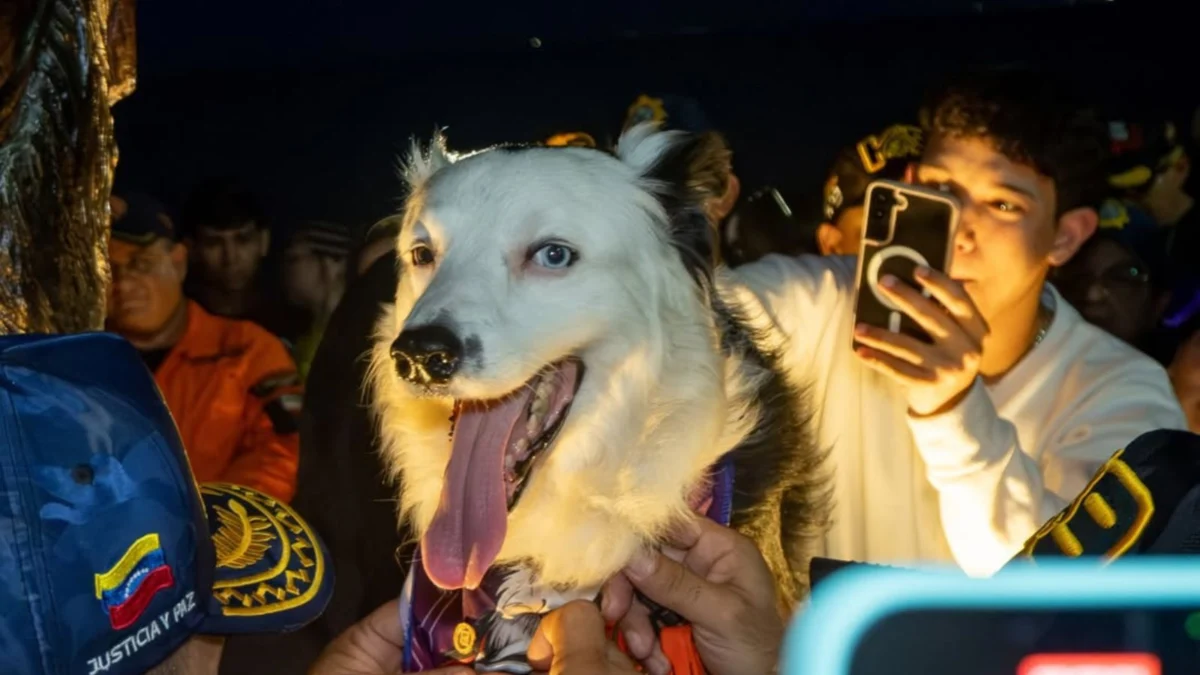
In the heart of Maracaibo, amidst the lush greenery of Vereda del Lago park, a new monument has risen. It is not of a politician, nor a military commander, but of a Border Collie named Tsunami—a creature whose piercing gaze, one blue eye and one brown, became the global symbol of resilience following the devastating earthquakes that shook Venezuela in 2026. As the bronze sculpture is unveiled, it serves as more than just a tribute to an animal; it is a permanent testament to the bond between human responders and the canine partners who risk everything to save lives.
The Unveiling: A City’s Tribute to a "Guardian of Hope"
The ceremony held at Vereda del Lago was a somber yet celebratory affair. Local officials, municipal leaders, and citizens gathered to witness the unveiling of a statue that depicts Tsunami in his iconic stance—alert, poised, and ready for action. The plaque affixed to the base bears the title "Guardián de la Esperanza" (Guardian of Hope), a moniker that resonates deeply with a nation still healing from the seismic trauma of the summer.
Mayor Giancarlo Di Martino, presiding over the ceremony, did not shy away from the gravity of the occasion. In a moving address, he lauded the canine as "a true hero" who transcended the traditional boundaries of animal service. During the event, Tsunami was formally honored with the city’s Honor Button of Merit, the Medal of Valor, and the official insignia of the municipal fire department. For those present, the sight of the handler, Jorge Beens, standing beside his partner as the shroud was pulled from the bronze figure, was a poignant reminder of the years of grueling work that preceded this moment.
Chronology: A Career Built on Courage
Tsunami’s journey to becoming a national icon was not an overnight phenomenon; it was a career defined by high-stakes intervention and consistent excellence. His service record, as documented by Forbes and other international outlets, traces a path through some of the most harrowing natural disasters of the past four years.
The Formative Years: 2022–2023
Tsunami’s training as a search and rescue (SAR) dog began under the rigorous standards of the K-SAR ECID unit. He first gained regional attention during the 2022 Las Tejerías and El Castaño mudslides. In the treacherous, sludge-filled terrain of those disasters, Tsunami demonstrated an uncanny ability to navigate unstable environments that were inaccessible to human responders.
His reputation grew internationally when he was deployed to the catastrophic earthquakes in Turkey and Syria in 2023. Working in brutal winter conditions, Tsunami was instrumental in detecting signs of life beneath the ruins of collapsed apartment blocks. These missions sharpened his skills, preparing him for the ultimate test in his home country.
The June 24th Catastrophe: 2026
On June 24, 2026, the resilience of Venezuela was shattered. Two earthquakes—measuring 7.2 and 7.5 on the Richter scale—struck the northern region of the country with a mere 39 seconds between them. The resulting devastation was widespread, leaving entire neighborhoods in ruins and hundreds trapped under concrete and steel.
Within hours, Tsunami and Jorge Beens were deployed to the epicenter. Footage of the dog picking his way across jagged shards of concrete, his ears pricked for the faint sounds of survivors, captivated the world. His efforts during those harrowing days were credited with the rescue of dozens of individuals. While rescue dogs are often unsung heroes, the sheer scale of the June 24th tragedy forced Tsunami into the global spotlight, making him the face of the national recovery effort.
Supporting Data: The Vital Role of K-SAR Dogs
The deployment of dogs like Tsunami is not a matter of sentimentality; it is a matter of hard, cold efficiency in disaster management. According to international search and rescue standards, a highly trained canine can perform the work of dozens of human searchers in a fraction of the time.
A dog’s sense of smell is estimated to be 10,000 to 100,000 times more acute than that of a human. In the context of an earthquake, where dust, smoke, and the smell of debris can overwhelm human senses, a SAR dog can isolate the scent of a living person buried meters beneath the surface.
Tsunami is one of the few elite SAR dogs currently operating in Venezuela. The scarcity of such specialized teams highlights the immense burden placed on dogs like him. His retirement, while celebrated, leaves a void in the country’s emergency response capabilities—a fact that the K-SAR ECID unit has acknowledged with a mix of pride and apprehension.
Official Responses and the End of an Era
The retirement of Tsunami marks the conclusion of a chapter that has defined the K-SAR ECID unit for nearly half a decade. In an official statement, the organization noted, "He retires at the top of his game, proving his courage and giving everything in the field."
The decision to retire him is a calculated one, based on the physical toll that years of climbing over rubble and enduring extreme environments take on a dog’s joints and respiratory health. "He has earned his rest," Jorge Beens told reporters at the ceremony. "He has given the country his best years, and now he deserves a life of comfort and safety, away from the dangers of the field."
The municipal government’s decision to commission a statue is a rare honor, usually reserved for human figures of historical importance. By elevating Tsunami to this status, the city of Maracaibo has institutionalized the value of animal service, setting a precedent for how first responders—of all species—are remembered in the public consciousness.
Implications: The Legacy of Human-Animal Cooperation
The story of Tsunami arrives at a time when the world is increasingly looking for symbols of hope amidst environmental uncertainty. The viral nature of his rescue efforts—and the subsequent decision to memorialize him—suggests a shift in how society perceives the role of working animals.
Beyond the News Cycle
The broader cultural impact of Tsunami’s story is evidenced by how it has touched the public. Following the June 2026 quakes, social media platforms were flooded with tributes, artwork, and messages of support for the rescue teams. This public engagement has led to increased interest in supporting K-SAR programs, with donations to the K-SAR ECID unit spiking in the months following the disaster.
The "Stray" Phenomenon
Tsunami’s story has also invited comparisons to other heartwarming animal news, such as the stray dog in Michigan that recently went viral for walking itself into a shelter. While these stories occupy different realms—one of heroic labor, the other of domestic survival—they both tap into a universal human desire to see animals treated with dignity and empathy. These narratives act as a counterweight to the often grim nature of disaster reporting, offering a sense of connection and shared values.
A Model for the Future
The statue in Vereda del Lago is not just a destination for tourists; it is a teaching tool. It serves as a reminder to the next generation of Venezuelans about the importance of specialized training, the necessity of disaster preparedness, and the profound, often life-saving bond between human and animal. As Tsunami transitions into his well-deserved retirement, he leaves behind a legacy that will be etched in bronze long after the physical scars of the 2026 earthquakes have faded from the city streets.
Conclusion: A Silent Guardian’s Rest
As the sun sets over Maracaibo, the bronze Tsunami stands as a silent sentry in Vereda del Lago. He remains a guardian, even in stillness, watching over the city he helped save. For his handler, Jorge Beens, and for the thousands of Venezuelans who owe their lives to his keen nose and steady heart, the statue is a promise that his service will never be forgotten.
In a world that often measures success in statistics and economic recovery, Tsunami represents a different kind of success—the kind that is measured in lives saved and the enduring power of courage. He retires not just as a dog, but as a legend, proving that even in the darkest rubble, hope can be found, provided there is a hero—four-legged or otherwise—willing to search for it.


 Neng Nana
 Evan Lee Salim
 Ali Ikhwan
 Jia Lissa
 Iffa Jayyana
 Dwi Wanna