
 Siti Muinah
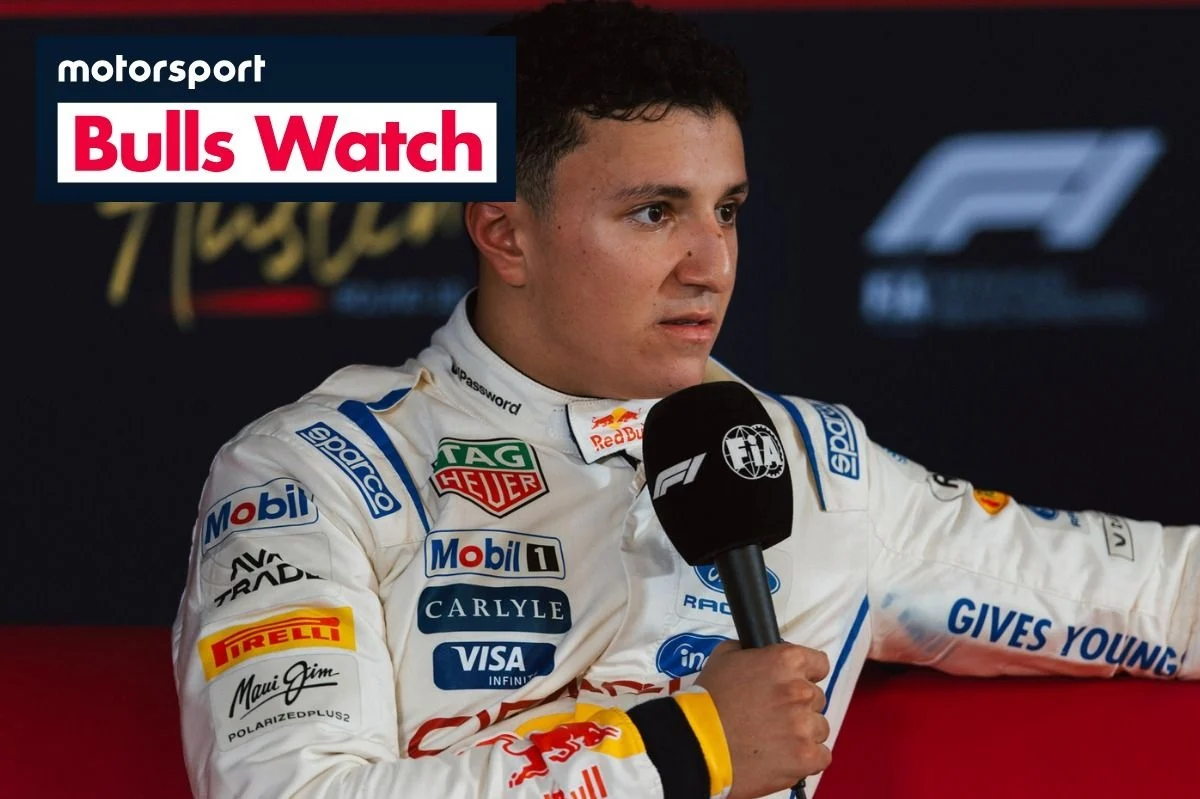
AUSTIN, Texas — Frustration boiled over in the Red Bull Racing garage following the United States Grand Prix at the Circuit of the Americas (COTA). Rising French star Isack Hadjar has issued a blunt and public demand for his team to completely redesign their car’s clutch system following a disastrous start that single-handedly ruined his race prospects.
Despite an impressive recovery weekend that saw him bounce back from a string of early setbacks to qualify on the second row—a mere 0.036 seconds behind teammate Max Verstappen—Hadjar’s race day unraveled within seconds of the lights going out. A substandard launch dropped him deep into the midfield, setting off a cascade of mechanical and communication woes that ultimately left him languishing in a disappointing sixth place.
The incident has once again turned a harsh spotlight onto Red Bull’s recurring start-line vulnerabilities this season, raising questions about component reliability, engineering communication, and the mounting pressure on the young Frenchman as he tries to find his footing in a turbulent campaign.
Main Facts: A Promising Weekend Derailed by Hardware and Radio Failures
Hadjar’s weekend in Texas had all the makings of a major redemption arc. Having endured a bruising run of races, a training-induced wrist injury during the summer break, and a nightmare weekend in Singapore where he lamented "a failure in each session," the Frenchman finally found his groove on Saturday at COTA.
Qualifying third on the grid put him right behind Verstappen, giving Red Bull a powerful tactical hand at the front of the field. Hadjar himself noted prior to the race that having two Red Bulls near the front would be "a bit of an advantage" in the strategic chess match against McLaren and Ferrari.
However, all that tactical promise evaporated off the line:
- The Start: Hadjar executed his launch procedures flawlessly, only to experience an unprovoked "clutch over-delivery" that completely compromised his acceleration.
- Positions Lost: Dropping from third to fifth before the first corner, he was swiftly swallowed up by the fast-starting Ferraris of Charles Leclerc and Lewis Hamilton. McLaren’s Lando Norris later bypassed him, extinguishing any realistic hope of a podium fight.
- Communication Breakdown: Compounding his misery, poor radio coverage meant Hadjar could not hear his engineers clearly during the race.
- Map Error: Miscommunication led him to rejoin the track on the wrong engine map following his pitstop, costing him an agonizing second per lap while running on the hard compound tires.
When speaking to Sky Sports F1 after reviewing race replays, Hadjar was visibly exasperated, insisting he had done everything within his power to get a clean start.
"You know, I do everything perfectly in terms of procedure, and then I just have clutch over delivery," Hadjar vented. "These things are just out of my control. It’s starting to piss me off, you know."
Chronology of the United States Grand Prix Weekend
To fully understand Hadjar’s frustration, one must look at the timeline of his weekend at the Circuit of the Americas and how rapidly a promising trajectory devolved into damage limitation.
Friday: Finding Footing
Hadjar arrived in Austin looking to wipe the slate clean after a disastrous Singapore Grand Prix. Free practice sessions were crucial for the Frenchman to rebuild confidence in his machinery and his newly healed wrist, following a summer training accident that forced him to sit out rounds at Zandvoort, Monza, and Madrid.
Saturday: The Breakthrough
Saturday proved to be a beacon of hope. Hadjar unlocked tremendous single-lap pace, extracting nearly everything from his RB car. Clocking in just 0.036 seconds behind reigning world champion Max Verstappen, Hadjar secured a career-best third on the grid. The paddock buzzed with anticipation over how Red Bull could use their dual-car front-row presence to dictate the race pace against their rivals.
Sunday: The Race Unravels
- Lap 1, Turn 1: The lights went out, and disaster struck. While Verstappen got away cleanly, Hadjar’s car suffered erratic power delivery off the line. Wheelspin and bogged-down acceleration saw him plummet from third to fifth before the field even reached the apex of Turn 1. Leclerc and Hamilton surged past effortlessly.
- The Chase: Throughout the opening stint, Hadjar fought desperately to claw back track position, but dirty air and the inherent limitations of his car’s setup made overtaking difficult.
- The Pit Stop & Radio Debacle: Pitting for hard tires, the communication breakdown with his pit wall reached a critical mass. Unable to hear instructions clearly, Hadjar exited the pit lane running an incorrect engine map. The mapping error severely penalized his lap times—bleeding roughly a second per lap compared to expected performance metrics—effectively ending any strategic recovery.
- The Flag: Managing the handicapped car to the checkered flag, Hadjar salvaged a lonely sixth-place finish, well away from the podium ambitions he held just hours prior.
Supporting Data & Technical Insight: A Fragile System
Hadjar’s complaints are not isolated incidents; they highlight a persistent vulnerability within Red Bull’s technical package this season. The Milton Keynes-based squad has occasionally struggled with clutch bite points and thermal management during race starts throughout the year.
When bluntly asked by media whether the team had adequately explained the recurring start issues to him, Hadjar’s response was a flat, telling "No."
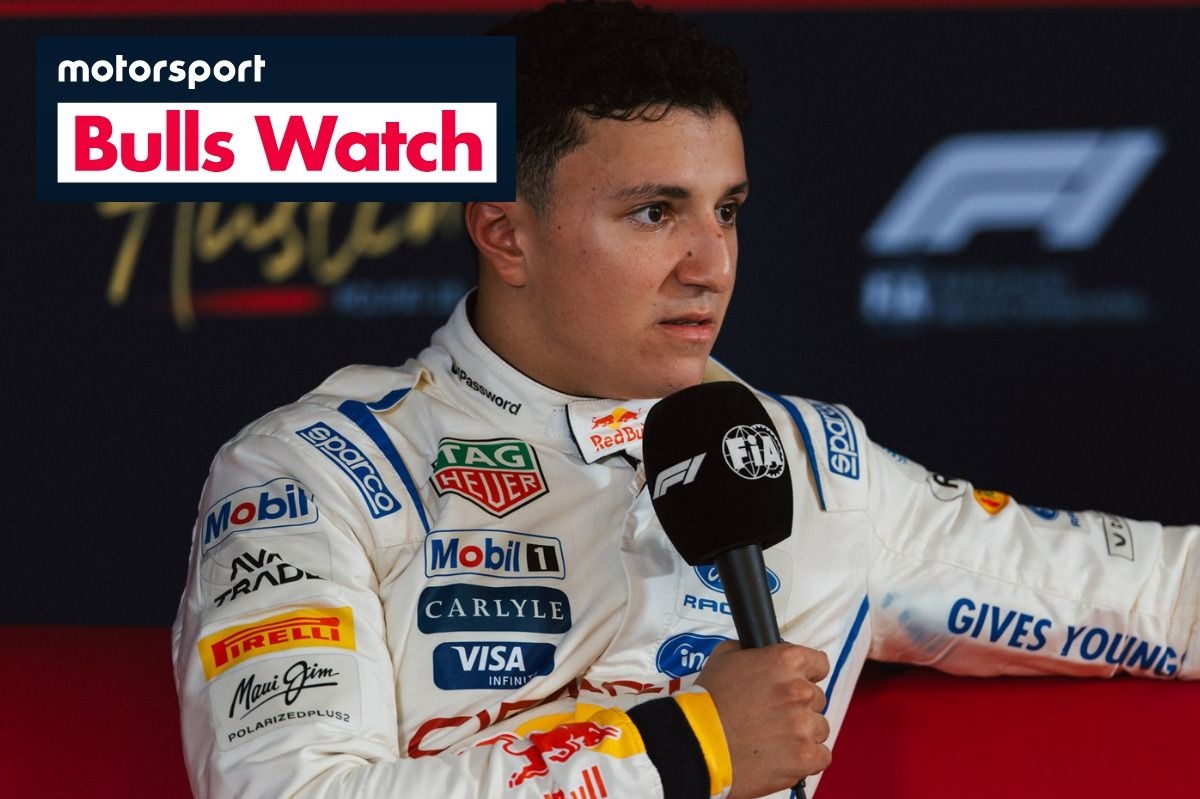
That lack of internal clarity fueled his subsequent demand:
"It needs a redesign. That’s it. The clutch, it needs a redesign because at the moment it’s too fragile. It’s not coping well with temperatures. Yeah, it’s a real struggle."
Technical Breakdown of the Issue:
- Thermal Sensitivity: Modern F1 clutches operate in extremely narrow temperature windows. If ambient or clutch basket temperatures deviate even slightly from projections during the formation lap, the material properties change, leading to unpredictable engagement.
- Over-Delivery Phenomenon: "Clutch over-delivery," as cited by Hadjar, occurs when the system clamps or releases torque inconsistently relative to the driver’s paddle input, making precise throttle-clutch coordination nearly impossible for the driver to compensate for manually.
- Radio & Telemetry Latency: COTA’s vast layout and massive grandstands are notorious for localized radio interference, but premier F1 outfits usually insulate their communication channels effectively. The breakdown in Austin exacerbated an already stressful cockpit environment, leading directly to the wrong-map pit exit.
Official Responses and Team Dynamics
While Hadjar was left to pick up the pieces of a ruined race, his teammate Max Verstappen endured a similarly challenging afternoon on the other side of the Red Bull garage.
Verstappen managed to salvage a podium by finishing third on a two-stop strategy, but the result brought an abrupt end to his run of two consecutive grand prix victories. Far from celebrating, the Dutchman offered a sobering assessment of Red Bull’s current competitive standing.
"The pace was simply not good enough today," Verstappen admitted candidly after the race, conceding that his presence on the podium owed more to a well-timed Virtual Safety Car (VSC) than raw race-winning speed.
The stark contrast between Verstappen’s ability to extract a podium from a sub-optimal car and Hadjar’s struggles underscores the steep learning curve facing the young Frenchman. However, Red Bull management has repeatedly demonstrated long-term faith in his potential. Prior to his return from injury in Azerbaijan, the team rewarded him with a lucrative contract extension locking him into the program through the end of 2027.
Team principal Christian Horner and the senior engineering staff now face a critical development window. Ignoring public ultimatums from their drivers is standard practice in F1, but when a driver calls out a specific structural hardware failure—especially one impacting race starts across the team—silence from the engineering department is rarely sustainable.
Wider Implications for Hadjar and Red Bull
As the Formula 1 circus packs up and looks toward the final stretch of the season, the ramifications of Hadjar’s outburst and COTA’s technical glitches extend far beyond a single race weekend.
1. Internal Pressure and Trust
Hadjar’s raw, unfiltered post-race comments—noting that the recurring issues are "starting to piss me off"—reveal a driver pushed to his emotional limit. While passion is welcomed in Formula 1, public rebukes of team hardware place immense pressure on the design office in Milton Keynes. How Red Bull’s engineering chiefs respond to Hadjar’s demand for a complete clutch redesign will be a litmus test for team harmony.
2. Constructor Championship Strategies
With McLaren and Ferrari intensifying their development pushes, every single point matters. Red Bull cannot afford to throw away front-row grid slots due to procedural lottery starts. If Hadjar continues to lose positions off the line, his usefulness as a tactical blocker or double-podium contender for Red Bull’s championship ambitions is severely compromised.
3. Career Trajectory
For Hadjar, 2024 and beyond represent a vital audition. Despite missing multiple races due to his wrist injury, his long-term contract secures his future on paper, but internal reputation is built on weekend execution. To prove he belongs at the sharp end of the grid alongside elite company like Verstappen, he must tame the current car’s anomalies—while hoping his engineers deliver the mechanical reliability he so desperately craves.
The clock is ticking down to the next round, and all eyes will be fixed on the Red Bull garage during the upcoming practice starts to see if any remedial software or hardware patches have been deployed. One thing is certain: Isack Hadjar has drawn a line in the sand, and the ball is now firmly in Red Bull’s court.

 Ali Ikhwan
 Asro

 Ammar Sabilarrohman

 Muslim
 Pevita Pearce
 rifanmuazin

 Basiran