
 Ali Ikhwan
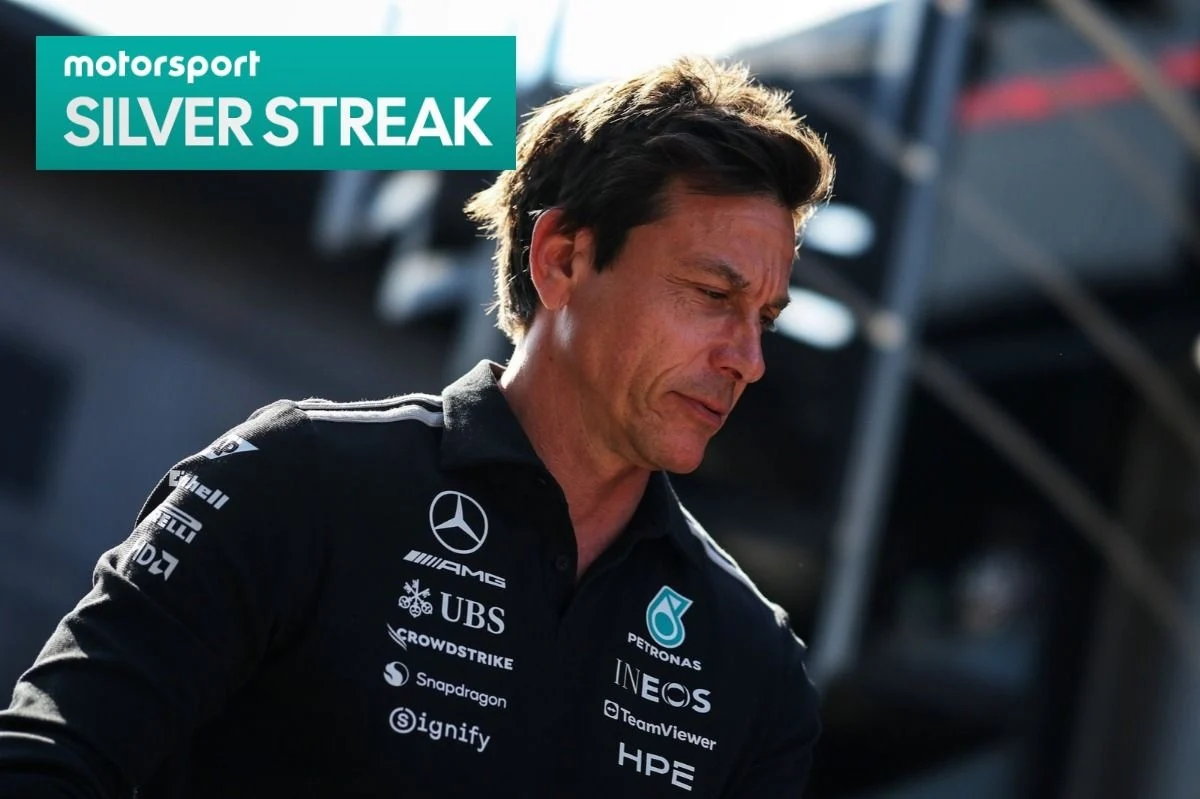
LONDON — Running a billion-dollar Formula 1 operation is an exercise in high-stakes risk management, corporate diplomacy, and ruthless human resource filtration. For every seat available on the 20-driver grid, thousands of aspirants flood team principals’ inboxes, each championed by ambitious karting fathers and optimistic management teams swearing blind that their protégé is the next Ayrton Senna, Michael Schumacher, or Lewis Hamilton.
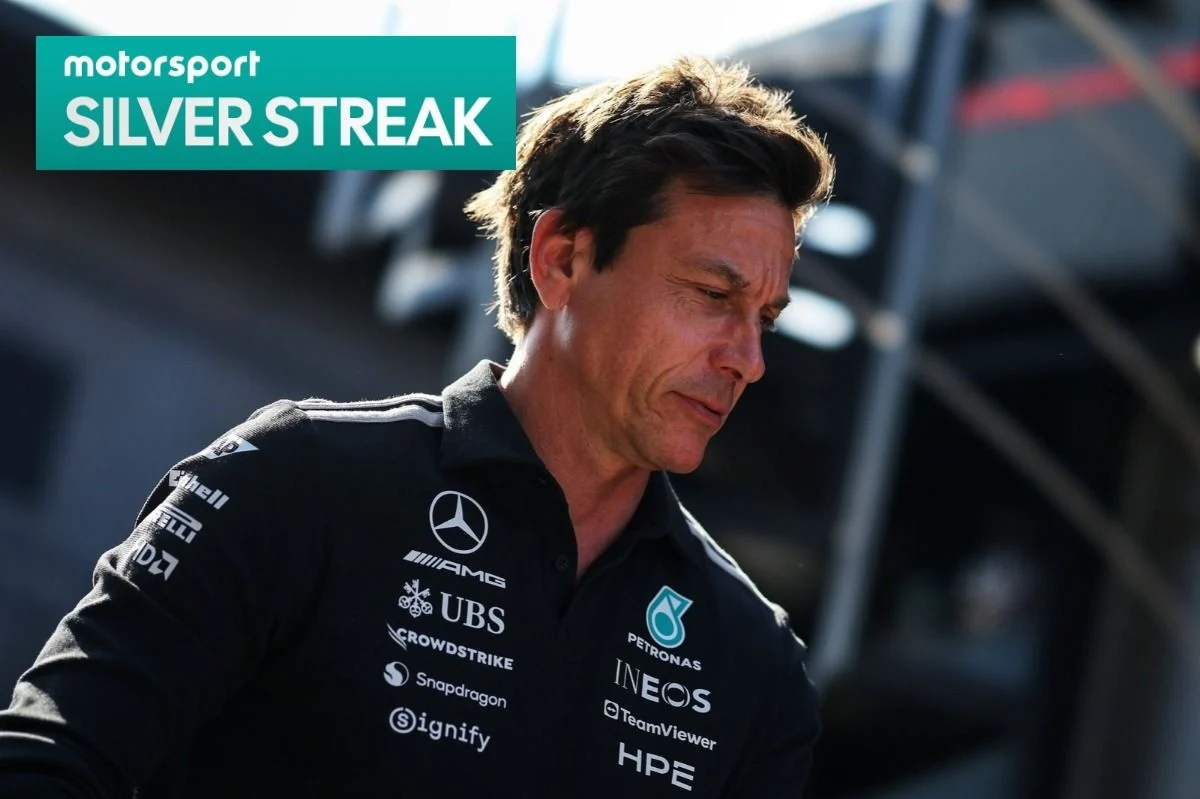
Separating genuine generational talent from well-funded anomalies is a precarious science. Yet, the scouting methodology implemented by Mercedes team principal and CEO Toto Wolff continues to be thoroughly validated. Proof of this philosophy sits comfortably within the Silver Arrows’ garage: sophomore sensation Andrea Kimi Antonelli, who stands on the precipice of securing the 2026 World Championship at the United States Grand Prix.
Appearing recently on the Cheeky Pint podcast hosted by John Collison, Wolff pulled back the curtain on the closely guarded mechanics of Mercedes’ driver identification process. Offering a masterclass in talent evaluation, the Austrian executive delivered stark assessments regarding what separates future world champions from the countless junior drivers who vanish before ever sniffing a Formula 3 cockpit.
Main Facts: The Anatomy of an F1 Prospect
The modern Formula 1 scouting matrix extends far beyond raw lap times. While the stopwatch remains the ultimate arbiter in junior categories like Formula 4, Formula 3, and Formula 2, Wolff asserts that velocity is merely a baseline requirement.
According to the Mercedes chief, unearthing a driver capable of contending for world championships relies on a three-tier filter:
- Instinctive Car Control: The ability to manipulate a machine with total comfort at high speeds under marginal grip conditions.
- Emotional Intelligence and Social Competence: The capability to interact constructively with aerodynamicists, mechanics, and corporate stakeholders without toxic interpersonal dynamics.
- Anomalous Physical Sensitivity: A genetically gifted "sixth sense" that allows the driver to communicate tactile vehicle dynamics in a manner that defies traditional engineering parameters.
Antonelli serves as the modern blueprint for this criteria. Thrust into the deep end of Formula 1 after rapid ascensions through the junior formulae, the Italian prodigy has seamlessly transitioned from a highly touted prospect into a mature, championship-caliber force. His trajectory highlights why Mercedes invested so heavily in his development years ahead of his senior debut.
Chronology: From Karting Rain to the F1 World Championship Stage
To understand how Mercedes identifies and nurtures a talent like Antonelli, one must examine the timeline of modern driver cultivation, which often begins before a prospect possesses a state-issued driver’s license.
The Formative Years: Karting and the Wet-Weather Eye Test
The filtering process typically begins on regional and international karting circuits, where budgets are tight, equipment is closely matched, and weather conditions create a great equalizer. Wolff explained that identifying raw talent does not require immediately pouring over gigabytes of telemetry data. Instead, it relies on an instinctive visual assessment.
"You can see when someone is comfortable in the kart, you know, going at 100 kilometres an hour in the rain, and that kid does his first lap and comes across the corner, you know, sideways, you know, OK, there are the ingredients for being good at it," Wolff noted.
The Junior Formula Gauntlet
Surviving the karting phase moves a driver into single-seaters, where the political and technical realities of motorsport begin to bleed in. During this phase, drivers are assessed not just on race craft, but on how they handle defeat, how they debrief with engineers after a disastrous qualifying session, and how they present themselves to prospective commercial partners. Many statistically fast drivers are discarded during this window due to behavioral deficits or emotional immaturity.
The Senior Breakthrough and 2026 Title Charge
Antonelli’s ascent encapsulates the speed of modern F1 development pipelines. Entering the grid as a heavily scrutinized rookie, he adapted to the rigorous physical and mental demands of Grand Prix racing with remarkable composure. Now, in just his second campaign at the pinnacle of motorsport, Antonelli arrives at the United States Grand Prix with a mathematical chance to seal the 2026 World Drivers’ Championship—cementing Wolff’s scouting vision in real time.
Supporting Data: The Economics and Realities of Junior Scouting
Formula 1’s junior ladder is notoriously unforgiving, functioning as an elite funnel where attrition rates approach near-total percentages.
- The Numbers Game: Out of the tens of thousands of active kart drivers globally across any given age cohort, fewer than 100 will ever test a current-specification F1 car, and only 20 will secure a permanent race seat.
- Financial Pressures: Modern junior careers in FIA-sanctioned single-seater categories (F4 through F2) routinely require investments scaling into millions of euros, heavily blurring the lines between raw pace and financial backing.
- The Attrition Rate: According to team scouting insights, a staggering percentage of technically rapid drivers fail to progress past regional Formula 3 due to non-driving factors—chiefly poor communication, unmanageable egos, and an inability to attract or retain sponsor backing.
Wolff’s candid admissions on the Cheeky Pint podcast highlighted the harsh commercial realities of team management:
"Underneath the stopwatch, there needs to be technical ability to set your car up in the right way, interact with the engineers, have some kind of social competence of making sure you have sponsors, treat them well," Wolff stated. "You know, there have been extremely talented kids that never went anywhere because they were just simply bad people or not intelligent enough."
Official Responses and Perspectives: Breaking the Engineers’ Brains
Beyond social acumen and raw speed, the upper echelon of Formula 1 requires a physiological connection to the machinery that borders on the paranormal. To illustrate this rare trait, Wolff reflected on his years working alongside seven-time world champion Lewis Hamilton, whose feedback loops frequently confounded the Mercedes engineering department.
Recalling a specific technical debrief, Wolff shared an anecdote that underscores the profound disconnect between ordinary drivers and generational greats:
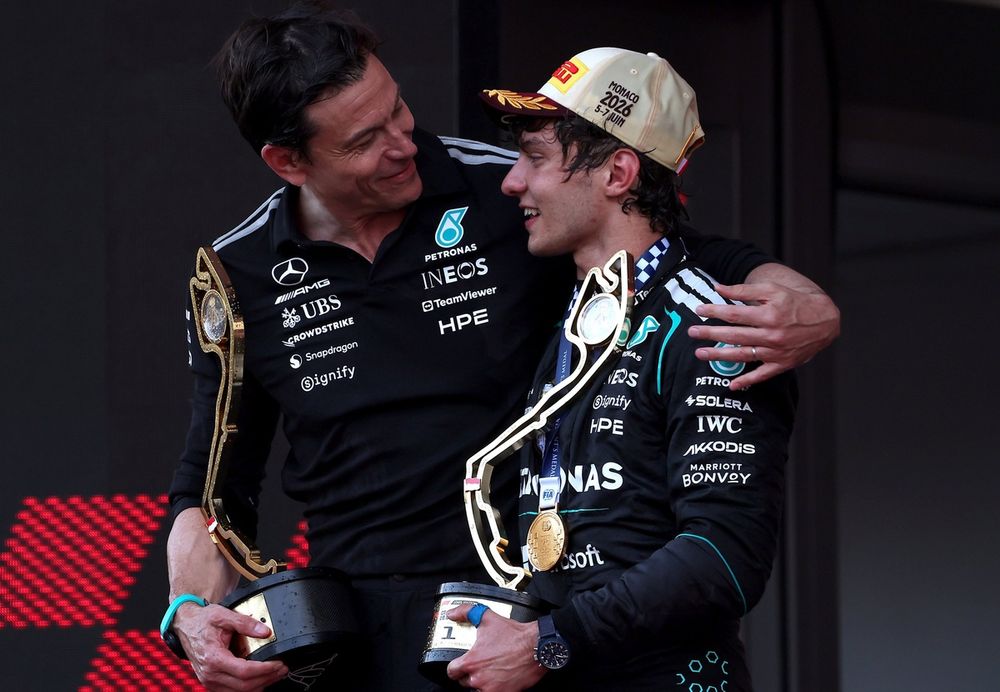
"One example is an old friend and driver of mine, Lewis Hamilton… Lewis once said something when talking about the car, ‘The car understeers from the front axle to where I sit.’"
For traditional aerodynamicists and vehicle dynamics engineers, the statement was initially nonsensical.
"Well, that’s the middle of the car; how can that understeer? And the engineers couldn’t really identify what he meant, but that is what his body told him," Wolff laughed. "If a driver is able to have that fundamental underlying layer of ability, then that becomes unbeatable, but that is genetics."
This level of proprioceptive sensitivity cannot be coached in a simulator or taught in a classroom. It is an innate biological filter that separates race-winners from world champions.
Implications: The Future of Driver Development
Wolff’s public breakdown of the Mercedes scouting framework carries significant implications for the broader motorsport ecosystem. As Formula 1 experiences a massive surge in global popularity—spurred by younger demographics, digital engagement, and the Netflix effect—the influx of capital into karting academies has never been higher.
- Holistic Assessment Over Pure Chrono-Data: Teams are increasingly leaning toward psychological profiling and emotional intelligence metrics alongside traditional lap-time telemetry. The era of tolerating toxic behavior from prodigious talents is effectively over, as modern F1 teams operate as global corporate entities where brand alignment is paramount.
- The Maturation of Academy Systems: Programs like the Mercedes Junior Team are evolving into comprehensive life-skill academies. Drivers are trained in media handling, stakeholder relations, and psychological resilience long before they step foot in a Formula 1 paddock.
- The Antonelli Benchmark: With Andrea Kimi Antonelli fighting for the title in his sophomore season, the pressure on rival junior academies (such as Red Bull, Ferrari, and McLaren) to fast-track their own prodigies has intensified. Antonelli has proven that under the right guidance, the transition from junior categories to championship contention can be compressed dramatically without sacrificing execution.
Ultimately, Toto Wolff’s insights remind fans and aspiring racers alike that reaching the pinnacle of motorsport requires far more than stepping on the throttle. It demands the genetic intuition of a Hamilton, the emotional intelligence of a diplomat, and the unshakeable composure required to throw a kart sideways in a torrential downpour—and make it look effortless.

 Siti Muinah
 Asro
 Ammar Sabilarrohman

 Muslim

 Pevita Pearce
 rifanmuazin

 Basiran