
 Ammar Sabilarrohman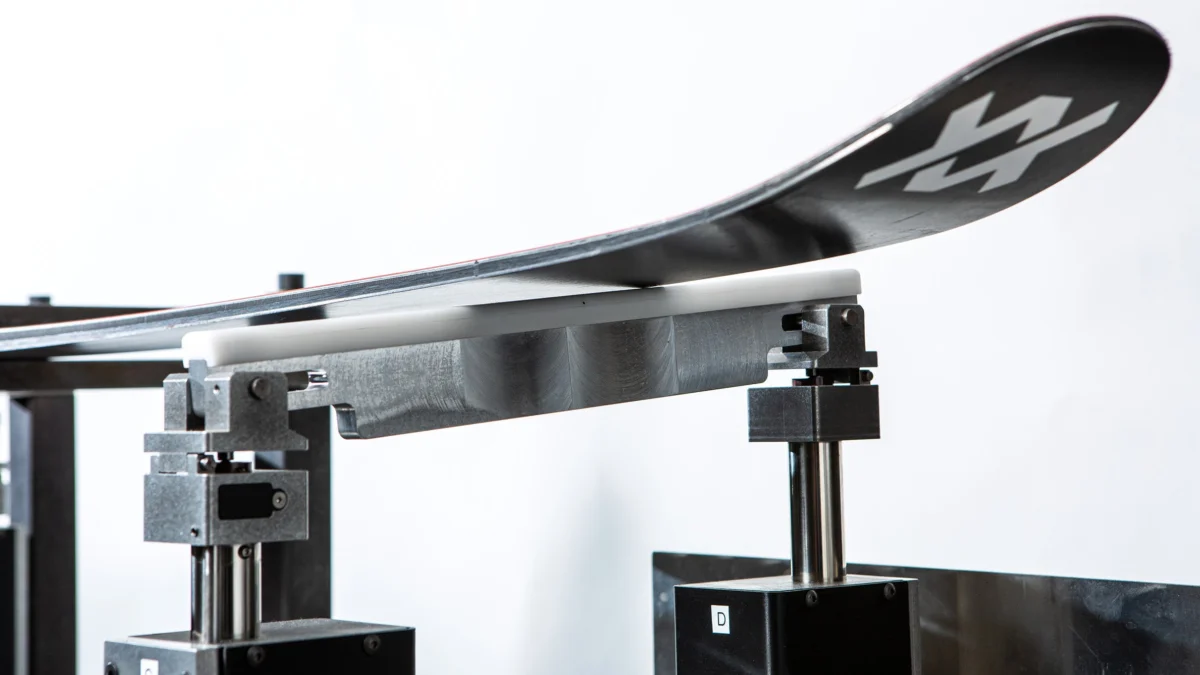
Published July 20, 2026 | Updated for Clarity and Technical Depth
For decades, the “hand-flex” test has been the unofficial, albeit deeply flawed, gospel of the ski shop. A skier picks up a pair of skis, jams the tail into the carpet, grips the tip, and leans into the camber to gauge stiffness. It is a ritual performed millions of times, yet it is almost entirely subjective and scientifically unreliable.
At the annual SKI Test, our expert crew spends a week on snow to capture the nuance of performance—how a ski initiates a turn, how it tracks through crud, and how much energy it requires to bend. This qualitative feedback is essential, but it remains susceptible to individual bias. Two world-class skiers can ride the same model and walk away with conflicting assessments of its “snappiness” or “stability.”
To bridge this divide, the industry is entering a new era of transparency. Earlier in 2026, we unveiled our state-of-the-art Ski and Snowboard Tester at the Outside Lab at CU Denver. By integrating objective mechanical data with human experience, we are finally moving beyond the “feel” to quantify the engineering reality of modern ski design.
The Genesis: Closing the Subjectivity Gap
The project was born from a simple frustration: the inability to settle debates about equipment performance. When our testers argued over whether the Nordica Enforcer 99 required more edge-engagement effort than the Blizzard Rustler 9, we lacked a neutral arbiter.
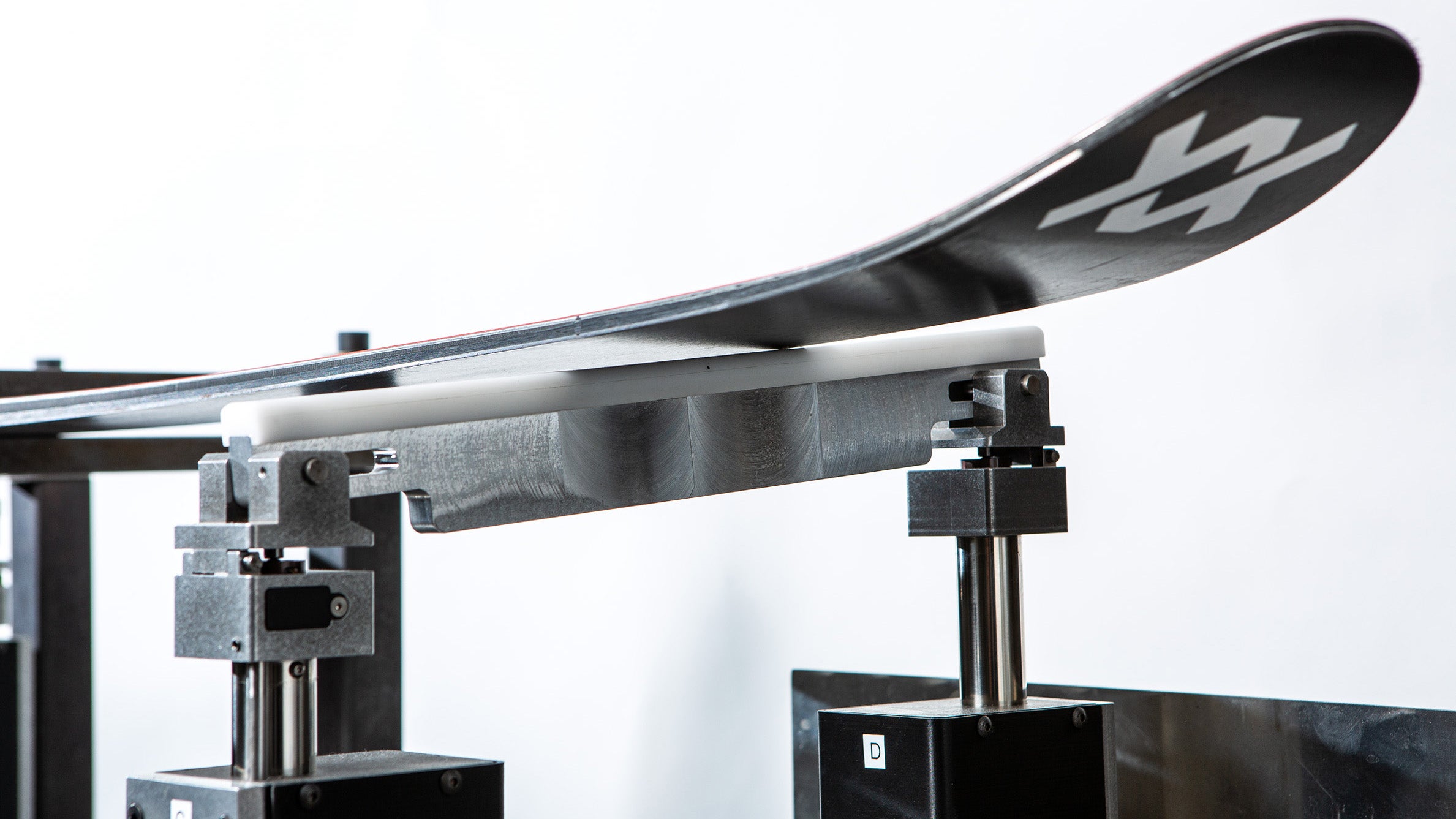
The Outside Lab at CU Denver was built to provide that missing third point of reference. By fine-tuning a rigorous, repeatable protocol, the machine now serves as a foundational layer for our reviews. The goal is not to replace the human element, but to provide a digital blueprint that explains why a ski feels the way it does. If a tester describes a tail as “stiff,” the machine can now provide the specific degree of deflection under a measured load, allowing for direct, apples-to-apples comparisons across our entire database.
Chronology: From Concept to Calibration
The development of this testing protocol has been a multi-year journey of engineering and refinement:
- 2024–2025 (Development Phase): Initial designs for the testing rig were drafted in collaboration with mechanical engineering faculty at CU Denver. The focus was on identifying the variables that matter most to performance: bending stiffness, torsional rigidity, and geometry.
- January 2026 (Prototyping): The machine was constructed, utilizing precision load cells and contactless scanners to ensure the data was not influenced by human error or surface irregularities.
- March–May 2026 (The Fine-Tuning Phase): We ran hundreds of test cycles to ensure the data remained consistent. A single ski was tested multiple times to confirm that the “load-unload” cycle produced identical outputs.
- July 2026 (Integration): The testing protocol was finalized. We began incorporating this data into our formal review process, beginning with the 2026-2027 product lineup.
The Anatomy of the Test: Supporting Data
The testing process is divided into two distinct phases: the Baseline Scan and the Load-Based Performance Test.
1. The Baseline: Mapping the True Shape
Before we apply a single pound of pressure, we map the ski’s resting geometry. Using a contactless laser scanner, we capture the ski’s full-length dimensions.
- Sidecut Analysis: We identify the exact radius of the hourglass shape. This data allows us to verify manufacturer claims and, more importantly, pinpoint where the turning shape is centered.
- Camber Profile: While camber is often described visually, our scanner quantifies the exact height and the transition point into "early rise." This allows us to predict how a ski will perform in variable conditions before it ever touches snow.
2. The Load Test: Measuring Mechanical Behavior
Once the geometry is mapped, we simulate the forces of a skier. We clamp the ski at standardized boot-sole lengths (26.5 for men, 24.5 for women) to replicate the leverage of an actual rider.
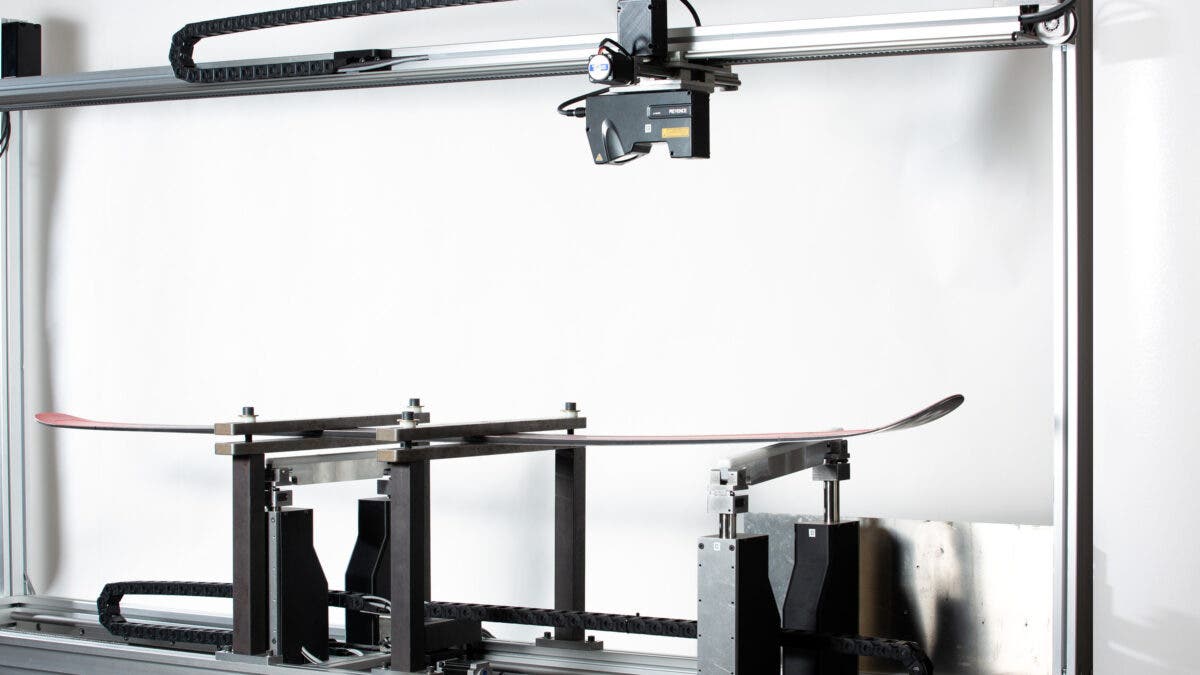
- Bending Stiffness (Flex): Instead of the archaic “hand-bend,” we use mechanical actuator arms to apply precise force at the tip and tail. By measuring the displacement against the applied load, we produce a flex curve. This provides a scientific definition of "stout" versus "playful."
- Edge Engagement: Perhaps the most significant advancement, this test measures how a ski reacts when forced onto its edge. By angling the actuator bridge, we simulate the transition from a flat base to a carved edge. This data quantifies the "effort-to-initiate" metric, identifying skis that are "hooky" versus those that are intuitive.
Official Perspectives: The Engineering View
Trevor Young, Lab Manager at CU Denver, notes that the data serves a dual purpose. "For the consumer, it provides an objective anchor for their purchasing decisions," Young explains. "For the manufacturers, it serves as a feedback loop. They can see exactly how their engineering choices—like adding a layer of Titanal or adjusting the wood core density—translate into measurable, repeatable performance metrics."
The lab’s findings have already sparked conversations with major brands. By sharing these findings, we are encouraging a more transparent dialogue between the R&D labs of major manufacturers and the end-users. The objective data allows us to identify trends in the industry—such as the gradual softening of certain "pro-level" models—that might otherwise go unnoticed in a single season of testing.
Implications: The Future of Ski Reviews
The integration of lab-tested data fundamentally changes the value of our annual reviews. We are no longer asking readers to trust a single tester’s subjective experience; we are providing a complete package:
- Contextualized Performance: A tester can report on how a ski feels on a specific day in the mountains, while the lab provides the "why." If the snow is firm, the tester might find a ski "twitchy." The lab can then confirm if that is due to a high-stiffness profile in the forebody.
- Eliminating Guesswork: For intermediate skiers who may not have the technical vocabulary to describe their needs, our data provides a clear path. A user looking for "forgiving" gear can now look for specific, lower-load-deflection numbers rather than relying on vague marketing terminology.
- A Long-Term Archive: As we continue to populate our database, we are creating a historical record of ski design. We will be able to track how the definition of an "All-Mountain" ski evolves over time, using hard data to prove shifts in geometry and stiffness.
Looking Ahead
The SKI Test remains, first and foremost, a human-centered endeavor. There is no machine that can measure the "soul" of a ski, the way it brings a smile to your face on a powder day, or the confidence it gives you in a steep, icy chute. However, by grounding our expert reviews in the cold, hard facts of physics and engineering, we are providing a more robust, reliable, and transparent resource for the community.
The next time you see a review, look for the lab metrics. They represent a new chapter in how we understand our equipment—not just as tools, but as precisely engineered machines designed to translate our energy into the perfect turn. Whether you are a weekend warrior or a professional, you now have the data to match your skiing style with the perfect ride.


 Iffa Jayyana
 Azzam Bilal Chamdy
 Neng Nana
 Nana Wu
 Lina Hope

 Sagoh
Sagoh