
 Siti Muinah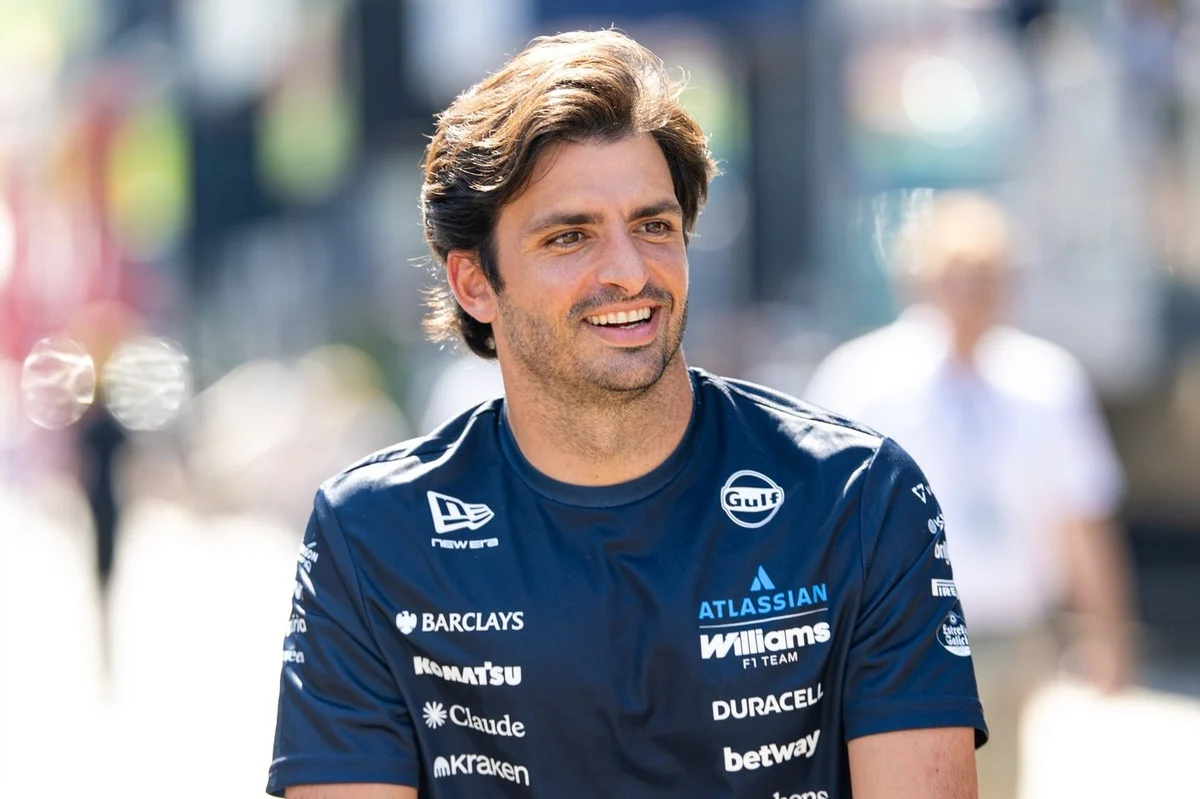
In the high-octane, pressure-cooker environment of Formula 1, emotions often run high. Every millisecond counts, and the thin margin between a perfect lap and a compromised session can turn even the most composed drivers into vocal critics of their peers. This reality was underscored at the historic Spa-Francorchamps circuit during the Belgian Grand Prix weekend, where a tense radio exchange between Mercedes prodigy Andrea Kimi Antonelli and Williams’ Carlos Sainz became a focal point of discussion.
However, what could have easily spiraled into a bitter paddock rivalry was quickly diffused by a mature, spontaneous act of sportsmanship that has earned Antonelli widespread praise from his seasoned colleague.
The Incident: A Frustrated Radio Outburst
The friction occurred during the opening practice session (FP1) on the challenging, high-speed layout of Spa. As Antonelli navigated the iconic Stavelot corner, he encountered the Williams of Carlos Sainz moving at a significantly slower pace.
For a driver pushing to find the absolute limit of his Mercedes, the sudden obstruction proved frustrating. In the heat of the moment, Antonelli aborted his flying lap, shadowing the Williams briefly before keying his radio to vent his displeasure. "Sainz, what an idiot!" the young Italian exclaimed, a comment that was immediately broadcast to the world.
On the other side of the transmission, Sainz was equally bewildered. Unaware of the specific intensity of the Mercedes driver’s frustration, he communicated his own confusion to his race engineer. "I don’t know what Antonelli was doing with me," Sainz remarked shortly after the encounter. "He threw the car into me; I don’t know why."
A Chance Encounter and a Mature Resolution
The narrative shifted on Saturday morning, moving from the technical arena of the cockpit to the human scale of the paddock. Often, incidents like these fester behind closed doors, handled by team principals or media handlers. In this instance, however, the resolution was entirely organic.
"This morning we actually woke up at the same time," Sainz recounted to the media following the qualifying session. "So we went in the lift at the same time, and I saw him and I said, ‘What’s up?’"
What followed was a display of maturity that caught the veteran Spaniard off guard. Antonelli, recognizing the impropriety of his radio outburst, immediately took the initiative to clear the air.
"The guy is a great guy," Sainz noted with genuine appreciation. "He just apologized, said that it was the heat of the moment, that he had seen the replay and I actually didn’t impede him that much. For being an FP1 session and not being an important lap of the weekend, he acknowledged he was being a bit emotional at the time."

For a young driver operating under the immense scrutiny of a top-tier team like Mercedes, the ability to recognize one’s own fallibility and address it directly with a peer is a trait often reserved for the most seasoned veterans. Sainz, who has navigated the ups and downs of F1 for years, was clearly impressed. "When someone comes out like that and tells that to your face straight away as soon as he sees you, for me, it’s a show of being a great guy. I have no other thing than to thank him for it and wish him the best."
Contextualizing the Performance: A Weekend of Extremes
While the off-track interaction highlighted the character of the drivers, the weekend itself presented a study in contrast regarding their respective performances on the track.
For Antonelli, the weekend in Belgium served as a powerful statement of intent. The Mercedes driver secured a stunning pole position, demonstrating the raw pace and technical acumen that have made him one of the most talked-about talents in the sport. His ability to find half a second during the closing stages of qualifying to edge out reigning champion Max Verstappen solidified his status as a legitimate contender at the front of the grid.
Conversely, it was a "tough weekend" for Carlos Sainz. Despite out-qualifying his teammate, Alex Albon, for the tenth time this season—and the fifth consecutive event—Sainz found himself starting 15th on the grid (later promoted one spot due to a penalty for Isack Hadjar).
The struggle was not entirely performance-based, however. Sainz revealed that Williams had been battling a persistent technical gremlin throughout the practice sessions. "It was a tough weekend," he admitted. "We had a technical problem that was costing us three to five tenths a lap throughout practice." While the team managed to identify and resolve the issue in time for qualifying, the underlying mystery of the technical glitch remains a point of concern.
"Happy that we found the issue," Sainz said, reflecting on the difficulty of the weekend. "Not so happy that we cannot explain the issue very well. So we need to keep digging."
The Psychological Dimension of Modern F1
The exchange between Antonelli and Sainz serves as a reminder that Formula 1 is as much a mental game as it is a physical or mechanical one. The cockpit of a modern F1 car is a claustrophobic, high-stress environment. Drivers are subjected to extreme G-forces, intense heat, and the constant demand for perfect precision while processing data from their engineers.
In such an environment, the radio is a pressure valve. It is rarely the place where filtered, diplomatic thoughts are expressed. The use of inflammatory language—while not ideal—is a common symptom of the adrenaline-fueled nature of the sport. The real test of character, therefore, is not the initial outburst, but the aftermath.
By apologizing, Antonelli demonstrated a level of emotional intelligence that will be vital as his career progresses. In the unforgiving world of F1, where rivalries can turn toxic and media narratives can amplify minor disputes, the ability to de-escalate tension through face-to-face communication is a valuable asset.

Implications for the Grid
As the sport looks toward the future, the interaction provides a positive glimpse into the sportsmanship of the next generation. Antonelli’s willingness to own his mistake sets a precedent for professional conduct that transcends the competitive nature of the racing.
For Sainz, who is known for his analytical approach and professional demeanor, the encounter likely solidified a level of mutual respect. In a sport where drivers spend their lives competing for the same inches of tarmac, personal rapport is rare. However, when it exists, it fosters a healthier paddock culture.
Furthermore, the incident highlights the ongoing development of both drivers. Antonelli is proving that his maturity is beginning to match his blistering speed, a dangerous combination for his rivals. Sainz, meanwhile, continues to prove his worth as a leader at Williams, maintaining his consistency even when plagued by technical uncertainties.
As the Belgian Grand Prix concluded, the focus shifted back to the racing, but the story of the elevator encounter lingered. It was a brief moment of humanity in a sport often dominated by telemetry, sponsorship, and technical jargon—a reminder that, despite the millions of dollars and the cutting-edge technology, the heart of Formula 1 remains the people behind the wheel.
Conclusion: Lessons from the Stavelot Incident
The "idiot" comment will likely be forgotten by the time the next race weekend arrives, overshadowed by the results of the Grand Prix and the constant churn of the F1 news cycle. Yet, for those observing the growth of young talent and the camaraderie of the grid, the resolution of this incident stands as a significant moment.
Kimi Antonelli’s proactive apology is a hallmark of a driver who understands that respect among peers is a currency as valuable as championship points. Carlos Sainz’s gracious acceptance of that apology further reinforces the professionalism of the current field.
As we look ahead to the remainder of the season, these small, human moments are what build the narrative of the sport. Whether it is the battle for the championship at the front of the field or the fight to overcome technical gremlins in the midfield, the character of the drivers remains the true differentiator. In Belgium, both Antonelli and Sainz proved that even when the heat of the moment takes over, the spirit of racing can—and should—remain one of mutual respect.

 Pevita Pearce
 Evan Lee Salim
 Neng Nana
 Nana Wu
 Lina Hope
 Sagoh
Sagoh
 Iffa Jayyana