
 rifanmuazin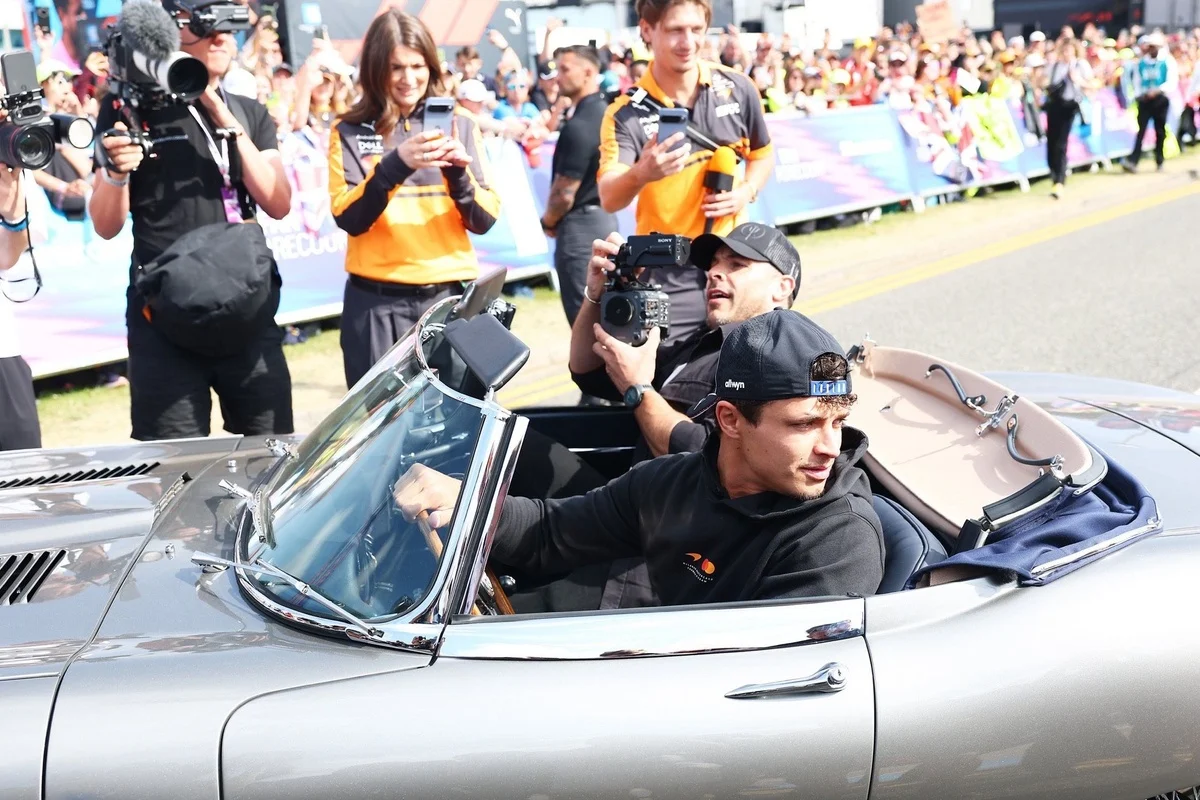
As the Formula 1 circus descended upon the hallowed grounds of Silverstone for the British Grand Prix, the paddock was treated to a masterclass in automotive elegance. While modern F1 cars are marvels of aerodynamics and carbon fiber, McLaren’s Lando Norris opted for a different kind of engineering excellence, arriving at his home circuit in a stunning, classic Jaguar E-type 4.2. The sight of the British star steering the 1960s icon through the gates served as a poignant reminder of the enduring romance between motorsport’s premier category and the heritage of automotive design.
A Vintage Arrival: The Jaguar E-Type in the Spotlight
The decision to pull into the Silverstone paddock behind the wheel of a 1960s British sports car was more than just a commute; it was a curated statement. The E-type, famously described by Enzo Ferrari as "the most beautiful car ever made," is a crown jewel of British motoring history.
Powered by a 4.2-litre inline-six engine, the vehicle boasts a legacy of performance that, while eclipsed by today’s hybrid power units, remains visceral. Capable of producing 265 horsepower, the E-type can sprint from 0 to 60mph in approximately 7.6 seconds, with a top speed flirting with the 150mph mark. For a driver who spends his weekends dancing on the edge of adhesion at 200mph, the analog feel of the E-type offers a meditative contrast.
The footage of Norris navigating the classic machine into the circuit was an instant viral sensation. The official Formula 1 TikTok channel captured the moment, with the clip garnering over 210,000 views and 23,000 likes within hours of being posted. It underscored the unique bridge Norris builds between the modern, data-driven world of F1 and the romantic, visceral roots of car culture.
The Norris Collection: A Curator’s Eye for Speed
The Jaguar E-type is far from a standalone outlier in the McLaren driver’s garage. Norris has quietly established himself as a serious automotive collector, possessing a stable of vehicles that would make a museum curator weep with envy. His collection reflects a sophisticated appreciation for both the cutting edge of engineering and the storied history of performance motoring.
The McLaren Connection
As a cornerstone of the Woking-based team, it is no surprise that Norris’s collection is anchored by the pinnacle of McLaren’s output. He is known to possess:
- The McLaren P1: A hybrid hypercar that redefined the landscape of the 2010s.
- The McLaren Senna: A track-focused beast that serves as an homage to the team’s most legendary driver.
- A Bespoke McLaren 765LT Spider: A machine that represents the current zenith of the company’s "Longtail" performance philosophy.
Icons of the Road
Beyond his team ties, Norris’s garage features some of the most sought-after machinery in history:
- Ferrari F40: An analog masterpiece and perhaps the most iconic supercar of the 1980s.
- Lamborghini Miura P400: Often cited as the world’s first "supercar."
- Porsche Carrera GT: Revered for its V10 engine and manual gearbox, it remains a holy grail for driving enthusiasts.
- Shelby Cobra 427: An American muscle legend that defines raw, unrefined power.
The collection is rounded out by eclectic choices like the Lamborghini Urus Performante, a Liberty Walk-modified Nissan Skyline GT-R R32, a charming Fiat 500 Jolly Evocation, and a custom roofless Land Rover Defender 90. It is a garage that speaks to a driver who loves the craft of driving in all its forms—from the precision of a modern supercar to the mechanical grit of a vintage roadster.
Silverstone Performance: Balancing the Glamour with the Grind
While the E-type dominated the social media cycle on Friday morning, the focus of the weekend quickly shifted to the unforgiving tarmac of the Silverstone Circuit. Qualifying sixth for the sprint race, Norris faced a significant challenge in the unpredictable British weather and the intense competition of the midfield.
In the 17-lap sprint, Norris displayed the poise that has come to define his recent career trajectory. Navigating the high-speed corners of Maggots and Becketts with precision, he managed to climb the order, securing a hard-fought third-place finish. He trailed behind the eventual sprint winner, Kimi Antonelli, and the indomitable Lewis Hamilton. This performance provided a vital morale boost for the McLaren garage, which has been working tirelessly to close the gap on the front-running teams.

Season Context: A Narrative of Evolution
The 2024 season has been a study in volatility for Norris. Currently sitting fourth in the Drivers’ Championship with 85 points, he remains in a tight tussle with Ferrari’s Charles Leclerc, who trails by only two points. The gap to the championship front-runners, particularly Lewis Hamilton, stands at 47 points, highlighting the climb that remains for the young Briton.
However, the season has not been without its highlights. Norris has twice ascended the podium this year, most notably during the Miami Grand Prix, where he secured a second-place finish, and the Barcelona-Catalunya Grand Prix. The latter race was particularly special, as it featured an all-British podium—a moment of national pride that saw Hamilton take the top step with Ferrari, followed by Mercedes’ George Russell and Norris.
Official Responses and Industry Implications
The intersection of celebrity, fashion, and high-performance automotive history is a growing trend in Formula 1. Teams and drivers are increasingly aware that the "driver arrival" is a prime piece of real estate for marketing and personal branding.
McLaren, in particular, has leaned into this. By allowing their drivers to showcase classic cars, the team reinforces its identity as a brand that is deeply rooted in engineering history. "Lando’s interest in classic cars is genuine," a team spokesperson noted. "It’s not just a photo opportunity. It’s an extension of his passion for the sport. When he drives an E-type, he’s connecting with the heritage of the cars that paved the way for the McLaren he drives on Sunday."
Industry analysts suggest that this trend is vital for F1’s long-term health. By embracing the history of the sport through these vehicles, teams are effectively engaging a broader demographic. Younger fans who might be attracted to the sport via social media clips of modern cars are suddenly being educated on the classics, creating a more holistic appreciation for the sport’s legacy.
The Road Ahead: What Comes Next?
As the season progresses, the challenge for Norris is to convert these flashes of brilliance into consistent championship-contending performances. The 2024 season has shown that the pecking order is far from static. While the top of the table has been dominated by a select few, the margins remain razor-thin.
For Norris, the key will be consistency. While his garage is filled with machines that represent the past and present of automotive glory, his eyes are firmly fixed on the future—specifically, a future that involves standing on the top step of the podium with a trophy in his hands.
As the paddock prepares for the next leg of the championship, the image of that silver Jaguar E-type parked outside the McLaren motorhome remains a fitting symbol of the weekend. It is a reminder that in the high-stakes, high-tech world of Formula 1, there is still space for the beauty of a manual transmission, the sound of an inline-six engine, and the simple joy of driving.
Lando Norris has shown that he is not just a driver; he is a guardian of the sport’s soul. Whether he is wrestling a modern McLaren through the corners of Silverstone or taking a Sunday drive in a 1960s icon, his commitment to the art of driving is clear. As the championship fight intensifies, fans will be watching not only to see where he finishes on the track, but what he chooses to drive when he arrives at the next circuit. After all, when you have a collection like his, the journey is just as important as the destination.


 Pevita Pearce
 Evan Lee Salim
 Neng Nana
 Nana Wu
 Lina Hope
 Sagoh
Sagoh
 Iffa Jayyana