 Suro Senen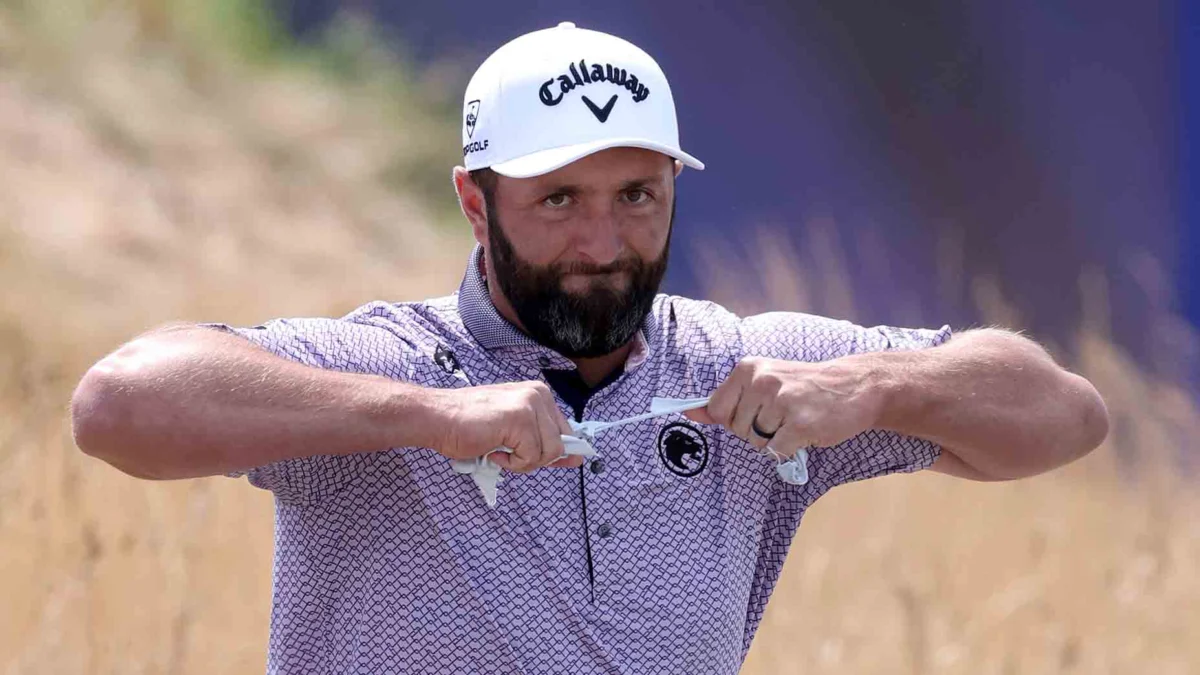
In the hyper-curated landscape of modern sports media, where the focus is perpetually locked on the “Big Three” or the perennial world top 25, the story of Ryan Fox serves as a refreshing, necessary disruption. Following his breakthrough victory at the 2026 Open Championship at Royal Birkdale, the golf world is finally asking: Who is Ryan Fox?
To the casual observer, the 39-year-old New Zealander might seem like a sudden arrival. However, for those who follow the gritty, often unglamorous trajectory of professional golf, Fox’s victory is the culmination of a “slow burn” career that defied every conventional timeline in the sport.
The Relatable Champion: A Career of Twists and Turns
Unlike the prodigies who transition seamlessly from amateur phenoms to PGA Tour staples by age 22, Ryan Fox’s path was marked by the kind of obstacles that would have forced a lesser player into early retirement. He did not begin competitive golf until his late teens, turned professional in his mid-20s, and only reached the PGA Tour at age 37.
“I’m definitely not following the trend at the moment,” Fox remarked following his victory on Sunday. “But if I can keep getting better a little bit every year, I’ll be pretty happy.”
His humility is grounded in a near-miss with destiny. Early in his career, while struggling on the Australian Tour, Fox was on the verge of walking away from the game entirely. It took a heart-to-heart conversation with his father, rugby legend Grant Fox, at the Australian Masters at Royal Melbourne to reignite his passion. His father’s advice was simple: “Why do you play this game? It’s supposed to be fun.” Fox finished fifth that week, kept his card, and effectively saved his career. That lesson in perspective clearly served him well at Royal Birkdale, where he navigated the pressure of a major championship with the composure of a man who knows exactly what it feels like to have nothing to lose.
Chronology of a Masterclass: The Final Round
Fox’s victory was not a product of defensive play or a collapse by his competitors; it was a proactive, aggressive masterclass. Standing on the 72nd tee, with the weight of his first major on the line, Fox didn’t play for a par. He attacked.
He nuked a drive, flushed a precise iron into the heart of the green, and drained the subsequent putt for a birdie. It was a statement of intent. When asked about his strategy, Fox was candid: “I told my caddie, Dean Smith, that we were going to take it on, that I was going to try to win the tournament, and I’d live with the consequences if I stuffed it up.”

His efficiency was a defining trait of the week. Known for his rapid pace of play—a rarity in an era of grueling, methodical pre-shot routines—Fox required just 22 seconds to execute his final, championship-winning stroke. He views this speed as a cognitive advantage rather than a quirk. “I see things fast,” he explained. “Everything just happened fast. I was never methodical at anything… and the less time I have to think about it, the less bad stuff can creep in.”
Supporting Data: The Stats Behind the Swing
While Fox’s pace captures the headlines, his precision under pressure was the statistical backbone of his win. Throughout the Open, his ability to “switch off” between shots allowed him to maintain mental energy that many of his peers lacked by Sunday afternoon.
- The Pace Advantage: During his final round, Fox played with a fluid rhythm that prompted Scottie Scheffler—who played with him earlier in the year—to joke that it felt like he wasn’t even in the group.
- Consistency: While others struggled with the firm, fast conditions of Royal Birkdale, Fox’s ball-striking remained remarkably consistent. His ability to hit fairways and greens under high-wind conditions proved superior to the field.
- The "All Black" Mentality: Drawing on the heritage of New Zealand’s sporting culture, specifically the resilience of the All Blacks, Fox showcased a level of grit that was evident in his recovery from difficult lies and his tactical decisions on the closing holes.
Official Responses and the "FescueGate" Shadow
No major championship is without its share of drama, and the 2026 Open was no exception. Much of the narrative leading up to Sunday was dominated by the debate surrounding Bryson DeChambeau and the contentious rulings involving long grass and potential drops—a saga the media dubbed “FescueGate.”
While the controversy drew significant attention, top players like Scottie Scheffler and Max Homa publicly defended DeChambeau, clarifying that they did not view him as a "cheater." However, the discourse highlighted a growing divide between those who advocate for the strict, traditional interpretation of links golf and those who view the sport as an evolving spectacle.
Robert MacIntyre offered a particularly poignant critique of modern course design, noting that the removal of hazards like gorse bushes has allowed longer hitters to play without fear. “Links golf needs gorse bushes,” MacIntyre argued. “I feel like that’s the way professional golf is going… we’ve still got to have punishment.”
Implications: A New Era for the Major Season?
The conclusion of the 2026 Open marks the end of the major championship season, leaving several key questions regarding the future of the game.
1. The Scheffler Standard
Despite finishing the major season 0-for-4, Scottie Scheffler remains the benchmark for consistency. His ability to finish in the top five in three of the four majors while not playing his absolute best is a testament to his floor, which is higher than most players’ ceilings. Most analysts expect him to contend heavily at the 2027 PGA Championship.

2. The Rise of the New Guard
Players like Ludvig Aberg and Cameron Young continue to knock on the door of major history. With a deep talent pool, the coming years promise a high degree of parity. The “over-under” on career majors for young stars is a popular talking point, with many experts betting that the era of a single dominant force is yielding to a highly competitive, multi-winner landscape.
3. The "Slow Burn" Inspiration
Perhaps the most enduring implication of Fox’s win is the validation of the long-term career path. In an era where athletes are often written off by their mid-20s if they haven’t reached the pinnacle, Fox’s success at 39 serves as a potent reminder that golf is a game of seasons. His victory has provided a morale boost to mid-career professionals grinding on secondary tours, proving that the gap between “unheralded” and “major champion” is often narrower than it appears.
Reflections on a Historic Week
As the dust settles at Royal Birkdale, the images of the week remain vivid: Tyrrell Hatton’s intensity, Jon Rahm’s focus on the first tee, and the heartbreaking near-misses of players like Cameron Young. Yet, it is the image of Ryan Fox—the son of a legend, the late bloomer, the rapid-fire swinger—that will define the 2026 season.
For those of us observing from the sidelines, the week was a reminder of why we follow the sport. It isn’t just about the records or the prize money; it’s about the human element of the game. It’s about the “sausage roll” moments—the simple, grounding experiences that keep players and fans alike tethered to the sport.
As we look toward next year’s Open in Scotland, the lessons of Royal Birkdale are clear: The game rewards those who can maintain their joy, those who can make quick, decisive choices under pressure, and those who refuse to let the “slow burn” of a difficult career extinguish their ambition. Ryan Fox didn’t just win a trophy; he won the respect of a sport that finally stopped asking who he was, and started asking how he did it.


 Lina Hope
 Iffa Jayyana
 Neng Nana
 Nana Wu
 Sagoh
Sagoh