
 Lina Irawan
To the casual observer, a Formula 1 Grand Prix is a straightforward exercise in speed: drivers line up on the grid, accelerate off the line, and circulate a circuit until a checkered flag drops. But beneath the roaring V6 turbo-hybrid engines and high-tech aerodynamics lies a complex framework of strict regulations governing distance, time, and safety.
Today, the standard Formula 1 Grand Prix is defined by a precise metric: a minimum of 305 kilometers (roughly 190 miles). Every race on the calendar—with one prestigious, slow-speed exception—consists of the exact number of full laps required to push past that 305-kilometer threshold.
Yet, this standardization is a relatively modern luxury. For the first four decades of the FIA World Championship, race distances were wild, unpredictable, and often grueling marathons. Furthermore, sweeping changes are on the horizon. Looking ahead to the 2027 season, Formula 1 is poised to shrink its standard race distance once more, driven by shifting power unit regulations and technical constraints.
Examining the past, present, and future of F1 race lengths reveals a fascinating narrative of endurance, safety overhauls, and the relentless pursuit of sporting spectacle.
Main Facts: The Anatomy of a Modern Grand Prix
Under current regulations, the structure of a Formula 1 weekend balances competitive urgency with strict temporal boundaries.
The baseline distance for nearly every Grand Prix is 305 kilometers. To calculate the total number of laps for a given venue, race organizers divide 305 by the length of the track and round up to the next complete lap. For instance, at Belgium’s iconic Spa-Francorchamps circuit—which measures over seven kilometers—drivers complete 44 laps to clear the threshold. At the tight and twisty Baku City Circuit, it requires 51 laps. Monaco, the shortest permanent outlier on the calendar, demands 78 laps.
Time limits are equally vital to how a race unfolds:
- Green Flag Racing Time: Actual racing time is capped at a maximum of two hours. If a race runs uninterrupted, the checkered flag will wave at the two-hour mark even if the full scheduled distance has not been completed.
- Overall Duration (Suspended Races): If a race is red-flagged and suspended due to weather or severe accidents, the total elapsed time—including the interruption period—cannot exceed three hours.
Beyond standard Grands Prix, the sport also utilizes the Sprint format at select rounds. These compressed races cover roughly 100 kilometers (about one-third of a full Grand Prix distance), last around 30 minutes, feature no mandatory pit stops, and award points to the top eight finishers.
Chronology: From 500-Kilometer Marathons to the 305km Standard
Formula 1’s journey toward standardization has been marked by a series of drastic rule changes aimed at reining in costs, boosting safety, and accommodating the physical limitations of drivers.
The Wild West 1950s: Up to 500 Kilometers
When the Formula 1 World Championship officially launched in 1950, race promoters enjoyed absolute autonomy over how long their events would run. The result was massive variance across the calendar.
The inaugural World Championship race at Silverstone in 1950 spanned 70 laps and 325 kilometers, with winner Nino Farina completing it in 2 hours and 13 minutes. However, the season-ending Italian Grand Prix at Monza pushed drivers to their absolute limits, stretching across 80 laps and approximately 504 kilometers. Farina spent nearly three hours wrestling his machine through high-speed Italian corners.
Even more extreme was the Indianapolis 500, which inexplicably counted toward the F1 World Championship points standings from 1950 to 1960. Spanning 200 laps and a staggering 805 kilometers (500 miles), the Indy 500 remains the longest race—in both laps and distance—in F1 World Championship history.
The First Major Cut (1958)
Recognizing the unsustainable physical toll and mechanical attrition of five-hour races, the sport’s governing body introduced tighter restrictions in 1958. Race distances were capped between 300 and 500 kilometers, alongside a strict two-hour race time limit. Through the 1960s, most Grands Prix hovered between 300 and 400 kilometers.
The 1971 Reduction to 322 Kilometers
To further curb speeds and enhance safety on increasingly dangerous tracks, the maximum distance was scaled down to approximately 322 kilometers (200 miles) ahead of the 1971 season.
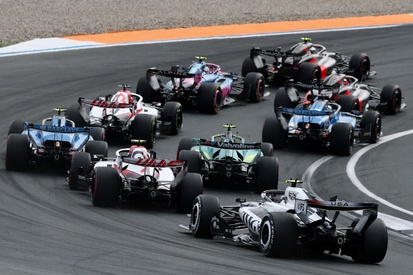
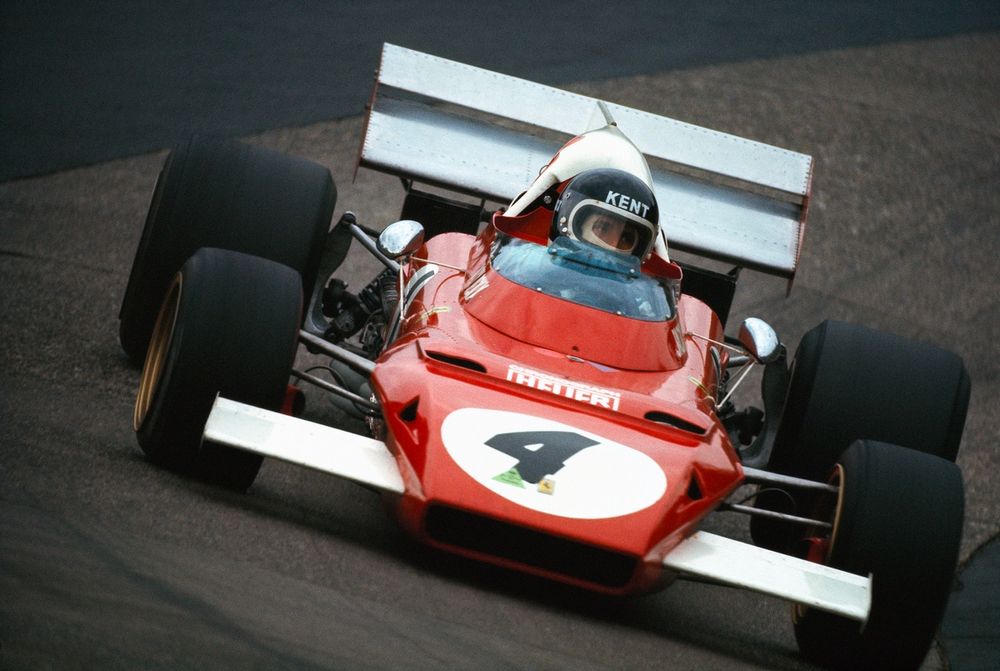
This era produced incredible anomalies. The 1971 German Grand Prix at the legendary, undulating 22.8-kilometer Nürburgring Nordschleife required just 12 laps to clear the distance requirements. It stands to this day as the lowest number of laps completed in a standard, uninterrupted World Championship race. Throughout the 1970s and 1980s, the grid settled comfortably into a 300-to-320-kilometer sweet spot.
The 1989 Standardization to 305 Kilometers
In 1989, Formula 1 officially adopted the 305-kilometer minimum rule. Designed to ensure predictability for television broadcasts and guarantee that events could comfortably conclude within a two-hour window, this principle became the bedrock of modern Grand Prix racing.
Supporting Data: Extreme Extremes in F1 History
While most races conform neatly to the 305-kilometer standard, extraordinary circumstances have occasionally rewritten the record books.
Canada 2011: The Longest Race Ever
For decades, rules limited active racing time to two hours, but lacked a hard cap on total elapsed time when red flags caused extended delays. That oversight was exposed at the 2011 Canadian Grand Prix in Montreal.
A torrential downpour forced a lengthy red-flag suspension that lasted over two hours. When racing resumed, Jenson Button orchestrated a legendary, chaotic charge through the field, ultimately snatching victory on the final lap. Due to the massive weather delay, the official race duration stretched to an astonishing 4 hours, 4 minutes, and 39.537 seconds, making it the longest Formula 1 race in history.
The FIA acted swiftly. By 2012, a four-hour aggregate cap was instituted for interrupted races, which was later tightened to three hours ahead of the 2021 season.

Belgium 2021: The Shortest Race Ever
Conversely, the sport witnessed its absolute shortest event at Spa-Francorchamps in 2021. Relentless, blinding rain prevented the field from ever racing under green-flag conditions. Cars circulated exclusively behind the Safety Car for a few cautious laps before the race was permanently abandoned.
Only a single lap was officially classified, creating a massive controversy when half-points were awarded despite zero racing taking place. This debacle forced the FIA to overhaul its points-awarding criteria for shortened races. Since 2022, a sliding scale has ensured that points are only distributed if a minimum threshold of green-flag racing is achieved, with full points reserved for races exceeding 75% distance.
Official Responses and Technical Implications: Why Races Are Shrinking in 2027
Change is once again on the horizon. The Formula 1 Commission has approved a major regulatory pivot for the 2027 season, which will reduce the standard Grand Prix distance from 305 kilometers down to 290 kilometers (roughly two to three fewer laps per race). Simultaneously, the cumbersome three-hour overall suspension limit will be scrapped in favor of a fixed, hard stop for racing activity, while the two-hour green-flag limit remains untouched.
The Power Unit Puzzle
The catalyst for shorter races stems directly from Formula 1’s next-generation power unit regulations. The engine formula features an approximate 50:50 split between internal combustion engine (ICE) power and electrical deployment.
Drivers have openly criticized the early characteristics of these power units, noting that heavy energy harvesting and deployment creates an artificial "yo-yo" effect on long straights. To alleviate this, the FIA adjusted the power split to a 58:42 ratio in favor of the combustion engine for 2027, shifting further to 60:40 by 2028.

However, extracting more power from the internal combustion engine invariably increases fuel consumption. Expanding the fuel tanks to accommodate a full 305-kilometer distance under higher fuel-flow rates would have forced teams to redesign their chassis entirely—a costly endeavor that teams fiercely resisted, preferring to carry over their 2026 chassis architectures.
Shortening all races uniformly by 15 kilometers prevents Grands Prix from devolving into tedious, fuel-saving hypermiling exercises. The historic Monaco Grand Prix is also expected to see its distance scaled back proportionally, though exact lap counts for the Principality remain under review.
The Future of F1 Distance
As Formula 1 continues to globalize, expand its calendar, and experiment with alternative formats like Sprints, the fundamental philosophy of how long a race should last is evolving.
While purists may lament the gradual trimming of Grand Prix distances from the epic 500-kilometer marathons of the 1950s down to the upcoming 290-kilometer standard of 2027, the sport must continually adapt. Balancing technical realities, engine efficiency, and modern television audience engagement ensures that Formula 1 remains agile.
Whether races will shrink even further in the future—as hinted by F1 President and CEO Stefano Domenicali—remains to be seen. But one thing is certain: the checkered flag will continue to mark the culmination of a meticulously calculated journey of speed, strategy, and endurance.

 Jia Lissa
 Neng Nana
 Iffa Jayyana
 Ali Ikhwan


 Dwi Wanna