
 Nana Muazin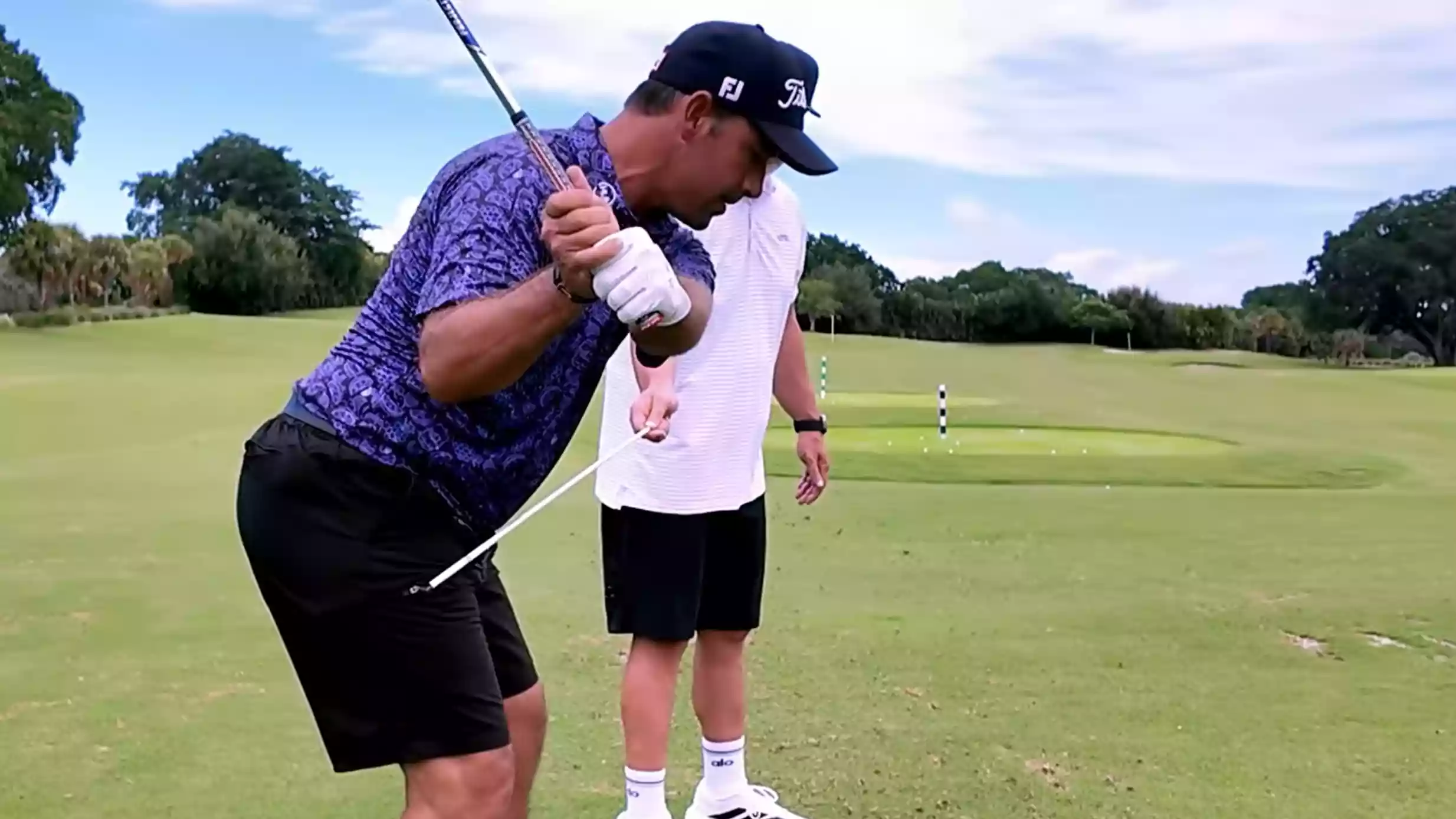
In the rarefied air of professional golf, where the difference between a tournament victory and missing the cut is measured in fractions of a millimeter, the margin for error is razor-thin. To bridge this gap, elite athletes have moved beyond the traditional "ball-beating" practice sessions of the past. Instead, they are embracing a holistic, multidisciplinary approach to the game that integrates biomechanical instruction, specialized fitness conditioning, and tactical strategy.
Recently, GOLF Top 100 Teacher Tony Ruggiero hosted a performance clinic featuring two of his premier students: PGA Tour winner Rafael Campos and rising talent Ty Gingerich, who is currently preparing for the rigorous demands of DP World Tour Q-School. By collaborating with elite performance coach Kolby Tullier and emerging instructor Jackson Koert, Ruggiero demonstrated that the blueprint for professional success is rooted in a fundamental understanding of the "kinetic chain"—the sequence of movements that allows energy to travel from the ground, through the body, and into the golf ball.
The Holistic Philosophy: A Team-Based Approach
For years, the golf industry operated in silos. A player might visit a swing coach on Tuesday, a personal trainer on Wednesday, and a mental coach on Thursday. The disconnect between these disciplines often left the athlete to synthesize conflicting information. The "performance session" model pioneered by Ruggiero and his team seeks to dismantle these silos.
"The goal is to synchronize the instruction," Ruggiero explains. "When you have a swing coach, a fitness expert, and a tactical mind working in the same room, you eliminate the guesswork. We are not just looking at a swing path; we are looking at how the player’s physiological capacity limits or enhances their technical execution."
This collaborative environment allows for immediate feedback loops. If Tullier identifies a weakness in a player’s hip mobility, Ruggiero can instantly adjust the swing drill to compensate, while Koert analyzes the resulting data to ensure the change translates into ball speed and dispersion gains.
The Mechanics of Power: Three Drills to Transform Your Game
While the setting was a high-performance lab, the drills utilized during the session are not reserved for tour pros. According to Ruggiero, these exercises—designed to optimize the load, transition, and rotation—are equally effective for the weekend golfer looking to break 90 or 80.

1. Assisted and Resisted Rotation: Building the Foundation
The first pillar of a powerful swing is the ability to load into the trail leg. Many amateurs struggle with "swaying" or "sliding" because they fail to properly engage their glutes and core to create a stable anchor.
Ruggiero utilizes a resistance strap wrapped around the player’s shoulders. As the player crosses their arms over their chest, the coach provides resistance during the backswing, forcing the player to fight into their trail side. This creates a "real" load, a sensation of tension that is often missing from the swings of casual golfers. By resisting the movement on the way back, the player learns to store energy. Conversely, by pulling the player toward the target during the downswing, the coach teaches the player how to "brake" correctly. As Ruggiero notes, "Most people think braking means stopping, but in the golf swing, it’s about transferring energy from the ground up. You need to feel that lead shoulder pull over the trail foot to create the torque necessary for pro-level speed."
2. Sequence Isolation: The Transition Trigger
The most common "fault" in amateur golf is the "over-the-top" move, where the hands and shoulders initiate the downswing. This is often an unconscious compensation for a lack of proper sequencing.
To correct this, the team uses a "Sequence Isolation" drill. The instructor holds a resistance band connected to the player and pulls them into the transition. The player’s objective is to initiate the downswing with the lead hip, not the hands. "It feels unnatural at first," admits Ruggiero. "Most players have spent years throwing their arms at the ball. The band makes it impossible to cheat. If your hands move first, the band pulls you off balance immediately. If you lead with the hip, the energy flows naturally through the body."
3. The "Electric Fence": Creating Space
Perhaps the most innovative drill in the group’s arsenal is the "Electric Fence." Ruggiero positions a foam roller or an alignment stick just in front of the player’s hips during slow-motion downswings.
The concept is simple but brutal: if the player pushes their hips toward the ball (a common cause of the dreaded "early extension" or "casting"), they will make contact with the stick. "Think of it as an electric fence," says Ruggiero. "You must clear your left hip around and back. You need to create space for your arms to work. If you spin out or pitch forward, you get zapped." By creating a physical barrier that must be cleared, the golfer is forced to rotate, which is the secret to consistency and clubhead speed.

Chronology of the Session
The performance session followed a structured timeline, emphasizing that physical prep must precede technical work:
- 09:00 AM – Assessment: Kolby Tullier performed a physical screening to identify tightness in the thoracic spine and hip flexors.
- 10:30 AM – Integration: Ruggiero and Koert introduced the resistance-based drills to ensure the body was moving within its new, verified range of motion.
- 12:00 PM – Data Validation: Using launch monitors, the team compared the "pre-drill" swing metrics to the "post-drill" results, showing measurable increases in launch angle consistency and smash factor.
- 01:30 PM – Tactical Application: The group discussed how to translate these physical movements into "on-course" decision-making, specifically regarding ball flight patterns under pressure.
Implications for the Amateur Golfer
The success of players like Rafael Campos on the PGA Tour serves as a testament to the validity of these techniques. However, the true beauty of this approach is its scalability.
The primary takeaway for the average golfer is that golf is a sport of physics, not just aesthetics. When a player learns to "load, brake, and fire," the golf club ceases to be a heavy object that must be muscled around the body and instead becomes an extension of the kinetic chain.
As Ruggiero highlights, the end of the session does not mark the end of the learning. "Rafa and Ty will take these drills on the road. They’ll work with each other, observing the other’s patterns and using these resistance tools to stay calibrated." For the amateur, this reinforces the value of having a practice partner. Even without a professional coach, two friends with a simple resistance band can replicate these drills to diagnose their own sequencing errors.
Looking Ahead: The Future of Instruction
As the sport continues to evolve, the distinction between "instruction" and "performance science" is narrowing. Events like the upcoming 2026 GOLF Top 100 Teachers Summit at Omni La Costa Resort & Spa are designed to disseminate these high-level insights to a broader base of teachers and students.
In summary, whether you are competing for a PGA Tour trophy or simply trying to eliminate a slice, the solution is rarely found in buying a new driver. It is found in the ground, in the hips, and in the sequence of your movement. By embracing the "electric fence" and mastering the art of the kinetic chain, any golfer can unlock a higher level of performance, proving that the secrets of the tour are more accessible than they have ever been.


 Basiran
 Azzam Bilal Chamdy
 Dwi Wanna
 Nana Wu
 Lina Hope
 Jia Lissa
 Reynand Wu