
 Siti Muinah
The NASCAR Cup Series has long grappled with the fine line between "hard racing" and "retaliation." This past weekend at the Chicagoland Speedway, that line was tested repeatedly, leading to a series of on-track confrontations that left fans, analysts, and competitors questioning where the officiating boundaries truly lie. Following a weekend defined by high-tension incidents—most notably involving Shane van Gisbergen, Austin Hill, Zane Smith, and Carson Hocevar—NASCAR managing director Brad Moran has clarified the sanctioning body’s decision-making process, emphasizing that without a "smoking gun" of admission or undeniable telemetry, the sport prefers to let the racing settle on the track.
The Incidents: A Chronology of Conflict
The primary controversy centered on the rivalry between Shane van Gisbergen and Austin Hill. Tensions between the two had been simmering since an earlier encounter two weeks prior, where van Gisbergen was leading on a mid-race restart, only to be spun by Hill, an incident that triggered a significant multi-car pileup.
When the series arrived at Chicagoland, the inevitable occurred on Lap 48. Hill was turned hard into the outside wall off the nose of van Gisbergen’s car. For the Richard Childress Racing No. 33 team, the incident appeared to be a textbook case of calculated retaliation. The impact was violent, effectively ending Hill’s contention for the win and fueling immediate speculation that the "debt" from two weeks prior had been settled.
The broadcast booth at TNT Sports analyzed the incident extensively, utilizing SMT (Standard Motorsports Telemetry) data. Veteran driver-turned-analyst Jamie McMurray, known for his clinical breakdown of driver inputs, was adamant that the data indicated a deliberate move by van Gisbergen to initiate contact. However, despite the visual and data-driven evidence suggesting intent, van Gisbergen maintained radio silence regarding any desire for payback. Because the driver never vocalized an intent to wreck his rival, NASCAR found itself in a precarious position regarding the application of punitive measures.
The drama did not end with the RCR and Trackhouse entries. A separate incident involving Zane Smith and Carson Hocevar also drew the scrutiny of officials. In that clash, Hocevar was spun off the nose of Smith’s car. In real-time, it appeared that Smith made a conscious choice to hold his line and refuse to lift, despite having the opportunity to avoid contact.
The Anatomy of an Investigation
Addressing the growing outcry for penalties, Brad Moran appeared on SiriusXM NASCAR Radio’s The Morning Drive on Wednesday to pull back the curtain on NASCAR’s post-race review process.
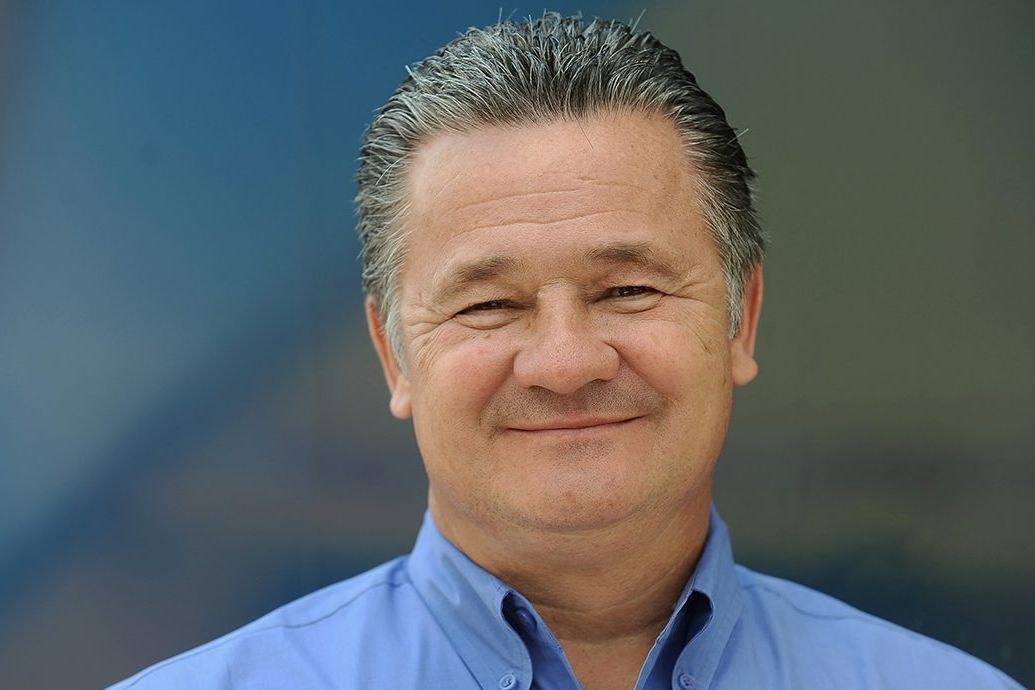
"Well, we looked at it very closely," Moran explained. "We pulled everything up on Tuesday like we always do. We actually had remote race control starting on that basically right after the incident happened. But we conducted our comprehensive review like we always do."
Moran detailed a multi-layered investigative approach that goes far beyond the naked eye. The sanctioning body synthesizes telemetry data, high-definition broadcast footage, and, crucially, in-car radio communications. The goal, according to Moran, is to reconstruct the "intent" of the driver at the moment of impact.
"We include everything from telemetry to radio communication, all vintage footage, race data, everything we have before we get in the middle of what really happened inside the race car," Moran said. "And there just wasn’t enough evidence there to say the incident was intentional, nor was there enough to do the same to [Smith and Hocevar]."
While no penalties were issued, Moran noted that the lack of a penalty does not equate to a lack of oversight. NASCAR officials are scheduled to meet with all involved parties on Saturday to address the rising tensions and set expectations for the remainder of the season.
The "Preece Precedent" and the Role of Radio Chatter
To understand why the Chicagoland incidents went unpunished, one must look back at the controversy involving Ryan Preece earlier this summer. Preece was hit with a $50,000 fine and a 25-point penalty following a collision with Ty Gibbs at Texas Motor Speedway.
At first glance, the Texas incident and the Chicagoland incidents share striking similarities: a driver facing an opponent they have a history with, followed by a collision where the trailing driver refuses to lift. However, the distinction, as Moran pointed out, lies in the driver’s own words.

During the Texas incident, Preece was heard on his team radio stating: "All right, when I get to that 54, I’m done with him. Fucking idiot."
Following the race, Preece was candid in interviews, admitting that he chose not to lift because of their previous history. "Could I cut him a break? Probably could have. But I didn’t," Preece admitted. This admission, combined with the radio chatter, provided NASCAR with the "intent" necessary to justify a penalty. When Preece appealed the decision, the appeals panel upheld the penalty—not because the racing was necessarily dangerous, but because Preece essentially confessed to using his car as a weapon.
Moran highlighted this contrast to illustrate the difficulty of the officiating role. "When we did our review of [the Preece] incident, we had data that we felt it was intentional," Moran said. "We had different radio communication that led us down that direction. So we take everything together and that’s why that penalty was issued."
Balancing "Hard Racing" with Over-Officiation
NASCAR finds itself in a perpetual balancing act. The sport’s growth is predicated on the "rubbing is racing" philosophy that draws fans to the track. Excessive policing of every fender-to-fender contact risks sanitizing the sport and removing the edge that makes NASCAR unique among major professional racing series.
"We try not to get in the middle. We don’t want to over-officiate," Moran emphasized. "We like aggressive driving. We like good hard racing. That’s what we do. That’s how we sell the stadiums out and that’s our plan. However, we do have to get into the middle of it occasionally and we don’t choose to do that."
The nuance here is that NASCAR is not merely looking for a crash; they are looking for a confession of intent. Without the driver explicitly stating they are going to "dump" their opponent, the sanctioning body is often hesitant to assume malicious intent. This standard, while frustrating to some teams, protects the drivers’ right to defend their position, even if that defense occasionally results in contact.

The "Cool Down Lap" Distinction
Beyond the main race incidents, officials also reviewed Austin Hill’s decision to "door slam" van Gisbergen during the caution period. While this behavior is often frowned upon, NASCAR declined to issue a penalty, noting that it did not "cross a line."
This brings to mind the case of Bubba Wallace, who was penalized after a Chicago street race last year for a similar maneuver. The difference in that case, Moran noted, was the timing. Wallace’s contact occurred on the cool-down lap when Alex Bowman had already begun to loosen his safety equipment, including his seatbelts. By initiating contact with a driver who is no longer prepared for an impact, Wallace created an unacceptable safety hazard. In the Chicagoland incident, the cars were still under caution speed with drivers fully strapped in, keeping the action within the realm of "sportsmanship" rather than "safety violation."
The Path Forward
The aftermath of Chicagoland serves as a reminder that the NASCAR Cup Series is as much a psychological battle as it is a mechanical one. By declining to issue penalties, NASCAR has signaled that they expect drivers to manage their own rivalries—up to a point.
The upcoming Saturday meetings between NASCAR officials and the drivers involved are intended to serve as a "reset." By bringing these parties into a room, NASCAR hopes to quell the fire before it leads to a truly dangerous or career-altering incident.
As the season progresses, the "Preece Precedent" will remain the gold standard for what constitutes a punishable offense. If a driver wants to play the "I was just racing hard" card, they had best ensure their radio remains silent regarding their true motivations. In the world of modern NASCAR, silence is not just golden—it is the only thing keeping a driver from a significant points deduction and a heavy fine. For now, the sport remains in the hands of the drivers, provided they keep their tempers in check and their mouths shut during the heat of the battle.


 Pevita Pearce
 Evan Lee Salim
 Neng Nana
 Nana Wu
 Lina Hope
 Sagoh
Sagoh
 Iffa Jayyana