
 Jia Lissa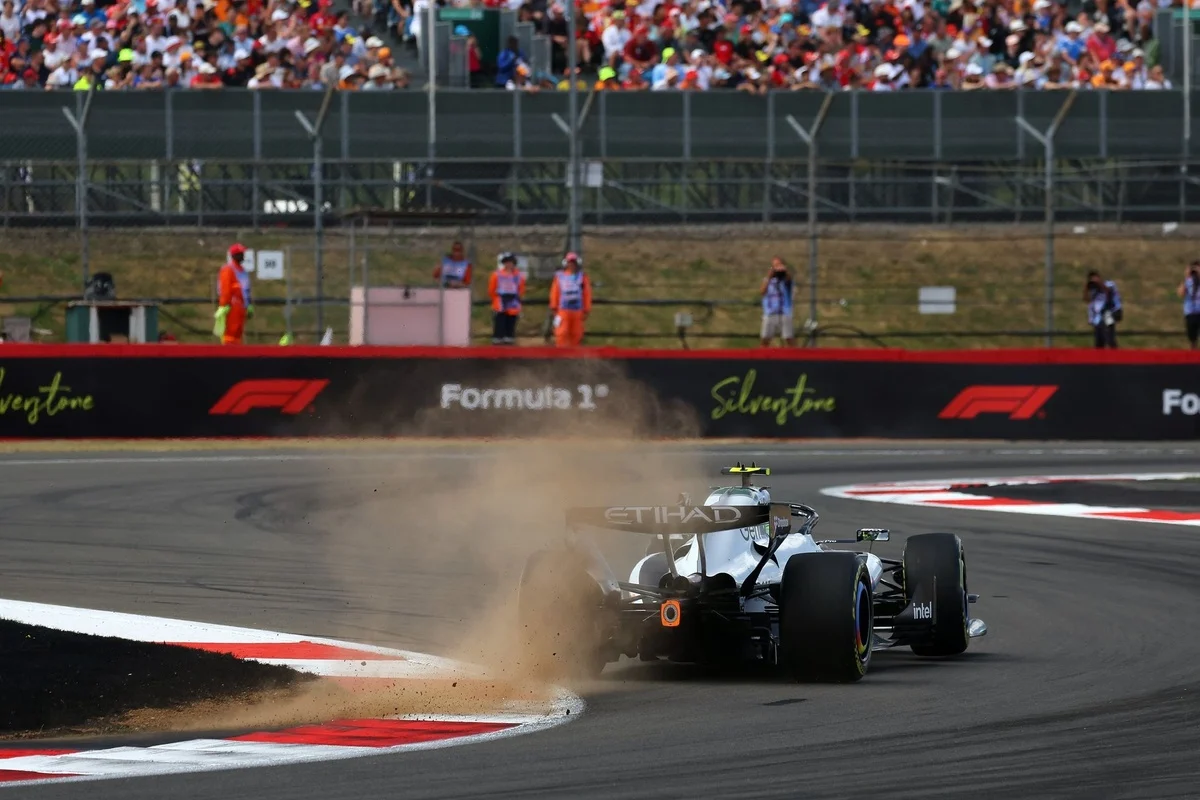
The Formula 1 British Grand Prix weekend at Silverstone served as a sobering, high-speed reality check for McLaren. While a promising podium finish for Lando Norris in the Saturday sprint race momentarily masked the Woking-based team’s underlying issues, the subsequent Grand Prix qualifying session stripped away the facade. As the dust settled on the historic circuit, it became clear that despite recent improvements, McLaren remains locked in a battle against both its rivals and its own technical shortcomings.
For a team that has been fighting at the sharp end of the grid, the performance at Silverstone was a stark reminder of the volatile nature of the current F1 pecking order. With Lando Norris qualifying a distant sixth—trailing the pole position by 0.766 seconds—and teammate Oscar Piastri languishing in eighth, the gap to the front was not merely a matter of milliseconds, but of a fundamental performance ceiling.
The Tale of Two Sessions: Sprint vs. Grand Prix
The weekend began with a glimmer of hope. During the 17-lap sprint race, Lando Norris put in a masterful performance, securing a third-place finish. In a high-stakes three-way scrap against George Russell and Max Verstappen, Norris demonstrated the grit and tactical awareness that have made him a fan favorite. For a brief moment, it appeared that McLaren had unlocked a hidden reserve of pace.
However, the transition to full-length qualifying for the Grand Prix provided a more accurate, albeit brutal, snapshot of the current landscape. As teams finalized their setups and the fuel loads dropped, the pecking order shifted. The gap to the front-running Mercedes of Kimi Antonelli and the Ferrari of Lewis Hamilton was significant.
The high-speed, high-load nature of Silverstone acts as a brutal arbiter of vehicle efficiency. Unlike lower-speed technical circuits, the Northamptonshire track demands both massive downforce and supreme aerodynamic efficiency. McLaren’s failure to bridge this gap in time for the British round left both Norris and Piastri struggling to find the stability required to attack the high-speed corners.

Decoding the Deficit: Aerodynamics and Gusty Conditions
The root cause of McLaren’s struggles is twofold: a lingering deficit in aerodynamic development and a susceptibility to atmospheric conditions. Team Principal Andrea Stella has been transparent about the fact that McLaren’s current aerodynamic efficiency is roughly two to three months behind the leaders.
"This is a circuit where we have a bit less grip overall than in Austria," Stella explained. "The car slides a lot. It was not only windy, but it was gusty. And when you have these conditions, I think there’s a premium for the cars that have the best behavior and grip in the corners."
The "gusty" nature of Silverstone on race weekend played a specific role in exposing the MCL38’s instability. When the wind shifts, a car with a sensitive aerodynamic platform loses the predictable load required for high-speed cornering. This forces the drivers to manage the car rather than push it, leading to a vicious cycle of sliding, which in turn degrades the tires and disrupts the driver’s rhythm.
Stella noted that Ferrari and Mercedes, which possess more stable platforms, were able to pull away precisely because their cars could handle the unpredictable nature of the British weather with greater composure.
The Power Unit Puzzle: HPP Integration
Beyond aerodynamics, a new variable has entered the conversation: the optimization of the Mercedes High Performance Powertrains (HPP) unit. While McLaren uses the same power plant as the Mercedes works team, they are not necessarily getting the same results.

"It’s a circuit where power unit exploitation and performance is particularly important, and I have to say that we still seem to have a little bit of a deficit in extracting the most from the HPP power unit," Stella admitted.
This is a delicate issue for the team. While the hardware is world-class, the integration—the software, the energy deployment strategies, and the way the car harvests and deploys electricity—is bespoke to each chassis. Stella pointed to GPS data as evidence that McLaren is leaving performance on the table. "If you look at the GPS overlays, it becomes apparent that somehow we need to keep our conversation open with HPP, because there’s some performance we seem to be leaving behind."
This admission suggests that McLaren’s engineering team is currently working through a calibration mismatch. In an era where power unit modes and hybrid deployment can account for significant lap time differences, this "deficit" is one that the team must resolve quickly to remain in the hunt for the Constructors’ Championship.
Analyzing the "Overdelivery" of the Sprint
Reflecting on the weekend, Andrea Stella was quick to temper the optimism generated by the sprint podium. He characterized the result as an instance of "overdelivery," driven by a strong start and the ability to find a clean rhythm early in the race.
"The result in the sprint was definitely encouraging… but I think that was a little bit of an overdelivery," Stella noted. "Once Lando was in third, he did a very, very good job maximizing everything. He only lost some time with [Sergio] Perez in corner nine. And I think it’s also important that when you get in a rhythm where you can use the deployment, the power unit, not to fight, but to have the fastest lap time, then you gain some pace."

Essentially, once a car is out of the "DRS train" or the chaotic midfield pack, it can operate in "clean air." In these conditions, the car is not burning its battery reserves to defend or attack, allowing the driver to hit their marks and maintain a consistent speed. The sprint race allowed Norris to enter this "clean air" state, masking the underlying performance struggles that were laid bare in the full qualifying session.
Looking Ahead: The Road to Hungary
McLaren’s trajectory for the remainder of the season is now centered on damage limitation followed by a push for progress. The team is currently bracing for the Belgian Grand Prix at the legendary Spa-Francorchamps. Given the track’s reliance on long, flat-out sections and high-speed cornering, Spa is expected to be another difficult weekend for the team, as it shares many of the aerodynamic challenges of Silverstone.
However, the mood within the team remains focused on the upcoming upgrade package scheduled for the Hungarian Grand Prix. The Hungaroring, characterized by its tight, twisting layout and lower speeds, is less punishing on pure aerodynamic efficiency. For McLaren, this is a vital opportunity to reset.
"We are three or four tenths behind in terms of development of our car," Stella conceded, looking at the broader championship picture. "To this, today, we need to add the fact that the conditions were difficult plus the exploitation of the power unit, on which we seem to be having a bit of a deficit."
Implications for the Championship
The events at Silverstone serve as a stark reminder that the 2024 season is far from decided. While Red Bull and Max Verstappen have faced their own share of "black cat" luck and performance fluctuations, the resurgence of Ferrari and the continued dominance of Mercedes in specific conditions mean that the "top four" teams are more congested than ever.

For McLaren, the path forward is clear:
- Bridge the Aero Gap: They must continue to shave off the two-to-three-month development lag that keeps them from matching the top-tier downforce levels.
- Refine Power Unit Integration: Deepening the collaboration with HPP to ensure the energy deployment strategies match the potential of the engine.
- Stabilize the Platform: Improving the car’s handling in gusty and non-ideal track conditions to ensure that the driver can push with confidence, regardless of the weather.
The team has proven that they can overdeliver when the stars align, but to be true contenders, they must move away from relying on race-day heroics to cover up fundamental engineering deficits. As the paddock moves toward the mid-season break, the developments in Hungary will be the ultimate litmus test for whether McLaren can sustain its challenge for the podium, or if they are destined to fall back into the tightly contested midfield scrap.
The British Grand Prix was, in many ways, a necessary wake-up call. It highlighted that in Formula 1, progress is rarely linear. For McLaren, the challenge now is to translate the lessons learned from the gusts of Silverstone into the precision required for the upcoming rounds. The fans in Woking and beyond will be watching the next few races closely, waiting to see if this talented squad can close the gap once and for all.


 Neng Nana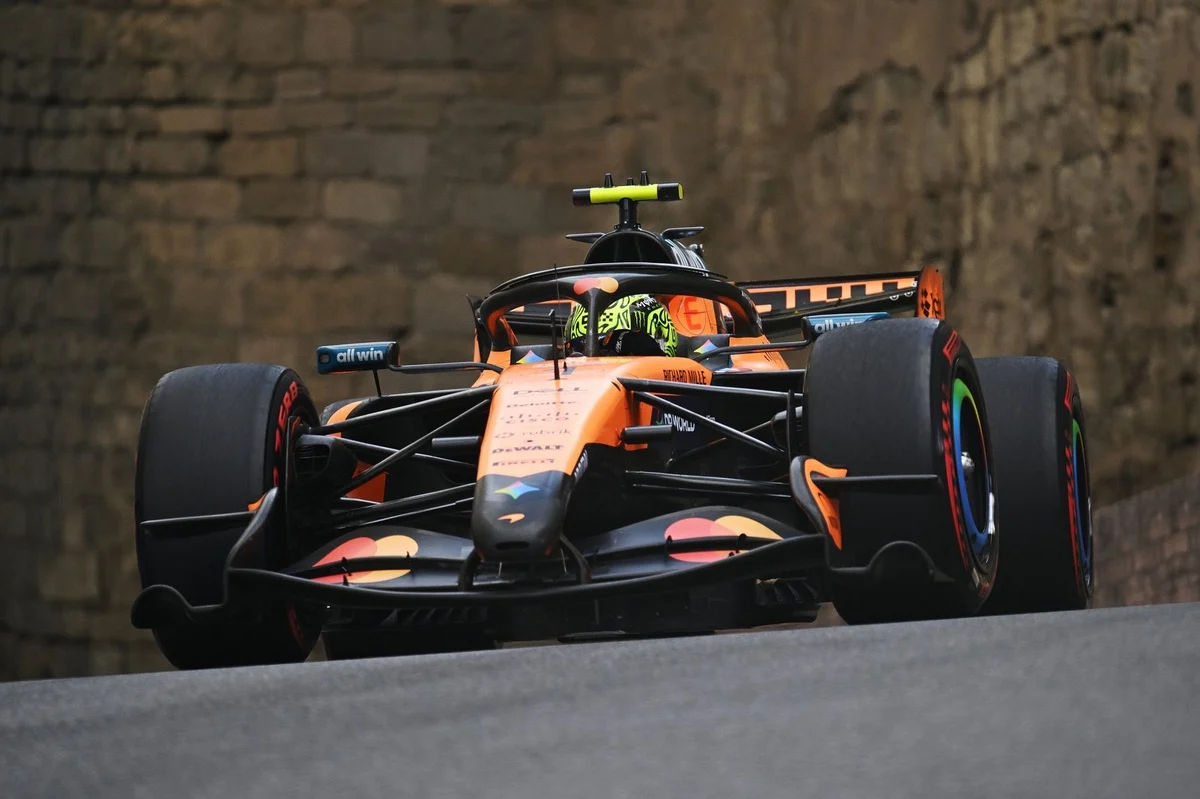
 Nana Wu

 Lina Hope

 Sagoh
Sagoh
 Iffa Jayyana