
 Lina Irawan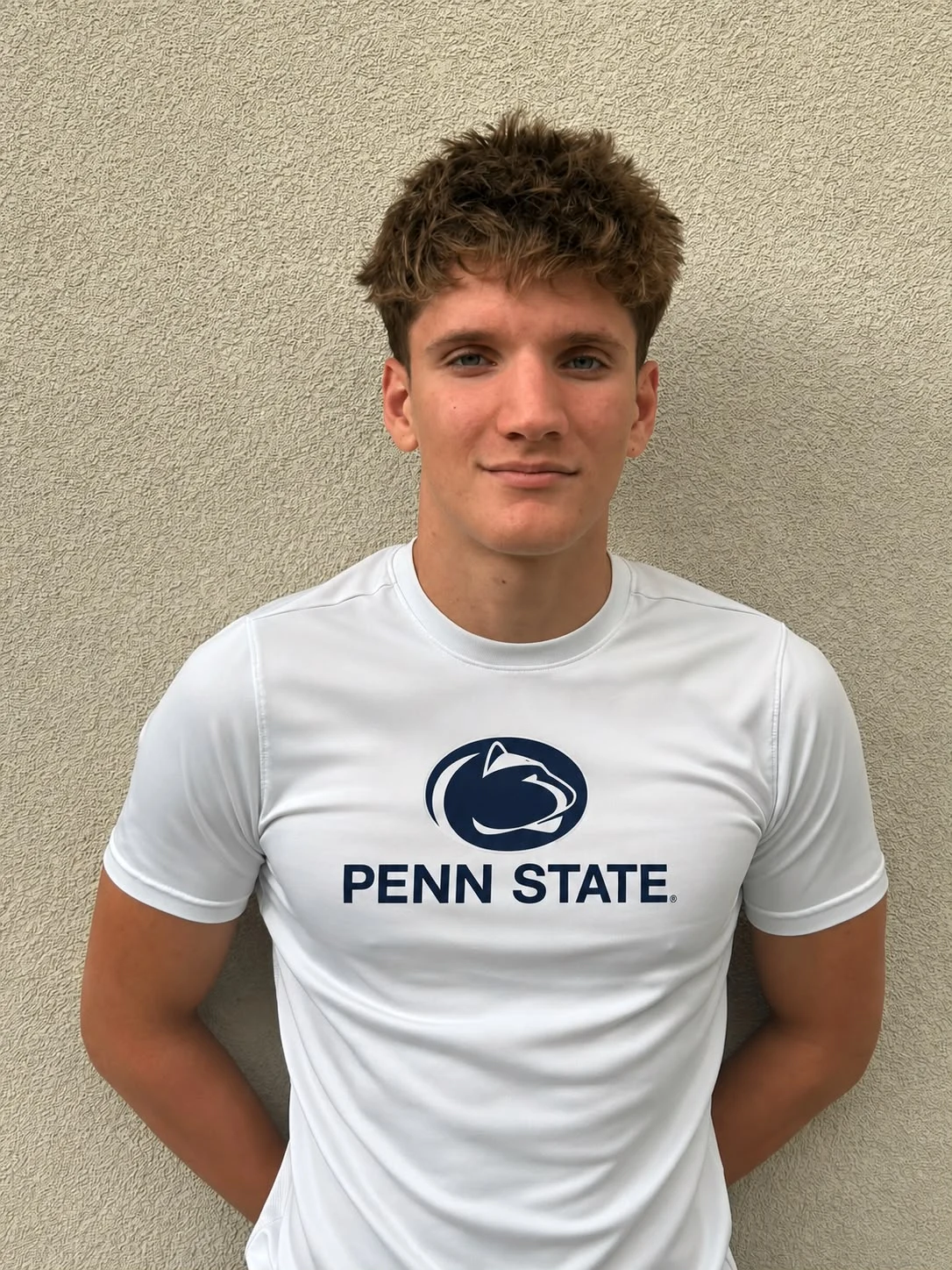
By Sports Desk | Recruiting Analysis
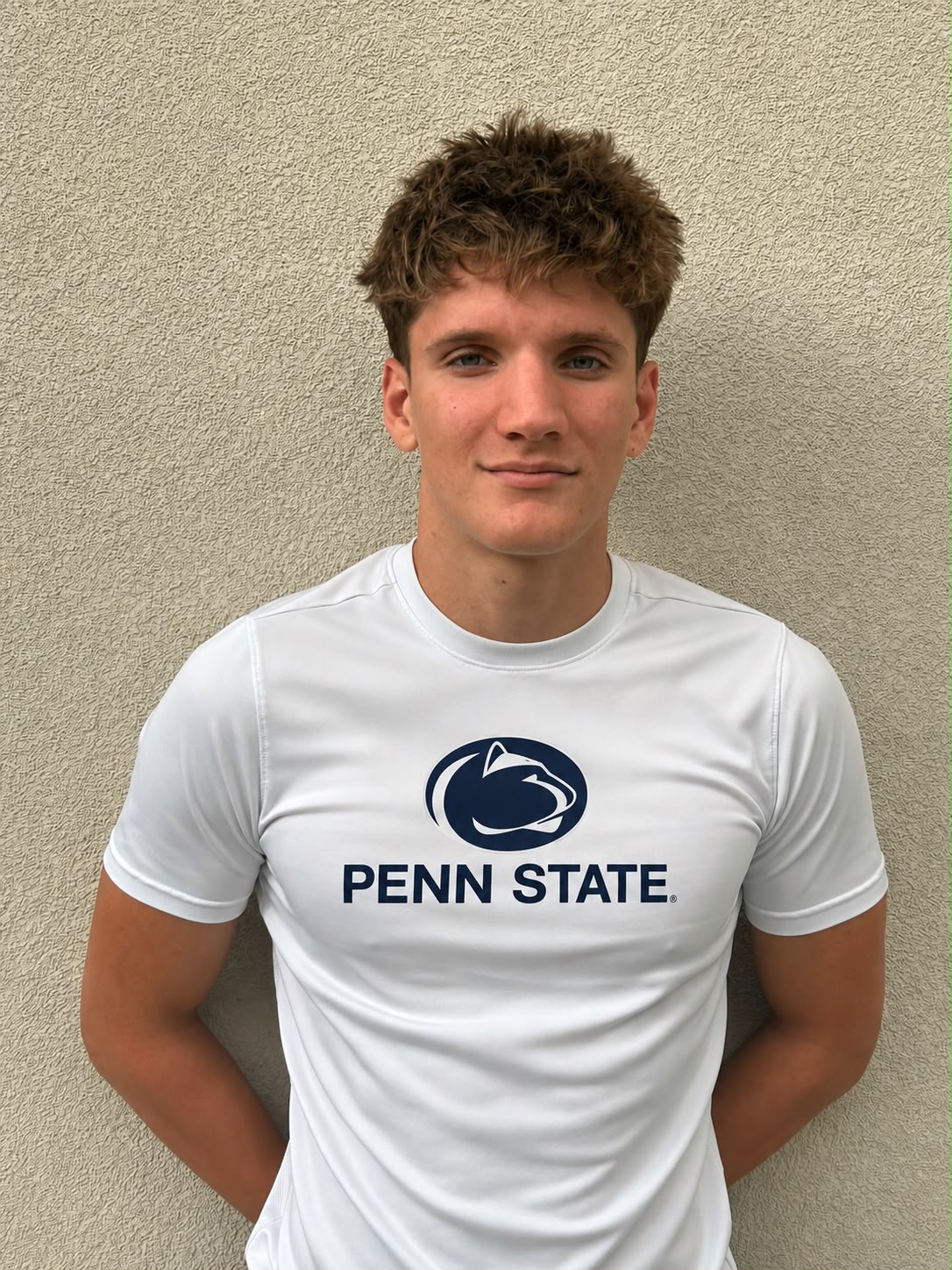
In a significant move for the future of collegiate swimming, European Junior Championships finalist Levente Varga has officially announced his verbal commitment to Pennsylvania State University. Set to join the Nittany Lions in the fall of 2028, Varga represents a major recruiting victory for the program, serving as the first publicized commitment for the university’s Class of 2032.
The announcement, shared via SwimCloud, signals a burgeoning trend of international talent seeking to hone their craft within the competitive landscape of the Big Ten Conference. For Penn State, the addition of a versatile IM and distance specialist like Varga is a foundational piece in their long-term strategy to ascend the conference standings.
The Path to State College: Main Facts and Background
Levente Varga is a rising star in the Hungarian swimming circuit. Hailing from Budapest, Varga balances rigorous academic demands at the Bessenyei Gyorgy Gimnazium with a demanding, year-round training schedule at the prestigious Kobanya Sport Club. His specialization in the Individual Medley (IM) and distance freestyle events makes him a highly adaptable athlete—the type of swimmer that modern Division I programs prioritize to maximize points at high-stakes championship meets.
Varga’s decision to commit early to Penn State underscores the global reach of NCAA swimming. By choosing to transition from the European long course circuit to the short course yard (SCY) format of the United States, Varga is preparing for a significant cultural and technical shift. His commitment is not merely a sports transaction; it is the culmination of years of dedication, supported by his family, personal coaches, and the robust development system at Kobanya.
"I’m beyond excited to announce my commitment to Penn State University!" Varga wrote in his public statement. "This dream wouldn’t have been possible without the incredible support of my family, coaches, teammates, and everyone who believed in me along the way. #WEARE"
A Chronology of Rising Performance
To understand the trajectory of Varga’s career, one must look at the data points that have defined his recent seasons. His development has been marked by a transition from domestic success in Hungary to international recognition on the European stage.
The 2024 Breakout
Varga’s performance at the MVM Ifjúsági Országos Bajnokság in May 2024 served as a major benchmark. Competing in long course meters (LCM), he recorded times of 2:05.80 in the 200 IM, 4:25.27 in the 400 IM, and 4:01.69 in the 400 free. These times demonstrated not only his raw speed but his ability to perform under the pressure of a national championship meet.
The International Stage
Following his domestic success, Varga took his talents to the European Junior Championships last month. This international debut was a critical test of his temperament and tactical race execution. Varga proved he belongs in the elite conversation, finishing sixth in the 400 IM with a time of 4:26.34 and securing 33rd in the 200 IM (2:06.70). These results provide a solid foundation for the technical coaching he will receive once he arrives in State College.
Winter Strength
In short course meters (SCM), Varga demonstrated exceptional consistency during the 2023-2024 winter season. His personal bests—set in November and December—highlight his range:
- 200 IM: 2:06.90
- 400 IM: 4:19.59
- 200 Free: 1:53.33
- 400 Free: 3:53.22
- 1500 Free: 15:28.98
Supporting Data: The Quantitative Edge
The recruitment of a foreign athlete often involves "conversion math"—predicting how a swimmer’s times in meters will translate to the yard-based pools of American universities. When projecting Varga’s potential impact on the Big Ten, the numbers suggest he is already operating at a high level.
Conference Scoring Potential
Penn State’s men’s team finished ninth at the most recent Big Ten conference meet. To climb the ladder, they need athletes capable of "B-final" and "A-final" performances. Varga’s converted time in the 1500-meter freestyle is particularly encouraging; it would have placed him 18th in the 1650-yard freestyle at the last Big Ten meet. Given that he has three full seasons of development before his collegiate debut, the potential for him to move into the top 16—and thus score crucial points—is high.
While his current bests in the 200/400 IM and 200/500 free are just outside the immediate scoring cutoff for Big Ten finals, the margin is slim. In a collegiate environment, where swimmers often see significant "taper" gains and specialized strength training, these gaps are expected to close. The coaching staff at Penn State will likely focus on his underwater work and turn efficiency, two areas where the transition to SCY often yields the most immediate improvements for international recruits.
The Strategic Implications for Penn State
The commitment of Varga serves as a barometer for the health and ambition of the Penn State swimming program. Recruiting from the European talent pool requires not just financial resources, but a strong reputation for athlete development and academic support.
Expanding the Recruitment Pipeline
By securing a commitment as early as the Class of 2032, Penn State is signaling a shift toward long-term developmental planning. Bringing in an athlete with international experience at the European Junior Championships provides the team with a "known quantity"—a swimmer who has already faced high-level adversity and succeeded.
Building for the Future
The Big Ten is an unforgiving conference. To compete with the likes of Indiana, Michigan, and Ohio State, Penn State must cultivate a roster with depth in the middle-distance and IM events. Varga’s versatility allows him to be a "plug-and-play" athlete for various relays and individual events, providing the coaching staff with tactical flexibility.
Official Perspective: The Role of Support Systems
It is worth noting the broader ecosystem that allows athletes like Varga to reach the collegiate level. The Fitter and Faster Swim Tour, which sponsors the SwimSwam recruiting channel, plays a significant role in providing educational resources and competitive platforms for aspiring athletes.
The journey from a local club in Budapest to the Big Ten is fraught with logistical and emotional challenges. The support of families and coaches remains the most critical, often unspoken, variable in a recruit’s success. Varga’s acknowledgment of his support system is a testament to the fact that collegiate recruitment is a collective achievement.
Conclusion: Looking Ahead to 2028
As Levente Varga continues his development in Hungary, the staff at Penn State will be tracking his progress with great interest. The move from Budapest to Pennsylvania is a significant one, representing the intersection of international athletic excellence and American academic tradition.
For the Nittany Lions, the arrival of Varga in 2028 is more than just an addition to the roster; it is a signal that the program is aggressively pursuing high-ceiling talent. If Varga’s current progression is any indication, he will arrive in the United States not merely as a participant, but as a contender. With three years left to refine his skills, the swimming community will be watching closely to see how this young Hungarian talent evolves before he dons the blue and white of Penn State.
For those interested in the future of the sport, Varga’s trajectory remains one of the most compelling narratives in collegiate recruiting, embodying the dedication and determination required to succeed on the world stage.
Fitter and Faster Swim Camps is the proud sponsor of SwimSwam’s College Recruiting Channel. For more information on their clinics and camps, visit fitterandfaster.com.

 Sagoh
Sagoh
 Nana Muazin
 Neng Nana
 Nana Wu
 Lina Hope
 Iffa Jayyana