
 Siti Muinah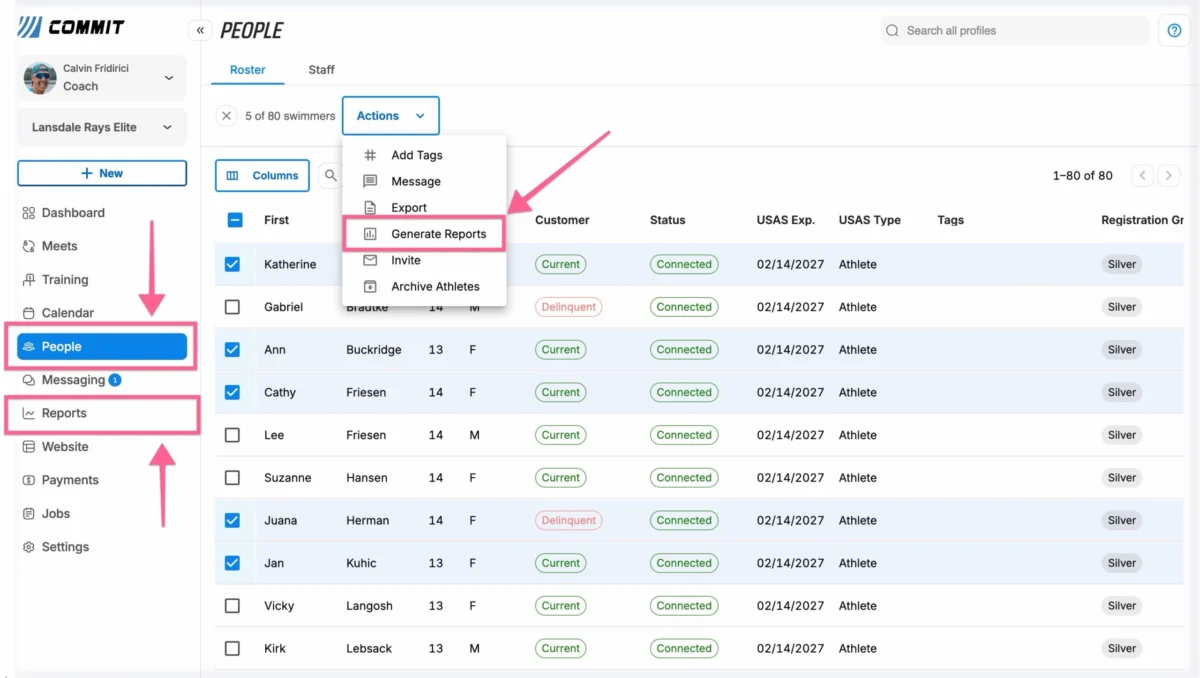
In the high-stakes world of competitive swimming, the difference between a podium finish and a missed touch often comes down to data. For coaches, the ability to track, analyze, and communicate performance metrics is essential to athlete development. However, the administrative burden of aggregating this data for entire squads has historically been a significant bottleneck.
Commit Swimming, the industry-leading team management platform, has officially addressed this challenge with the launch of its new "Multi-Swimmer Reports" feature. Designed to eliminate the manual drudgery of data entry and spreadsheet consolidation, this update allows coaches to generate comprehensive performance analytics for entire groups in a matter of seconds. By bridging the gap between raw pool data and actionable coaching insights, Commit Swimming is setting a new standard for operational efficiency in the sport.
The Core Innovation: Data at Scale
For years, swim coaches have been forced to choose between deep analysis and time efficiency. Manually pulling reports for individual swimmers—or worse, attempting to reconcile disparate data points across a roster—often meant spending more time behind a computer screen than on the pool deck.
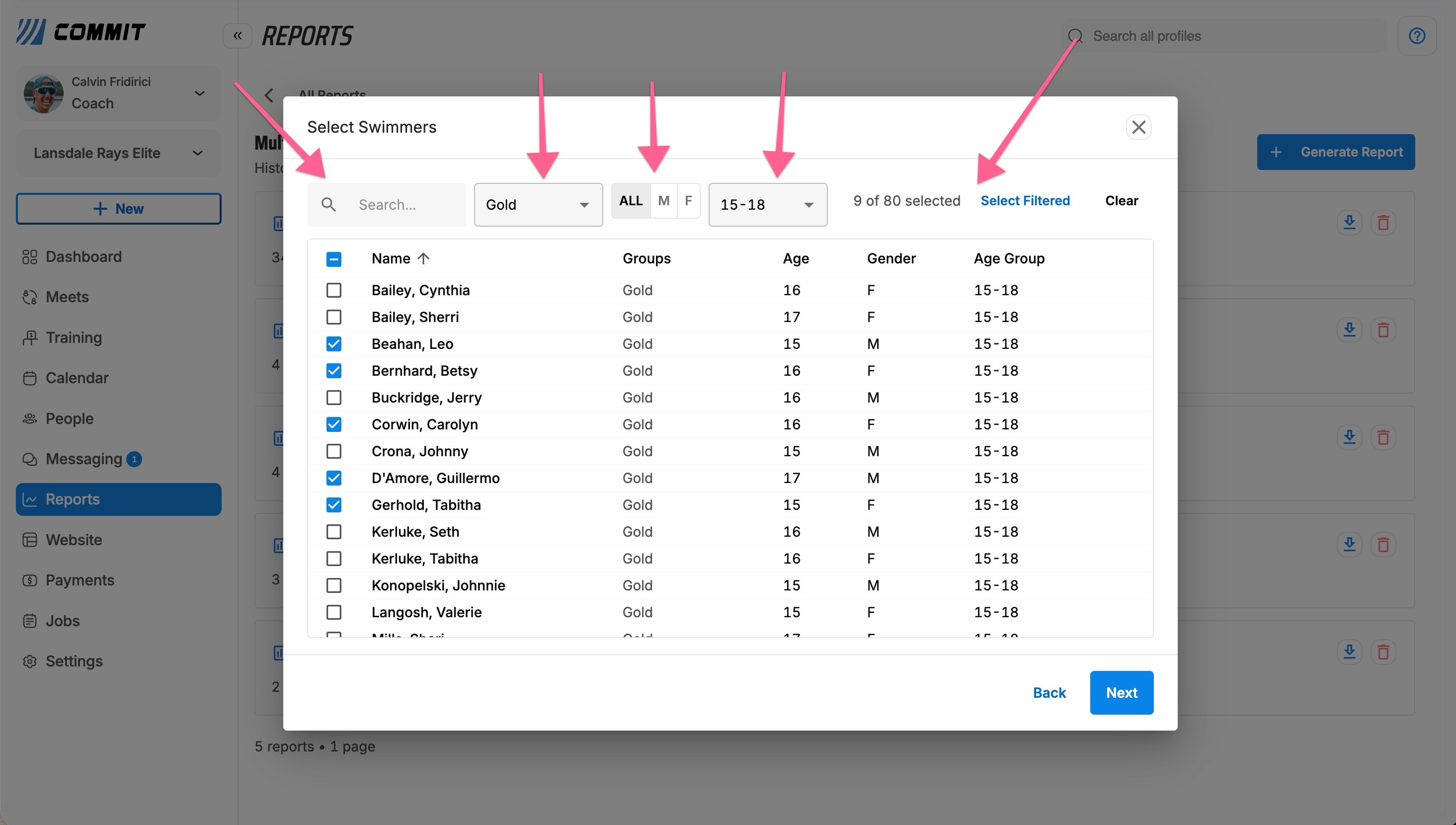
The introduction of Multi-Swimmer Reports changes this dynamic by allowing for bulk processing. Coaches can now filter by training group, age bracket, or custom criteria to generate reports for dozens of athletes simultaneously. This shift represents a transition from "point-in-time" individual tracking to "holistic" squad analysis.

Key Functional Upgrades
The update introduces four primary pillars that define the new workflow:
- Group-Wide Generation: Coaches no longer need to navigate to individual athlete profiles to see performance trends. The system now allows for batch selection, ensuring that entire squads can be analyzed in a single session.
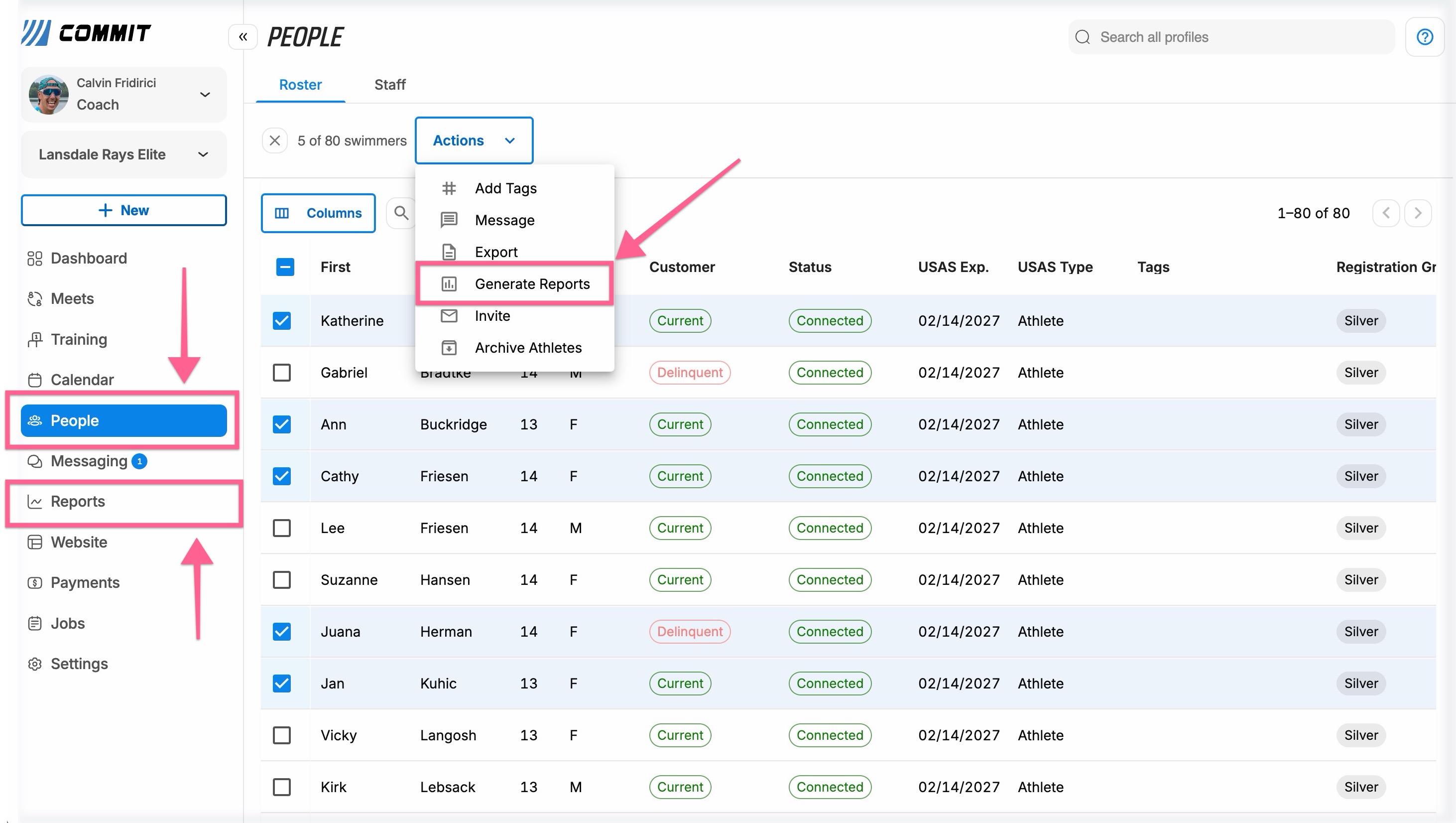
- Contextual Access: Understanding that coaching workflows vary, Commit has integrated report generation directly into both the dedicated "Reports" dashboard and the live roster view. This allows coaches to pull data exactly when they need it, whether they are in the office or on the pool deck.
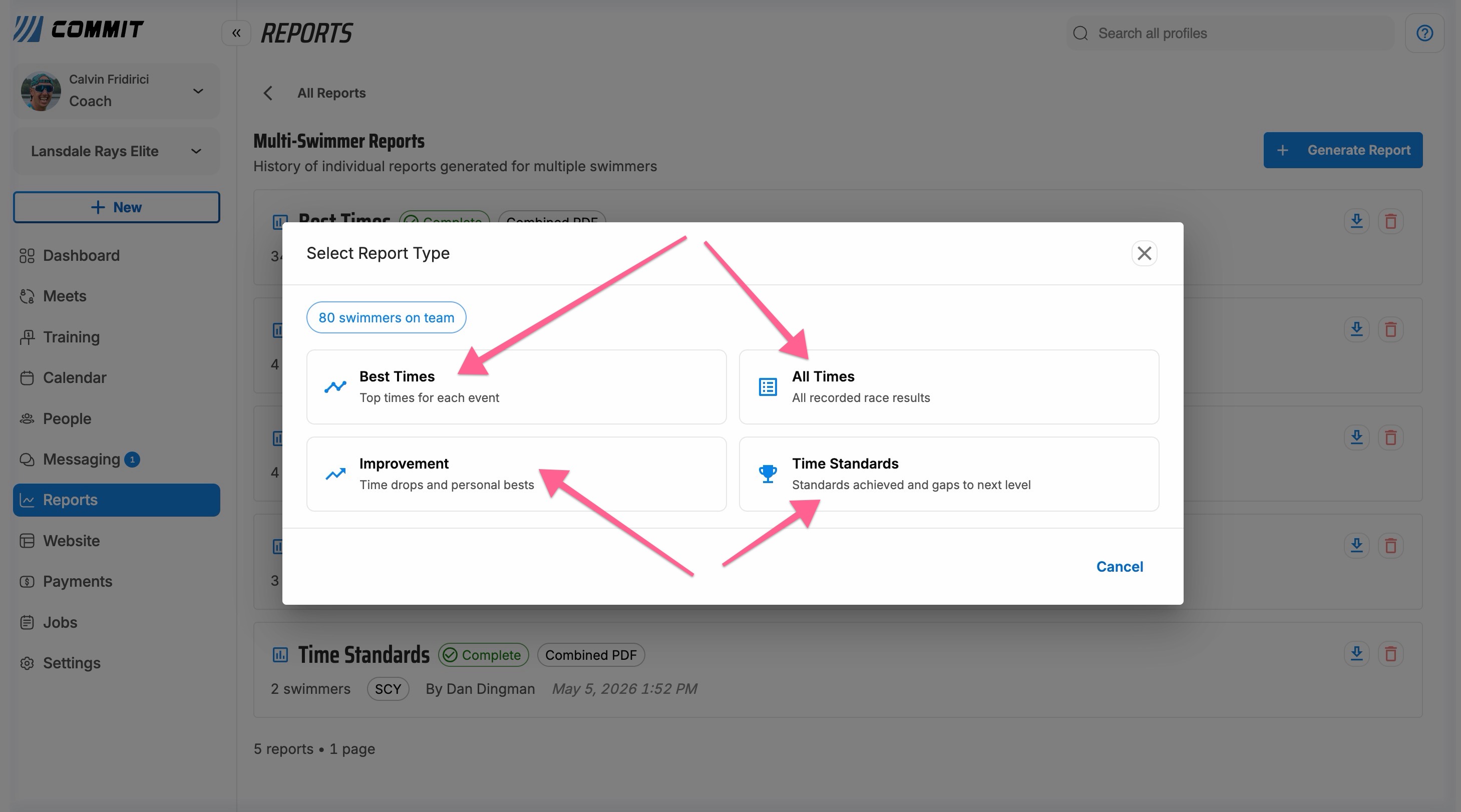
- Diverse Metrics Library: The platform now supports a wide array of performance indicators, including best times, progressive improvement curves, and alignment with various time standards.
- Persistent Storage: Every generated report is archived within the platform, creating a searchable, historical library of team progress that can be easily exported or shared with parents and athletes.
Chronology of Development: A Response to Coach Feedback
The development of Multi-Swimmer Reports was not an arbitrary product update; it was the result of a long-term feedback loop between the engineering team at Commit and the coaches who use the software daily.
Phase 1: The Bottleneck Identification (Q1 2025)
During a series of regional coaching clinics, the Commit team conducted a comprehensive audit of user pain points. The most consistent complaint centered on "administrative friction"—the time required to prepare reports for progress meetings and season-end reviews.
Phase 2: The Prototyping Stage (Q3 2025)
By the autumn of 2025, Commit began beta-testing an "aggregate view" feature. Initial feedback suggested that while coaches liked the summary data, they needed more granular filtering options. This led to the integration of the custom filtering criteria now available in the live software.
Phase 3: Integration and Deployment (Q2 2026)
Following extensive stability testing, the feature was rolled out as a core component of the Commit platform. This rollout was accompanied by a suite of educational video content, including the newly released instructional guide designed to help coaches master the filtering tools within the first week of implementation.
Supporting Data: Why Efficiency Matters
The impact of this update on the bottom line of a swimming program is quantifiable. Internal metrics from early adopters indicate that coaching staffs save an average of 4–6 hours per week on administrative reporting.
When extrapolated over a 40-week competitive season, a club with a staff of five coaches effectively recovers over 1,000 man-hours. In an industry where coaching salaries are often tight and the demands for high-quality instruction are increasing, this time reclamation is a game-changer.
Furthermore, the accuracy of automated reporting reduces the likelihood of human error inherent in manual spreadsheet tracking. By relying on a "single source of truth"—the Commit database—coaches can be confident that the metrics they present to parents or stakeholders are accurate, up-to-date, and standardized across the entire organization.
Perspectives from the Industry: Official Responses
The response from the coaching community has been overwhelmingly positive. Many industry professionals view this as a necessary evolution for clubs looking to professionalize their operations.
"We were spending hours every Sunday night just formatting performance data to send to parents," says one head coach of a mid-sized competitive club. "With the new Commit update, I can pull the same data, with better visualization, in about 45 seconds. It’s not just about the time saved; it’s about the ability to provide more frequent, data-backed feedback to our swimmers."
Commit Swimming’s leadership emphasizes that this is only the beginning. "Our mission has always been to build tools that allow coaches to do what they do best: coach," says a representative from the company. "By automating the repetitive aspects of data management, we are giving coaches back the most valuable resource they have—time."
Implications for the Future of Swim Management
The implications of this update extend beyond simple convenience. As the sport of swimming becomes increasingly reliant on performance analytics, the ability to synthesize this data will become a competitive advantage.
1. Data-Driven Recruitment and Retention
When athletes can see clear, automated reports detailing their improvements, their engagement with the sport increases. Transparency in performance metrics acts as a motivator, and the ease with which coaches can now share these reports fosters a more professional, goal-oriented environment.
2. Standardization of Coaching Practices
Larger teams often struggle with inconsistent reporting across different age groups. With standardized templates within the Multi-Swimmer Reports, clubs can ensure that every athlete, from the developmental level to the national qualifiers, receives a high-quality, professional performance summary.
3. The Shift Toward "Digital-First" Clubs
The swimming industry has historically been slow to adopt modern software solutions, often relying on legacy systems that are cumbersome and outdated. Commit Swimming’s focus on high-speed, intuitive interfaces—and now, automated reporting—is driving a mass migration away from platforms like SportsEngine Motion (TeamUnify). As clubs move to "digital-first" ecosystems, they gain the agility to scale their programs without a proportional increase in administrative overhead.
Conclusion: Reclaiming the Pool Deck
The launch of Multi-Swimmer Reports is a testament to the fact that software for athletics must be as dynamic as the sport itself. By reducing the administrative burden, Commit Swimming is effectively lowering the barrier to entry for high-level data analysis.
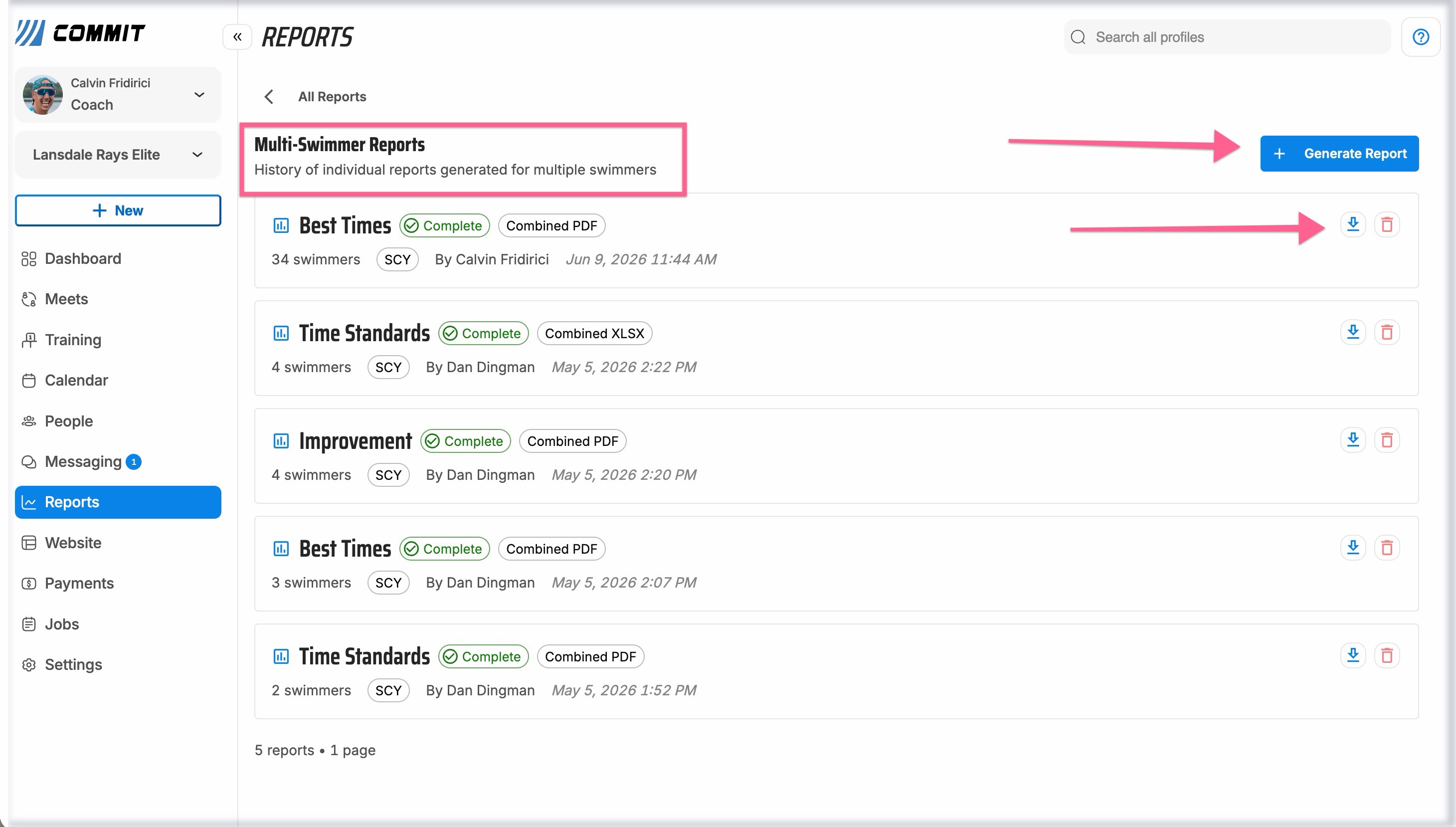
Coaches are no longer forced to choose between maintaining a spreadsheet and maintaining their focus on technique, stroke mechanics, and athlete psychology. The tools are now in place to ensure that data serves the coach, rather than the coach serving the data.
As the competitive season progresses, the true impact of this feature will be felt in the improved communication between staff and athletes, and ultimately, in the performance outcomes seen in the pool. For teams ready to transition into a more efficient, modern era of club management, Commit Swimming provides the platform to make that transition seamless.
To experience the speed of these new reporting tools, coaches and team administrators are encouraged to schedule a personalized demonstration. By integrating these workflows, clubs can stop managing paperwork and start managing success.
For more information, visit commitswimming.com and book your team demo today.


 Sagoh
Sagoh
 Nana Muazin
 Neng Nana
 Nana Wu
 Lina Hope

 Iffa Jayyana