
 Lina Irawan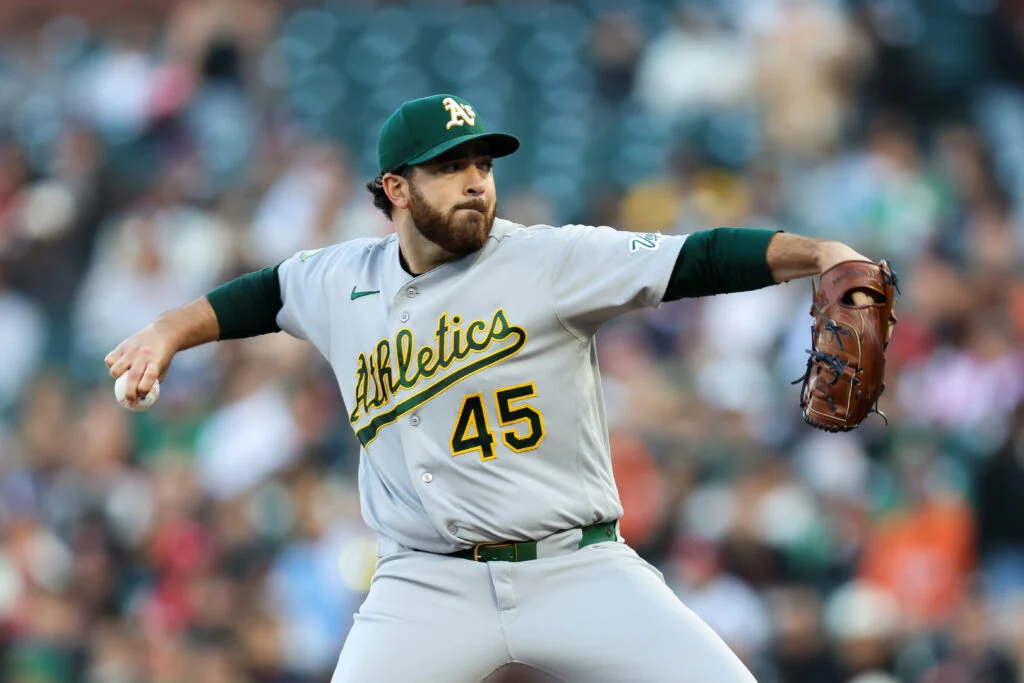
By Editorial Staff
July 18, 2026
In a move that underscores the Chicago Cubs’ desperate need for reliable pitching depth as the trade deadline approaches, the front office announced on Saturday that they have acquired veteran right-hander Aaron Civale from the Oakland Athletics. In exchange, the Cubs are parting ways with minor league arm Aiden Moffett. As part of the transaction, the Athletics will also send cash considerations to Chicago, a move intended to offset the remainder of Civale’s $6 million salary for the 2026 season.
The trade represents a homecoming of sorts for the well-traveled hurler, who spent a brief stint on the North Side at the conclusion of the 2025 campaign. For the Cubs, the acquisition is a low-stakes gamble designed to bolster a pitching staff that has dealt with significant attrition and inconsistency throughout the first half of the season.
The Core Facts: Breaking Down the Deal
The trade, announced late Saturday afternoon, sees 31-year-old Aaron Civale moving from the bottom-dwelling Athletics back to a Cubs organization that is currently fighting to maintain relevance in a crowded National League Wild Card race.
For the Cubs, the transaction is functionally an inexpensive insurance policy. By securing cash from Oakland, Chicago is assuming a minimal financial commitment for the remainder of Civale’s one-year deal. The cost of acquisition, Aiden Moffett, is a prospect currently working through the lower levels of the minor league system. While the Cubs are clearly looking for immediate rotation or bullpen help, the Athletics—who designated Civale for assignment just 48 hours prior to this trade—are effectively cutting ties with a failed free-agent experiment.
Chronology of a Failed Experiment
To understand why the Athletics were willing to move on from a pitcher they signed to a $6 million contract just six months ago, one must look at the disastrous trajectory of Civale’s 2026 season in Oakland.
The Winter Signing
In January 2026, the Athletics viewed Civale as a stabilizing veteran presence—a reliable "innings-eater" who could bridge the gap between their young pitching prospects and a more competitive window. The one-year, $6 million deal was framed as a potential bargain, with the hope that Civale could provide league-average production and perhaps be flipped for prospects at the July deadline.
The 2026 Struggles
The reality, however, was starkly different. Civale struggled from the outset, posting a bloated 5.42 ERA across 16 appearances. Control issues, coupled with a notable decline in velocity, plagued his tenure in the Bay Area. His season was further derailed by a shoulder injury that forced a stint on the 15-day injured list, disrupting his rhythm and preventing him from building any meaningful momentum.
The Final Straw
The final two appearances before the All-Star break served as the catalyst for his departure. Civale surrendered eight earned runs over just seven combined innings, a performance that highlighted his inability to keep opponents in check. With the Athletics firmly out of postseason contention and looking to clear roster space for younger talent, the decision was made on Wednesday to designate him for assignment.
Supporting Data: Can the Cubs Unlock the 2025 Version?
The Cubs are betting on the "familiarity factor." The organization is intimately acquainted with Civale’s pitch profile, having acquired him off waivers from the Chicago White Sox in August 2025.
During that five-game cameo with the Cubs last season, Civale functioned primarily as a high-leverage reliever, showing flashes of the poise that defined his earlier career. While his sample size was small, the Cubs’ analytical team clearly saw something in his spin rates or pitch sequencing that they believe can be replicated.
Performance Metrics (Comparison)
- 2025 (Cubs): The brief tenure provided optimism. His ability to work in short bursts allowed his fastball to play up, and his breaking stuff was significantly more effective than it has been in his recent starts for Oakland.
- 2026 (Athletics): A 5.42 ERA and a WHIP exceeding 1.50 tell the story of a pitcher struggling to miss bats. The primary concern for the Cubs’ pitching coaches will be whether his shoulder health is truly 100% or if his velocity dip is a permanent manifestation of the wear and tear of a long career.
Official Responses and Front Office Strategy
The Cubs’ front office, led by President of Baseball Operations Jed Hoyer, has maintained a stoic approach to the 2026 deadline. Speaking briefly after the announcement, the team emphasized the need for versatility.
"Aaron is a pitcher we know well," the statement read. "He’s a professional who understands the rigors of a pennant race. We believe a change of scenery and a return to our pitching infrastructure will allow him to rediscover the form he showed with us last season. Adding depth is never a bad thing, especially when it comes at a manageable cost."
The Athletics, conversely, have remained quiet regarding the specifics of the trade, reflecting the organization’s desire to move forward with a full-scale youth movement. By offloading the remaining salary, Oakland has created immediate payroll flexibility, allowing them to sign minor league veterans or focus on internal evaluations for the remainder of the season.
Implications: The Road Ahead
This trade is not a "blockbuster," but it is a quintessential "Cubs-style" mid-season move. It addresses a glaring need—the lack of reliable depth—without sacrificing the future of the farm system.
For the Cubs
The pressure is now on pitching coach Tommy Hottovy to work his magic. If Civale can return to a mid-4.00s ERA, he provides immense value as a long-man out of the bullpen or a spot-starter when injuries inevitably strike the rotation. If he continues to struggle, the Cubs have effectively lost nothing more than a prospect who was not projected to contribute to the big-league club in the immediate future.
For the Athletics
For Oakland, the implication is simple: the experiment failed, and it is time to pivot. By moving Civale for Aiden Moffett, they are essentially taking a flyer on a younger arm. Moffett, who possesses a high-ceiling fastball, will now have the chance to develop within the Athletics’ system, which has historically been adept at helping young arms find their command.
The League Context
As we approach the July 31 trade deadline, this deal serves as a bellwether for the rest of the league. We are seeing a market where teams are cautious about parting with premium prospects, preferring instead to swap "distressed assets"—players who have underperformed but possess theoretical upside. The Cubs are banking on the fact that Civale is not the pitcher his 2026 stats suggest, but rather the pitcher they saw in 2025.
Conclusion: A Low-Risk, High-Reward Calculation
The acquisition of Aaron Civale is a classic "low-risk, high-reward" maneuver. In a season where the margins between the division leaders and the Wild Card chasers are razor-thin, the Cubs cannot afford to ignore opportunities to improve their pitching depth.
While fans might clamor for a marquee starter, the reality of the 2026 market is that pitching is at a premium. By bringing back a known quantity who has already proven he can handle the pressure of the Chicago market, the Cubs have secured a veteran arm that could prove vital in late-inning situations or as an emergency starter.
Whether this move is viewed as a masterstroke or a footnote will depend entirely on Civale’s performance over the next three months. For now, the Cubs have added a familiar face to their clubhouse—a player who knows exactly what it means to wear the pinstripes and who is looking for a second chance to prove his worth in the heat of a playoff race.
More to come as the Cubs finalize their roster maneuvers heading into the series against the Cardinals.

 Nana Wu
 Siti Muinah
 Neng Nana

 Lina Hope

 Sagoh
Sagoh
 Iffa Jayyana