
 Siti Muinah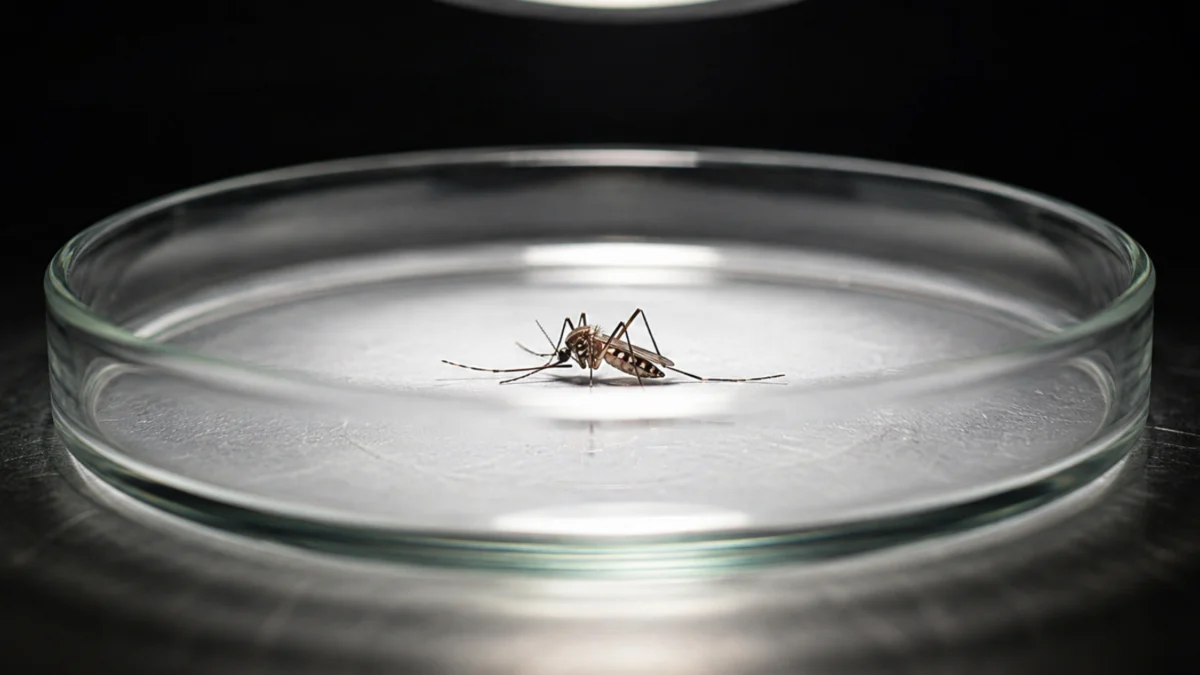
In the vast, chaotic ecosystem of TikTok, where trends rise and fall with ephemeral speed, a creator operating under the moniker "Fatsocat" has carved out a niche so unsettling that it has transcended mere viral entertainment to spark a genuine psychological debate among millions of viewers. Known to his 623,000 followers as the "mosquito serial killer," Fatsocat has transformed the mundane annoyance of summer pests into a series of chilling, meticulously documented experiments that blur the lines between entomological study and something far more sinister.
With over 28 million aggregate likes, the account has become a digital curiosity. However, it is not the macro-photography or the insect trivia that keeps audiences glued to their screens; it is the ritualistic, almost clinical nature of the creator’s war on mosquitoes. By capturing, testing, and ultimately archiving his subjects in a physical notebook, Fatsocat has invited comparisons to fictional television tropes, drawing widespread reactions ranging from morbid fascination to genuine alarm.
The Anatomy of an Obsession: A Chronology of Experiments
Fatsocat’s content follows a rhythmic, repetitive, and increasingly ominous structure. While the average person might reach for a flyswatter or a can of repellent, Fatsocat engages in what he frames as "experiments."
The Early Phase: Curiosity and Control
The initial videos on the channel focused on the behavior of insects under controlled environments. Early entries saw him trapping mosquitoes with various household substances. However, as his audience grew, so did the complexity and cruelty of his methodology. He began testing how mosquitoes would interact with hazardous materials, including rat poison and the chemical contents of glow sticks, as well as introducing them to natural predators, such as ant-mimicking spiders, to observe the outcome.
The Syringe Incident
Perhaps the most polarizing moment in his content history involves a video where he allows a mosquito to feed on his own blood before trapping it inside a medical syringe. In a sequence that viewers described as deeply discomforting, he extracts the air and replaces it with concentrated cigarette smoke. As the insect loses consciousness, he narrates the process with a chilling, detached calm, informing his audience that the insect’s struggle and eventual "sleep" are "perfectly normal."
The Notebook Archive
The defining feature of his content—and the source of the "serial killer" moniker—is the conclusion of every video. Once the subject has succumbed to his tests, he produces a notebook. Using clear adhesive tape, he mounts the deceased insect onto a page, meticulously recording the date and the method of its demise.
The collection, which appeared to span from late May through late June, shows dozens of preserved specimens. This ritualistic cataloging, combined with his soft-spoken, methodical narration, has created a persona that feels eerily reminiscent of the protagonist from the hit series Dexter.
Supporting Data: The Viral Spread
The reach of Fatsocat’s content is not limited to his native platform. On July 17, a compilation of his work was shared on Reddit, where it exploded in popularity, garnering over 31,000 upvotes within 24 hours. The comments section of that post became a focal point for the public’s psychological reaction to his work.
Public Sentiment and the "Dexter" Comparison
The consensus among the online community is one of visceral unease. Reddit users were particularly fixated on the creator’s behavioral cues. One commenter highlighted the phrase "quietly open my notebook," noting that the creator’s hushed tone gave the impression he was afraid of "waking up the newest entries."
The psychological impact of the videos is profound. Even those who loathe mosquitoes—a species responsible for more human deaths globally than any other animal—have expressed sympathy for the subjects. "Never thought I would feel bad for mosquitoes, but this did it," one user remarked. The juxtaposition of the creator’s soft-spoken, "ASMR-style" narration with the violent reality of the experiments has created a cognitive dissonance that keeps viewers returning, despite their own self-reported disgust.
Implications: The Evolution of "Dark" Content on Social Media
The rise of Fatsocat is not an isolated incident but rather a symptom of a broader trend in digital media where creators push the boundaries of "acceptable" animal-related content.
The Influence of Parasite-Centric Content
Fatsocat’s success mirrors the viral trajectory of creators like YouTuber Rusty Cage, who recently spent weeks attempting to kill a Lone Star tick he had removed from his own body. Cage’s failure to terminate the resilient parasite through freezing and drowning highlighted a burgeoning genre of content: the "man vs. pest" narrative.
However, where Cage’s content focused on the survivalist struggle of the parasite, Fatsocat’s content focuses on the total domination of the insect. The shift from "attempting to eliminate a threat" to "systematically documenting the death of a captive" marks a significant evolution in the genre, moving from survival to spectacle.
Ethical Considerations
While mosquitoes are legally and socially considered pests, the "serial killer" framing raises questions about the platform’s responsibility. TikTok’s community guidelines generally prohibit the depiction of animal cruelty. However, the definition of "animal" is often interpreted as vertebrate life. Invertebrates, such as insects, exist in a grey area of platform policy. This lack of clear regulatory enforcement allows creators like Fatsocat to operate with impunity, effectively testing the limits of what an audience will accept as "entertainment."
The Psychological Underpinnings of the Fascination
Why do millions watch? Psychologists suggest that such content taps into a primal human desire for control over a chaotic environment. Mosquitoes represent an uncontrollable, disease-carrying threat. By capturing and documenting them, Fatsocat provides his audience with a sense of vicarious agency.
However, the "serial killer" comparison persists because of the creator’s method. It is not the death of the insect that disturbs the audience; it is the preservation of the death. The notebook represents a desire to memorialize the act of killing, which is a classic trope associated with the development of psychopathic behaviors in literature and film. Whether Fatsocat is intentionally playing into this "Dexter" persona for views or simply possesses a bizarre, analytical approach to entomology remains unclear.
Conclusion: A Digital Mirror
As Fatsocat continues to add to his notebook, the debate surrounding his content grows. He has effectively weaponized the aesthetic of a true-crime documentary to frame the destruction of common insects. Whether one views him as an amateur entomologist with a dark flair or a harbinger of increasingly desensitized digital entertainment, his rise to fame is a testament to the internet’s enduring obsession with the macabre.
Ultimately, the "mosquito serial killer" serves as a mirror to our own digital culture. We are a society that consumes the destruction of life as a form of "oddly satisfying" content, provided the subject is small enough to be dismissed. As long as the notebook continues to fill and the views continue to climb, Fatsocat will remain a prominent, if unsettling, fixture of the social media landscape, leaving us to wonder: what happens when the insects are no longer enough to satisfy the audience’s hunger for the macabre?


 Nana Wu
 Neng Nana

 Lina Hope

 Sagoh
Sagoh
 Iffa Jayyana