
 Suro Senen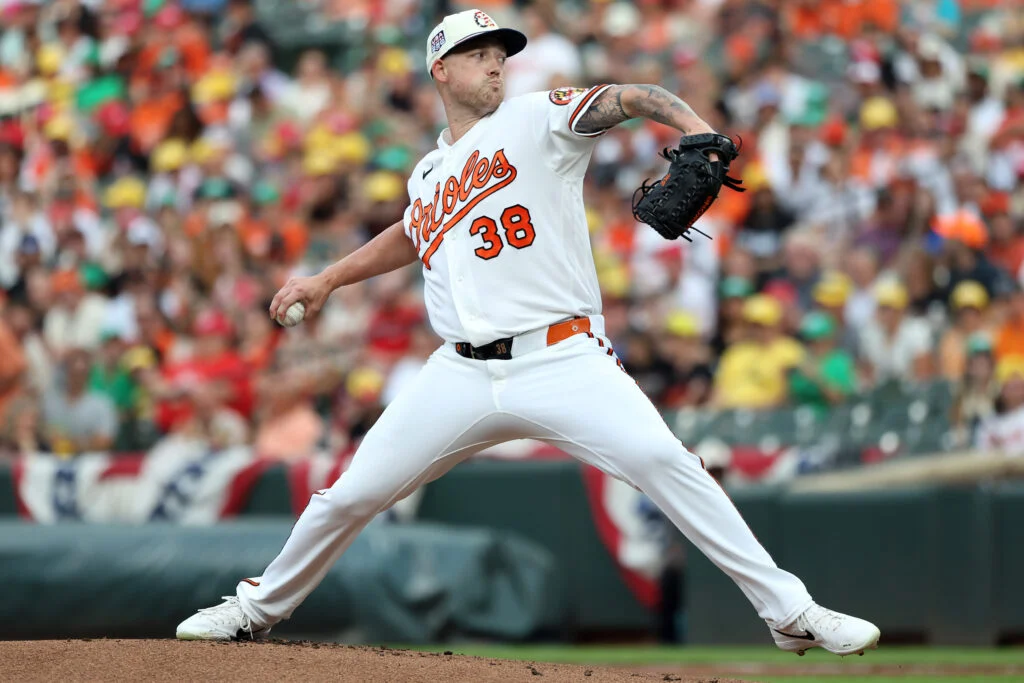
In a definitive move signaling the Baltimore Orioles’ commitment to sustaining their status as a perennial American League contender, the organization announced today that they have signed right-handed starting pitcher Kyle Bradish to a five-year contract extension. The deal, which spans through the 2031 season, guarantees Bradish $90 million and solidifies the top of the Orioles’ rotation for the remainder of the decade.
The agreement, brokered by All Bases Covered Sports Management, marks a significant milestone for both the franchise and the 29-year-old hurler. By locking up Bradish, the Orioles have successfully mitigated the uncertainty of his looming free agency, securing a proven commodity who has become a cornerstone of the club’s pitching staff.
The Financial Breakdown
The structure of the $90 million contract reflects a measured, escalating salary progression that provides Baltimore with financial flexibility in the immediate future while rewarding Bradish as he enters his prime years. According to reports first surfaced by Ryan Ripken of the Ryan Ripken Show, the payout schedule is as follows:
- 2026: $10 million
- 2027: $13 million
- 2028: $17 million
- 2029: $22 million
- 2030: $28 million
This deal replaces the final two years of Bradish’s arbitration eligibility—during which he was coming off a $3.55 million salary—with three years of guaranteed free agency. It stands as the largest pitching contract in the history of the Orioles franchise, narrowly eclipsing the five-year extension signed earlier this season by fellow starter Shane Baz.
A Proven Trajectory: The Evolution of Kyle Bradish
To understand the significance of this signing, one must look at the path that brought Bradish to Baltimore. Originally selected by the Los Angeles Angels in the fourth round of the 2018 MLB Draft, Bradish spent only one season in the Angels’ farm system before being traded to the Orioles in a blockbuster deal involving Dylan Bundy.
While the secondary pieces of that trade—Isaac Mattson, Kyle Brnovich, and Zach Peek—failed to make a lasting impact in Baltimore, the acquisition of Bradish has proven to be a masterstroke by the front office. While Bundy provided a brief, serviceable window for the Angels, Bradish has evolved into a high-leverage starter capable of anchoring a championship-caliber rotation.
Performance and Durability
Statistically, the 2026 campaign has been one of resilience for Bradish. Posting a 3.61 ERA across his first 19 starts, he has navigated a season characterized by a shift in profile. While his strikeout rate has dipped slightly from the dominant levels seen in 2022 and 2023, and his walk rate has climbed to a career-high 11.0%, the underlying metrics suggest a pitcher who remains effective. His xERA and xFIP both sit comfortably below the 4.00 mark, indicating that his surface-level stats are a fair reflection of his actual performance.
Perhaps most importantly, the conversation surrounding Bradish has shifted from "potential" to "availability." After an arduous 2024 season plagued by elbow complications that required surgical intervention, Bradish was limited to a mere 72 1/3 innings between 2024 and his limited return late last year.
The 2026 season has served as a validation of his health. Having already surpassed the 107-inning mark, Bradish is on a clear trajectory to eclipse his career-high workload of 168 2/3 innings, set in 2023. This durability is the primary catalyst for the Orioles’ decision to commit long-term capital, as the team places a premium on the ability to absorb innings deep into the summer months.
Official Responses and Organizational Vision
The extension is as much a statement about the current ownership’s philosophy as it is about the player. David Rubenstein, who assumed the role of majority owner ahead of the 2024 season, has overseen a period of aggressive financial expansion that has transformed the club’s roster-building strategy.
"Keeping players of Kyle’s caliber in an Orioles uniform is an important part of our long-term vision," Rubenstein said in a formal statement. "We are grateful to Kyle for his commitment to our organization and to Baltimore."
This sentiment was echoed by Mike Elias, the Orioles’ president of baseball operations. Under Elias, the Orioles have transitioned from a rebuilding club to a powerhouse, and he views the extension as a linchpin of that evolution. "This extension reflects the continued dedication of our ownership group, led by David Rubenstein, to build and sustain a team that our fans and Baltimore can be proud of," Elias noted.
Implications for the Roster and Payroll
The signing of Bradish represents the second major investment in pitching this year, following the Shane Baz extension. This dual-track approach to securing the rotation is part of a broader, more ambitious financial strategy.
A New Era of Spending
Under previous ownership, the Orioles were often characterized by austerity, with total payrolls hovering around the $65 million mark. That era is firmly in the rearview mirror. With payrolls climbing to $103 million in 2024 and currently sitting near $172 million, the club is operating in a new tier of financial competitiveness.
The Bradish deal follows the marquee signing of first baseman Pete Alonso, whose $155 million contract remains the second-largest in franchise history. By combining high-impact free agent acquisitions with early-career extensions for internal talent, Baltimore is effectively creating a hybrid model of team construction designed to maximize their competitive window.
The Outlook for the Rotation
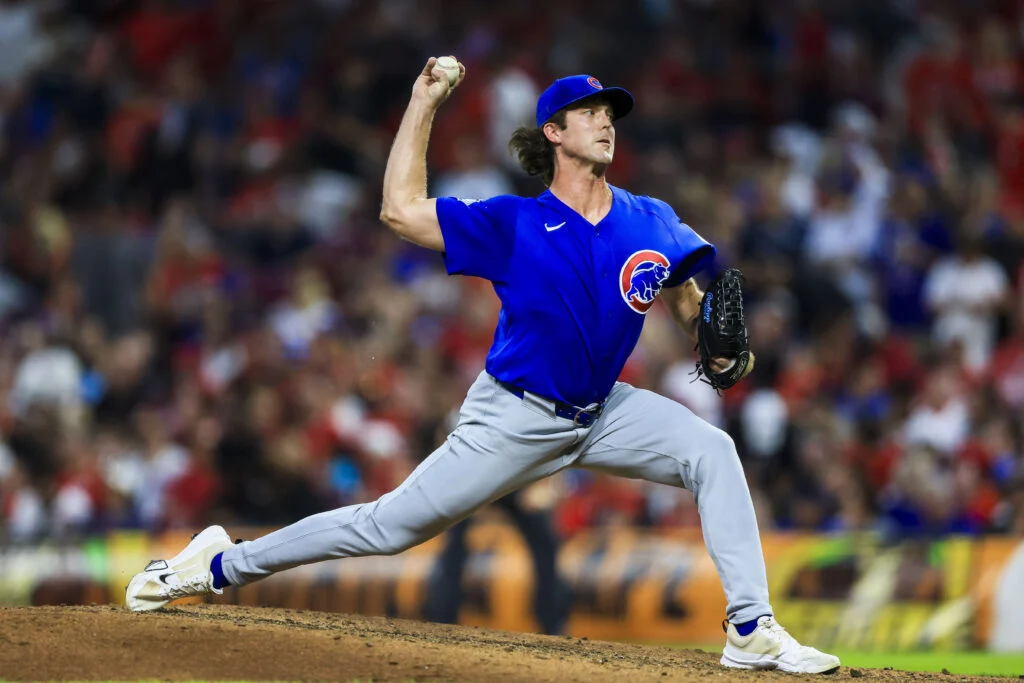
With Bradish and Baz locked in for the remainder of the decade, the Orioles have established a stable foundation. However, the work is far from complete. While Dean Kremer remains under team control for another season and prospect Brandon Young is not slated for arbitration until 2029, the rotation still has variables. The upcoming free agency of Trevor Rogers leaves a vacancy that the team will need to address through the draft, trade market, or further free-agent spending.
Nevertheless, the front office has clearly prioritized the "Core Four" approach. By securing the top of their rotation, the Orioles provide their coaching staff and fans with a predictable, high-ceiling starting staff that can go toe-to-toe with any team in the American League.
Conclusion: A Bet on Stability
In the modern landscape of Major League Baseball, where pitching volatility is the norm and injuries can derail championship hopes in an instant, the Orioles have chosen to bet on the upside of a familiar face. Kyle Bradish has proven he can handle the pressure of the American League East, and by securing his services through 2031, Baltimore has removed one of the most significant variables in their long-term planning.
The combination of increased payroll, aggressive extensions, and a clear vision from the front office suggests that the "Baltimore Way" is no longer just about scouting and development—it is about retention. As the Orioles look toward the future, they do so with the confidence that their rotation is anchored by one of their own, providing a beacon of stability in an unpredictable game. For the fans in Baltimore, the message is clear: the window of opportunity is not just open—it is being reinforced for the long haul.

 Nana Wu
 Siti Muinah
 Neng Nana

 Lina Hope
 Sagoh
Sagoh
 Iffa Jayyana