
 Raul Delapena Setiawan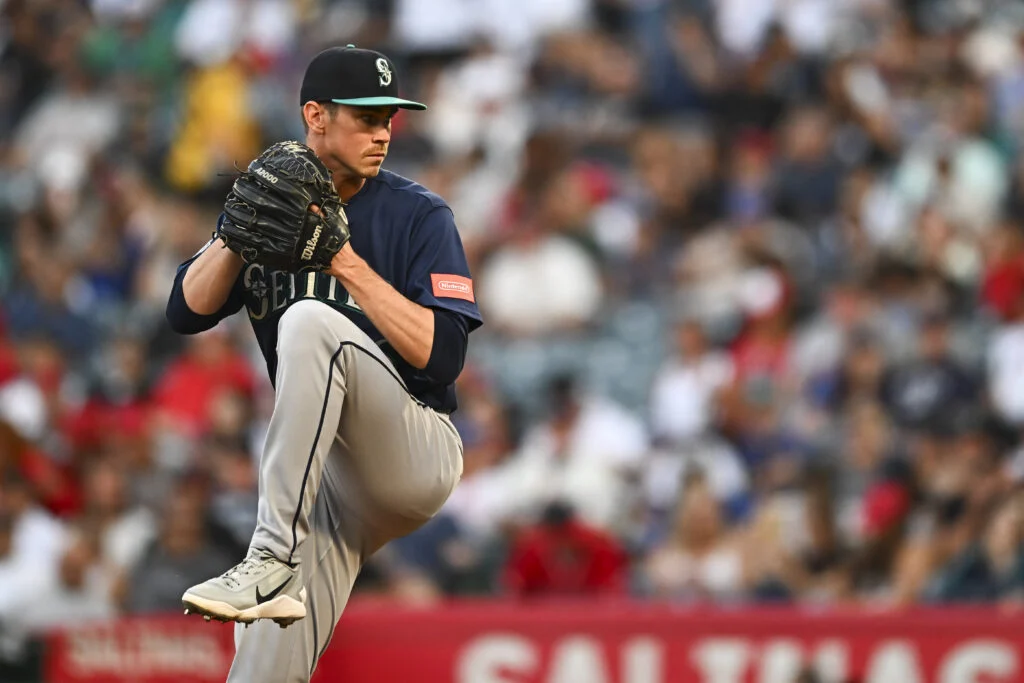
As the 2026 Major League Baseball trade deadline approaches, the Seattle Mariners find themselves at a critical crossroads. Despite a roster anchored by one of the most formidable starting rotations in professional baseball, the club’s playoff ambitions are being threatened by a persistent lack of offensive output. According to reports from Ken Rosenthal and Will Sammon of The Athletic, the Mariners have begun signaling to rival executives that they are prepared to leverage their pitching depth to secure the right-handed hitting reinforcements required to vault them over the Texas Rangers in the American League West.
At the center of these discussions is right-hander Emerson Hancock. By making the 27-year-old available, Seattle is attempting to execute a classic "sell-high" maneuver, capitalizing on a season of statistical growth to address the team’s glaring inability to handle left-handed pitching.
The State of the Race: A Statistical Paradox
Entering late July with a 51-52 record, the Mariners’ position in the standings seems at odds with their underlying metrics. While they currently sit just half a game back of the Rangers, a deeper dive into the numbers suggests Seattle has been arguably the unluckiest team in the American League.
The Mariners boast a +17 run differential, a stark contrast to the -30 mark posted by the division-leading Rangers. On paper, Seattle possesses the superior roster, yet their inability to convert high-quality pitching performances into wins has kept them in a perpetual dogfight. The team’s offensive struggles have been particularly acute against southpaws, against whom they are slashing a dismal .216/.302/.334. With a wRC+ of 87, they rank among the bottom three offenses in the league in that split, trailing only the Colorado Rockies and the Toronto Blue Jays. For a team with championship aspirations, this deficiency is no longer a quirk—it is an emergency.
A Surfeit of Arms: The Luxury of Depth
The willingness of President of Baseball Operations Jerry Dipoto to trade from his starting rotation is not a sign of desperation, but rather a testament to the organization’s unparalleled depth. The Mariners have successfully cultivated an assembly line of elite pitching, creating a "good problem to have."
The current big-league rotation features a core of six viable starters: Luis Castillo, Logan Gilbert, George Kirby, Bryan Woo, Bryce Miller, and Emerson Hancock. This depth is further bolstered by a minor-league pipeline that includes premier prospects Kade Anderson and Ryan Sloan. Additionally, Logan Evans remains on the mend from Tommy John surgery, with the club projecting him to be a factor in the 2027 rotation.
In an era where starting pitching is the game’s most precious and fragile commodity, moving a healthy, controllable arm carries inherent risk. A single string of injuries to the remaining starters could render the rotation vulnerable. However, the Mariners front office has determined that the opportunity cost of maintaining this depth—while the offense continues to sputter—is too high to ignore.
The Case for Trading Hancock
While the Mariners could have theoretically explored moving a veteran like Luis Castillo, the logic against such a move is overwhelming. At 33, Castillo is the elder statesman of a rotation otherwise composed of arms in their physical prime (ages 26–29). His contract is also a significant hurdle; he is currently earning $22.75 million, with an identical salary due in 2026. Moreover, he possesses a $25 million vesting option for the following year should he reach 180 innings.
Castillo’s 4.85 ERA this season, coupled with a career-low 20.1% strikeout rate, has diminished his value to the point where any trade would likely require the Mariners to subsidize his contract. Conversely, the rest of the rotation is either in their pre-arbitration or early arbitration years, offering immense value-per-dollar.
Emerson Hancock stands out as the most logical trade chip. While he has been effective, posting a 3.16 ERA across 105 1/3 innings this year, the underlying metrics suggest he is outperforming his peripherals. A 3.72 FIP and a 3.82 SIERA indicate that he has benefited from a .245 BABIP and a 79.5% strand rate—indicators that some regression may be on the horizon. By trading Hancock now, the Mariners can divest themselves of a pitcher whose current results may exceed his long-term projection, all while securing a high-impact bat that is under team control.
Evaluating the Market: Potential Targets
The Mariners are looking for an immediate injection of life into their lineup. The list of potentially available right-handed bats is robust, and the industry consensus is that a player of Hancock’s profile—young, controllable, and starting-pitcher-ready—is the exact type of "blue chip" asset that can headline a deal for a middle-of-the-order hitter.
Targets like Zach Neto, Taylor Ward, and Luis Robert Jr. represent the caliber of player Seattle should be targeting. Other potential fits include versatile infielders like Matt McLain or Spencer Steer, who could stabilize the lineup against left-handed starters. By dangling Hancock, Seattle can potentially avoid dipping into their elite pool of position-player prospects, effectively improving their offense without sacrificing the long-term health of their farm system.
Implications for the Stretch Run
The decision to trade a pitcher is a signal to the clubhouse and the fan base: the Mariners are going all-in. For a city hungry for success, the move signals that the front office recognizes the narrowness of their current championship window.
However, this strategy hinges on the ability of the remaining five starters to remain healthy. The modern game is defined by the attrition of arms; the Mariners are essentially betting that they can survive a potential injury crisis in exchange for the immediate offensive production needed to secure the AL West title.
If the trade pays off, the Mariners will have successfully rebalanced their roster, turning a surplus of pitching into a championship-caliber lineup. If the offense fails to spark, or if the rotation suffers a string of injuries in August and September, the front office will face intense scrutiny for breaking up a unit that was, for a time, the envy of the league.
The Road Ahead
As the deadline approaches, all eyes will be on the Seattle front office. Will they find a partner willing to exchange a cornerstone hitter for the remaining four years of team control on Emerson Hancock?
The landscape is shifting. Contenders are looking for pitching depth, and rebuilders are looking for young, cost-controlled arms. Seattle sits at the nexus of these two needs. By aggressively shopping their pitching surplus, the Mariners have set the stage for what could be the most defining transaction of their season—and perhaps, the key to finally ending their current offensive stagnation. The pressure is on, the chips are on the table, and for the Mariners, the time for half-measures has clearly passed.


 Nana Wu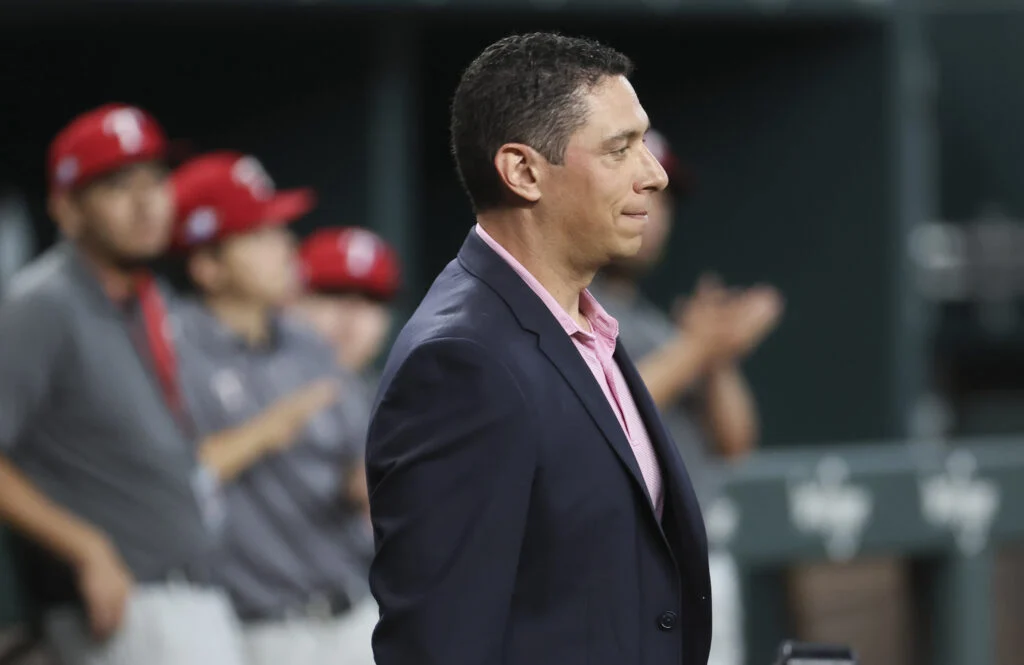
 Siti Muinah
 Neng Nana

 Lina Hope

 Sagoh
Sagoh
 Iffa Jayyana