
 rifanmuazin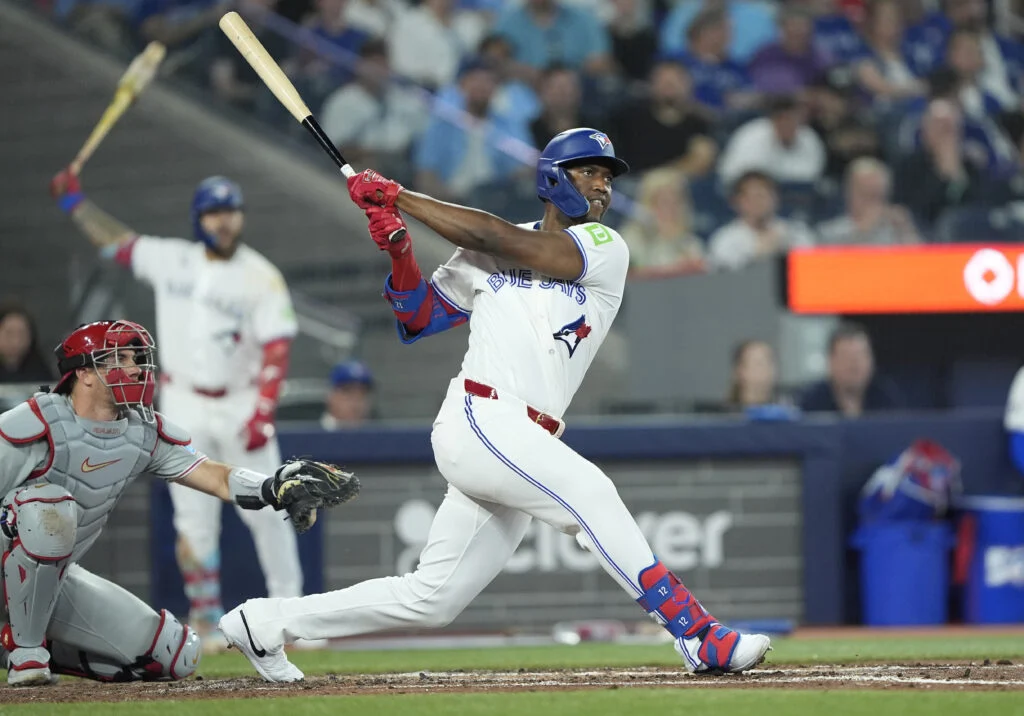
In a move that signals both desperation and a final, aggressive push for the postseason, the Arizona Diamondbacks have claimed outfielder Jesús Sánchez off waivers from the Toronto Blue Jays. The transaction, confirmed by both clubs this week, marks a curious addition for a team fighting to secure a playoff spot with only fourteen days remaining in the 2026 regular season.
Sánchez, who had been designated for assignment (DFA) by Toronto just last week, arrives in the desert as the Diamondbacks attempt to rectify a glaring weakness in their roster construction. To accommodate the incoming outfielder, Arizona utilized the 40-man roster vacancy created by the recent designation of Lourdes Gurriel Jr. for assignment. As Sánchez is currently out of options, he will be required to report directly to the active roster, immediately joining the fray as the team fights to close a 2.5-game gap behind the San Diego Padres.
The Context of the Claim
The acquisition of Sánchez is, by any objective metric, a high-risk, low-reward gamble. Because he was claimed after the September 1 cutoff date, league rules dictate that Sánchez is ineligible for the postseason roster. This effectively limits his utility to the final two weeks of the regular season. For a team in the thick of a pennant race, bringing in a player who cannot contribute in October is a rarity, suggesting that the Diamondbacks’ front office is prioritizing immediate, short-term production over long-term integration.
For Toronto, the move is a matter of shedding salary and moving on from a project that failed to bear fruit. The Blue Jays, currently operating well above the $304 million competitive balance tax threshold, are paying a significant 90% tax rate on their expenditures. By offloading the remainder of Sánchez’s $6.8 million salary, the Blue Jays save nearly $1 million in tax implications alone—a victory for their ledger even if the player finds success elsewhere.
A Chronology of Struggles and Shifts
The path that led Jesús Sánchez to Arizona is paved with inconsistent performance and roster instability on both sides.
The Toronto Tenure
The Blue Jays entered the 2026 season with high hopes for Sánchez, having acquired him in a trade that sent promising prospect Joey Loperfido to the Houston Astros. The expectation was that Sánchez would provide a consistent lefty-bat presence to balance their lineup. Instead, the 2026 campaign became a downward spiral. After posting solid, albeit unspectacular, numbers from 2021 through 2025, Sánchez saw his metrics crater. His strikeout-to-walk ratio regressed, his power output dwindled to just eight home runs, and his defensive contributions—which were previously viewed as a stabilizing force—plummeted into negative territory.
The Diamondbacks’ Search for Offense
Arizona’s outfield situation has been a revolving door of frustration. Having parted ways with Alek Thomas (traded to the Dodgers) and Pavin Smith (who was outrighted, though recently returned to the 40-man roster) earlier this summer, the club found itself without a reliable left-handed bat. The signing of Max Kepler and the trade deadline acquisition of Lars Nootbaar were designed to fill this void. While Nootbaar has provided some stability, the failure of Kepler—who was released just last week—forced the Diamondbacks to scour the waiver wire for another option.
Supporting Data: The Case for the Gamble
While Sánchez’s 2026 performance is undeniably poor, the Diamondbacks are betting on the "career-average" version of the player to help them overcome their struggles against right-handed pitching.
Offensive Analytics
Between 2021 and 2025, Sánchez recorded 2,030 plate appearances, slashing .242/.309/.424. During that five-year stretch, he was a perfectly league-average hitter (100 wRC+). His career splits reveal a stark reality that likely drove Arizona’s decision-making:
- Vs. Right-Handed Pitchers: .256/.325/.450 (112 wRC+)
- Vs. Left-Handed Pitchers: .178/.228/.279 (38 wRC+)
The Diamondbacks, as a team, have struggled immensely against right-handers this season, posting an 88 wRC+ in those matchups—tied for the worst in Major League Baseball. If Sánchez can regain even a fraction of his career-average form against righties during this two-week sprint, the club believes he could be the difference-maker needed to catch the Padres.
The Defensive Collapse
Perhaps the most concerning aspect of the acquisition is the total regression of Sánchez’s glove work. In previous years, he provided positive value with a +13 Defensive Runs Saved (DRS) rating entering 2026. This season, however, he has posted a -10 DRS and -8 Outs Above Average (OAA). The "eye test" confirms these metrics, as Sánchez has been prone to uncharacteristic misplays in the outfield. The Diamondbacks are essentially hoping that a change of scenery and the pressure of a pennant race will sharpen his defensive focus.
Official Perspectives and Organizational Strategy
The Diamondbacks’ front office has remained characteristically tight-lipped regarding the move, though the logic is transparent to industry observers. By committing the final $500,000 of his salary, the team is making a minimal financial investment for a potential high-upside return.
"We are looking for any edge we can find," a source close to the organization noted. "When you are chasing a division lead or a Wild Card spot, you look at every available body that might help you win the next game. Jesús has a track record that suggests he is better than what we have seen this year."
For the Blue Jays, the move was purely transactional. With their season effectively over and their payroll constraints tightening, the decision to designate Sánchez for assignment was an inevitability, especially after it became clear he no longer fit into their long-term plans. The interest from other clubs—notably at least one other team submitted a claim—suggests that the industry still views Sánchez as a "buy-low" candidate despite his disastrous 2026.
Strategic Implications and Future Outlook
What does this mean for the Diamondbacks’ lineup in the final stretch?
The Immediate Lineup
Sánchez will likely slide into a rotation in the corner outfield spots alongside Corbin Carroll and Lars Nootbaar. The designated hitter position, which has been fluid for Arizona all season, provides a path for all three players to receive regular at-bats. With the team sitting 2.5 games back of San Diego, every plate appearance is now magnified. The coaching staff will likely employ a strict platoon strategy, deploying Sánchez almost exclusively against right-handed starters to maximize his historical strengths.
The Offseason Horizon
Looking ahead to the 2027 season, the reality is less optimistic. Sánchez remains under team control via the arbitration process, but given his sub-replacement level performance in 2026, it is highly probable that the Diamondbacks will non-tender him this winter. The team is essentially treating him as a "rental" for the final 14 games of the year.
The "All-In" Mentality
This move underscores a broader theme in modern baseball: the willingness of front offices to churn the bottom of the roster to gain a marginal advantage. Even if the probability of success is low, the cost of the gamble—a small financial commitment and the displacement of a struggling bench player—is negligible.
As the Diamondbacks head into the final fortnight of the season, all eyes will be on Sánchez. If he delivers, he will be remembered as the unexpected hero of a desperate September push. If he fails to turn his season around, he will be a footnote in a season defined by "what-ifs." For now, he is a Snake, and for the next fourteen days, the Diamondbacks are banking on his bat to guide them to the postseason.

 Lina Irawan

 Pevita Pearce
 Basiran

 Nila Kartika Wati
 Nana
Nana