
 Pevita Pearce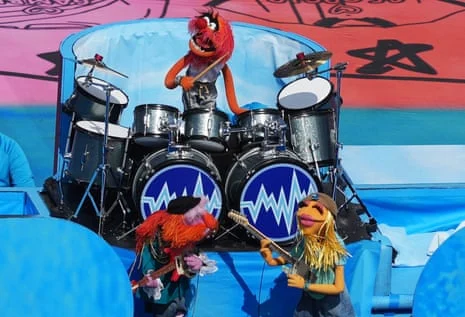
EAST RUTHERFORD, NEW JERSEY – July 19, 2026 – Spain has clinched the FIFA World Cup trophy, defeating Argentina in a fiercely contested final that extended into extra time at MetLife Stadium. While Ferran Torres’s decisive goal secured a historic victory for La Roja, the narrative of the 2026 final was undeniably bifurcated, marked as much by its controversial, star-studded halftime show and the politically charged presence of former U.S. President Donald Trump as by the football itself. This World Cup final aimed to be more than just a sporting event, transforming into a grand spectacle that left many purists questioning the evolving identity of the beautiful game.
The Grand Spectacle: A Fusion of Sport, Celebrity, and Politics
The 2026 World Cup final, hosted on American soil, was presented by FIFA as an ambitious endeavor to merge the global appeal of football with the high-octane entertainment culture synonymous with major U.S. sporting events, particularly the Super Bowl. From a lavish pre-match ceremony to an extended halftime show featuring a constellation of international music stars and even Muppets, the event was designed to be an all-encompassing experience. However, this blend of athletic competition and pop culture generated significant debate, highlighting a growing tension between traditionalists and those advocating for a more "Americanized" approach to global football tournaments.
Adding another layer of complexity to the day’s events was the attendance of former President Donald Trump, whose appearance alongside FIFA President Gianni Infantino for the trophy presentation underscored the political weight and global media attention surrounding the tournament. His presence, a recurring theme at high-profile American sporting events, often draws a mix of intense scrutiny and predictable reactions from the public.
A Day of Chronological Unfoldings
The day began long before kickoff, with a closing ceremony designed to set a celebratory tone, albeit one tinged with a sense of nostalgia for some observers.

Pre-Match Pomp and Presidential Presence
The closing ceremony, a 90-minute prelude to the main event, featured an eclectic mix of entertainers. Streamer IShowSpeed shared the stage with figures like Nicole Scherzinger, Robbie Williams, and Tom Cruise – a lineup that prompted some to note their past cultural peaks. The inclusion of Cruise, known for his daredevil stunts, even sparked playful speculation about whether he would "jump off something high." The aim was clear: to build anticipation and showcase a diverse range of talent, appealing to a broad global audience beyond just football enthusiasts.
Amidst this spectacle, the arrival of former President Donald Trump by helicopter was a significant talking point. Confirmed by the White House, his attendance at the final, where he was slated to present the trophy with Gianni Infantino, drew parallels to his previous appearances at other major sporting events like the NBA Finals, the World Series, and the Ryder Cup, often met with a mixed reception from crowds. This time, while no direct boos were audible on the stadium’s video screens, FIFA appeared to strategically avoid showing him prominently during the halftime show, perhaps to minimize political distraction during the entertainment segment.
The MetLife Stadium itself, unburdened by the smoke from recent Canadian wildfires and enjoying comfortable temperatures of 82F (28C), provided a clear setting for the final. The "sell-out" status was acknowledged, though humorously compared to the New York Jets’ regular ability to fill the same venue, subtly highlighting the challenge of truly making soccer a mainstream draw in the U.S.
Global Fanfare: From Madrid’s Plaza to Buenos Aires’ Obelisco
Beyond the stadium, the final sparked fervent reactions across the globe, particularly in the competing nations. In Madrid, Sam Jones reported from a "rammed" Plaza de Colón, where hundreds gathered under the massive Spanish flag. The mood was a blend of "expectant and buoyant," with fans like 18-year-old Katy, who was just two when Spain last won the World Cup, expressing high hopes for a 3-2 victory. Miguel Hinojal Vicente, 37, recalled the "magical thing" of Spain’s last triumph, while Raquel Garcia emphasized the unifying power of such events, predicting a 3-0 win and stating, "This is about the hopes of a country and it’s about unity… Events like these bring people together and they make people happy."
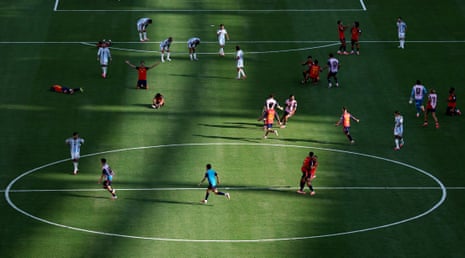
Meanwhile, Facundo Iglesia painted a vivid picture from downtown Buenos Aires, where hundreds congregated around a small screen outside a travel agency, their cheers and vuvuzelas drowning out any commentary. The air buzzed with chants of "El que no salta es español" (Anyone who doesn’t jump is a Spaniard) and the more traditional "El que no salta es un inglés" (Anyone who doesn’t jump is an Englishman). The unique challenge for these scattered fan pockets was "spoilers" due to broadcast delays, with reactions rippling through the crowd before the on-screen action caught up. Pastry chef Carla Lucía del Pardo even resorted to watching commentary on her phone to "gain five seconds," expressing concern that Argentina was playing "well, but too calm."
The Halftime Extravaganza: Hits, Misses, and Muppets
The World Cup final’s halftime show was billed as a central attraction, aiming to captivate a global audience and attract new fans, mirroring the success of the NFL’s Super Bowl halftime spectacle. This 25 to 30-minute interlude, with approximately 11 minutes dedicated to the actual performances, sparked considerable debate, not least for its length and potential impact on player performance. Concerns were raised that the extended break could lead to muscle cool-down and increased injury risk, a point humorously underscored by the thought of a "56-year-old Messi" taking a "nice nap."
The show, curated by Coldplay’s Chris Martin, featured a diverse lineup of artists:
- Michael Buffer’s iconic "Let’s Get Ready To Rumble!" served as the high-energy opener, a familiar sound to American sports fans.
- Madonna made a grand entrance, driven onto the field in a seemingly "un-roadworthy" car by Brazilian football legends Ronaldo and Ronaldinho. Her performance, while commanding, highlighted the fusion of music and football icons.
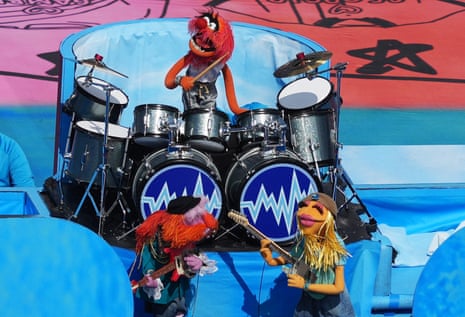
- A surprising, yet universally lauded, highlight was Animal from The Muppets taking to the drums for a rousing rendition of "Seven Nation Army." This moment, described by one Guardian critic at the stadium, Alexander Abnos, as initially difficult to discern live, nevertheless became an instant fan favorite and a rare point of consensus amidst the mixed reactions.
- K-pop sensation BTS delivered a polished performance of "Dynamite," showcasing their trademark professionalism and receiving significant airtime, a testament to their global appeal.
- The appearance of Ted Lasso and Coach Beard to introduce Justin Bieber marked a moment of cross-media promotion. Bieber, now 32, performed, even improvising "World Cup" into his lyrics. However, his segment drew some of the sharpest criticism, with reader Leo Addor colorfully describing him as resembling "a homeless guy who cut up his own clothes and then wandered onto the pitch to play guitar about some weird Christian bullshit."
- Shakira and Burna Boy performed, bringing out a "cute kids" choir from Staten Island (the PS 22 Chorus) and the beloved Muppets, Kermit and Miss Piggy, for a segment lauded as "wholesome and nice" but ultimately questioned for its necessity at a World Cup final. The dynamic between Shakira and Burna Boy was noted as "weird" by Leo Addor, with Burna Boy seemingly "contractually obligated to stay at least 1/2 feet away from Shakira at all times."
The overwhelming sentiment from many quarters was that while the individual performances were often professionally executed, the overall show felt disjointed and lacked a coherent theme. Wayne Rooney famously declared, "I like a lot of them artists but I thought it was crap," though Roy Keane reportedly enjoyed Shakira’s segment. Matthew Leung, a BTS fan, found the 17 minutes "underwhelming, cringeworthy crap," questioning its effectiveness as an advertisement for the group. Brigid Brennan noted the "choice to have a heavy Brazilian influence in front of a pro Argentinian crowd" with Ronaldo, Ronaldinho, and Pele, leading to audible boos for the latter.
Philip Reed reflected on the distinct cultures of US soccer fandom, suggesting a divide between the "artsy" international club follower and the "soccer mom" culture, wondering if this World Cup might bridge the gap. Leo Addor’s scathing review continued, observing Dua Lipa watching the show and seeming to believe "she could’ve done better, and well, she’s right." The general consensus echoed the Guardian’s chief critic, Alexis Petridis, who reviewed the show as "Hits, misses and Muppets: the star-studded World Cup half-time show nobody asked for."
The Debate: Does the World Cup Final Need a Halftime Show?
The ambitious production sparked a fundamental question: does the World Cup final, arguably the pinnacle of global sport, truly need such a protracted and elaborate halftime show?
Official Justifications and Supporting Data
James Massing of Live Nation, a key partner in the production, articulated the commercial rationale to the BBC. He argued that modern sports events must "change things up" because they are "competing with any other live experience – going to the museum, going to the theatre, going to the cinema." This perspective frames the World Cup not merely as a football match, but as an entertainment product vying for attention in a crowded market. Furthermore, FIFA emphasized that all artists performed for free, with the show supporting "Fifa’s education fund," attempting to lend a charitable veneer to the commercial endeavor.
Counterarguments and Cultural Clash
However, this rationale met significant skepticism. Critics immediately pointed out the "Mona Lisa" analogy: people don’t expect a halftime show at a museum, and they still queue to see art. This highlights a fundamental difference in how different cultural experiences are consumed and valued. Many argued that the appeal of a World Cup final lies inherently in the sport itself, its drama, and its global cultural significance, not in added pop concerts.
The argument that U.S. fans require a halftime show was also challenged. Numerous major American sporting events, such as the NBA Finals and the World Series, do not feature elaborate musical interludes and still command massive audiences. The Super Bowl, often cited as the inspiration, is seen as a unique cultural event with its own distinct traditions, one that often provides timely social commentary – from Bad Bunny’s "hymn to immigrants" to Beyoncé’s "black panther tribute." The skepticism was palpable regarding whether FIFA, under Gianni Infantino, would permit Shakira or any other artist to infuse similar political or social messaging, such as references to the "Iran War," into their performance.
Philip Reed’s observation about the "artsy" vs. "soccer mom" cultures of US soccer fandom further illuminated the potential cultural friction. For many, the appeal of soccer in the U.S. is precisely that "it’s not the NFL," offering a different sporting experience. Conversely, many European fans enjoy the NFL because it’s distinct from soccer. This suggests that attempting to force an NFL-style entertainment model onto the World Cup might alienate existing fans without necessarily converting new ones who appreciate football for its inherent qualities. The extended break itself, lasting nearly half an hour, disrupted the flow of the game, a concern for player welfare and maintaining match intensity.
The Match Resumes and Spain’s Triumph
Following the extended halftime, the teams returned to the pitch, navigating the challenges of maintaining physical readiness after such a long break. The second half and extra time resumed with an intensity that ultimately overshadowed the earlier spectacle.
Extra Time Drama and Decisive Goal
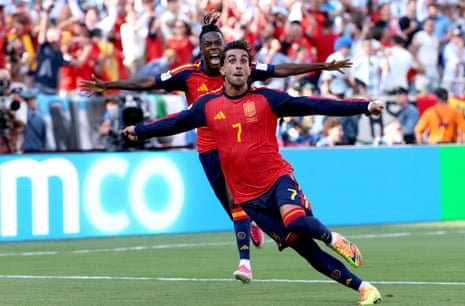
The match remained deadlocked, forcing it into extra time. Unlike the main interval, there was no further entertainment break, allowing the football to take center stage. Rob Smyth provided live updates as the tension mounted. Spain, seizing the momentum, eventually broke the deadlock with a crucial goal from Ferran Torres. This pivotal moment gave La Roja a significant lead and a "huge step towards victory."

Argentina’s Frustration and Spain’s Celebration
The final whistle confirmed Spain as World Cup champions once again. The reactions were stark: jubilant celebrations erupted from the Spanish camp, while Argentina’s frustration boiled over. In a regrettable incident, Argentina’s Molina reportedly punched a Spanish substitute who ran onto the field to celebrate, highlighting the raw emotions of defeat. Tennis star Carlos Alcaraz, present in the stands, was seen celebrating Spain’s triumph with an unbridled joy that surpassed his usual composure after winning Grand Slams.
The Trophy Presentation and Lasting Implications
The trophy presentation saw Spain receive their well-deserved prize from the duo of Donald Trump and Gianni Infantino. Christopher Smith’s satirical comment, "Any chance we can get Animal from the Muppets to hand off the trophy instead of the other muppet Trump?" encapsulated the lingering sentiment among many fans regarding the political involvement.
This World Cup final in New Jersey will be remembered not only for Spain’s hard-fought victory but also for its audacious attempt to redefine the global football spectacle. The extensive halftime show, the blend of celebrity and sport, and the political overtones sparked a global conversation about the commercialization of sport, cultural assimilation, and the enduring identity of football. As FIFA continues to expand the World Cup’s reach, the 2026 final serves as a powerful case study, demonstrating the potential for both groundbreaking entertainment and profound cultural friction in the pursuit of new audiences. The question remains: in the future, will the "everything but the football" elements truly enrich the World Cup, or merely distract from the game that millions around the world love for its inherent drama and purity?

 Azzam Bilal Chamdy
 Sagoh
Sagoh
 Neng Nana
 Nana Wu
 Lina Hope

 Iffa Jayyana