
 Asep Darmawan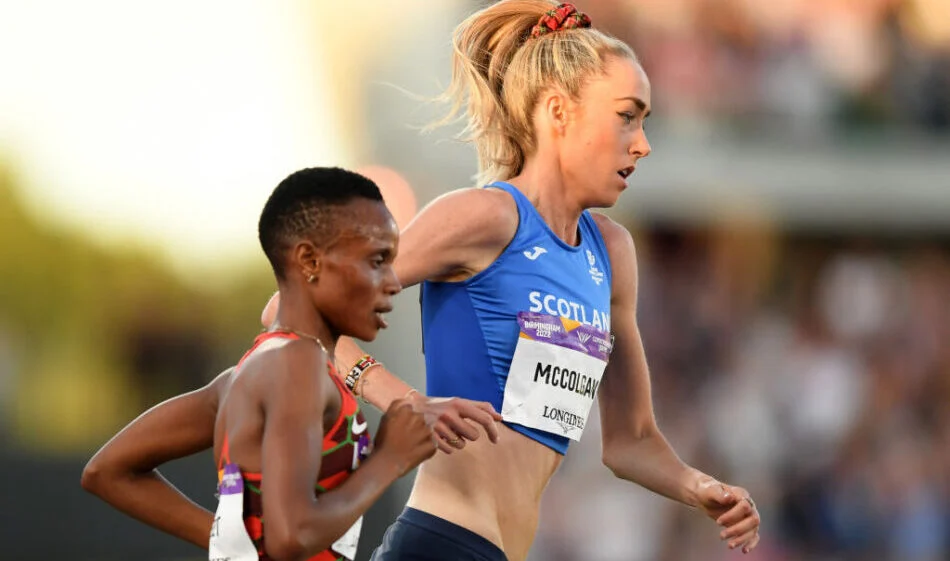
As the sporting world turns its eyes to Scotland, the Commonwealth Games find themselves in an era of necessary reinvention. The 2026 iteration, hosted in Glasgow, stands as a testament to agility, resilience, and the enduring appeal of one of the world’s oldest multi-sport events. Following the dramatic withdrawal of the original host, Victoria, Australia—a decision triggered by spiraling costs that surged from an estimated £1.2 billion to nearly £4 billion—Glasgow has stepped into the breach, offering a "scaled-back" model that prioritizes existing infrastructure over the fiscal burden of new construction.
The Evolution of the Games: From Crisis to Glasgow
The path to these Games has been anything but conventional. When Victoria exited the hosting agreement in 2023, the Commonwealth Games Federation faced an existential crisis. The subsequent £199 million compensation payout to the Australian state underscored the precarious financial nature of modern mega-events. Glasgow, having successfully hosted a widely celebrated Games in 2014, emerged as the logical savior.
By utilizing established venues like the Scotstoun Stadium for athletics, the city has avoided the "white elephant" syndrome—the legacy of expensive, underused stadiums that have haunted previous hosts. This condensed, intimate version of the Games is designed to be sustainable, focusing on the spirit of competition rather than the spectacle of excess.
A New Broadcast Landscape
For the first time since 1954, the British broadcasting landscape has shifted significantly. The BBC is no longer the primary home of the Commonwealth Games in the UK. Instead, TNT Sports has secured the rights to provide extensive live coverage, with streaming available via Max. For viewers preferring traditional broadcast, Channel 5 will air nightly highlights, marking a transition in how the public engages with the Commonwealth narrative.
Athletics at Scotstoun: The Ones to Watch
The heartbeat of the Games remains the athletics program. Despite a series of high-profile withdrawals, the entry list at Scotstoun promises fierce, world-class competition.
The Middle-Distance Showdown
The women’s 800m is shaping up to be the jewel of the track events. With Keely Hodgkinson absent, the spotlight falls on her training partner, Georgia Hunter Bell. Hunter Bell is eager to make her mark, noting, "I feel like all the greats have medalled or won the Commonwealth Games. It feels like a home Games." She faces a formidable rival in Kenya’s world champion, Lilian Odira. Their rematch is expected to be one of the most tactical and intense races of the ten-day festival.
The Global Rivalry: Men’s Javelin
The men’s javelin will carry the weight of national pride, as Pakistan’s Olympic gold medalist Arshad Nadeem faces off against Indian superstar Neeraj Chopra. Their rivalry has transcended the athletics field, echoing the intensity of their nations’ historic cricket clashes. However, the field is deep; Sri Lanka’s Rumesh Pathirage, boasting a 92.62m personal best, and reigning world champion Keshorn Walcott of Trinidad and Tobago are both legitimate threats to the podium.
Home Heroics: The 10,000m and Hammer
Opening night at Scotstoun will be electrified by the women’s 10,000m. Scotland’s own Eilish McColgan, despite recent injury setbacks, will be the focus of local adoration. She will be joined by teammate Megan Keith in a challenge against a strong Kenyan contingent led by Diana Wanza and Miriam Chebet.
In the men’s hammer, Canada’s Ethan Katzberg enters as the clear favorite. Yet, the story of the event belongs to Scotland’s Chris Bennett. Having retired in 2023, Bennett’s return to his home city to compete at the Games is widely regarded as the "perfect ending" to his career, bringing an emotional gravity to the throwing circle.
The Heptathlon and Sprint Dynamics
The heptathlon has undergone a seismic shift following the withdrawal of Katarina Johnson-Thompson. Her absence leaves the door wide open for Northern Ireland’s Kate O’Connor, the current world silver medalist. The field also features Niamh Emerson, who is completing a remarkable return from an eight-year struggle with injuries.
In the sprints, the men’s 100m will see defending champion Ferdinand Omanyala tested by a rising class of talent, including Australia’s Lachlan Kennedy and England’s debutant Louie Hinchliffe. Meanwhile, the women’s 100m has been reshaped by the absence of Daryll Neita, leaving Amy Hunt to spearhead the English effort.
Supporting Data: Key Disciplines and Athletes
| Event | Date | Key Contender(s) |
|---|---|---|
| Women’s 10,000m | July 27 | Eilish McColgan (SCO) |
| Men’s Hammer | July 27 | Ethan Katzberg (CAN), Chris Bennett (SCO) |
| Women’s 100m | July 28 | Amy Hunt (ENG) |
| Women’s High Jump | July 28 | Nicola Olyslagers (AUS) |
| Men’s 100m | July 28 | Ferdinand Omanyala (KEN) |
| Women’s 3000m Steeple | July 29 | Faith Cherotich (KEN), Elise Thorner (ENG) |
| Women’s 5000m | July 30 | Laura Muir (SCO), Jessica Hull (AUS) |
| Women’s 800m | July 31 | Georgia Hunter Bell (ENG), Lilian Odira (KEN) |
| Men’s Javelin | July 31 | Arshad Nadeem (PAK), Neeraj Chopra (IND) |
| Men’s Discus | August 1 | Matt Denny (AUS), Lawrence Okoye (ENG) |
Official Responses and Strategic Implications
The decision to pivot to a "Glasgow-lite" model has received praise from sports economists who argue that the future of the Commonwealth Games depends on accessibility rather than scale. The Games’ organizers have focused on minimizing the "fiscal shock" that led to the collapse of the Victoria bid. By leveraging existing transport and accommodation, Glasgow is demonstrating that the Commonwealth Games can survive without massive capital investment.
"This is not just about a sporting event; it’s about proving that cities can still host international gatherings without bankrupting their taxpayers," said one local organizing official. The implications are clear: the future of these games may lie in established host cities rotating the burden, rather than expecting developing or mid-sized economies to build new, extravagant infrastructure.
A Legacy in the Making
As the Games draw near, the atmosphere in Glasgow is one of anticipation. The reliance on the Scotstoun Stadium provides a rare, intimate viewing experience, bringing the crowd closer to the athletes than in the cavernous Olympic-style bowls of the past.
For the athletes, this is a career-defining moment. For the city of Glasgow, it is an opportunity to prove that it remains a premier destination for global sport. While the withdrawal of several high-profile stars on the eve of the Games has undoubtedly changed the landscape, it has also created space for the next generation of competitors to rise. Whether it is the return of a veteran like Chris Bennett or the breakthrough of an underdog like Niamh Emerson, the 2026 Games are poised to be defined not by the billions of pounds they didn’t spend, but by the moments of human spirit they showcase.
As the track lights dim and the final medals are tallied on August 1, the world will likely look back at Glasgow 2026 not as a "diminished" Games, but as the blueprint for a sustainable, athlete-centered future for the Commonwealth movement. The challenge of the coming days is to ensure that the competition matches the ambition of the organizers—delivering high-quality, high-drama athletics that remind us why the Commonwealth Games remain a cherished fixture on the global sporting calendar.

 Nana Wu
 Siti Muinah
 Neng Nana
 Lina Hope
 Sagoh
Sagoh
 Iffa Jayyana