
 Ali Ikhwan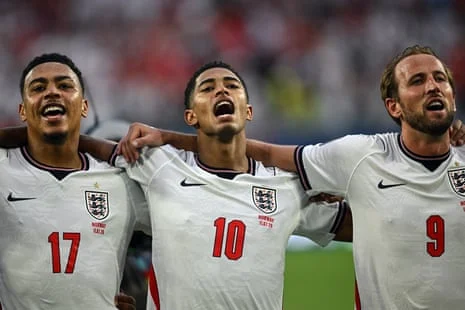
Sun 19 Jul 2026, 09.00 CEST
After five weeks of thrilling football, 103 matches, and the participation of forty-eight nations, the FIFA World Cup 2026 culminates today in a monumental showdown. Europe’s reigning champions, Spain, face off against South America’s titans, Argentina, in a final that promises to etch new chapters into footballing history. This is not merely a contest for a trophy; it’s a battle of distinct footballing philosophies, a quest for unprecedented glory, and a stage set for legends to be forged.
While the world’s gaze fixates on this ultimate denouement, the tournament’s other narrative, England’s dramatic 6-4 victory over France in the third-place playoff, offers a bittersweet reflection on what might have been for the Three Lions, and a poignant commentary on the mental fortitude required at the pinnacle of the sport.
The Grand Finale: Spain vs. Argentina – A Battle for Supremacy
The stage is set for a truly historic World Cup final. Spain, the champions of Europe, are aiming for an astonishing second major tournament win in a row, a testament to their sustained dominance and a footballing identity built on precision, control, and tactical mastery. Their opponents, Argentina, arrive with their own formidable ambition: to secure a fourth major title and, remarkably, a second consecutive World Cup, a feat not achieved since Pelé’s Brazil captivated the world in 1958 and 1962. The stakes could not be higher, and the narrative threads weaving through this encounter are as compelling as any in football’s rich tapestry.
The clash represents a fascinating tactical juxtaposition. Spain, under Luis de la Fuente, embodies a philosophy of meticulous ball retention and suffocating midfield control. Their success stems from deep-rooted principles of possession and intelligent movement, as brilliantly articulated by pundit Emma Hayes, who described them as "masters of time and space." This approach has seen them concede precious few opportunities, building their formidable record on a rock-solid defensive foundation complemented by a midfield triumvirate capable of dictating the tempo against any opposition.
Argentina, in contrast, often presents a more fervent, almost "quasi-religious" commitment to their cause, epitomised by the presence of Lionel Messi. Their journey to the final has been characterized by a blend of individual brilliance and collective passion, a team united in their devotion to their talismanic captain. For them, victory is not just a sporting achievement but a myth-making endeavour, a testament to belief and an unwavering will to deliver when it truly matters.
England’s Absurd Victory and Lingering Questions
Before the main event, England’s third-place playoff against France delivered an "absurd victory," a 6-4 thriller that felt more like a tennis score than a football match. Bukayo Saka’s hat-trick was a highlight, yet the game, as exhilarating as it was, only served to underscore deeper questions about England’s mental and tactical makeup.
Manager Thomas Tuchel, reflecting on the tournament, acknowledged building "something very special" over seven weeks but also stressed the need to "play better football, manage games better under pressure, take better decisions under pressure. We need to defend more economically." These words resonate deeply with the frustrations expressed by fans and pundits alike, particularly the sentiment that "watching Sunday’s final will be painful. Why can’t we cross the line? Is it to do with our social, cultural makeup? I believe it is to do with the mental part of the game."

The 6-4 result, while entertaining, might have masked the tactical issues that plagued England throughout. The debate over team selection, particularly the omission of creative talents like Adam Wharton, Morgan Gibbs-White, Phil Foden, and Cole Palmer in favour of the experienced but arguably "miles off the standard" Jordan Henderson, has been a contentious point. Henderson, who reportedly delivered a pivotal pre-game speech, embodied a reliance on experience and character, yet many argue this came at the cost of vital attacking flair and midfield control.
The reluctance to give Kobbie Mainoo significant minutes, despite England’s "desperate lack of midfield balance, control, poise and craft," also raised eyebrows. The reliance on "box-to-boxers charging about, exhorting their teammates to yet greater physical effort" rather than players "able to remain calm in the maelstrom" highlights a persistent issue in English football, one that contrasts sharply with the composed midfield maestros Spain consistently produces. Tuchel’s preference for Morgan Rogers over a fit-again Saka in crucial stages also drew criticism, especially after Saka’s stellar performance against France. These decisions, viewed in retrospect, appear to have been miscalculations that contributed to England’s semi-final exit.
Tactical Deep Dive: How the Final Could Unfold
The tactical battleground for the Spain vs. Argentina final will primarily be in midfield and how each team manages the opposition’s key playmakers.
Spain’s Midfield Dominance:
Spain’s strength lies in their ability to control possession and dictate the rhythm of the game through their midfield trio, likely featuring Rodri, Fabián Ruiz, and Dani Olmo. Rodri, often described as "the metronome," is central to their system, orchestrating attacks and stifling opposition build-ups. His ability to find space, distribute the ball accurately, and break up play is unparalleled.
The question for Argentina’s Lionel Scaloni is how to neutralize this threat. The idea of man-marking Rodri has been mooted, recalling Sam Allardyce’s famous tactic of deploying Kevin Davies on Claude Makélélé. However, as noted by analysts, Rodri is a more sophisticated player – stronger, cleverer, and a superior passer. A more effective strategy for Argentina might involve cutting off his passing angles and pressuring the players around him, disrupting the supply lines to prevent him from initiating Spain’s intricate passing moves.
Argentina’s Attacking Edge and Messi’s Aura:
Argentina’s offensive hopes largely rest on the genius of Lionel Messi and the predatory instincts of Julián Álvarez. While Spain boasts an elite defensive record, conceding goals to them is a "different proposition" that demands "a level of efficiency in possession and ruthlessness when converting chances." Messi and Álvarez possess the individual quality to "bag out of nothing," but the challenge will be to create the "requisite opportunity" against Spain’s organized defence.
Spain, under Luis de la Fuente, has explicitly stated they will "not man-mark Messi." This is a pragmatic decision, acknowledging that attempting to shackle a player who "barely features in the game these days" (in terms of constant involvement) yet can conjure magic at any moment, would be counterproductive. Instead, their focus will be on tracking his runs into the box and preventing him from receiving "unchallenged possession just outside their box for 15 minutes straight until he conjures something."
Scaloni faces a crucial decision regarding his formation. Doubts persist whether a conventional 4-4-2 can effectively counter Spain’s midfield superiority. France’s 4-2-3-1 against Spain was deemed a "major error," suggesting a need for more midfield bodies. If Argentina fields only Leandro Paredes and Alexis Mac Allister against Spain’s three central midfielders, the control exerted by Rodri, Ruiz, and Olmo "will surely be too great for them to be seriously threatened." A change in system, perhaps to a 4-3-3 or a diamond midfield, might be necessary to compete for dominance in the central areas.
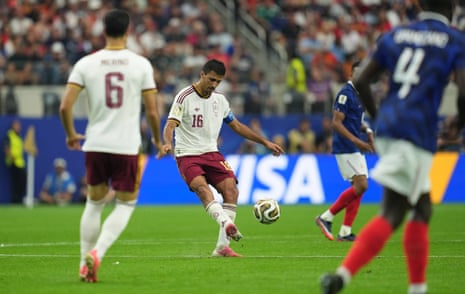
Beyond tactics, Argentina’s "quasi-religious attempt to write their own mythology" is a potent force. The squad’s reverence for Messi, their commitment to "doing his running, getting him the ball, and getting after anyone who dare foul or cheek him, is unlike anything I’ve seen before." This emotional and spiritual connection, combined with strong defensive performances from players like Cristian Romero and Lisandro Martínez, gives them a chance, even against a technically superior side.
Unprecedented Achievements and Broader Implications
The final also offers a unique opportunity for individual glory. Santi Alonso, a nervous Spain fan in the UK, highlighted that if Spain wins, Alex, already a reigning European and Olympic champion (having won gold with the Spanish Olympic squad alongside Fermín), would become the "most complete reigning international champion any male footballer has ever been," achieving an unprecedented "three-crown" status. Such an achievement would underscore the depth of talent and systematic success within Spanish football.
Beyond the pitch, the World Cup raises perennial questions about the business of football. FIFA is set to announce a record $15 billion in World Cup revenue, "smashing expectations." However, this financial triumph has drawn criticism, with the argument that "football, rather than making money because it exists, exists to make money." This prioritization of profit over the grassroots and the fan experience, highlighted by issues like "flogging tickets to corporates," leads to a sense that "there is more than enough money in the game to keep it for the people – the problem is the lack of will and care."
This commercialization is further reflected in the transfer market, with Chelsea’s "bizarre" £117 million acquisition of Morgan Rogers from Aston Villa sparking debate. This deal, part of Chelsea’s staggering nearly £2 billion spending spree in four years, raises questions about financial fair play and the very nature of competitive sport. While a transfer’s worth is ultimately determined by its success, such exorbitant fees for players who are "neither elite nor a cert to become so" highlight a disconnect between market value and on-pitch reality. For England, questions also arise about how Rogers fits into the national team, especially alongside Jude Bellingham and Harry Kane, given his tendency to "look to score, not provide," potentially exacerbating Kane’s service issues.
Meanwhile, Manchester United’s acquisition of Andrey Santos and Arsenal’s pursuit of Christos Tzolis for £34 million reflect different strategic approaches in the transfer market. Santos, while a "solid acquisition," is seen as a bargain compared to the desired Mateus Fernandes, suggesting a balance between value and top-tier quality. Tzolis’s potential move to Arsenal sparks tactical discussions on whether he fits the profile of a winger needed by Mikel Arteta, or if he is another "threat starting from wide."
The World Cup final is more than just a game; it is a cultural phenomenon that touches upon national identity, tactical innovation, and the intricate economics of modern sport. As Spain and Argentina prepare to collide, the world watches, ready to witness which philosophy will prevail and which nation will claim ultimate glory, leaving an indelible mark on football’s illustrious history.


 Azzam Bilal Chamdy
 Sagoh
Sagoh
 Neng Nana
 Nana Wu
 Lina Hope

 Iffa Jayyana