
 Lina Hope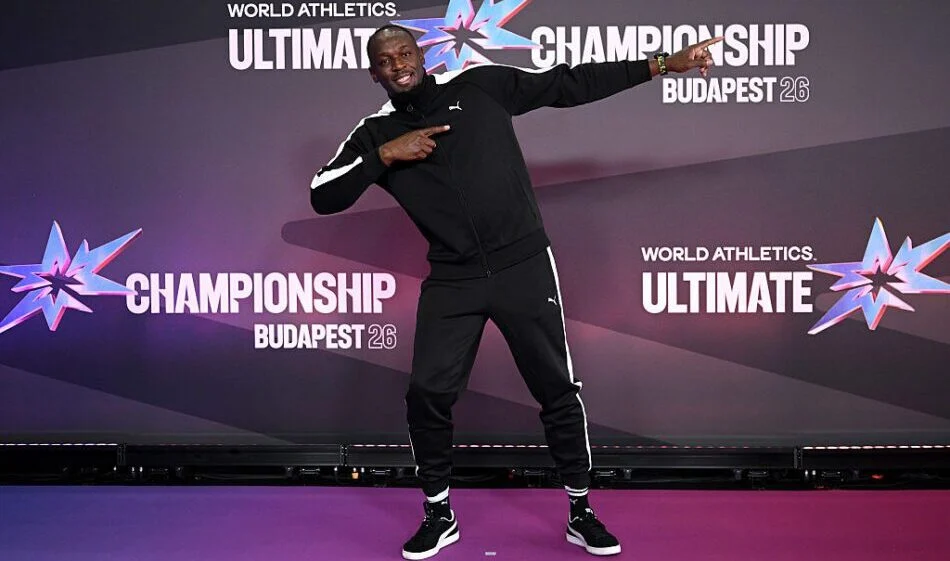
BUDAPEST — Sprinting legend Usain Bolt has admitted that a wave of modern financial incentives in track and field “stings a little” when compared to the meager rewards of his own peerless career. Speaking in the Hungarian capital ahead of the inaugural World Athletics Ultimate Championship, the eight-time Olympic champion confessed that he and fellow Jamaican icon Asafa Powell had recently marveled at how much the economic landscape of athletics has transformed since they hung up their spikes.
Bolt’s candid reflections came to light on Thursday during a high-profile pre-event press conference. Confronted by sports journalist Sean Ingle of The Guardian, Bolt was asked if he would have relished competing for the astronomical sums now on offer. The answer was an emphatic, if wistful, acknowledgment of missed opportunities.
Under the lucrative prize structure of the newly minted Ultimate Championship, a sprinter who sweeps the 100m, 200m, and mixed 4x100m relay events this weekend can walk away with an eye-popping $450,000. To put that figure in historical perspective, a single weekend of racing in Budapest could net an athlete more than the combined financial bonuses Bolt ever received for winning any of his historic individual Olympic gold medals.
“I was having a conversation with Asafa before I came here, and we were actually talking about that same thing,” Bolt shared with reporters. “We were like, ‘Geez, we missed out on this cash prize.’ A wonderful few championships, and it still doesn’t add up to all that cash.”
Main Facts: The Inaugural World Athletics Ultimate Championship
The high-stakes event in Budapest marks a paradigm shift in professional track and field. Designed to capture the attention of a modern, fast-paced audience, the Ultimate Championship features a condensed, high-intensity program boasting a massive total prize pot of $10 million.
Key details of the event include:
- The Payout Structure: Sprinters dominating the 100m, 200m, and mixed 4x100m events can accumulate up to $450,000 over the course of the weekend.
- Star Power: Usain Bolt and pole vault world record-holder Mondo Duplantis have been drafted in as the official "Ultimate Legends," serving as the marquee ambassadors for the inaugural event.
- Global Participation: The competition brings together 381 elite athletes representing 65 member federations.
- Media and Infrastructure: The event is supported by 48 broadcast partners and has drawn roughly 300 accredited media members and photographers to document the action.
Despite his lighthearted lament about missing out on the windfall, Bolt—who serves alongside Duplantis in the "Ultimate Star" role—was quick to praise the initiative. Rather than harboring bitterness, the sprint king framed the substantial payouts as a long-overdue victory for the sport’s professionalization.
“It’s big, and I think it’s good for the sport. It incentivizes athletes to come out here and do their best,” Bolt noted. “This is a job for us, and this is what we do. It’s sad I missed out on it, but I’m happy for the athletes.”
Chronology: From Concept to Reality in Budapest
The path to the inaugural Ultimate Championship has been years in the making, reflecting a concerted effort by World Athletics to overhaul how the sport is packaged and monetized.
- Two to Three Years Ago: World Athletics leadership, spearheaded by president Sebastian Coe, begins quietly mapping out a concept for a high-stakes, end-of-season showdown designed to pit the world’s best athletes against one another with unprecedented financial backing.
- Ten Weeks Prior to the Event: Coe travels to Budapest to finalize political and logistical alignments, engaging in intensive talks with the newly structured Hungarian government to secure vital state backing.
- The Night Before the Press Conference: A severe rainstorm sweeps through Budapest, putting the newly installed black infield to an immediate, unplanned stress test.
- Thursday, September 10, 2026: World Athletics hosts its opening press conference. Sebastian Coe, Usain Bolt, Dawn Harper-Nelson, and local organizers address the media, confirming that ticket sales are robust and that the venue infrastructure has withstood the elements.
- Friday, September 11, 2026: The competition officially opens, with the Hungarian prime minister expected in attendance, setting off a weekend of high-octane track and field action that culminates in unprecedented financial rewards for the sport’s elite.
Supporting Data: A Multi-Million Dollar Shift in Track and Field
The Ultimate Championship’s $10 million prize fund is not an isolated financial injection; it forms the crown jewel of a much broader fiscal strategy engineered by World Athletics. According to Sebastian Coe, the governing body is set to distribute more than $50 million in competition prize money across the current Olympic cycle.
This institutional pivot began taking tangible shape at the Paris 2024 Olympic Games, where World Athletics made history by becoming the first international sports federation to introduce prize money for Olympic champions, awarding $50,000 to gold medalists. The organization has already signaled its intent to expand this reward system further, with plans to distribute prize money to all medalists across every track and field event at the upcoming Los Angeles 2028 Olympic Games.
Bolt, who spent the prime of his career battling administrative bodies over revenue shares and appearance fees, strongly endorsed this financial evolution.
“I think we put such a big weight on the Olympics, and it’s something athletes also look forward to,” Bolt explained. “I definitely agree that they should be compensated for what they do… we’re putting our bodies on the line, because if we get injured, it messes the next year up.”
Official Responses: Coe, Local Organizers, and Legends React
The press conference provided a platform for key figures to address the logistical triumphs and cultural milestones underpinning the Budapest event.
World Athletics President Sebastian Coe adopted an unapologetic stance regarding the organization’s aggressive financial investments in the athletes’ welfare.
“I am unapologetic and we are unwavering about our support for the athletes and their financial welfare,” Coe declared. “It’s not just warm words. We walk the walk.”
Coe also reflected on the arduous journey required to bring the Ultimate Championship to life. Crediting the "Herculean" efforts of his staff and the Hungarian government, Coe explained why Budapest was chosen as the host city for the inaugural showcase. Having successfully hosted the 2023 World Athletics Championships, the Hungarian capital has effectively established itself as a trusted epicenter for international track and field.
“It is, as far as I’m concerned, almost become the World Championship capital of the world,” Coe said, praising the combination of proven logistical competence and robust political support.
Gabor Kocsvaj, the Hungarian government minister overseeing the event, echoed Coe’s sentiments. He pointed to a recent half marathon in Budapest that attracted over 24,000 runners, alongside hammer thrower Bence Halász’s European title earlier in the year, as clear indicators of the nation’s profound appetite for athletics.
On the technical and operational side, Olympic 100m hurdles champion Dawn Harper-Nelson—who will host the event’s on-field presentations—reassured stakeholders regarding the venue’s readiness. Addressing the dramatic weather conditions of the previous evening, Harper-Nelson confirmed that the striking black infield had passed its inaugural trial with flying colors.
“The black infield stood up through the rain last night,” she remarked. “That lets us all know this championship is here to stay.”
Adding a touch of levity to the proceedings, Coe revealed details regarding the athletes’ exclusive after-party. Hosted by American sprint star Noah Lyles, the celebration will deliberately exclude World Athletics official staff.
“It would feel a bit like a creepy uncle turning up at an 18th birthday party,” Coe joked. “We’re going to leave Noah and all the young people to that.”
Implications: A New Era for Professional Athletes
The launch of the World Athletics Ultimate Championship and its unprecedented payout structure signals a fundamental transformation in how track and field athletes sustain their careers. For decades, elite runners, jumpers, and throwers labored under an amateur-legacy model where peak financial rewards were largely restricted to lucrative commercial endorsement deals, with major championship medals offering immense prestige but relatively modest direct monetary compensation.
By injecting tens of millions of dollars directly into competition prize pots, World Athletics is attempting to professionalize the sport in a manner akin to professional tennis or golf. This structural shift has profound implications:
- Prolonged Careers: With substantial prize money available at high-profile events outside of the traditional four-year Olympic cycle, elite athletes can better absorb the financial shocks of injuries and extend their competitive peak years.
- Elevated Competition: High-stakes financial rewards virtually guarantee that the world’s best athletes will consistently face off against one another, eliminating the tendency for top-tier stars to skip major non-Olympic meetings.
- Changing Legacy Perceptions: As demonstrated by Usain Bolt’s candid reflections, future generations of athletes will evaluate their careers through a drastically different financial lens than the legends of the past. While historical greats like Bolt secured their status through immortal world records and gold medals, upcoming competitors will have the opportunity to build substantial generational wealth strictly through on-track performance.
As the starting blocks are secured in Budapest and the world’s finest athletes prepare to battle for a slice of the historic $10 million prize fund, track and field is officially stepping into a bold, lucrative new chapter.


 Iffa Jayyana
 Nana Wu
 Suro Senen
 Nana Muazin
 Asro
Asro

 Dwi Wanna