Basiran
By James Colgan
September 20, 2026
PEBBLE BEACH, Calif. — In the storied, windswept landscape of Pebble Beach, where golf history is etched into every cliffside, Rocco Mediate offers a perspective as sharp as the Pacific breeze. When asked about his future with the U.S. Ryder Cup team, Mediate doesn’t mince words. "I don’t have one," he says with a characteristic grin.
For Mediate, who famously pushed Tiger Woods to the brink in the 2008 U.S. Open, the window to represent the United States in the biennial matches closed long ago. He never wore the stars and stripes in a Ryder Cup, never felt the suffocating pressure of a six-foot putt to salvage a point, and, in his estimation, that might be for the best. "I would have been the antichrist," he jokes. Yet, sitting on the sidelines of the PURE Insurance Championship, Mediate is not just a spectator; he is a sharp-eyed critic of a system he believes has become trapped in its own self-importance.
As the U.S. team prepares for next week’s Presidents Cup in Chicago, the perennial question returns: Why does the American squad, often boasting a vastly superior talent pool, continue to struggle when the Ryder Cup stage is set?
The Core Conflict: Over-Analysis vs. Organic Play
Mediate’s critique of the current American approach is blunt: "I think it’s overblown, overdone, and overanalyzed completely."
For decades, the Ryder Cup was an exhibition—a celebration of the game’s best. Today, it has evolved into a global spectacle, a high-stakes corporate and sporting event that carries the weight of national pride. Mediate argues that in the process of professionalizing the team experience, the United States has stripped away the joy that once fueled great performances.
"First of all, the Ryder Cup is an exhibition," Mediate insists. "It does not matter in the history of the sport. Enjoy it. Make jokes. Have a great time with the guys."
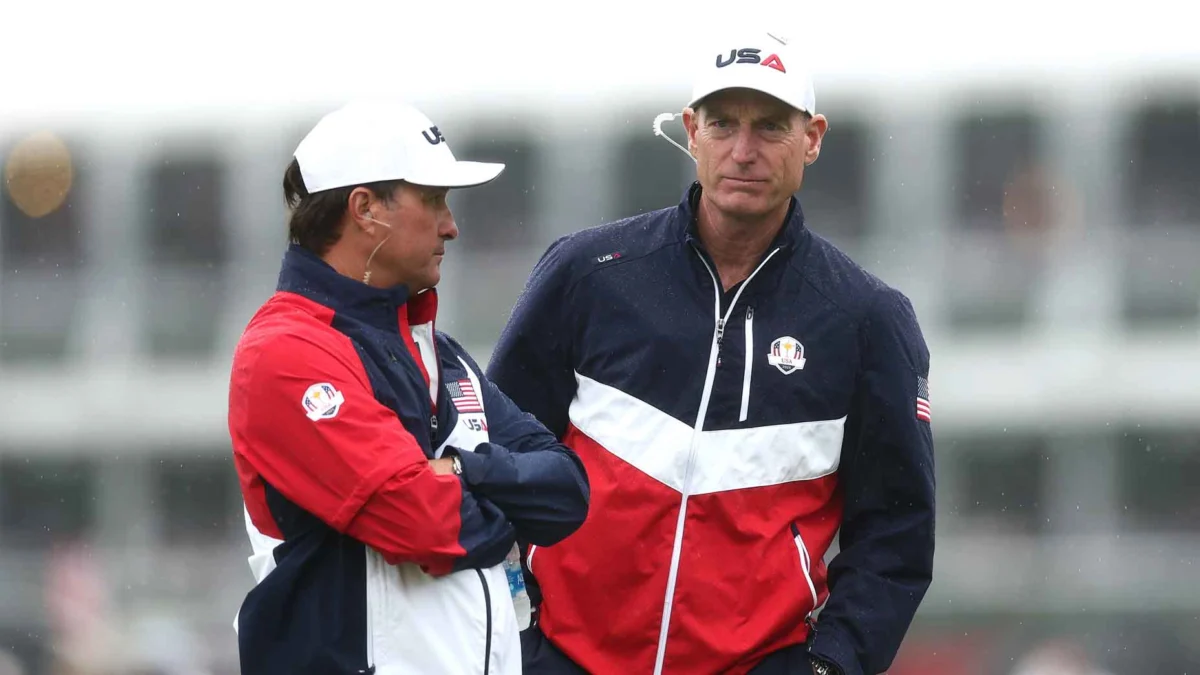
Mediate is particularly critical of the stagnation in leadership. He points to the revolving door of familiar faces—the same captains, the same assistant captains, and the same strategic committees. "Love Jim Furyk. Love the guys. But change something up," he says. "Same assistant captain. Same everything."
Chronology of a Shifting Strategy
The frustration surrounding U.S. team performance is not new, but the internal reaction to it has evolved significantly over the last several years.
- Pre-2020: The American approach was largely reactive, focusing on individual talent and ad-hoc pairings rather than long-term infrastructure.
- 2021-2023: Following a string of losses, the PGA of America began shifting toward a data-heavy, "program-based" model, mimicking the European model of continuity.
- 2024-2025: The implementation of rigorous statistical analysis and new points-qualifying criteria became the hallmark of the U.S. leadership.
- September 2026: As the team heads to Chicago for the Presidents Cup, the focus has shifted toward integrating these new statistical models into the team-play culture.
The goal is no longer just to pick the best players, but to build a "program"—a cohesive unit that functions with the same institutional memory that has long characterized European success.
Data-Driven Innovation: The Leonard Approach
Not everyone in the inner circle shares Mediate’s "fire and brimstone" outlook. Justin Leonard, a veteran of multiple team events and currently an assistant captain under Jim Furyk for the upcoming Ryder Cup in Ireland, represents the counter-argument to Mediate’s "less is more" philosophy.
For Leonard, the solution to the American slump isn’t less organization; it is better organization.
"We’ve changed our stats and data analysts, and we’ve changed our points structure too," Leonard told GOLF. "Trust me, a lot of time and effort and phone calls went into those decisions. The PGA of America wants us to come up with a better playbook, so that there’s more continuity from team to team."
This new "playbook" is an attempt to address the criticism that U.S. teams are disparate groups of individuals who don’t understand how to play for each other. By investing in research teams and creating a more transparent qualifying process, the U.S. leadership hopes to build a foundation that survives from one captaincy to the next.

Global Perspectives: The "Warrior Mentality"
The search for the "American secret" has led many to look across the Atlantic and toward the International team for answers. At Pebble Beach, a collection of international veterans—men with decades of experience in team golf—offered their own theories on why the U.S. often falls short.
Henrik Stenson, a five-time Ryder Cup veteran, suggests the issue may be rooted in the American golf development path. "Europe’s been underdogs historically, and that group coming together—they grew up together and played a lot of golf together," Stenson noted. "Maybe team USA played more college golf and are trying to beat each other up more than the Euros. Clearly, there’s been a good team spirit from team Europe for many years."
Stuart Appleby, a stalwart of the International Presidents Cup squad, believes the problem is psychological. "The U.S. team has got a lot of desire to win, that’s nice, but you’ve got to get out of your own way," Appleby said. "The Europeans, they want to win just as bad, but they have the warrior mentality. They’re totally divorced from the outcome."
The consensus among these veterans is that the Americans are often playing under the weight of expectation. When the pressure mounts, they tighten up. The Europeans, conversely, appear to embrace the chaos of the event.
Implications for the Presidents Cup and Beyond
The upcoming Presidents Cup in Chicago will serve as the first major stress test for the new U.S. "program." While the Presidents Cup is a PGA Tour-run event and the Ryder Cup is under the purview of the PGA of America, the continuity of leadership—with figures like Jim Furyk, Keegan Bradley, and Brandt Snedeker involved—is intentional.
The question remains: Can a structure built in boardrooms and through data points truly translate to the high-pressure environment of the first tee?
"The fact that Jim is there, Keegan is there, and Brandt has been around the teams… I’m sure there’ll be some good things that we’ll take from next week to get things going in a better direction," Leonard said.
However, Mediate remains skeptical that more meetings and more data will yield a different result. His proposed solution is almost radical in its simplicity: "If I’m the captain, I’m not in a cart riding around. I’m going to sit in the locker room, watch it on TV, maybe have a Diet Coke. I’d tell them, ‘Guys, listen—pair yourselves up. If you don’t like the clothes, play in your own clothes.’"
The Road Ahead: A Philosophical Divide
The divide in American golf philosophy is clear. On one side, there is the belief that the U.S. team must build a sophisticated, data-driven machine to overcome the inherent structural advantages of the European team. On the other, there is the "Mediate school of thought"—the idea that the U.S. is losing precisely because it is trying too hard, stifling the natural, aggressive talent that makes these players champions in the first place.
As the U.S. team arrives in Chicago, the stakes are high, even if the event isn’t the Ryder Cup. The "program" is in its infancy, and the pressure to produce a victory is immense.
Mediate knows he won’t be on the PGA of America’s Christmas card list for his comments, but he is unbothered. He sees the struggle for what he believes it is: a team trying to solve a human problem with technical solutions.
"People will say, ‘That’s the dumbest thing,’" Mediate concluded, reflecting on his own unconventional advice. "But then you’ve got to remember, wait a minute—this isn’t working."
Whether the American approach requires a total deconstruction or merely a refinement of its new data-driven model will likely be determined in the coming years. For now, the U.S. team remains in a state of transition—searching for the right balance between the cold, hard numbers of the modern era and the intangible spirit that has defined the Ryder Cup for nearly a century.

 Dwi Wanna

 Lina Hope
 Suro Senen
 Nana Muazin
 Asro
 Iffa Jayyana