
 Dwi Wanna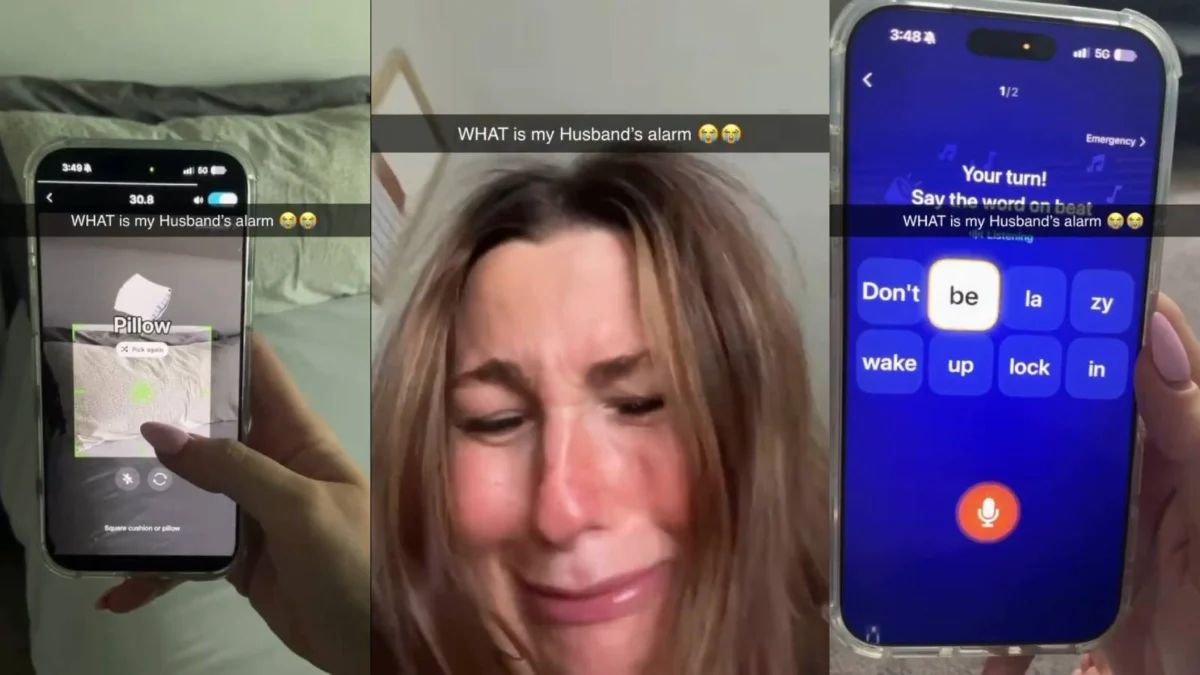
For millions of people, the morning alarm is a daily adversary—a brief, jarring encounter that is usually silenced with a single, groggy tap on a snooze button. But for the users of Alarmy, the experience is less of a gentle wake-up call and more of a high-stakes, interactive hostage negotiation with their own circadian rhythms.
The application has recently surged back into the public consciousness, trending across social media platforms after entrepreneur Roman Khaves shared a video on X (formerly Twitter) showcasing the app’s "mission-based" wake-up system. The footage, which shows a user frantically attempting to complete tasks while a persistent, high-decibel alarm blares in the background, has reignited a heated debate: Is Alarmy the ultimate productivity hack, or is it a psychological experiment in morning masochism?
The Mechanics of a Forced Awakening
Alarmy is not your standard alarm clock. Developed for the "snooze-prone" and the chronically deep sleeper, the app operates on a simple, if aggressive, premise: you do not get silence until you prove you are awake.
The app replaces the traditional "dismiss" button with a series of cognitive and physical hurdles. These "missions" are designed to force the brain out of sleep inertia—the state of grogginess and cognitive impairment that follows waking up. The available missions range from the mundane to the physically demanding:
- Mathematical Challenges: Users must solve a series of increasingly difficult math problems to stop the sound.
- Memory Tests: A sequence of tiles must be memorized and repeated.
- Physical Activity: The app utilizes the phone’s accelerometer to require users to perform a set number of squats or violent shakes of the device.
- The "Photo Mission": Perhaps the most effective feature, this requires the user to get out of bed and snap a photo of a pre-registered item—like a bathroom sink or a kitchen coffee machine—to deactivate the sound.
- Barcode/QR Code Scans: A variation of the photo mission, this forces the user to walk to a specific location (like a toothpaste tube or a pantry item) to scan its barcode.
The app also features a "Wake Up Check" function. Should the user complete a mission and then attempt to crawl back under the covers, the app monitors for inactivity and can trigger the alarm again, effectively preventing the user from succumbing to the temptation of "just five more minutes."
Chronology of a Viral Phenomenon
Alarmy was not born overnight. Its trajectory from a niche productivity tool to a global viral sensation spans several years of iterative development.
- Early Development: Originally launched to combat the high failure rate of traditional alarm clocks, the app was designed by developers who identified "sleep inertia" as a major productivity killer.
- The Milestone of 50 Million: Through word-of-mouth and aggressive optimization, the app reached the 50-million-download mark on the Google Play Store. It has consistently maintained a 4.6-star rating, a rarity for apps that inherently frustrate their users.
- September 2026 Update: As of its most recent update on September 18, 2026, the developers have continued to refine the "Accessibility Service API" integration. This particular feature is controversial; it prevents users from easily force-closing the app or turning off the phone while the alarm is active, ensuring that the "mission" must be completed.
- The Viral Pivot: While the app has been popular for years, the recent viral video posted by Roman Khaves served as a catalyst for a new wave of discourse. The video highlighted the sheer absurdity of a person doing squats in their pajamas at 6:00 AM, framing the app as a form of "digital torture." This framing has resonated with a generation of social media users who are increasingly obsessed with the intersection of "hustle culture" and self-optimization.
Supporting Data: By the Numbers
The success of Alarmy is backed by significant metrics that demonstrate a massive demand for "friction-based" productivity tools.
- User Base: With over 50 million downloads on Android alone, the app occupies a dominant share of the sleep-utility market.
- Engagement: The app boasts over two million reviews on the Google Play Store. The high volume of reviews suggests that users are not just downloading the app—they are actively engaging with its complex, often infuriating settings.
- Retention: Anecdotal evidence from forums like Reddit suggest that while many users delete the app after a week of frustration, a "hardcore" subset of users credit the app with saving their careers or academic lives by ensuring they are never late.
- Technical Integration: The use of the Accessibility Service API is a technical safeguard against "cheating." By restricting the phone’s OS-level functions during an alarm, the app guarantees that the software remains the primary authority in the room until the user is mobile.
The Psychological Implications: Efficiency or Abuse?
The viral reaction to Alarmy has split opinion into two distinct camps.
The Proponents: "The Ends Justify the Means"
For those who suffer from severe sleep inertia, the alarm is seen as a necessary evil. Proponents argue that the "torture" of the alarm is simply the cost of doing business. If a user is chronically late for work, the temporary misery of doing squats or solving algebra at dawn is a small price to pay for professional success. From this perspective, the app is a form of "gamified discipline." It forces the user to transition from a parasympathetic, sleep-heavy state to an active, alert state, essentially hacking the brain’s wakefulness transition.
The Critics: "The Architecture of Anxiety"
Conversely, psychologists and tech critics have begun to question the long-term impact of starting one’s day with a cortisol spike. If the first thing a person does is engage in a "battle" with their phone, it sets an antagonistic tone for the rest of the day. There is a fear that such apps reinforce a culture where the individual is constantly at war with their own biological needs. By prioritizing the alarm’s "mission" over the body’s need for gentle arousal, users may be trading short-term punctuality for long-term physiological stress.
Corporate Strategy and Future Outlook
Alarmy operates on a "freemium" model. While the basic functionality is free, the app utilizes in-app advertising and premium subscriptions to generate revenue. By keeping the app accessible, the developers ensure a massive user funnel, which is then monetized through data and subscription conversions.
The developers have remained relatively quiet regarding the "torture" characterization. Their marketing materials continue to focus on "Sleep Tracking," "Loud Alarm Sounds," and "The Ultimate Wake-Up Solution." By ignoring the controversy and doubling down on the "effectiveness" angle, the company maintains its brand identity as a serious tool for serious people.
Conclusion: The Future of the Morning Routine
The viral explosion of Alarmy is a symptom of a larger cultural shift. We live in an era where every second of our time is commodified and optimized. The "snooze button," once a symbol of a well-deserved lazy morning, has become a symbol of failure in the eyes of the productivity-obsessed.
Whether you view Alarmy as a brilliant solution to a modern problem or a dystopian piece of software that forces us to become slaves to our own devices, one thing is clear: the app works. As long as there are people who struggle to leave their beds, there will be a market for tools that make the cost of staying in bed higher than the cost of waking up.
For now, the app continues to dominate the charts, proving that in the digital age, sometimes the only way to get out of bed is to be forced to earn your morning, one squat at a time.


 Lina Hope
 Sagoh
Sagoh
 Neng Nana
 Nana
Nana

 Ali Ikhwan
 Siti Muinah