
 Lina Hope
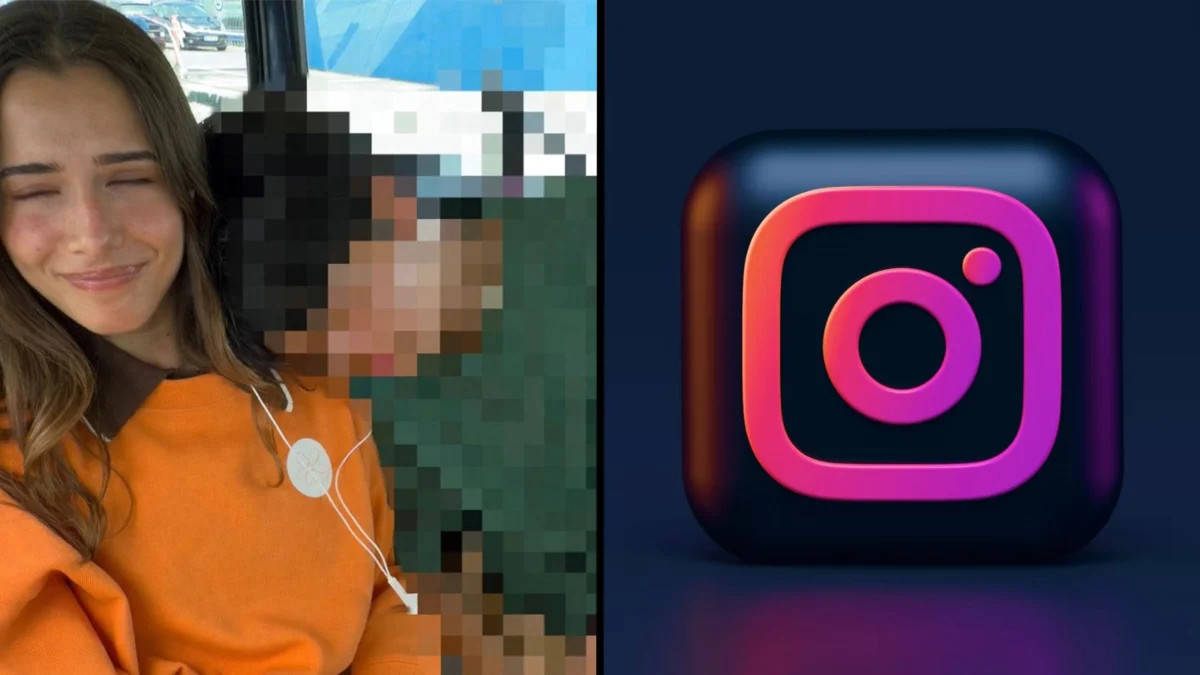
In the age of hyper-connectivity, the line between public declaration and private intimacy has become increasingly blurred—quite literally. Instagram, the Meta-owned social media juggernaut, has officially rolled out a new suite of AI-powered creative tools that allow users to pixelate and blur specific subjects within their Stories. While the technical application is straightforward, the cultural implications are profound, particularly within the ecosystem of modern dating, where the "soft launch" has become a quintessential rite of passage for new couples.
For the uninitiated, a "soft launch" is the calculated, often subtle introduction of a romantic partner to one’s social media following. It is the art of showing just enough to generate intrigue without revealing the full identity of the partner. Whether it is a hand resting on a table, a shadow cast across a wall, or the back of a head in a crowded restaurant, these snippets serve as a "save the date" for one’s social circle. With Instagram’s latest update, this cryptic practice has moved from a manual struggle of awkward cropping to a seamless, AI-assisted aesthetic.
The Mechanics of the Blur: How the Technology Works
The functionality is integrated directly into the Instagram Stories interface. By accessing the "Pixel" effect, users are no longer limited to standard, blunt-force filters. Instead, Meta has leveraged generative AI to allow for more nuanced editing. Users can apply the effect and provide a natural language prompt—such as "pixelate the person in the background" or "heavily blur the individual on the right"—to isolate subjects with surprising precision.
The degree of obfuscation is entirely at the discretion of the user. If the goal is complete anonymity, a user can command the AI to render a subject as a blocky, unrecognizable silhouette. If the goal is a more subtle, "mysterious" aesthetic, the prompt can be adjusted to retain some texture while softening facial features to the point of being unidentifiable.
This marks a significant shift in mobile content creation. Previously, achieving this look required third-party applications, tedious manual masking, or a deep understanding of photo-editing software like Photoshop. By democratizing this level of visual control, Instagram is acknowledging a shift in how its users view digital privacy: they want to be present in the digital space, but they want to maintain a "gated" community where they control exactly who sees what.
A Chronology of the Soft Launch: From Mystery to Mainstream
The evolution of social media dating trends has been rapid. A decade ago, the transition from "single" to "in a relationship" was often signaled by a simple status change on Facebook. Today, that transition is a multi-stage process, often spanning months.
The Early Days: The "Hard Launch"
Before the soft launch became a cultural staple, the standard was the "hard launch." This involved a clear, high-resolution photo of a couple, often accompanied by a definitive caption. It was a formal, public declaration that left little room for speculation. However, as the anxiety surrounding digital permanence grew, users became more guarded.
The Rise of the "Soft Launch" (2018–2022)
Around 2018, the trend of partial disclosure began to gain momentum. Influencers and regular users alike realized that keeping a partner’s face hidden served two purposes: it maintained a layer of personal privacy, and it generated higher engagement through "comment-baiting." Followers would inevitably ask, "Who is that?" or "Show us the face!"—driving algorithm-friendly interaction.
The AI Integration (2024–Present)
By late 2024, the demand for privacy-first tools hit a boiling point. Meta’s introduction of the Pixel tool is the platform’s direct response to this behavior. It moves the soft launch from a "hack" (cropping photos) to a "feature" (using AI to curate reality). This development marks the formalization of the "anonymous partner" as a legitimate category of social media content.
Supporting Data: Why Privacy Matters in the Dating Pool
The demand for these tools is rooted in the shifting demographics of digital dating. According to industry analysis, nearly 65% of Gen Z and Millennial users report feeling "anxious" about the permanence of their social media history. When a relationship is in its infancy, the fear of "digital baggage"—having a partner’s face permanently attached to one’s feed should the relationship end—is a significant deterrent to posting.
Furthermore, statistics from dating platforms like Hinge and Bumble indicate that the "exclusive" stage of dating is becoming harder to define. In a world of app-based dating, users are often dating multiple people simultaneously. The soft launch is a way to signal commitment to a specific partner without the full weight of a public declaration, which could be perceived as "too much, too soon" by either party.
By providing a tool that allows for the temporary, reversible, or stylized masking of a partner, Instagram is providing a safety net for users who want to participate in the digital celebration of their relationship while maintaining a "break-up proof" social media aesthetic.
Official Responses and Expert Critique
The reaction to Instagram’s new feature has been polarized. On one side, tech enthusiasts praise the tool for its ease of use and creative potential. On the other, relationship experts and social media skeptics are sounding the alarm on what this means for the authenticity of modern connections.
The Tech Perspective
Meta has framed the update as a move toward "greater creative expression and control." By allowing users to manipulate the contents of their photos, the company is positioning itself as a platform that values user agency. The technology itself is impressive, showcasing the company’s heavy investment in generative AI to keep its user base within the Instagram ecosystem rather than migrating to external editing apps.
The Expert View
Dr. Elena Vance, a sociologist specializing in digital relationships, argues that this tool could exacerbate the "performative nature" of modern love. "When you are using AI to edit the presence of a human being in your life, you are essentially treating that person as a prop in your personal brand," says Vance. "It shifts the focus from the experience of being with that person to the management of one’s public image."
Other experts suggest that the feature might encourage "cautious dating," where partners are kept at arm’s length digitally to prevent the need for "digital cleanup" if the relationship fails. "It’s a symptom of a society that is terrified of vulnerability," says one prominent dating coach. "If you aren’t ready to show their face, maybe you shouldn’t be posting them at all."
User Feedback
The reception on social media has been equally divided. Instagram’s own announcement posts were flooded with mixed reactions. While some users praised the ability to "blur out photobombers," others felt the feature was an unnecessary complication. "Congrats, you made a pixelate filter more cumbersome," one user commented, pointing out that simple blur tools have existed for years. Others expressed concerns about the "creepiness" of intentionally obscuring human beings, noting that it feels like a step toward a dystopian, hyper-managed reality.
The Broader Implications: Where Do We Go From Here?
The introduction of the AI blur tool is more than just a minor UI update; it is a signal of the future of social media. As AI becomes more sophisticated, we can expect to see even more tools that allow for the "curated reality." We are moving toward a time when the background of your photo can be entirely hallucinated by AI, and the people in your life can be filtered, masked, or replaced with ease.
The "Black Mirror" Effect
This brings us to the broader landscape of AI in dating. With the advent of apps like Overtone—which uses AI to simulate compatibility testing—and now Instagram’s blurring tools, the barrier between real-life interaction and simulated, controlled digital interaction is thinning. We are essentially living in an era where we can "edit" our romantic lives before they have even fully begun.
The Future of Digital Privacy
Ultimately, the success of this feature will depend on how the public adopts it. If it becomes a standard tool for protecting the privacy of non-consenting parties in public photos, it will be hailed as a massive win for digital safety. However, if it remains primarily a tool for the "soft launch" culture, it will likely be viewed as a symbol of the superficiality that continues to plague digital discourse.
As users begin to integrate this AI into their daily routines, the "soft launch" will become even more complex. We may soon see "AI-filtered reveals," where a pixelated partner is gradually sharpened through a series of posts until their identity is finally "unlocked."
Instagram has effectively given its users a new paintbrush for their digital portraits. Whether they use that brush to protect their loved ones or to further the performative nature of the "soft launch" remains to be seen. In the end, the tool is neutral, but the human desire to control how we are perceived—and who we are perceived with—is the true engine behind this technological evolution. As we continue to navigate the complexities of digital intimacy, one thing is certain: the face of modern dating is changing, and it looks a lot like a pixelated silhouette.


 Siti Muinah

 Nana Wu
 Neng Nana



 Sagoh

 Iffa Jayyana