
 Laily UPN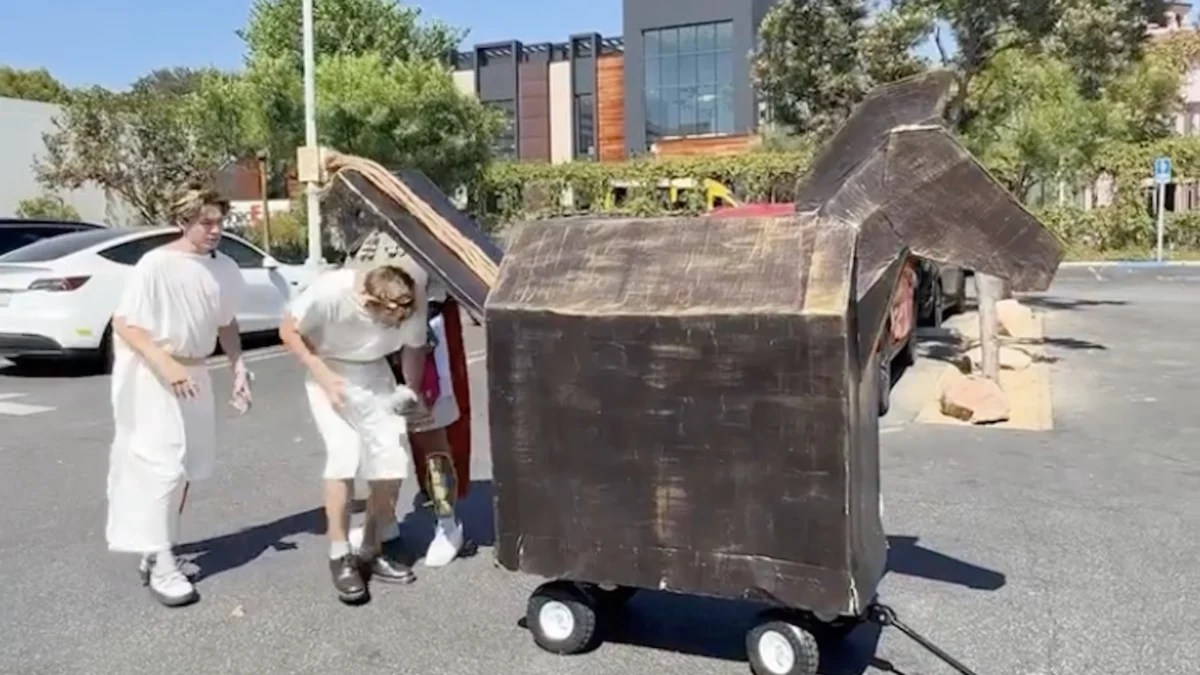
The intersection of classic literature and modern-day viral content reached an unexpected zenith this week as the YouTube collective FullSquad Gaming attempted a daring, if ill-fated, cinematic infiltration. Seeking to bypass the standard admission protocols at a local AMC theater, the group constructed a DIY Trojan Horse—a nod to the iconic plot device from Homer’s The Odyssey—to sneak into a screening of Christopher Nolan’s latest film adaptation of the same name. While the endeavor ultimately ended in a security intervention, the stunt has ignited a conversation regarding the lengths to which content creators will go for engagement and the evolving relationship between cinemas and the digital age.
The Cinematic Context: Nolan’s Epic Reimagined
Christopher Nolan’s The Odyssey has been one of the most anticipated cinematic events of the decade. Based on Homer’s seminal epic poem, the film promises to transport audiences back to the Bronze Age, chronicling Odysseus’s arduous journey back to Ithaca and the blood-soaked struggle of the Trojan War.
The film has already garnered significant attention, not only for its directorial pedigree but for Nolan’s ambitious creative choices, including his decision to have the cast utilize American accents—a choice he recently defended as a way to ground the story in a modern, visceral reality. Nolan has referred to the original text as "the Marvel of its day," aiming to capture that same sense of spectacle and cultural ubiquity. It is perhaps this very sense of spectacle that inspired FullSquad Gaming to attempt their own "epic" entrance.
Chronology of the Infiltration Attempt
The heist, documented in a video that has since garnered millions of views, followed a carefully—if foolishly—planned trajectory. The FullSquad Gaming team, consisting of three members, operated under the premise of a "one-ticket-only" challenge.
The Fabrication
The group began by constructing a rudimentary, wheeled wooden horse. The structure was large enough to house two of the team members, while the third member acted as the "charioteer," pulling the contraption through public spaces. The video shows the creators parading the horse through the streets, occasionally revealing their hidden cargo to surprised pedestrians, effectively building the suspense that would characterize their eventual arrival at the cinema.
The Breach
Upon arriving at the AMC theater, the group’s plan relied on the confusion of the staff and the sheer audacity of the prop. With only one legitimate ticket for three people, the group maneuvered the Trojan Horse past the initial ticket-scanning checkpoint. Whether through staff distraction or the novelty of the prop, the team successfully navigated two distinct security checkpoints, pushing their wooden vessel toward the cinema’s inner hallways.
The Collapse
The operation reached its climax in the theater’s corridor. As the team rounded a sharp corner, the weight distribution of the DIY horse proved insufficient for the maneuver. The structure toppled, crashing into the carpeted floor and revealing the two hidden stowaways. The illusion was shattered instantly.
The Security Intervention
Security personnel were alerted immediately to the commotion. The interaction, captured on camera, was surprisingly civil. One security guard approached the group and, with a tone of weary professionalism, stated, "You guys can’t bring this in, unfortunately." A second staff member arrived shortly thereafter, initially inquiring about the group’s ticket status before witnessing the wreckage of the wooden horse. In a moment of begrudging professional solidarity, the staffer remarked, "I respect this," acknowledging the sheer level of effort involved in the stunt, even while confirming their expulsion from the premises.
Supporting Data: The Rise of "Stunt-Driven" Content
The FullSquad Gaming incident is not an isolated phenomenon. In the current media landscape, YouTube and TikTok creators are increasingly pressured to perform high-stakes "stunts" to maintain relevance in a hyper-competitive attention economy.
Industry analysts note that "infiltration" videos have become a sub-genre of their own. From sneaking into concerts to accessing restricted areas of theme parks, these creators often operate in a grey area of legality—trespassing or violating terms of service to generate "organic" viral moments.
While the Trojan Horse stunt was harmless, it raises questions about theater liability. AMC and other major theater chains maintain strict policies regarding oversized items and public safety. Had the horse obstructed a fire exit or caused a physical injury during its collapse, the legal ramifications for the creators would have been far more severe than a simple ejection from the building.
Official Responses and Industry Perspectives
While there has been no official statement from Christopher Nolan’s production team regarding the stunt, the theater industry has reacted with a mix of amusement and frustration.
"Cinemas are places of immersion," says industry consultant Marcus Thorne. "When you bring a wooden horse into a lobby, you break the contract between the venue and the audience. While it makes for good YouTube content, it’s a logistical nightmare for staff who are already tasked with managing large crowds and safety protocols."
However, the "I respect this" comment from the theater worker highlights a cultural shift. Among younger demographics, these creators are viewed as modern-day tricksters. Their actions are less about theft—the group did purchase a ticket, after all—and more about the performative nature of their digital identity. To them, the "ticket" is not a piece of paper, but a permit to create content within a public space.
Implications for the Future of Theater Etiquette
The FullSquad Gaming incident forces a broader conversation about the future of cinema as a physical space. As streaming services continue to challenge the dominance of the box office, theaters are increasingly looking for ways to foster "community" and "event-based" experiences.
However, there is a fine line between the "event" and the "distraction." If creators begin to view movie theaters as mere sets for their pranks, chains may be forced to implement stricter security measures, such as bag checks, metal detectors, or bans on large personal items. This would inevitably alienate the very audience that theaters are trying to court.
Furthermore, the stunt highlights a generational gap in how literature and media are consumed. The creators chose The Odyssey—a text of immense cultural gravity—as the backdrop for a slapstick comedy bit. While some academics might view this as a trivialization of the work, others argue that it demonstrates the continued relevance of the story. Homer’s work was meant to be performed, debated, and shared; in the 21st century, that sharing happens via viral video, even if the methods are unorthodox.
Conclusion: The Trojan Horse in the Digital Age
The attempt by FullSquad Gaming to "invade" the cinema with a DIY Trojan Horse serves as a microcosm of the modern creator economy. It was bold, it was impractical, and it was ultimately unsustainable. While the group did not succeed in watching the film from inside their prop, they succeeded in their primary objective: garnering the attention of millions and cementing their own "epic" narrative in the digital record.
As for the cinema industry, the incident serves as a reminder of the need to adapt to a world where every customer is potentially a creator. Whether this leads to a new era of "stunt-friendly" cinema or a tightening of security, one thing is certain: the walls of the modern theater are no longer as impenetrable as those of ancient Troy. If the goal was to pay homage to the ingenuity of the Greeks, FullSquad Gaming managed to capture at least one element of the story: the realization that sometimes, the best way to get inside is to think outside the box—or, in this case, inside the horse.


 Siti Muinah
 Nana Wu
 Neng Nana

 Lina Hope

 Sagoh
Sagoh
 Iffa Jayyana