
 Asro
Asro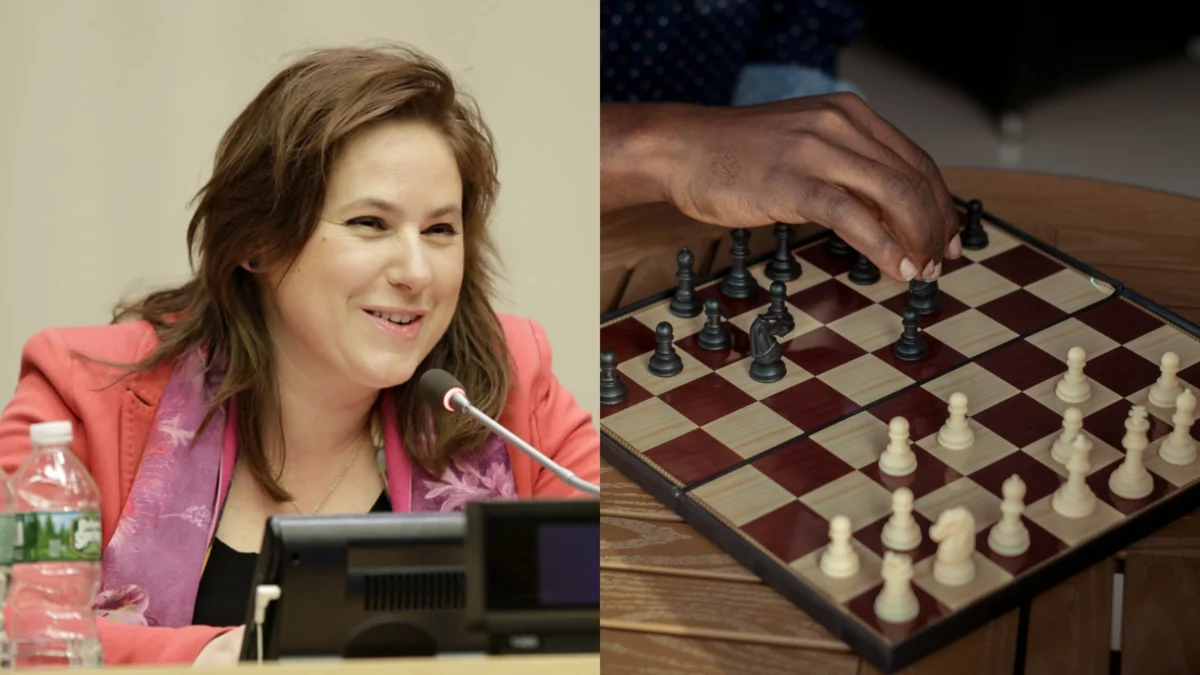
In a move that has sent shockwaves through both the international sporting community and the halls of European politics, Hungarian Prime Minister Péter Magyar has extended a formal invitation to legendary chess grandmaster Judit Polgár to serve as the President of Hungary. The proposal, made public on July 19, follows a period of constitutional transition and marks a potential departure from traditional partisan politics in favor of a figure defined by intellectual rigor, global prestige, and non-partisan achievement.
The Intersection of Strategy and Statecraft: Main Facts
The political landscape of Hungary is currently undergoing a significant shift. Following the decision by incumbent President Tamás Sulyok to sign a constitutional amendment that concludes his current term, the office of the presidency—a role that serves as a symbol of national unity and a guardian of constitutional order—is set to become vacant.
Prime Minister Magyar’s public overture to Polgár is not merely a symbolic gesture; it is an attempt to redefine the presidency as a position of "highest service" rather than political maneuvering. Polgár, widely regarded as the greatest female chess player in history, retired from competitive play in 2014, but her influence has only grown in the years since. By selecting a candidate who has spent her life navigating the complexities of high-stakes strategy, the Prime Minister aims to signal a new era of leadership based on meritocracy and integrity.
A Legacy of Excellence: A Chronology of Judit Polgár’s Career
To understand why the Hungarian government is turning to Polgár, one must look at her unparalleled trajectory. Born in 1976 in Budapest, Judit was raised as part of a famous educational experiment led by her father, László Polgár, who aimed to prove that genius is made, not born.
The Prodigy Years (1988–1991)
- 1988: At just 12 years old, Polgár broke into the FIDE top 100 players list, a feat that defied all contemporary age-related precedents.
- 1991: At the age of 15 years and 4 months, she achieved the title of Grandmaster (GM), breaking the record previously held by Bobby Fischer to become the youngest person to ever earn the title at the time.
The Era of Dominance (1992–2014)
- 1990s: Polgár transitioned from a prodigy to a global titan, winning multiple international titles and consistently competing in the "open" category against the world’s best male players.
- 2002: She achieved a historic victory, becoming the first woman to defeat a reigning world number one, Garry Kasparov, in a rapid game.
- 2005: She reached a peak FIDE rating of 2735, cementing her place as the eighth-highest-rated player in the world at the time.
- 2014: After a decades-long career that saw her defeat eleven reigning or former world champions, including Magnus Carlsen, Viswanathan Anand, and Anatoly Karpov, Polgár announced her retirement to focus on her foundation and educational advocacy.
The Strategic Mindset: Supporting Data and Cultural Impact
The rationale behind the Prime Minister’s nomination is rooted in the perception of Polgár as an incorruptible figure. In his official statement via Facebook, Prime Minister Magyar emphasized that the presidency requires a person of "unity, peace, and pride."
"The office of President of the Republic is not a profession or a job, but the highest form of service," Magyar stated. "The president’s duty is to serve and represent. Every Hungarian."
Statistical analysis of Polgár’s career supports the Prime Minister’s assertion of her "resilience and integrity." Her career is statistically unique:
- Olympiad Success: She secured five Chess Olympiad medals, demonstrating an ability to work within a team environment despite chess being an inherently individual pursuit.
- Endurance: Her ability to maintain a top-100 ranking for over two decades demonstrates a level of professional discipline rarely seen in any field.
- Global Diplomacy: Unlike political appointees, Polgár’s reach is global. She has served as a cultural ambassador for Hungary for over thirty years, representing the nation in arenas from the United Nations to the classrooms of developing nations where she promotes chess as a tool for cognitive development.
The Call to Service: Official Responses and Public Reaction
The nomination has been met with a mixture of awe and cautious optimism. While Polgár has yet to issue a formal acceptance or rejection, the political infrastructure surrounding the Prime Minister has moved quickly to solidify the proposal.

High-profile figures within Hungarian public life—including intellectuals, artists, and leaders in academia—have reportedly thrown their support behind the idea. The narrative being crafted is that Hungary, currently navigating a complex period of constitutional reform, requires a "Grandmaster" of diplomacy—someone who calculates risks, respects the rules of the board, and acts with the long-term benefit of the country in mind.
Critics, however, have questioned whether a background in high-level sports provides the necessary experience for constitutional law and legislative oversight. Supporters counter this by pointing to the presidency’s ceremonial nature, arguing that a leader who embodies national excellence is more valuable than a career politician who may be entrenched in partisan division.
Implications for the Future: A New Model of Leadership?
The potential ascension of Judit Polgár to the presidency of Hungary could have profound implications for the role of non-traditional candidates in high-level government.
1. The End of Partisan Monopoly
By looking outside the traditional political class, Prime Minister Magyar is challenging the notion that the presidency must be held by someone with a lifelong history of party membership. This could encourage other European nations to seek out "national icons" to fill ceremonial roles, thereby increasing public engagement with government processes.
2. Chess as a Metaphor for Governance
The transition from the chessboard to the presidential palace is a powerful symbolic shift. Governance, like chess, requires the ability to see several moves ahead, manage limited resources, and maintain composure under immense pressure. Should Polgár accept, her term would likely be characterized by a focus on long-term national planning, education, and the promotion of critical thinking within the citizenry.
3. A Focus on Intellectual Merit
The emphasis on Polgár’s "diligence and integrity" suggests that the government is looking to re-brand its public image. In an era where political discourse is often dominated by polarization, the image of a world-renowned strategist who earned her position through pure merit could serve as a powerful stabilizing force.
Conclusion: The Final Move
As the nation waits for a formal response from the grandmaster, the conversation has moved far beyond the borders of Hungary. Whether Polgár accepts or declines, the act of nominating her has already shifted the political dialogue. It has forced the public to ask what qualities they truly value in a leader: political experience or the demonstration of excellence, integrity, and intellectual fortitude.
In the world of chess, a player knows when the board is set, the pieces are positioned, and the time for a decisive move has arrived. For Judit Polgár, this is the ultimate endgame. The world watches to see if the woman who mastered the board will now take her seat at the head of the nation, bringing the same precision and grace to the office of the presidency that she brought to the world stage for nearly three decades. As the Prime Minister aptly put it, it would be a "tremendous honor" for a country to be represented by a figure of such caliber—a true testament to the idea that some leaders are not chosen by power, but by the weight of their own achievements.


 Siti Muinah
 Nana Wu
 Neng Nana
 Lina Hope
 Sagoh
Sagoh
 Iffa Jayyana