
 Neng Nana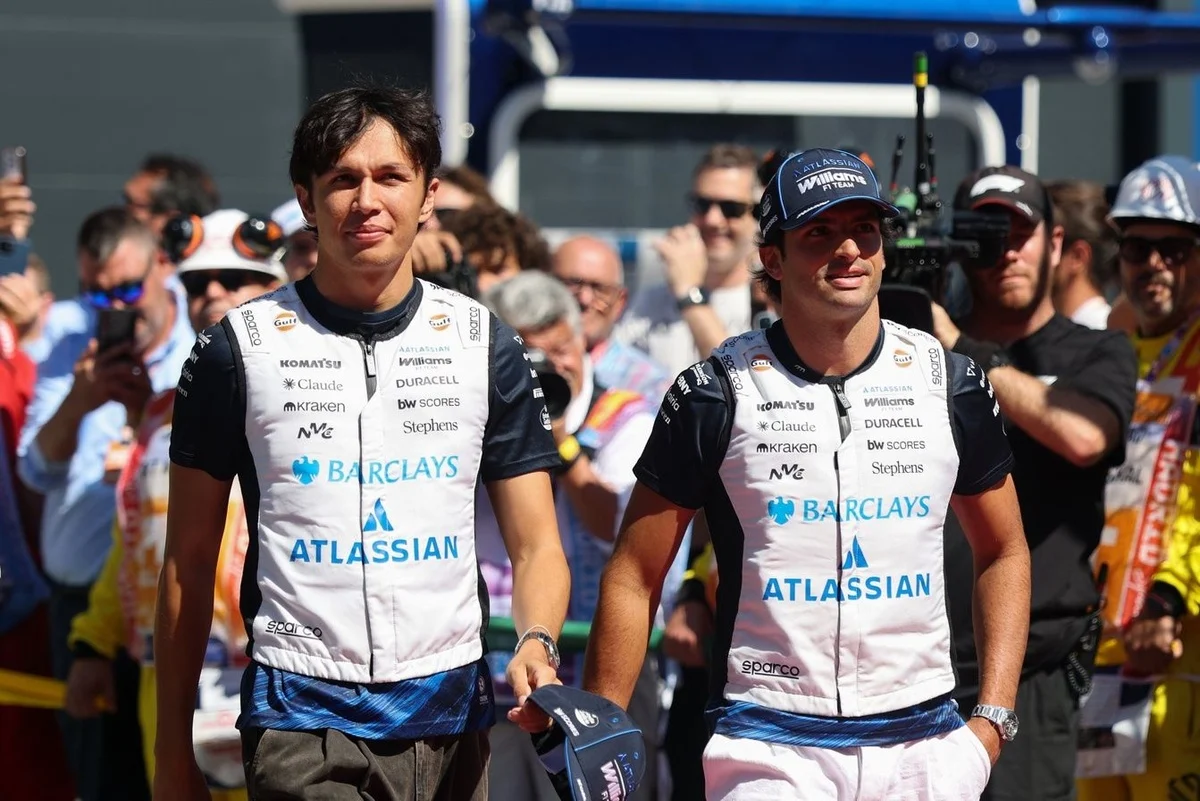
BAKU, Azerbaijan — Formula 1 is a sport defined by relentless travel, high-pressure environments, and microscopic margins of error. Between media obligations, engineering debriefs, simulator sessions, and the physical toll of 24 global race weekends, downtime is a rare and precious commodity for the drivers on the grid.
However, an unusual gap in the 2026 Formula 1 calendar—necessitated by logistical shifts and regional geopolitical complexities—has unexpectedly birthed a rare social phenomenon within the F1 paddock: a post-race "boys’ trip."
Speaking ahead of the Azerbaijan Grand Prix at the Baku City Circuit, Williams Racing teammates Alex Albon and Carlos Sainz revealed that a select contingent of Formula 1 drivers plans to remain in Asia following the rescheduled Bahrain Grand Prix. Rather than enduring the exhausting transcontinental commute back to their European bases, these athletes intend to unwind together in a secluded resort setting.
Yet, this lighthearted revelation comes at a critical juncture for Grove-based Williams. As the team enjoys a brief moment of levity off the track, the atmosphere inside the garage remains intensely focused. The iconic British constructor has rolled out a major, make-or-break upgrade package for its FW48 challenger in Baku—a comprehensive B-spec evolution designed to rescue a difficult campaign.
Main Facts: The Off-Grid Escape and Williams’ B-Spec Awakening
The primary headline emerging from the Baku paddock centers on a forthcoming getaway that has captured the attention of fans and media alike. Thanks to a calendar adjustment that sees the Bahrain Grand Prix relocated to the Sepang International Circuit in Malaysia due to ongoing security concerns and conflicts in the Middle East, drivers face a rare logistical window. Instead of flying home for a few days before immediately turning around to head to Southeast Asia and subsequently Singapore, a small group of drivers has decided to stay put.
"We’re going to go on like a boys’ trip, I guess," Alex Albon disclosed during a lively appearance in the Fan Zone ahead of qualifying in Baku. "I think there are a few drivers where we’re going to hang out."
Carlos Sainz, who joined the Williams driver lineup this season, elaborated on the nature of the excursion with dry humor. "Yeah, it’s going to be [a boys’ trip]," Sainz confirmed. "We just realised no one’s bringing their girlfriend. But it’s not like we’re going to do anything exciting. We’re going to be in a resort in the middle of nowhere."
While the prospect of F1 gladiators swapping helmet visors for pool loungers offers a refreshing humanizing glimpse into the paddock, the immediate reality for Albon and Sainz is grounded in the high-stakes theater of the Azerbaijan Grand Prix.
Williams arrived at the season-opening test in Bahrain earlier this year with a heavily overweight FW48, severely compromising their early-season pace. Months of frantic design work at the factory in Grove, Oxfordshire, culminated in Baku with a sweeping B-spec upgrade package. The team hopes these structural modifications will shed crucial kilograms, improve aerodynamic efficiency, and finally allow their drivers to fight consistently for points.
Chronology: From Bahrain Struggles to Baku’s Upgraded Reality
To understand the weight of expectation riding on Williams’ shoulders this weekend, it is essential to retrace the timeline of the 2026 season thus far.
Pre-Season and Early-Season Hurdles
When the FW48 first broke cover during pre-season testing at the Bahrain International Circuit, alarm bells rang quietly within the Williams engineering department. The car was significantly heavier than the FIA minimum weight limit, robbing it of critical apex speed and tyre life. This initial deficit set the tone for the opening rounds of the championship. Despite the heroic defensive driving and opportunistic racecraft of both Albon and Sainz, the inherent performance ceiling of the overweight chassis left them fighting at the back of the midfield.
The Factory Push and the B-Spec Debut
Recognizing that patching up the current package would yield diminishing returns, Williams technical leadership greenlit a substantial development pivot. Resources were funneled into a B-spec concept aimed at redesigning internal packaging, shedding superfluous weight, and overhauling the car’s aerodynamic floor and sidepod geometry.
The fruits of this labor debuted in the Baku pit lane on Thursday morning ahead of the Azerbaijan Grand Prix. Free practice sessions became a high-speed laboratory as the team scrambled to correlate physical data from the new parts with their CFD (Computational Fluid Dynamics) and wind tunnel predictions.
Qualifying Drama and Penalties
The true pace of the B-spec FW48 began to reveal itself during Saturday’s qualifying session. In a fiercely competitive midfield, Carlos Sainz extracted impressive speed from the updated machinery to secure ninth place in Q3. Alex Albon, battling slightly different setup compromises, slotted his car into 13th on the starting grid.
However, joy quickly turned to damage control for the Spanish veteran. Following the session, stewards summoned Sainz for failing to slow down sufficiently under yellow flag conditions during a critical phase of qualifying. After reviewing telemetry and onboard footage, the race director handed Sainz a mandatory five-place grid penalty, dropping him from ninth down to 14th for the Grand Prix start. To compound matters, the Spaniard received two penalty points on his Super Licence, bringing his cumulative total to four points within a rolling 12-month period.
Supporting Data: Championship Standings and Penalty Metrics
As the red lights prepare to go out at the Baku City Circuit for the 3:00 PM local time (12:00 PM UK time) start, the statistical landscape paints a clear picture of why developments like the Baku upgrade package are desperately needed.
2026 Driver Championship Standings
- Carlos Sainz: 16th position, 6 points
- Alex Albon: 17th position, 5 points
Both drivers have punched above their weight class on multiple occasions this season, turning scraps of misfortune from rival teams into hard-fought championship points. Yet, holding the 16th and 17th spots in the standings falls far short of the ambitions held by Williams Racing team principal James Vowles and the investment group steering the team’s long-term resurgence.
Disciplinary Record Update
- Carlos Sainz’s Baku Penalty: 5-place grid drop + 2 penalty points
- Total Super Licence Points (Sainz): 4 points (12-month accumulation)
While four penalty points is far from the danger zone of an automatic one-race suspension (which triggers at 12 points), it serves as an unwelcome hurdle for Sainz as he attempts to carve his way through the field from 14th on a street circuit notorious for attrition and chaotic safety car interventions.
Official Responses: Inside the Williams Camp
The duality of the weekend—balancing the anticipation of a relaxing Asian holiday against the grueling technical challenge of mastering a B-spec car—was a prominent theme in media pens throughout the Baku paddock.
When asked about the upcoming getaway by reporters, both Albon and Sainz maintained a lighthearted demeanor, emphasizing that the trip is designed simply to decompress away from the unrelenting gaze of the media and fans.
"It’s easy to forget how much energy these back-to-back-to-back stretches take out of you," noted a paddock insider close to the team. "When the calendar shifts like it has with Bahrain moving to Sepang, staying out in Asia makes complete logical sense. It prevents jet lag from destroying your sleep schedule twice in ten days."
Meanwhile, technical commentary from the team regarding the FW48 B-spec has been cautiously optimistic. Williams management has stressed that while the upgrade package addresses fundamental aerodynamic and weight issues, extracting its full potential will require a steep learning curve.
"We didn’t bring this package to Baku just to test the waters; we brought it because it represents the baseline of where this car should have been at round one," a senior Williams engineer noted off the record. "Alex and Carlos have given us great feedback. Now it’s about executing a clean race and keeping our noses clean on a track where mistakes are punished instantly by concrete walls."
Implications: What Lies Ahead for Williams and the F1 Calendar
The intersection of off-track driver camaraderie and on-track technical evolution carries deep implications for the remainder of the 2026 Formula 1 season.
1. The Strategic Value of Downtime
Mental health and driver fatigue have become major talking points as the F1 calendar expands toward its absolute logistical limit. With 24 races spanning multiple continents, burnout is a genuine threat to drivers and team personnel alike. The impromptu Asian holiday planned by Albon, Sainz, and a select few peers highlights a growing recognition among athletes that preserving mental well-being is just as critical as physical training. By choosing to acclimatize and relax in a secluded resort rather than enduring exhausting intercontinental flights, these drivers are pioneering a smarter, more sustainable approach to mid-season fatigue management.
2. The Verdict on the FW48 B-Spec
For Williams, the Azerbaijan Grand Prix serves as a crucial litmus test. If the B-spec package successfully unlocks consistent Q3 pace and race-day tire preservation, it will validate the aggressive mid-season development strategy spearheaded by Vowles. A strong performance in Baku—and at the subsequent races in Singapore and Sepang—could propel Williams past their immediate midfield rivals (such as Alpine, Visa Cash App RB, and Haas), injecting millions in vital prize money and renewed commercial confidence into the Grove outfit.
3. Mitigating Race-Day Damage
For Carlos Sainz specifically, Sunday afternoon in Baku will require a masterclass in calculated aggression. Starting down in 14th due to his grid penalty means navigating the perilous tight turns of the Baku City Circuit—most notably the infamous castle section at Turn 8—without falling victim to lap-one chaos. If Sainz can claw his way back into the points-paying positions alongside teammate Albon, it will turn a weekend of technical experimentation and administrative penalties into a resounding tactical success.
As the engines fire up and the grid forms on the Baku tarmac, Williams stands at a fascinating crossroads: ready to fight for every thousandth of a second on the track, while quietly looking forward to a well-earned, offline escape beneath the Asian sun.

 Nana
Nana
 Muslim
 Reynand Wu
 Pevita Pearce
 Laily UPN
 Siti Muinah