 Dwi Wanna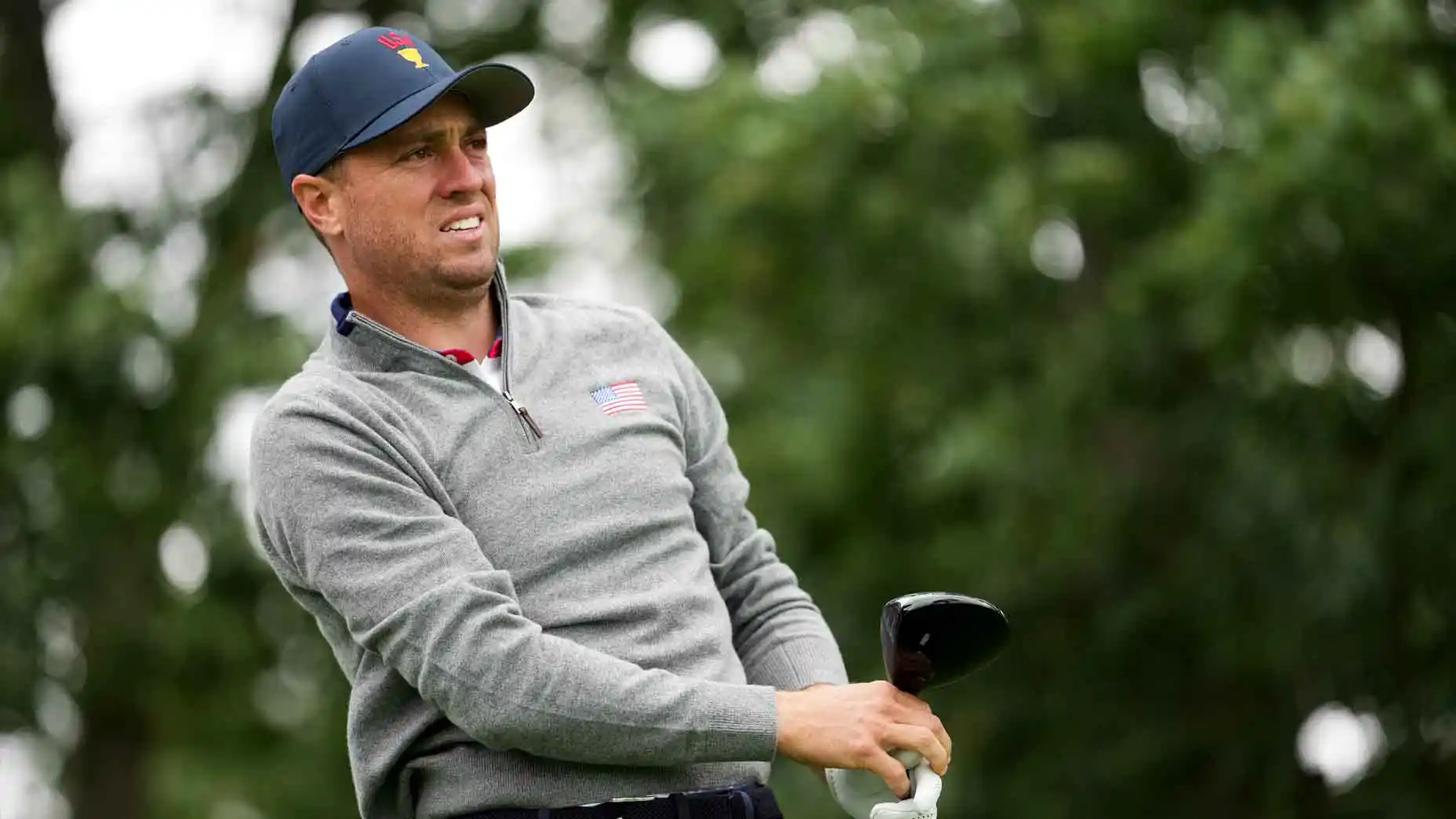
By Josh Schrock
September 22, 2026
As the autumn air settles over the hallowed grounds of Medinah Country Club, the stage is set for the 2026 Presidents Cup. The biennial showdown between the United States and the International Team arrives in Chicago with a familiar narrative: a heavily favored American juggernaut looking to extend an era of dominance, pitted against a scrappy International squad desperate to rewrite history.
It has been nearly three decades since the Americans last tasted defeat in this competition. Save for a 2003 stalemate in South Africa, the Internationals have been chasing the stars and stripes for a generation. While the depth of the American roster has traditionally overwhelmed their opponents, the intrigue this week lies in the specific pressures facing key individuals. With the tournament set to commence, five players find themselves under a microscope, their performances likely to dictate whether this week becomes another U.S. coronation or a long-awaited turning point for world golf.
The American Core: Justin Thomas and Patrick Cantlay
Justin Thomas: Searching for His Identity
Justin Thomas enters Medinah as the emotional heartbeat of the U.S. team, but his inclusion is not without skepticism. In the landscape of 2026, Thomas has struggled to find the elite consistency that defined his rise to world number one. With only two top-10 finishes this season—the last coming at the PGA Championship in May—his form has been statistically concerning.
Since the beginning of June, his results have been erratic: T19, T17, T14, T50, T65, T14, T47, and T16. Perhaps more damning are his peripheral statistics; ranking 107th in Strokes Gained: Approach and 87th in putting, Thomas is statistically fighting his game. While he remains a beloved figure in the team room, the narrative surrounding his selection is complicated by the omission of players like J.J. Spaun, who secured a victory at the BMW PGA Championship. Thomas is no longer the automatic selection he once was; he is a captain’s pick who must now justify his presence on the grass at Medinah.
Patrick Cantlay: The Silent Veteran
Patrick Cantlay occupies a different space in the U.S. hierarchy. Boasting a stellar 10-4-0 career record in the Presidents Cup, his partnership with Xander Schauffele is a cornerstone of the American strategy. Yet, 2026 has been a year of quiet frustration for the Californian. Despite another winless campaign, Cantlay’s advanced metrics remain elite. He finished the season ranked third in approach play and fourth in Strokes Gained: Tee to Green, showing signs of life with recent finishes of T28, T8, T12, and a runner-up performance.
If the U.S. team cruises to a victory, Cantlay’s selection will be viewed as a prudent choice of experience. However, should the Americans struggle early, the whispers regarding his lack of major championship impact and his selection over "new blood" will grow louder. Cantlay is a "match-play menace," but at Medinah, he must prove that his analytical excellence translates into the grit required to close out matches.
The International Dilemma: Matsuyama and Scott
For the International team, the math is simple but daunting. Lacking the overwhelming depth of the Americans, Captain Geoff Ogilvy’s squad relies heavily on its marquee names. If the veterans at the top of the lineup falter, the burden shifts to a younger, less-experienced cohort.
Hideki Matsuyama: The Weight of Expectation
Hideki Matsuyama remains the most recognizable face on the International squad. However, his Presidents Cup resume is remarkably modest for a player of his caliber. With a 9-13-5 overall record and a 6-12-3 mark in foursomes and fourballs, Matsuyama has struggled to impose his will on the event. For the Internationals to bridge the gap, they need their best player to be a dominant force, not a liability.

Adam Scott: The 12th Time’s the Charm?
Adam Scott’s relationship with the Presidents Cup is one of the most fascinating stories in professional golf. Entering his 12th appearance, Scott has been a constant in an ever-changing International setup. His only victory came in 2005, and his 20-28-6 record reflects a career spent battling the best of the United States.
The strategy of the International team has often been to rely on Scott as a stabilizing force, yet the numbers suggest he has been overwhelmed. Having been paired with 18 different partners across 11 editions, the search for a perfect chemical balance has proven elusive. With the team lacking depth, the pressure on Scott to lead by example is immense. If he and Matsuyama cannot find their footing early, the International campaign could crumble before Sunday’s singles matches begin.
The Scheffler Factor: Dominance vs. Team Reality
Perhaps the most compelling narrative at Medinah is that of Scottie Scheffler. For four years, Scheffler has been the undisputed king of stroke-play golf. His ability to navigate 72-hole events with clinical precision is historic. Yet, when he puts on the team uniform, that brilliance has been strangely muted.
The "Mortal" World Number One
With a 3-5-1 Presidents Cup record, Scheffler’s team performance stands in stark contrast to his world-beating talent. He is currently the only player to have won multiple majors and competed in multiple Presidents Cups since 2000 to hold a sub-.500 record. While legends like Tiger Woods and Phil Mickelson were the engines of their respective teams, Scheffler has yet to translate his individual success into a team-wide mandate.
Looking Toward Adare Manor
The implications of Scheffler’s performance go far beyond this week in Chicago. With the 2027 Ryder Cup at Adare Manor looming, the pressure on Scheffler is twofold. First, he must silence the critics who suggest his game is not suited for the volatility of match play. Second, he must prove that the "European bogeyman"—against whom he has struggled in past Ryder Cups—is not a permanent mental block. If Scheffler can dominate at Medinah, it will serve as a powerful signal that the United States is prepared for the challenges of the upcoming Ryder Cup.
Implications for the Future of the Event
The 2026 Presidents Cup is more than just a trophy on the line; it is a referendum on team composition and the evolving hierarchy of professional golf. The American side is currently betting on the continuity of their veterans, hoping that experience outweighs the momentum of the younger stars sitting at home.
For the Internationals, this event represents a crossroads. Under the leadership of Geoff Ogilvy, they have emphasized chemistry and preparation, but the reality remains that a loss at Medinah will reignite debates about the format of the competition itself. Can a team that lacks the massive domestic depth of the U.S. ever truly compete on a level playing field?
As the first tee shots fly, the focus will shift from the spreadsheets and the rankings to the psychological warfare of the match-play arena. Justin Thomas must find his form, Patrick Cantlay must prove his worth, the International veterans must finally deliver, and Scottie Scheffler must seize his mantle as the leader of the next generation.
Medinah has been the site of historic golf before. This week, it serves as the ultimate theater for the pressure of professional sports. Whether it becomes a coronation for the Americans or a shock to the system for the golf world, the outcomes of these five players will be the defining story of the 2026 Presidents Cup. The eyes of the world are on Chicago, and the pressure has never been higher.


 Asro
Asro
 Azzam Bilal Chamdy
 Iffa Jayyana
 Ali Ikhwan
 Jia Lissa
 Neng Nana