
 Pevita Pearce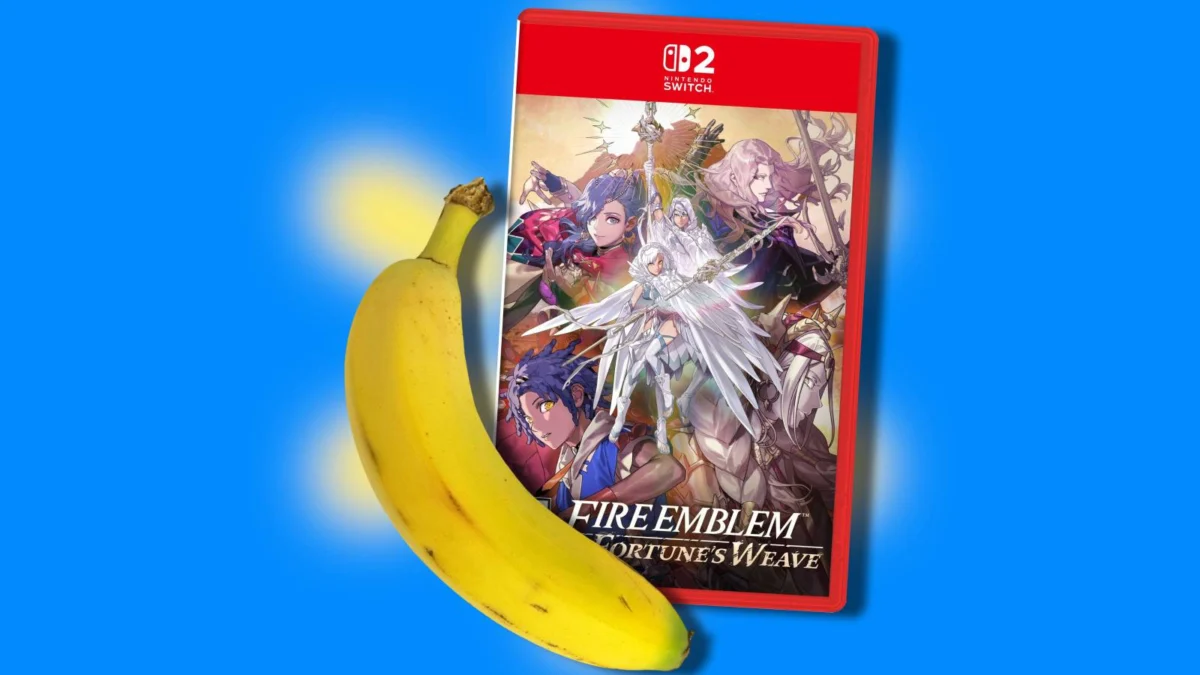
In the fast-paced world of digital retail, checkout systems are designed to be seamless, automated, and rigid. However, the recent launch of Fire Emblem: Fortune’s Weave for the Nintendo Switch 2 has exposed a bizarre, low-tech vulnerability within the Walmart digital storefront. Gamers attempting to secure the highly anticipated title at a discount have discovered that the key to unlocking savings isn’t a complex hack or a leaked backend key—it is, quite literally, a single banana.
The situation has turned into a viral sensation, with social media forums and Reddit threads buzzing with anecdotal evidence of shoppers adding produce to their digital carts to force promo codes to trigger. As the community attempts to reverse-engineer the glitch, the intersection of grocery logistics and high-end consumer electronics has created one of the most unusual retail phenomena of the year.
The Genesis of the Exploit
The story began shortly after the release of Fire Emblem: Fortune’s Weave. With a standard MSRP of $79.99, the title represents the premium pricing tier for the new console generation. Naturally, savvy consumers began hunting for ways to mitigate the cost. Industry deal-tracker Wario64 brought attention to several promotional codes—specifically “FAST30” and “SAVE3X”—that were theoretically designed to knock approximately $20 off the price, bringing the total down to roughly $60.
However, users quickly discovered that these codes were inconsistently applied. For many, the Walmart cart would refuse to recognize the discount, citing unspecified errors or invalid criteria. The frustration led to a period of trial and error among the gaming community. It was through this collective troubleshooting that the “banana exploit” was born.
As Wario64 noted in a widely circulated post: “If the code doesn’t work, try switching to pickup. If that doesn’t work, add a banana.”
Chronology of the Digital Banana Craze
The timeline of this phenomenon highlights how quickly information travels in the modern gaming ecosystem.
- Launch Day: Fire Emblem: Fortune’s Weave hits store shelves. Early adopters attempt to use standard promo codes, reporting hit-or-miss success rates.
- The Discovery Phase: Users on platforms like Reddit begin comparing notes on why the codes fail. Some discover that toggling between “Delivery” and “Store Pickup” resets the checkout state, occasionally triggering the discount.
- The Banana Breakthrough: An anonymous user discovers that adding a single banana—priced at roughly 20 cents—to the cart acts as a “trigger” for the system. The theory is that the addition of a grocery item changes the nature of the transaction in the system’s logic, forcing the coupon field to re-evaluate the total.
- The Viral Surge: Screenshots of $60 Fire Emblem orders alongside a single piece of fruit flood social media. The exploit is dubbed the “Banana Glitch.”
- The Supply Crisis: As thousands attempt the trick, some users report that local Walmart inventory systems are struggling. In some districts, bananas are being marked as “out of stock” online, likely due to the sheer volume of orders containing a single banana that are never actually picked up.
Understanding the Logic Behind the Glitch
While the average shopper sees a piece of fruit, systems engineers see a complex web of logistical variables. Why would a 20-cent banana force a $20 discount to apply?
Retail experts suggest that the answer lies in how Walmart’s backend processes “conditional discounts.” Promo codes often have specific triggers: a minimum order value, a specific department category, or a requirement for a certain shipping method. It is highly probable that Fire Emblem: Fortune’s Weave was incorrectly categorized within the system’s tax or shipping logic.
By adding a grocery item, the user essentially forces the system to “re-calculate” the entire basket. This re-calculation often clears the cached error state that was preventing the promo code from applying. Essentially, the banana acts as a “refresh” button for the checkout script. The fact that the game already exceeds the minimum purchase amount is irrelevant; the system simply needed a catalyst to force a new calculation of the total price.
Supporting Data and User Reports
The evidence is largely anecdotal, but the sheer volume of reports from diverse geographic locations suggests a systemic issue rather than a localized one. On the r/switch2 subreddit, dozens of users have provided “proof-of-work” images.
One user noted, “I spent an hour trying to get the code to work. I changed my address, tried three different browsers, and cleared my cookies. The moment I added a banana to my cart, the code ‘FAST30’ turned green and the price dropped to $60. I removed the banana, and the price stayed discounted. It’s absurd, but it works.”
This process—adding an item to trigger the code and then removing it—is a common technique in digital couponing, but its reliance on a specific grocery item is what elevates this story to the status of a meme.
Official Responses and Corporate Silence
As of the time of writing, Walmart has not released a formal statement regarding the exploit. This is standard procedure for large retail corporations; acknowledging the flaw publicly would only invite further scrutiny and likely lead to a faster patch.
Industry analysts suggest that Walmart’s IT department is likely already working on a fix. The issue is likely not with the promo code itself, but with the specific metadata associated with the Fire Emblem product listing. By adjusting the weight, category, or shipping requirements of the game in their database, they can effectively “kill” the need for the banana-refresh.
Walmart’s silence is also a matter of public relations. The company likely views the loss of a few thousand dollars in potential revenue as a minor inconvenience compared to the negative PR that might come from “fixing” a bug that has essentially become a harmless bit of internet culture.
Implications for E-Commerce and Consumer Behavior
The Fire Emblem banana glitch serves as a fascinating case study in the fragility of modern e-commerce systems. It highlights the “black box” nature of digital checkout, where a customer has no visibility into why a transaction succeeds or fails.
The Gamification of Shopping
This event underscores a growing trend where consumers approach online shopping with a “gamer mindset.” The propensity to treat checkout errors as “bugs” to be exploited—rather than obstacles to be avoided—has turned the act of buying a game into a mini-game itself.
The Fragility of Inventory Systems
The reported “banana shortage” at some locations is perhaps the most significant implication. Even if the shortage is digital (the system thinks they are out of stock because of the spike in orders), it shows how sensitive modern supply chain software is to anomalies. If a surge of “banana-only” orders can disrupt the inventory count of a retail giant, it raises questions about the robustness of these systems during actual crises.
The Future of Promo Codes
This incident will almost certainly force retailers to overhaul how they deploy promo codes. We can expect to see more rigid, account-locked, or item-specific codes in the future to prevent the type of “refresh-triggering” that allowed the banana trick to function.
Conclusion
The Fire Emblem: Fortune’s Weave banana exploit is a reminder that even in the age of AI, cloud computing, and massive logistics networks, software is ultimately written by humans—and humans are prone to oversights. While the discount was a win for consumers, the true value of the event lies in the shared experience of the gaming community.
For a few brief days, thousands of people were united by the absurdity of adding fruit to a digital cart, turning a simple retail transaction into a piece of gaming history. Whether Walmart patches the hole today or tomorrow, the “Banana Glitch” will remain a legendary footnote in the history of the Nintendo Switch 2 launch. As for the bananas themselves, it is safe to assume that most of those orders were canceled, leaving the fruit safely in the store—and the gamers, for now, with their discounted copies of Fortune’s Weave.


 Nana
Nana
 Reynand Wu

 rifanmuazin
 Laily UPN
 Asro
Asro
 Muslim