
 Evan Lee Salim
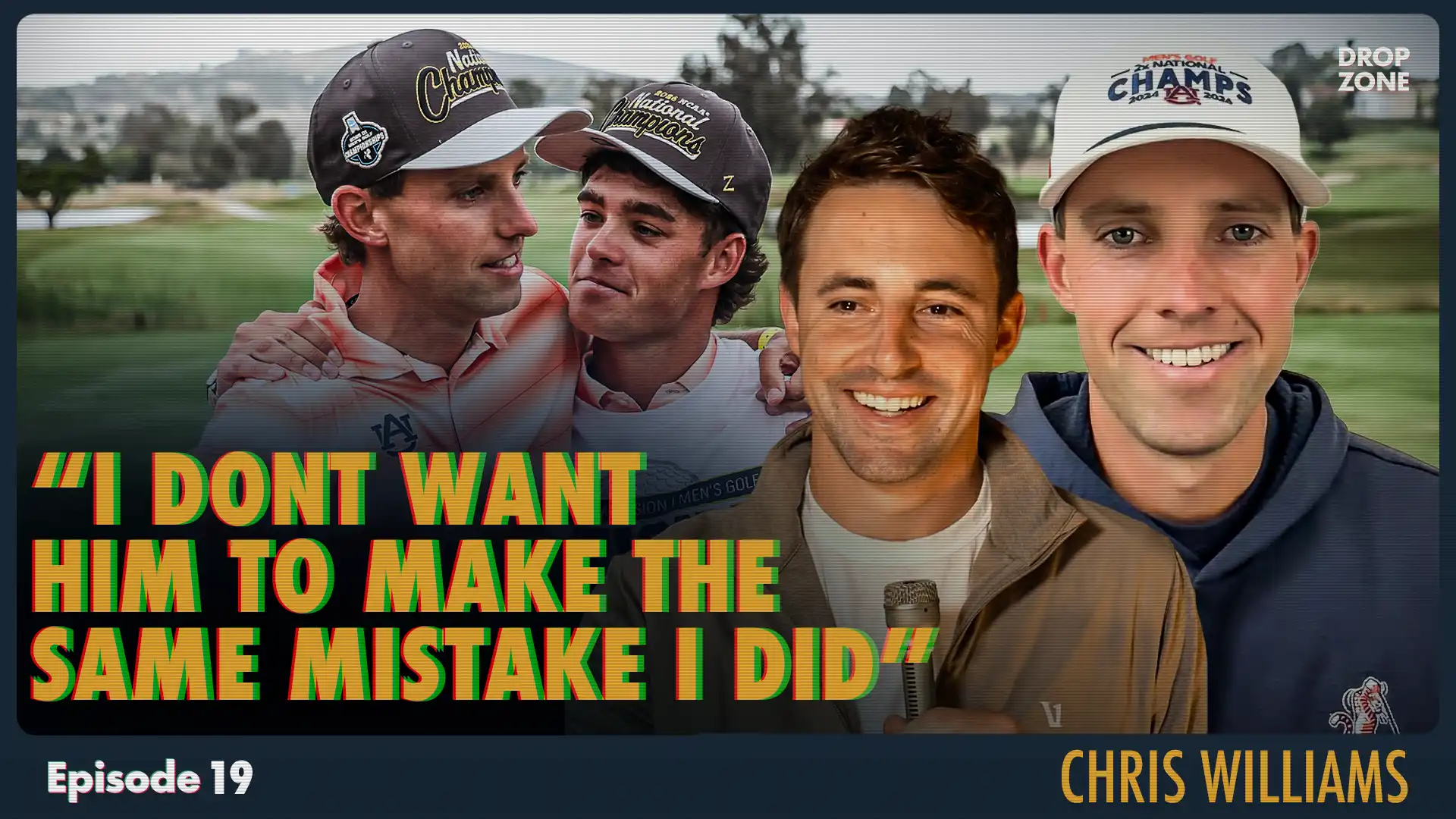
The trajectory of a professional athlete is often measured in trophies, prize money, and world rankings. But for Chris Williams, the narrative arc of his life took a sharp, unexpected, and ultimately redemptive turn—moving from the lonely, high-pressure grind of the professional tour to the profoundly rewarding role of a mentor at Auburn University.
Williams, once the world’s top-ranked amateur, a Hogan Award winner, and the great white hope of American golf, walked away from the professional game just as his peers were beginning their ascent. Today, he is arguably more influential than he ever was as a player. As the associate head coach at Auburn, he has become the guiding hand for Jackson Koivun, a generational talent who is currently rewriting the record books of amateur and professional golf.
The First Chapter: A Prodigy’s Burden
In the early 2010s, Chris Williams was the standard by which all other amateur golfers were measured. A product of Idaho with a swing as smooth as silk and an easy, affable charm, he dominated the collegiate ranks at the University of Washington. By the time he turned professional, he had secured the Ben Hogan Award—the "Heisman Trophy" of college golf—and had held the No. 1 spot in the World Amateur Golf Ranking for nearly a year.
Nike signed him to a lucrative five-year deal, and he was managed by the same team that looked after Tiger Woods. To his peers, he wasn’t just a player; he was a myth. Yet, beneath the accolades, a disconnect was forming.
"From the game standpoint—I love the game," Williams says, reflecting on his transition. "But from playing for a living and making it your livelihood, I couldn’t handle it. I never liked it from the start."
The professional lifestyle—the endless travel, the isolation of hotel rooms, and the absence of a team environment—eroded his passion. By 2018, when his Nike contract expired, Williams made the quiet, definitive choice to step away. He finished his degree at Washington and transitioned into coaching, finding that he thrived when he was part of a collective.
Chronology: From Pupil to Mentor
The seeds of his second act were sown during his own college days. Williams credits his former coach, Matt Thurmond, for recognizing that his true value lay not in his own scorecards, but in his capacity to foster team spirit.
"We always joked internally as a staff that if golf never worked out for you, you would be a really good coach," Thurmond told him. "You cared more about the team than your individual wins."
This philosophy followed Williams to Auburn. In 2021, on his very first recruiting trip to San Jose, California, he encountered a "scrawny, 135-pound" kid named Jackson Koivun. Despite Koivun’s slight frame and lack of national prestige at the time, Williams saw a spark of "fiery" internal confidence that he hadn’t seen in years.
That meeting initiated a mentorship that has defined the last few years of Auburn golf. Together, they helped build a dynasty, securing two national titles. While Koivun has now moved to the professional ranks—winning his first PGA Tour event at the 3M Open and going undefeated at the Presidents Cup—the bond between the two remains the backbone of Koivun’s early success.
Supporting Data: The Statistical Weight of a Legacy
The hype surrounding Jackson Koivun is not mere conjecture; it is backed by an overwhelming historical record. According to DataGolf’s all-time amateur rankings, Koivun holds the No. 1 spot, placing him ahead of modern icons like Jon Rahm (No. 2), Jordan Spieth (No. 3), and Patrick Cantlay (No. 4).
Chris Williams sits at No. 10 on that same list—ahead of major winners and current stars like Collin Morikawa and Ludvig Åberg. This historical context provides the weight behind Williams’ advice. When he tells Koivun that he is "good enough," he isn’t speaking as a bystander; he is speaking as a man who has occupied the same rarified air and understands the psychological toll that comes with being the hunted.
The Philosophy of "Small Tweaks"
One of the most critical lessons Williams imparts to his young charge is the danger of over-correction. Reflecting on his own career, Williams admits he fell into the trap of changing his swing, his equipment, and his mental approach the moment he hit a rough patch as a pro.
"I wish I would have had someone in my ear telling me, ‘No, what you’re doing is good. What you’re doing is good enough,’" Williams says.
With Koivun, the approach has been radically different. Rather than attempting to "reinvent the wheel," they focus on incremental, 1% improvements. When Koivun struggled with his wedge game or needed to increase his apex on a 4-iron to compete on the PGA Tour, they chipped away at the problems with surgical precision rather than wholesale destruction.
Implications: The New Era of Player Development
The success of the Williams-Koivun partnership highlights a growing trend in elite golf: the importance of sustained, holistic mentorship. The professional tour is a lonely place, and even a talent as singular as Koivun is susceptible to the "high-anxiety" realities of the sport.
Williams remains a stabilizing force, often receiving panicked texts from Koivun after a bad round on the road. By normalizing these struggles and providing a perspective that only a former No. 1 can offer, Williams is helping Koivun navigate the "tornado" of fame, endorsements, and media obligations that often derail young players.
"I don’t want him to make the same mistakes I made," Williams explains. "I get a little protective of him… I’ll do anything for you."
Official Reflections: A Life Well-Lived
When asked if he feels he missed his calling, Williams is contemplative. He acknowledges the "regret" that occasionally surfaces when he sees his former peers winning majors, but he quickly balances it with the reality of his current life.
"I think I’m way more happy and enjoying way more what I’m doing now, helping these kids get to where they want to be," he says.
The transition from a player who felt stifled by the demands of the sport to a coach who finds joy in the success of others represents the ultimate professional evolution. Williams has found a way to remain at the absolute pinnacle of the game, not by fighting for the trophy, but by building the person who wins it.
As for his own game? He still shoots the occasional 61 at his home course in Seattle, reminding anyone who doubts him that the talent is still there. But the desire to prove it on a professional leaderboard has vanished. He is content to let his legacy be measured by the players he influences, the teams he builds, and the quiet, steady hand he keeps on the shoulder of the next generation.
In the story of Chris Williams, the second chapter isn’t just an epilogue—it is the masterpiece.

 Lina Irawan

 Lina Hope

 Nana Wu
 Laily UPN

 Ammar Sabilarrohman
 Asro