
 Ammar Sabilarrohman
By Sports Editorial Staff
Wednesday, 18 November 2026
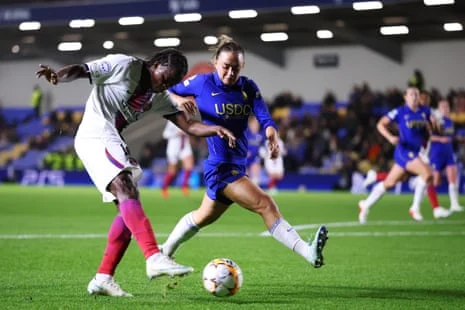
In a compelling, high-stakes encounter at Kingsmeadow, Chelsea and Paris Saint-Germain played out a goalless draw that leaves both sides searching for the clinical edge required to navigate the fiercely competitive group stage of the UEFA Women’s Champions League. Despite a match defined by tactical discipline and persistent pressure, neither side could find the breakthrough, resulting in a stalemate that underscores the fine margins at the elite level of European football.
The Main Facts: A Battle of Attrition
The match, held under the floodlights on a chilly London evening, saw Chelsea dominate possession for large swathes of the game. The Blues, desperate for three points to solidify their standing in a tight group, controlled the tempo but were repeatedly frustrated by a compact, disciplined PSG defensive block.
Chelsea entered the contest sitting fifth in their group, level on points with Arsenal and Bayern Munich, with only goal difference keeping them outside the coveted top-four automatic quarter-final spots. For the visitors, the stakes were equally high; sitting 10th, PSG arrived in London needing a result to keep their European ambitions alive. While the match finished 0-0, the intensity was palpable, with both goalkeepers—Chelsea’s Hannah Hampton and PSG’s Katarzyna Kiedrzynek—forced into critical interventions to maintain parity.
Chronological Breakdown: How the Drama Unfolded
First Half: A Tactical Chess Match
The opening 45 minutes set the tone for the evening: a high-pressing game from Chelsea met by opportunistic counter-attacks from the French side. Chelsea, having made three changes to their starting XI following their weekend victory over Manchester City, looked to establish dominance early. Nathalie Bjorn, Veerle Buurman, and Aggie Beever-Jones were drafted into the side, yet the rhythm remained elusive.

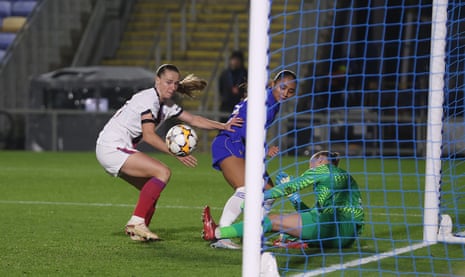
PSG’s defensive structure, anchored by Mbock and Samoura, was formidable. Chelsea’s best opportunity of the half came in the 45th minute when Sandy Baltimore fired a strike at goal. Kiedrzynek made a crucial save, and the rebound fell to Alyssa Thompson, whose follow-up was also thwarted. It was a moment that epitomized the night: Chelsea’s persistence met by PSG’s resolve.
Second Half: The Hunt for a Winner
The second half began with a heightened sense of urgency. Chelsea’s Erin Walsh appeared to be struggling with a shoulder injury early after the restart, yet she remained on the pitch, highlighting the intensity of the contest.
PSG grew into the game around the hour mark. Merveille Kanjinga, who proved to be a constant thorn in Chelsea’s side, forced a brilliant save from Hampton in the 54th minute. The Frenchman’s pace and direct running consistently troubled the Chelsea backline, with Katie McCabe frequently forced into emergency defensive measures.
Recognizing the need for a spark, Chelsea manager introduced a triple substitution in the 61st minute, bringing on Erin Cuthbert, Lucy Bronze, and Maika Hamano. The impact was immediate. Chelsea’s ball movement became sharper, and the pressure on the PSG goal mounted. A flurry of corners followed in the 70th and 71st minutes, with Bronze coming agonizingly close to finding the net with a header that was ultimately cleared off the line.
The game concluded as a chaotic, end-to-end affair. Despite the introduction of 16-year-old Alyssa Charlier for PSG in the 68th minute—a testament to the depth of the Parisian squad—neither team could find the net. The match ended with a feeling of "what could have been," as both managers lamented a lack of clinical finish in the final third.

Supporting Data: By the Numbers
The statistical profile of the match highlights a game of lopsided possession but balanced danger. Chelsea enjoyed a clear advantage in ball retention, yet their "Expected Goals" (xG) were mitigated by a lack of composure in the final 18 yards.
- Chelsea’s Offensive Woes: Aggie Beever-Jones, a talent of immense promise, struggled to find her rhythm, continuing a season-long trend of underperformance in front of goal, with only one strike to her name this campaign.
- PSG’s Defensive Discipline: The visitors relied on a low block that proved highly effective. PSG’s ability to limit Chelsea to low-probability shots from distance forced the hosts into a predictable, crossing-heavy game plan that the French defenders managed with relative ease.
- The Group Context: With Manchester City recording a 2-0 win over Häcken earlier in the day and Real Madrid securing a 3-1 comeback victory against 10-woman Internazionale, the pressure on Chelsea to secure points at home remains intense. City and Madrid remain unbeaten, setting a high bar for the remainder of the league phase.
Official Responses and Tactical Observations
Post-match, the narrative from both camps focused on the quality of the opposition’s defensive structure.
"We knew coming to London would be a test of our organization," a PSG spokesperson noted. "Our plan was to absorb the pressure and use our speed on the wings to punish them. While we didn’t get the goal, a point away from home in the Champions League is always a result to build on."
Chelsea’s camp was understandably more frustrated. The decision to rotate the squad—forced by Melvine Malard’s hamstring injury—meant that the team took time to click. The late-game intensity suggested that had the triple substitution occurred earlier, the result might have shifted in favor of the hosts.
Implications for the Competition
This draw has significant ramifications for the group standings. For Chelsea, the failure to secure three points means they remain in a precarious position. The "Group of Death" nature of this campaign means that every dropped point at home is a potential turning point.
- Qualification Pressure: Chelsea now faces a must-win scenario in their upcoming fixtures. With Arsenal and Bayern Munich nipping at their heels, the margin for error has effectively vanished.
- The "Clinical" Crisis: A recurring theme for Chelsea this season has been the discrepancy between their creative buildup play and their finishing. Whether it is a lack of confidence or a tactical imbalance, this will be the primary focus for the coaching staff in the coming week.
- PSG’s Revival: Conversely, this performance will act as a massive confidence booster for the French giants. Having previously occupied a lower spot in the standings, holding Chelsea at Kingsmeadow proves that they are capable of grinding out results against Europe’s elite.
As the tournament moves toward its final group-stage fixtures, the focus shifts to the tactical adjustments required to unlock these stubborn defensive lines. For Chelsea, the challenge is clear: transform possession into points before the European dream slips further out of reach. For the rest of the group, the door remains wide open, with the fight for the top four set to go down to the final minute of the final matchday.
For full coverage of the Women’s Champions League, stay tuned to our live blog for updates on all upcoming fixtures.


 Muslim
 Layla Zulfa

 Asro

 rifanmuazin

 Sagoh

 Suro Senen