
 Laily UPN
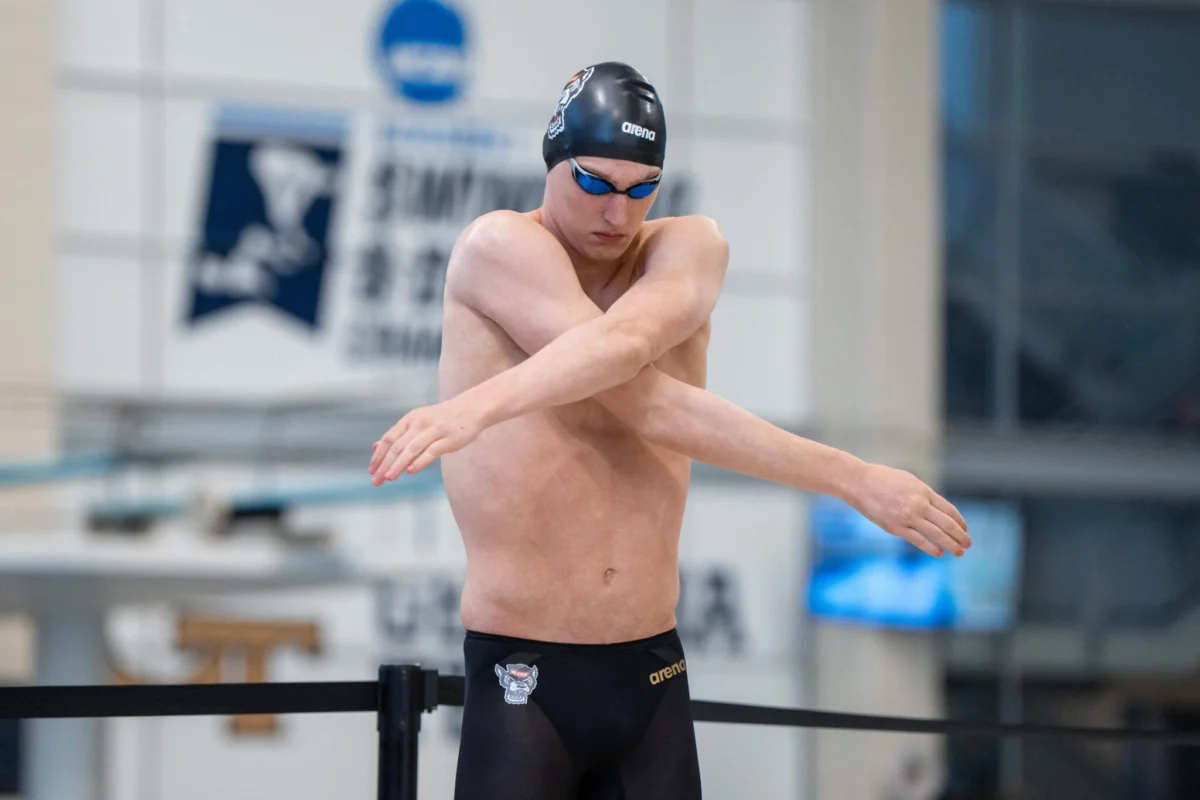
GREENSBORO, N.C. — As the 2026 collegiate swimming calendar reaches its pivotal midseason crescendo, the Greensboro Aquatic Center (GAC) has become the epicenter of the sport. The inaugural Wolfpack Elite GAC Invitational kicked off this week, drawing a powerhouse field of programs to North Carolina. Headlined by the inaugural CSL champions, the host NC State Wolfpack, the competition also features the University of Arizona Wildcats, the Auburn Tigers, George Washington University, and the Virginia Tech Hokies.
The opening session on Wednesday set a blistering pace, focusing on the tactical intensity of the 200 medley relays and the grueling endurance required for the 1650-yard freestyle, all punctuated by the raw speed of the 800-yard freestyle relays.
The Landscape of Competition: Why Greensboro Matters
For programs like NC State and Auburn, this midseason meet serves as a critical diagnostic tool. With the championship season looming in the spring, coaching staffs are using the GAC Invitational to test relay chemistry, evaluate depth in distance events, and gauge the taper readiness of their rosters. The facility, a world-class venue known for its fast water, provided the perfect backdrop for teams looking to post NCAA-qualifying times and establish early-season dominance.
"Midseason is where we find out who we are," noted one coaching staff member. "It’s about execution, fine-tuning the technical details of our strokes, and seeing how our athletes respond to the pressure of a high-level environment away from the comfort of their home pools."
Chronology of Action: The Opening Night Highlights
The Women’s 200 Medley Relay: A Wolfpack Masterclass
The evening began with a statement performance from the host squad. The NC State women’s ‘A’ relay wasted no time asserting their authority, cruising to a runaway victory with a time of 1:33.90.
The quartet of Leah Shackley (23.66 backstroke), Eneli Jefimova (26.16 breaststroke), Tyler Driscoll (22.89 butterfly), and Lily Christianson (21.19 freestyle) operated with clockwork precision. The defining moment of the race came during the breaststroke leg, where Jefimova clocked a split nearly a full second faster than the rest of the field, effectively blowing the race open. The Wolfpack’s dominance was further underscored by their ‘B’ relay, which touched in 1:36.26, narrowly edging out Auburn to secure a 1-2 finish for NC State.
Men’s 200 Medley Relay: An Auburn Duel
If the women’s race was a demonstration of singular dominance, the men’s 200 medley relay was a masterclass in internal team competition. The Auburn men’s ‘A’ and ‘B’ relays engaged in a tactical war that captivated the crowd.
The Auburn ‘A’ squad ultimately claimed the victory in 1:22.65, though the win was far from guaranteed. The Wolfpack men opened strong, with Quintin McCarty posting a stellar 20.72 backstroke split. However, Auburn’s tactical adjustments proved superior as the race progressed. Uros Zivanovic’s 22.89 breaststroke leg surged the ‘A’ relay back into contention. On the butterfly leg, Bradford Johnson (20.11) and Mike Rice (19.97 for the ‘B’ team) traded blows, setting up an electric anchor leg. Warner Russ anchored the ‘A’ relay in 18.30 to secure the win, leading a 1-2 finish for the Tigers.
Women’s 1650 Freestyle: Tactical Grit
The 1650 freestyle shifted the focus from explosive speed to pure aerobic capacity. Kate Anderson claimed the individual victory, touching the wall in 16:22.19. While just five seconds off her lifetime best (16:17.61, set at the 2025 ACC Championships), Anderson’s race was a clinic in pacing.
Arizona’s Ava Sutphin provided the evening’s biggest surprise. Swimming in the outer lane 8, Sutphin demolished her previous personal best of 16:34.74—set at the 2023 YMCA Short Course Nationals—to finish in 16:23.03. Her near-medal performance from an outside lane is a testament to the unpredictable nature of midseason racing. Virginia Tech also utilized this event to bolster their team score, utilizing a deep roster to finish 1st, 3rd, 6th, and 8th, while Arizona’s 2-4-5 showing kept them well within striking distance of the leaders.
Supporting Data and Technical Analysis
The speed on display in Greensboro is reflective of a wider trend in collegiate swimming: the increasing reliance on relay depth to secure team titles.
| Event | Winner | Winning Time | Key Split |
|---|---|---|---|
| Women’s 200 Medley Relay | NC State ‘A’ | 1:33.90 | Jefimova (26.16) |
| Men’s 200 Medley Relay | Auburn ‘A’ | 1:22.65 | Russ (18.30) |
| Women’s 1650 Freestyle | Kate Anderson | 16:22.19 | N/A |
The data suggests that while NC State has the highest top-end speed in the women’s sprint relays, Auburn’s men’s program possesses a unique "clutch" factor. By running their ‘B’ relay as a genuine threat to their ‘A’ squad, Auburn is creating a competitive internal environment that forces every swimmer to hit their taper targets earlier in the season.
Official Responses and Perspectives
"We are incredibly proud of how our women came out of the blocks tonight," said a spokesperson for the NC State coaching staff. "When you see an opening split like Leah’s and a follow-up breaststroke leg like Eneli’s, it builds confidence across the entire roster. It’s not just about the win; it’s about the standard we’re setting for the rest of the weekend."
Conversely, the Auburn camp expressed satisfaction with their men’s performance. "To go 1-2 in a field this deep—against a team as fast as NC State—is exactly what we needed to see. The boys are learning how to race each other, and that internal pressure is what will carry us through the championship phase of the season."
Implications for the Season Ahead
As the Wolfpack Elite GAC Invitational continues, the implications for the NCAA championships are becoming clearer:
- The Rise of the Underdog: Performances like Ava Sutphin’s in the 1650 show that athletes from non-traditional powerhouse lanes are finding form. This will force the top-tier teams to remain vigilant throughout the preliminary heats.
- Relay Versatility: NC State’s ability to sweep the top spots in the women’s medley relays indicates they have the depth required for long-format championship meets. Their versatility in swapping personnel between the ‘A’ and ‘B’ squads will be a massive advantage in the spring.
- Endurance as a Team Weapon: Virginia Tech’s point accumulation in the 1650 freestyle highlights the value of "volume scoring." While they may not have grabbed the gold, their collective finish ensured they stayed relevant in the team standings.
Looking Ahead
The meet continues through the weekend, with shorter individual events and the marquee 400 and 200 freestyle relays still on the docket. If Wednesday’s session was any indication, the Greensboro Aquatic Center will remain the hottest place in the country for collegiate swimming. Fans can expect to see further adjustments in relay lineups and a concerted push from the teams to drop times as the fatigue of the midseason training block finally gives way to the adrenaline of the race.
The competition is not just a test of fitness; it is a psychological battle. As teams continue to scout their opponents, the results from the GAC Invitational will likely shape the coaching strategies for the remainder of the 2026 campaign. With the Wolfpack holding home-pool advantage and the Tigers showing incredible depth, the race for the team title remains too close to call.
As the swimmers head back to their recovery protocols, the rest of the collegiate swimming world is watching closely. The path to the national championship often runs through midseason benchmarks like this one, and in Greensboro, the standard has been set high.

 Reynand Wu
 Asep Darmawan

 Nana Wu
 Ammar Sabilarrohman

 Asro

 rifanmuazin

 Sagoh