
 Nila Kartika Wati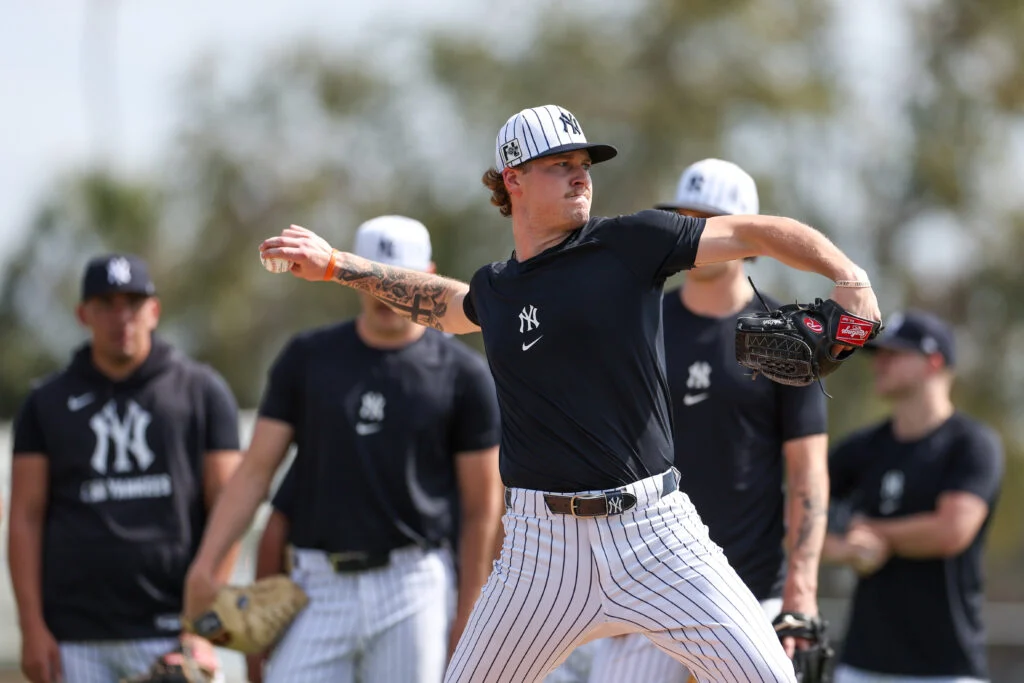
By Editorial Staff
September 12, 2026
In a flurry of roster activity aimed at bolstering their organizational depth for the future, the Washington Nationals announced on Saturday that they have successfully claimed right-handed pitcher Chase Hampton off waivers from the New York Yankees. The move represents a low-risk, high-reward gamble for a Washington franchise currently in the midst of an extensive rebuilding phase. To accommodate Hampton on their 40-man roster, the Nationals were forced to move right-hander Matt Waldron from the 15-day injured list to the 60-day injured list, effectively ending his 2026 campaign.
The organizational overhaul did not stop there. The Nationals also confirmed the activation of left-handed reliever Richard Lovelady from the 60-day injured list, signaling a return to action for the veteran arm as the club looks to evaluate its bullpen options in the final weeks of the season.
The Strategic Acquisition of Chase Hampton
The claim of Chase Hampton is a classic "buy-low" maneuver. Only two seasons ago, Hampton was widely considered one of the most promising pitching prospects in professional baseball, holding a firm spot on various top-100 prospect lists. His journey to the nation’s capital, however, has been marred by significant physical setbacks.
A Career Interrupted
Hampton’s trajectory shifted dramatically following the 2023 season. Once viewed as a foundational piece for the Yankees’ future rotation, the right-hander was sidelined for the better part of two years due to a series of injuries, the most devastating of which was a torn ulnar collateral ligament requiring Tommy John surgery.
Recovery from such a procedure is rarely linear, and Hampton’s return to the mound this past May proved the adage true. Across three levels of the Yankees’ minor league system in 2026, Hampton struggled to regain his pre-surgery form. In 55 innings of work, he posted a challenging 8.18 ERA. More concerning for evaluators were his peripheral statistics: a 21.3% strikeout rate paired with a 12.9% walk rate, suggesting that his command has yet to return to the elite levels scouts once touted. Furthermore, the long ball proved to be an Achilles’ heel, as he surrendered 13 home runs in his limited workload.
Why Washington Took the Risk
Despite the underwhelming 2026 stat line, the Nationals see a player with untapped potential. Having just turned 25 last month, Hampton possesses a full slate of minor league options, as he has never previously been added to a 40-man roster. This flexibility allows Washington to assign him to Double-A or Triple-A next spring without the immediate pressure of major league service time constraints.
For a rebuilding team, the opportunity to acquire a former top-100 prospect for nothing more than a waiver claim is an opportunity too enticing to pass up. The Nationals are essentially paying for the "pedigree" and the hope that, with another full year of post-surgical recovery, Hampton can rediscover the mechanics that made him a premier pitching talent.
The Roster Shuffle: Waldron’s Season Concludes
The arrival of Hampton necessitated a corresponding move, which fell on the shoulders of Matt Waldron. Waldron, a unique knuckleballing talent, has been a journeyman of sorts in 2026. After being claimed off waivers from the Toronto Blue Jays just weeks ago, Waldron provided the Nationals with a brief glimpse of stability, logging 5 2/3 scoreless innings over three appearances.
However, the physical demands of the season caught up with him. On September 5, Waldron was placed on the 15-day injured list due to chest inflammation. With the season nearing its conclusion and the team prioritizing the evaluation of younger arms, the Nationals opted to move Waldron to the 60-day IL.
A Difficult Year for the Knuckleballer
Waldron finishes his 2026 campaign with a 6.54 ERA across 42 2/3 innings, a journey that saw him wear the uniforms of the San Diego Padres, the Toronto Blue Jays, and finally the Washington Nationals. Because he is out of minor league options and has been designated for assignment multiple times, his future in Washington—or anywhere in the major leagues—remains uncertain. The coming winter will be a pivotal period for the veteran as he looks to find a team willing to provide him with a consistent role in their pitching staff.
Returning Depth: Richard Lovelady Activated
While the rotation depth received a long-term look in Hampton, the bullpen received a more immediate boost with the return of Richard Lovelady. The left-hander, acquired in an April cash deal with the New York Mets, had been sidelined since late June with a left triceps strain.
Assessing the Bullpen
Prior to his injury, Lovelady was a serviceable piece of the Nationals’ middle relief corps, logging 23 innings with a 3.91 ERA. While his 18.4% strikeout rate and 14.9% walk rate indicate that he has struggled with consistency, his return provides manager-level staff with another veteran arm to absorb innings during the final stretch of the season.
The activation of Lovelady serves two purposes:
- Evaluation: The coaching staff needs to see if his velocity and movement have returned to form following his triceps issue.
- Workload Management: By utilizing Lovelady in low-leverage situations, the team can protect their younger prospects from over-exertion as the season winds down.
Implications and Future Outlook
The moves made on September 12 underscore the Nationals’ philosophy as they head into the 2026-2027 offseason: accumulate talent, maintain roster flexibility, and leverage the waiver wire to find hidden gems.
The "Late Bloomer" Theory
The Nationals’ front office is clearly banking on the "late bloomer" narrative with Chase Hampton. By assigning him to Double-A for the remainder of the season, they are giving him a safe environment to work on his pitch sequencing and command without the scrutiny of the major league spotlight. If Hampton can show flashes of his former self during this period, he could enter Spring Training as a dark-horse candidate for a rotation spot or a multi-inning bullpen role.
Organizational Stability
The decision to shut down Matt Waldron and activate Richard Lovelady shows that the team is focused on the present health of its roster while keeping one eye on the future. The 2026 season for Washington has been defined by transition. By clearing roster spots for high-ceiling players like Hampton, the club is signaling that they are not content to simply finish the season with their current personnel.
The Road Ahead
As the final weeks of September approach, the Nationals will likely continue to experiment with their pitching staff. Fans should expect to see a revolving door of prospects getting their first taste of major league competition, while veterans like Lovelady attempt to prove their worth for next year’s roster.
While the claim of Chase Hampton may not be the headline-grabbing trade of the year, it is the type of move that often defines the difference between a team that successfully rebuilds and one that languishes. For a franchise that prides itself on player development, the next few months will be critical in determining whether Hampton is a reclamation project that yields dividends or a minor setback in the team’s ongoing search for pitching depth.
As the team looks toward 2027, the focus remains clear: refine the pitching staff, identify the core pieces of the future, and continue to aggressively pursue talent through every available avenue. For Chase Hampton, the Nationals offer a fresh start—a chance to leave the injuries and the struggles of 2026 behind and restart his ascent toward the major leagues.

 Basiran
 Azzam Bilal Chamdy
 rifanmuazin
 Ali Ikhwan
 Dwi Wanna
 Raul Delapena Setiawan
 Laily UPN
 Ammar Sabilarrohman