
 Basiran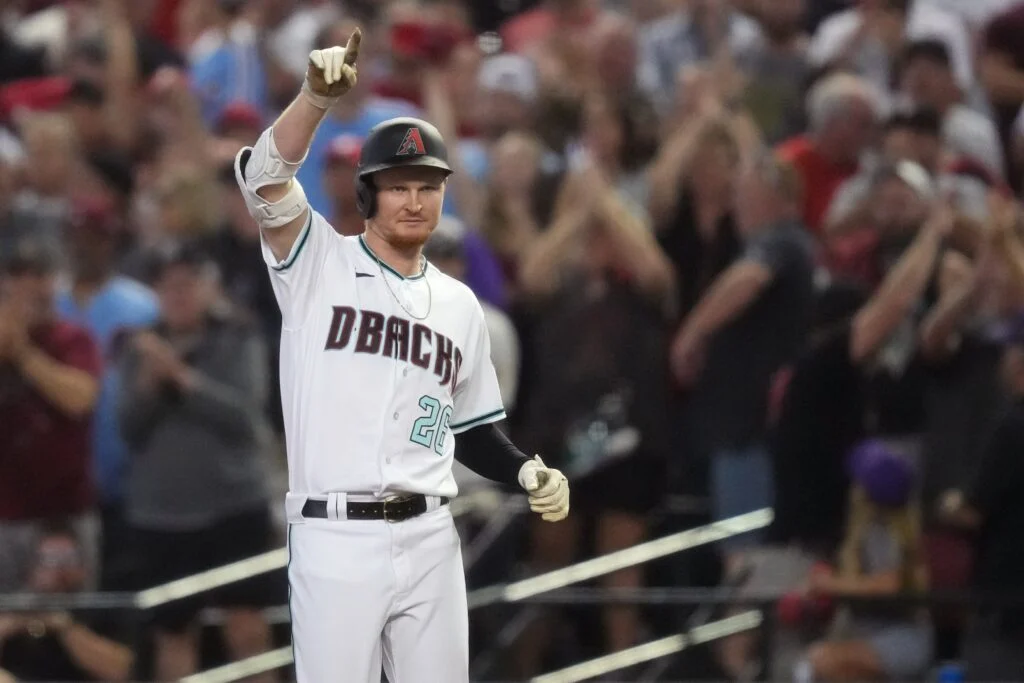
By Editorial Staff
September 12, 2026
In a move that underscores the volatility and tactical maneuvering characteristic of late-season Major League Baseball, the Arizona Diamondbacks have orchestrated a reunion with a familiar face. Pavin Smith, the left-handed hitting utility man who has spent the better part of his professional career within the Diamondbacks’ organization, is set to rejoin the big-league roster.
According to reports from Alex Weiner of Arizona Sports, Smith will be inserted into the Diamondbacks’ lineup this evening as the club prepares for a high-stakes showdown against the Texas Rangers. While the return of a player previously designated for assignment is often a procedural footnote, Smith’s reappearance in the desert arrives at a critical juncture for an Arizona team fighting to cement its standing in the postseason picture.
The Main Facts: A Procedural Homecoming
The logistics of Smith’s return are as intricate as the diamond itself. Following a difficult stretch of performance earlier this summer, the Diamondbacks designated Smith for assignment in July. After clearing waivers, he was sent outright to the Triple-A Reno Aces, a move that removed him from the 40-man roster and signaled a period of organizational uncertainty regarding his future with the franchise.
To formalize his return to the active roster this evening, the Diamondbacks front office must execute a corresponding roster move to clear a spot on the 40-man squad. While the team has yet to announce which player will be removed or transferred to the 60-day injured list to accommodate the change, the urgency of the situation suggests that the organization prioritizes Smith’s specific skill set for the remainder of the 2026 campaign.
Chronology of a Displaced Prospect
To understand the significance of Smith’s return, one must look back at the trajectory of his career since the All-Star break.
The July Departure
In mid-July, the Diamondbacks reached a breaking point regarding roster depth. With a glut of outfielders and first basemen crowding the depth chart, the team opted to designate Smith for assignment. At the time, his production had dipped, and the team sought to create flexibility to address other areas of concern.
The Reno Resurgence
Following his assignment to Triple-A Reno, Smith did not merely bide his time; he went to work. In the Pacific Coast League, a notoriously hitter-friendly environment, Smith utilized his plate discipline and contact-oriented approach to regain his rhythm. Throughout August and early September, reports from the Aces’ coaching staff highlighted Smith’s improved exit velocity and his ability to handle breaking balls—the primary weakness that led to his initial demotion.
The September Call-Up
As rosters expanded and the grind of the 162-game season began to take its physical toll on the starting lineup, the Diamondbacks’ front office revisited their internal options. The decision to recall Smith was predicated on his sustained production in Reno and his versatility, which allows manager Torey Lovullo to deploy him as a pinch-hitter, spot starter, or late-inning defensive replacement.
Supporting Data: Why Smith Matters Now
Statistical analysis of the Diamondbacks’ current roster reveals a specific need that Smith is uniquely qualified to fill. While the team boasts considerable power from the right side of the plate, the bench has lacked a high-contact, left-handed bat capable of neutralizing opposing right-handed relievers in high-leverage situations.
The Left-Handed Advantage
Throughout the 2026 season, the Diamondbacks have struggled against high-velocity right-handed pitching. Smith’s career profile suggests he is an effective counter-measure. During his time with Reno, he maintained a slash line that demonstrated a refined approach to the strike zone, specifically lowering his strikeout rate while increasing his walk rate. This "on-base" mentality is a staple of the Diamondbacks’ offensive philosophy, one that Smith has seemingly re-embraced.
Defensive Flexibility
Beyond the batter’s box, Smith’s utility as a corner outfielder and first baseman provides Lovullo with the tactical flexibility required for a deep playoff run. In an era of specialized bullpens, having a player who can seamlessly transition between positions allows the manager to manipulate his defensive alignment based on the opponent’s batting tendencies in the late innings.
Official Responses and Organizational Outlook
While the club has kept details surrounding the specific roster transaction quiet, the sentiment within the clubhouse remains one of focused optimism. Manager Torey Lovullo has long been a proponent of "organizational depth," often citing the necessity of players who are intimately familiar with the team’s culture and expectations.
"Pavin knows us, and we know him," a source within the organization noted earlier today. "He went down to Reno, did exactly what we asked of him, and earned this opportunity. At this stage of the season, you need guys who aren’t going to be overwhelmed by the pressure of the moment. Pavin has been here before."
The front office’s decision to bring him back is a calculated risk. By choosing a familiar internal option over an external waiver-wire acquisition, the Diamondbacks are betting on the "known commodity." They are banking on the idea that Smith’s familiarity with the hitting coaches and his comfort level in the Chase Field environment will allow him to contribute immediately without the standard adjustment period required of a new arrival.
Implications for the Stretch Run
The return of Pavin Smith carries significant implications for the Diamondbacks’ postseason aspirations.
Roster Equilibrium
The immediate impact will be felt in the bench dynamics. By reclaiming a spot on the 40-man roster, Smith displaces another player, effectively shifting the internal hierarchy. This creates a "win-now" pressure on the entire squad; every player currently on the roster is aware that the margin for error is razor-thin as the calendar turns toward October.
Strategic Depth
As the team faces the Rangers and looks toward the final series of the year, the coaching staff is likely to utilize a platoon system. Smith’s presence allows for strategic rest for the primary starters, ensuring that the team’s core offensive contributors remain fresh for potential postseason games. The ability to swap defensive positions without sacrificing offensive output is a luxury that few teams possess, and it is a key component of Arizona’s tactical identity.
Psychological Momentum
There is also a psychological component to the move. Reintegrating a player who fought his way back from a demotion can provide a morale boost to the clubhouse. It signals to the team that the organization values resilience and that the path back to the majors is always open for those who perform. It reinforces the culture of accountability that has been a hallmark of the Diamondbacks’ success over the past several seasons.
Looking Ahead
As the Diamondbacks prepare for the series against Texas, all eyes will be on the lineup card. The expectation is that Smith will be utilized in a capacity that highlights his contact skills—likely batting in the lower-to-middle third of the order to provide protection for the team’s power hitters.
The next few weeks will serve as the ultimate audition for Smith. Should he perform at the level expected, he could solidify his role on the postseason roster. Conversely, should he falter, the Diamondbacks have already demonstrated a willingness to make the difficult decisions required to maintain competitive integrity.
For now, the story is one of redemption and strategic necessity. Pavin Smith is back where he started, and the Diamondbacks are banking on his return being the final piece of a puzzle that leads to a deep October run. The fans in Phoenix have seen this script before, but the ending remains unwritten. As the lights go up at Chase Field tonight, the focus shifts from the front office’s paperwork to the batter’s box—where games are ultimately won or lost.
More to come as the Diamondbacks finalize their 40-man roster adjustments.

 Nila Kartika Wati
 Azzam Bilal Chamdy
 rifanmuazin
 Ali Ikhwan
 Dwi Wanna
 Raul Delapena Setiawan
 Laily UPN
 Ammar Sabilarrohman