
 Pevita Pearce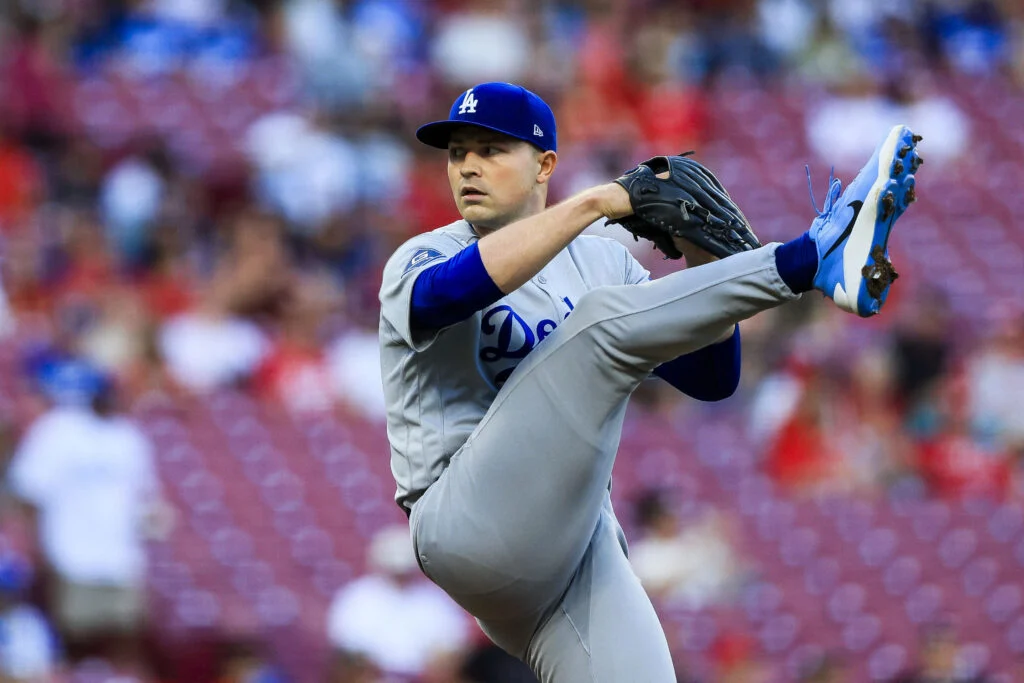
As the 2026 Major League Baseball season hurtles toward its dramatic conclusion, the league finds itself in a state of bifurcated focus. For the contenders, the final weeks are a high-stakes sprint to secure postseason berths or the coveted first-round bye. For the rest of the league, the attention has already shifted to the hot stove. Following the conclusion of the World Series, the annual ritual of the Top 50 Free Agent list will commence, complete with expert contract projections and landing spot predictions. Before that deep dive begins, we offer one final look at the top 10 players in what is, by all accounts, a thin and underwhelming market.
The State of the Market: Quality Over Quantity
This year’s free-agent class is defined by a lack of depth, making the few genuine stars available significantly more valuable to organizations desperate for upgrades. While there are a few elite talents at the top, the drop-off is precipitous. Our rankings are not merely a reflection of a player’s talent or "impact" in a vacuum; they are grounded in a realistic assessment of "earning power."
Consider the case of Nick Martinez. Despite his stellar results for the Tampa Bay Rays, his profile as a 36-year-old right-hander with diminishing velocity and below-average strikeout rates limits his market to short-term deals. He will certainly appear in our full Top 50, but he cannot crack the top 10. In this economy, teams are prioritizing the potential for three-plus years of production over short-term results, pushing younger arms with higher ceilings to the forefront of the bidding wars.
Chronology and Market Dynamics
The 2026 season has seen significant volatility in player values. We have seen players rebound from catastrophic starts to surge back into the top 10, while others, once considered locks for massive paydays, have seen their stock cool significantly as their production waned. Furthermore, the inclusion of international talent—specifically a standout Japanese slugger expected to be posted—has injected a wild card into the winter proceedings.
1. Tarik Skubal, LHP, Dodgers
The undisputed king of this class remains Tarik Skubal. Despite an elbow scope in May and a subsequent trade to the Dodgers, Skubal’s dominance on a rate basis remains unparalleled. His return from the innovative "Nano-Needle" procedure to address a bone spur was nothing short of miraculous; he currently maintains a 2.70 ERA, identical to his pre-surgery performance.
Skubal is a rare breed—a true "Ace" who could start a Game 7 for any franchise in baseball. As he approaches his 30th birthday, his eligibility to sign without the anchor of a qualifying offer makes him the most dangerous free agent in years. Projections suggest he could shatter Yoshinobu Yamamoto’s $325 million record, with some analysts positing a $400 million total value.
2. Teruaki Sato, 3B/OF, Hanshin Tigers (NPB)
The international market provides the most intriguing narrative. Sato, a 27-year-old MVP candidate in Japan, is mashing at a historic pace, batting .315/.393/.618 with 35 home runs. While concerns persist regarding his 26.9% strikeout rate and defensive limitations, his raw power is undeniable. The market for NPB stars is notoriously fickle, but if a team buys into his potential as a middle-of-the-order threat, he could easily secure a nine-figure deal.
3. Trevor Rogers, LHP, Orioles
Once considered a candidate for a modest rebound deal, Rogers has transformed into a legitimate five-year contract candidate. Since early June, he has fired 109 innings of 3.06 ERA ball, boasting a superlative 4.6% walk rate. At under 29 years old, he is the only non-Skubal starter with a clear path to a massive long-term commitment.
Supporting Data: The Elite Tier
The remainder of the top 10 features a mix of veteran position players and high-upside arms, each presenting unique risk-reward profiles:
- 4. Randy Arozarena (OF, Mariners): Nearing his sixth-straight 20-20 season, Arozarena is currently playing at the peak of his powers. Despite being 32, his consistent hard contact and offensive production in a pitcher-friendly park make him a top-tier target for corner outfield help.
- 5. Seiya Suzuki (OF, Cubs): A 1-A/1-B comparison to Arozarena, Suzuki offers slightly more power and better defensive reliability. Both will likely reject qualifying offers and land deals in the $70–100 million range.
- 6. Freddy Peralta (RHP, Rays): After a disastrous stint with the Mets, Peralta has rejuvenated his career in Tampa Bay. His recent 2.66 ERA over 40 2/3 innings proves he is not finished, though teams will have to decide if his early-season struggles were an aberration or a warning sign.
- 7. Michael King (RHP, Padres): Having put durability concerns to rest with a 175-inning season, King is a reliable rotation anchor. While he may not land a massive four-year deal at age 32, he is a lock for a significant three-year guarantee.
- 8. Ryan Jeffers (C, Twins): Despite an injury-interrupted campaign, Jeffers remains one of the few above-average hitting catchers in the league. His 35% wRC+ relative to the position makes him an incredibly valuable asset.
- 9. Adrián Morejón (LHP, Padres): A dominant, high-velocity reliever, Morejón is one of the few arms in the game capable of matching the strikeout and walk rates of elite closers. He is poised to push for a record-breaking reliever contract.
- 10. Brandon Lowe (2B, Pirates): A 31-home-run season paired with a massive defensive turnaround (+28-point swing in defensive metrics) has cemented Lowe as one of the best power-hitting second basemen in the game.
Official Responses and Implications
The primary implication of this year’s class is the leverage held by the top-tier arms. With teams like the Dodgers, Yankees, and other high-payroll clubs expected to compete for Skubal, the market will likely be dictated by the "Ace" premium.
General managers across the league have privately noted that the scarcity of reliable starting pitching makes this a "seller’s market" for the top 10. However, the secondary market—comprised of players like Luis Arraez and Bo Bichette (who holds a crucial opt-out)—remains fluid. The potential for teams to utilize "opt-out-laden" deals, similar to the one that brought Michael King to San Diego, is expected to increase as clubs look to balance long-term financial flexibility with the immediate need for win-now production.
Conclusion: The Path Forward
As the postseason approaches, the focus on these 10 names will only intensify. For players like Skubal and Rogers, the upcoming winter represents a career-defining moment. For the rest of the class, the goal is to prove that their 2026 performance is a floor, not a ceiling.
This class may be labeled "underwhelming" due to its lack of absolute volume, but the quality of the top-end talent ensures that the winter of 2027 will be anything but quiet. Front offices are already crunching the numbers, preparing to bet their futures on these players. By the time the dust settles in the spring of 2027, the landscape of Major League Baseball will undoubtedly be reshaped by the moves made in the coming months.

 Siti Muinah
 Laily UPN
 Suro Senen
 Iffa Jayyana

 Reynand Wu
 Lina Hope