
 Reynand Wu
Main Facts
The undulating, sun-scorched tarmac of Jerez de la Frontera played host to yet another chapter in one of modern professional cycling’s most quietly devastating statistical anomalies. During the individual time trial stage of the Vuelta a España, Primož Roglič (Red Bull-Bora-Hansgrohe) delivered a masterclass against the clock, carving through the Andalusian course with typical precision. When the dust settled and the final times were locked into the official timing systems, Roglič had bested his perennial GC rival, Enric Mas (Movistar Team), by a decisive margin of 33 seconds.
For the casual observer, 33 seconds in a Grand Tour time trial is a notable gap, but hardly an insurmountable chasm. However, context transforms this result from a routine stage-placing into something approaching psychological warfare. With this latest victory, Roglič extended an astonishing, unbroken head-to-head time trial streak against the Spanish climber. The Slovenian has now defeated Mas in every single individual time trial they have contested against one another—a sequence that now stands at an imposing 23 consecutive occasions.
Yet, as the aerodynamic helmets came off and the post-stage analysis began, the man wearing the figurative bullseye demonstrated a pragmatic detachment from his own statistical dominance. Roglič, famously stoic and rarely given to emotional hyperbole, was the first to acknowledge the stark reality of Grand Tour racing: as aesthetically pleasing and impressive as a 23-0 record looks on paper, it is, in the grand scheme of a three-week war of attrition, virtually irrelevant. It is a brilliant footnote, a trivia question waiting to be asked, but it offers zero guarantees when the road points skyward into the high-altitude passes where the Vuelta will ultimately be won and lost.
Chronology
To truly understand how this 23-0 head-to-house record was forged, one must trace the timeline of a rivalry that has defined the upper echelons of the Vuelta a España for the better part of a decade.
The genesis of this streak dates back to the early Grand Tour appearances where both riders began to emerge as legitimate GC contenders. In the formative years of their respective WorldTour careers, Roglič—a former ski jumper who transitioned to cycling relatively late—showcased an innate, raw horsepower that immediately made him a terrifying prospect in the race against the truth. Mas, conversely, was cast from the classic mold of a pure Spanish escalador: light, fluid in the high mountains, but historically vulnerable when forced to push huge gears in an aerodynamic tuck across flat or rolling terrain.
The first markers in the 23-match streak were laid down quietly during the 2018 and 2019 seasons. While Roglič was building his palmarès with Jumbo-Visma, routinely finishing on podiums and claiming time trial victories in races like the Tour de France and the Vuelta, Mas was finding his footing as a Grand Tour protagonist, notably finishing second overall behind Roglič in the 2019 edition of the Spanish national tour. Even in that breakthrough performance for Mas, the time trials acted as the great separator; every time the clock started, Roglič took minutes or seconds, slowly tightening a tourniquet on the GC standings.
As the years progressed into the pandemic era and beyond, the pattern became a fixture of autumn cycling. Whether it was a short, technical prologue through the streets of Burgos, a long, power-heavy drag along the coastline, or the undulating vineyards of Jerez de la Frontera, the script remained stubbornly identical. Mas would ride a controlled, risk-managed race to minimize losses, while Roglič would hammer out a cadence that consistently drew him closer to—or past—his rival on the virtual road.
By the time the race arrived at Jerez de la Frontera for the latest installment of this chronometric duel, the 23-0 milestone was less of a surprise and more of an inevitability. Yet, the manner of the execution showed that Roglič, despite changing team colors to Red Bull-Bora-Hansgrohe, has lost none of his lethal efficiency against the clock.
Supporting Data
A deeper dive into the metrics of the Jerez de la Frontera time trial and the broader historical dataset illuminates the sheer scale of Roglič’s superiority in this specific discipline.
On the Jerez course—a route characterized by sweeping corners, technical braking zones, and exposed straights where pacing strategy was paramount—Roglič averaged a staggering speed that systematically eroded Mas’s overall buffer. The 33-second delta accrued over the relatively modest distance highlights a deficit that Movistar’s sports directors have tried, thus far unsuccessfully, to engineer out of their talisman’s toolkit.
Historical Breakdown of the Roglič vs. Mas TT Rivalry:
- Total Individual Time Trials Contested Head-to-Head: 23
- Stage Wins / Better Times for Primož Roglič: 23
- Stage Wins / Better Times for Enric Mas: 0
- Average Time Gap (Estimated Across Grand Tour TTs): Ranging from 15 seconds in short prologues to upwards of 2–3 minutes in long, rolling efforts.
- Key Battlegrounds: Vuelta a España (multiple editions), Tour de France, and select European WorldTour week-long stage races.
When contrasted with their climbing performances, the data tells an even more fascinating story of contrasting philosophies. In the high mountains—on legendary slopes like the Angliru, Lagos de Covadonga, or Monachil—the margin between Roglič and Mas often narrows to mere bike lengths, and on select days, Mas has even succeeded in dropping the Slovenian. Yet, the time trial acts as an equalizer that fundamentally skews the general classification math in Roglič’s favor. Every time the race visits the chrono, Mas is forced into a defensive posture, playing tactical catch-up in the stages where drafting and team support can no longer mask an individual aerodynamic deficiency.
Official Responses and Team Perspectives
The post-race press conferences in Jerez de la Frontera offered a revealing glimpse into the psychological landscapes of both camps. Team managers, performance directors, and the riders themselves addressed the elephant in the room: a statistical whitewash that spans nearly a quarter-hundred races.
Primož Roglič, characteristically understated, downplayed the milestone when pressed by international media.
"Numbers are nice for journalists, but they don’t give you time gaps on the road tomorrow," Roglič said, offering a wry smile. "Enric is a phenomenal rider, and in the mountains, he makes you suffer just as much as anyone else. Today was a good day for us, the legs responded well, and we executed the plan. But the Vuelta is long. A 33-second gap here can disappear in five kilometers of a brutal climb if you have a bad day."
Roglič’s coaching staff at Red Bull-Bora-Hansgrohe echoed this sentiment, emphasizing that while aerodynamic optimization and pacing algorithms played a crucial role in securing the stage result, the team’s primary focus remains absolute vigilance. In modern Grand Tour racing, dwelling on psychological advantages over a single rival can lead to complacency, especially in a race known for chaotic weather, tactical crosswinds, and brutal summit finishes.
From the Movistar Team paddock, the tone was one of pragmatic realism mixed with quiet defiance. Enric Mas, speaking to Spanish television broadcasters, did not shy away from his struggles against the clock, framing them as an area of ongoing evolution rather than an insurmountable curse.
"Primož is simply one of the best time-trialists in the history of this sport, especially when you look at how he handles terrain that requires power and technical bike-handling," Mas admitted candidly. "Of course, we want to lose less time. We work on the aero position, we work in the wind tunnel, and we try to optimize every detail. But today, he was simply superior. We know where our strengths lie, and they are not on the TT bike. Our race is in the mountains, and that is where we will look to make the difference."
Movistar’s directeur sportif added that while the 23-0 record is a statistical reality, it does not define Mas’s overall tactical outlook for the remainder of the Vuelta. "We don’t look at the number 23," he noted. "We look at the seconds. Thirty-three seconds is a hurdle, yes, but in a three-week race, it is a deficit that can be managed and overturned if we race smartly and put pressure on our rivals where they are vulnerable."
Implications for the Remainder of the Vuelta a España
As the Vuelta a España leaves Andalusia and sets its sights on the punishing terrain of the northern mountain ranges, the implications of Roglič’s latest time trial victory ripple across the entire general classification battle.
First and foremost, the psychological toll—or lack thereof—is a critical variable. For a less resilient rider, knowing that a key rival holds a flawless 23-0 record in time trials could induce a sense of fatalism. However, Mas has repeatedly demonstrated an admirable mental fortitude, shrugging off chronometric setbacks to launch aggressive, long-range attacks in the high mountains. The Spaniard knows that he cannot beat Roglič at his own game; therefore, his strategy must rely on isolating the Slovenian, forcing high-tempo climbs that neutralize individual time-trial prowess through sheer exhaustion.
For Roglič and Red Bull-Bora-Hansgrohe, the 33-second gain in Jerez acts as a valuable tactical cushion, but it also alters the team’s defensive obligations. Holding a lead—however slender—means that rival teams will look to Roglič’s squad to control breakages and dictate the pace of the peloton. In a race notorious for its unpredictability, bearing the burden of the race can expose a team to tactical ambushes, particularly if other GC contenders form alliances to isolate the leader on multi-mountain stages.
Furthermore, this result underscores a broader trend in contemporary Grand Tour racing: the absolute necessity of time-trial proficiency for anyone harbouring ambitions of standing on the highest step of the podium in Madrid. The days of pure climbers winning Grand Tours purely on the back of uphill exhibitions are increasingly rare. Modern parcours are deliberately designed to balance the ledger, rewarding the complete rider—the athlete who can descend like a daredevil, climb with the lightweight elites, and suffer in an aerodynamic tuck at 50 kilometers per hour.
Ultimately, while the 23-0 scoreline will forever be remembered as a stunning testament to Primož Roglič’s enduring mastery over the clock and Enric Mas’s stubborn resistance, it remains merely a chapter in a much larger narrative. The red jersey will not be decided by what happened on the flat, sweeping boulevards of Jerez de la Frontera, but by who has the physical reserves and tactical astuteness to conquer the brutal vertical landscapes awaiting them in the weeks to come.

 Nana Muazin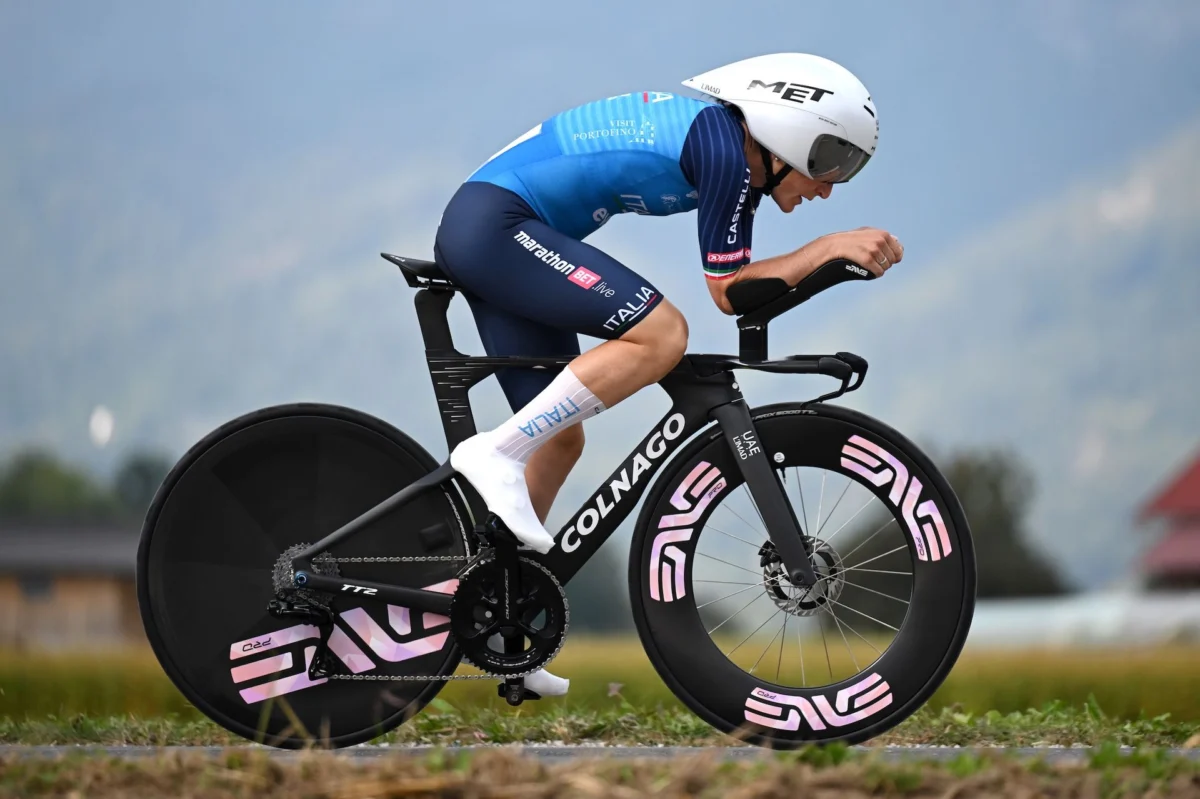
 Jia Lissa
 Suro Senen
 Asro
Asro
 Iffa Jayyana
 Dwi Wanna