
 Ammar Sabilarrohman
The international rugby landscape has been fundamentally reshaped with the introduction of the Nations Championship, a premier biennial tournament designed to bring structure, intensity, and global alignment to the sport’s international calendar. By bridging the gap between the traditional summer and autumn Test windows, this competition elevates the stakes of international fixtures, transforming routine tours into a cohesive, high-stakes league format.
As the tournament moves through its opening phases in 2026, it has already delivered on its promise of world-class entertainment, featuring a 12-team roster comprising the Six Nations heavyweights, the Rugby Championship nations, and the rising forces of Fiji and Japan. With two rounds of pulsating action now in the books, the inaugural competition has firmly established itself as the new heartbeat of the sport.
The State of Play: Hemispheric Rivalries
The competition is structured around two distinct league tables—Northern Hemisphere and Southern Hemisphere—to facilitate scheduling across the two major international windows.
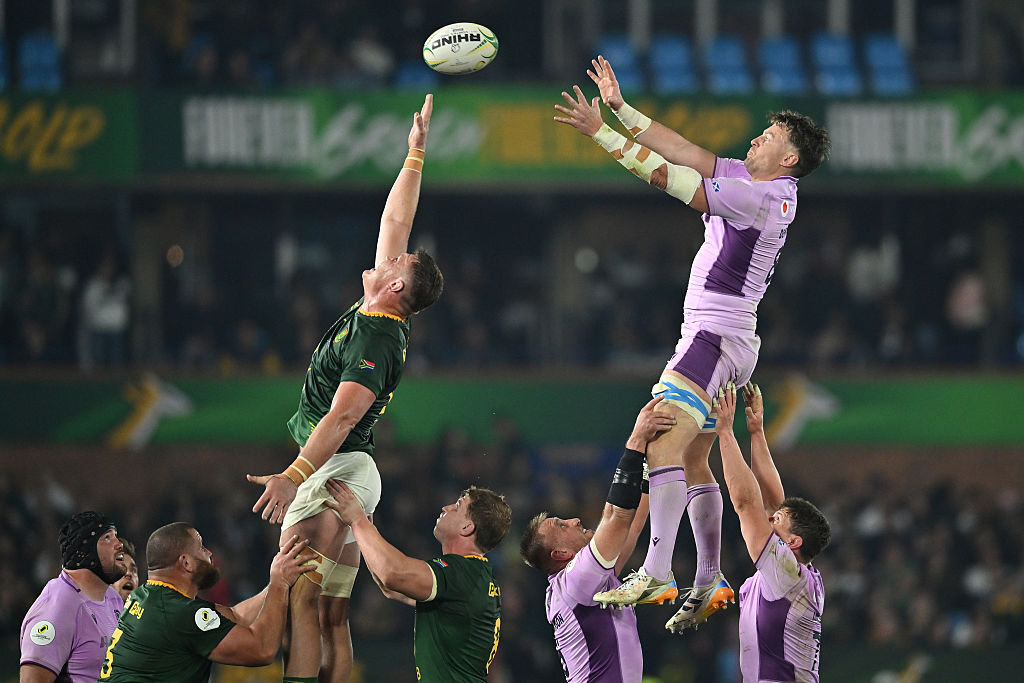
As of the conclusion of Round 2, the standings reflect the fierce parity that organizers hoped to achieve. In the Northern Hemisphere, Ireland has surged to the front of the pack, setting a blistering pace with a series of disciplined performances. Meanwhile, in the Southern Hemisphere, the world champion Springboks have asserted their dominance, topping the table. However, the South African lead is precarious, with the All Blacks trailing by only the slimmest of margins on points difference.
The competitive nature of the tournament is perhaps best illustrated by the teams still searching for their first win: Italy, Australia, and Fiji. While these nations have faced challenging starts, the format of the Nations Championship ensures that every match carries massive significance, keeping their tournament hopes alive as they look to capitalize on the upcoming rounds.
A Strategic Shift: Why the Nations Championship Matters
For years, the global rugby calendar was criticized for its fragmented nature, with disjointed summer tours often lacking a clear narrative or long-term stakes. The Nations Championship represents a decisive shift toward a unified global model. By incorporating the six European powers, the four Rugby Championship sides, and the inclusion of Fiji and Japan (classified as a southern side for scheduling purposes), the tournament aligns the world’s elite rugby programs under one competitive umbrella.

Matches are scheduled specifically for years devoid of a Rugby World Cup or a British & Irish Lions tour, ensuring that the Nations Championship acts as the pinnacle of the international game during these transition years. This ensures players and fans alike have a clear, prestigious goal to aim for, while simultaneously providing a structured platform for emerging nations to test themselves against the best in the world.
Chronology of Action: The First Two Rounds
The intensity of the competition was evident from the opening whistle on July 4, 2026.
Round 1: A Statement of Intent
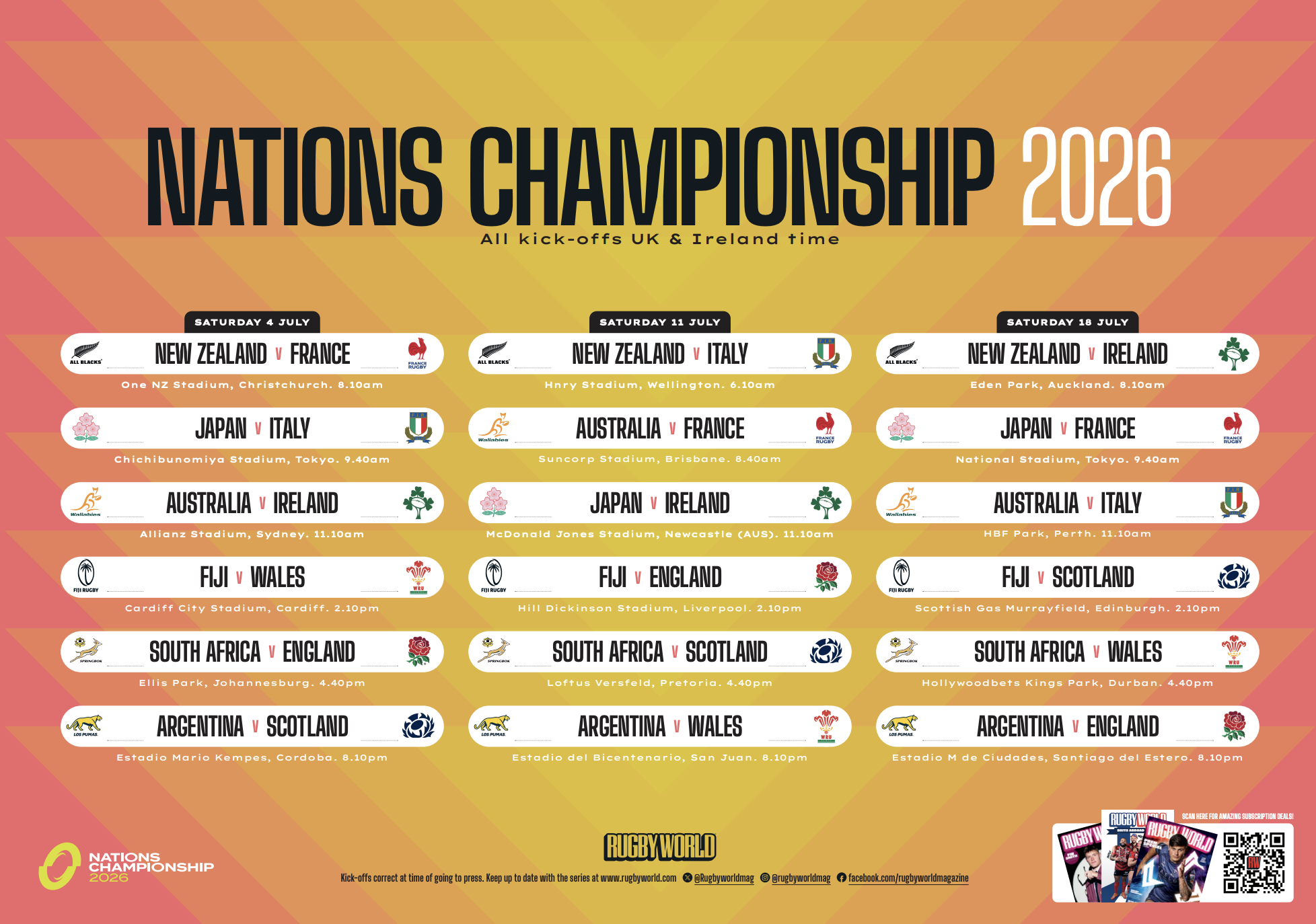
The tournament kicked off with a flurry of high-scoring encounters. New Zealand edged France in a 34-32 thriller at the One New Zealand Stadium, signaling that home-field advantage would be a critical factor. Simultaneously, Japan demonstrated their growing maturity by defeating Italy 27-10 in Tokyo. In Sydney, Ireland snatched a narrow 33-31 victory over the Wallabies, while Wales made a strong statement in Cardiff by dismantling Fiji 39-24. The opening weekend concluded with South Africa overpowering England 45-21 in Johannesburg, and Scotland outgunning Argentina 47-38 in a high-octane battle in Cordoba.
Round 2: Strengthening the Narrative
The second round, held on July 11, saw teams refine their strategies. New Zealand continued their momentum with a dominant 47-17 victory over Italy in Wellington. France recovered from their narrow opening loss to dismantle Australia 42-26 in Brisbane, while Ireland maintained their lead with a 36-20 win over Japan. England showcased their attacking prowess by putting 73 points past a struggling Fiji side in Liverpool, and South Africa secured a hard-fought 42-28 win over a resilient Scotland team. Argentina, meanwhile, re-established their credentials with a 35-21 win over Wales in San Juan.
Supporting Data: The Elite Performers
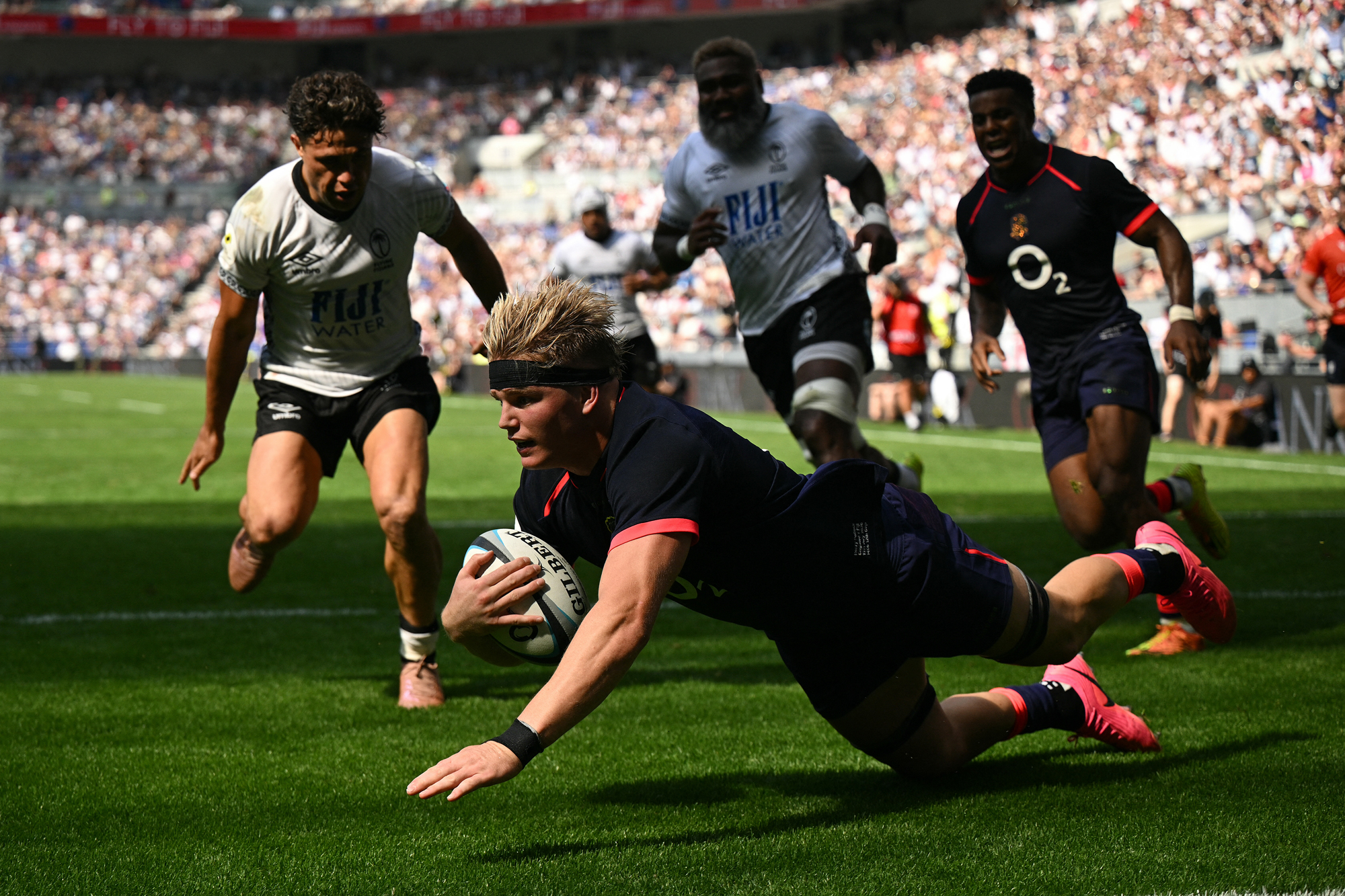
The individual brilliance on display has been a hallmark of the tournament’s early success. Players like England’s Henry Pollock, whose hat-trick against Fiji captivated audiences, have propelled themselves to the top of the try-scoring charts. The clinical nature of the kickers has also been pivotal, with points-scoring tallies reflecting the high-scoring nature of the 2026 format.
As the tournament transitions to the November window, the focus shifts to the remaining rounds and the final playoffs at Allianz Stadium, Twickenham. The data collected thus far—from possession statistics to defensive line-breaks—suggests a tournament that is favoring expansive, attacking rugby, much to the delight of the global fanbase.
Official Perspectives and Coaching Strategies
The tactical depth of the tournament is spearheaded by some of the most decorated coaches in the game. With the likes of Andy Farrell (Ireland), Rassie Erasmus (South Africa), and Joe Schmidt (Australia) at the helm, the Nations Championship is serving as a masterclass in modern tactical evolution.
"The tournament is exactly what we needed to test the depth of our squad," noted an official representative for the tournament board. "The ability to rotate players while maintaining a high level of competition is critical for the long-term health of our national programs."
Head coaches have been vocal about the importance of the Championship, viewing it as an essential bridge toward the next World Cup cycle. For teams like Fiji, under the guidance of Senirusi Seruvakula, the tournament provides a vital opportunity to expose their young talent to the rigors of tier-one intensity, a factor that will be crucial for the development of Pacific Island rugby.

Implications for the Future of Rugby
The long-term implications of the Nations Championship are profound. Beyond the immediate glory of winning the title, the tournament serves as a financial and developmental engine for participating unions. The broadcast partnerships with entities like ITV in the UK, Virgin Media in Ireland, and TF1 in France highlight the commercial appeal of this new structure.
Furthermore, the alignment of the global calendar offers a solution to the perennial issues of player welfare and burnout. By creating a definitive window for international competition, unions can better manage the transition between club and country commitments, ensuring that the best players in the world are available for the highest-quality fixtures.
As we look toward the upcoming November rounds, the narratives are clear: Can Ireland sustain their northern dominance? Can the Springboks withstand the pressure of the All Blacks? Will the teams currently at the bottom of the table find their form before the playoffs? The Nations Championship has not only succeeded in filling the calendar; it has revitalized the narrative of international rugby, proving that when the world’s best play, the sport reaches new heights.

Summary of Key Tournament Logistics
- Duration: July 4 – November 29, 2026.
- Participating Nations: Argentina, Australia, England, Fiji, France, Ireland, Italy, Japan, New Zealand, Scotland, South Africa, Wales.
- Broadcasting: Global coverage provided by major national networks including ITV, Virgin Media, and TF1.
- Format: League-based, split by hemisphere, culminating in a finals weekend at the Allianz Stadium, Twickenham.
Fans are encouraged to utilize the official digital resources provided by Rugby World to track fixtures and download the comprehensive wall chart to keep up with the action as the tournament moves into its decisive second half.


 Nana Wu
 Nana Muazin
 Neng Nana
 Lina Hope
 Sagoh
Sagoh
 Iffa Jayyana