
 Basiran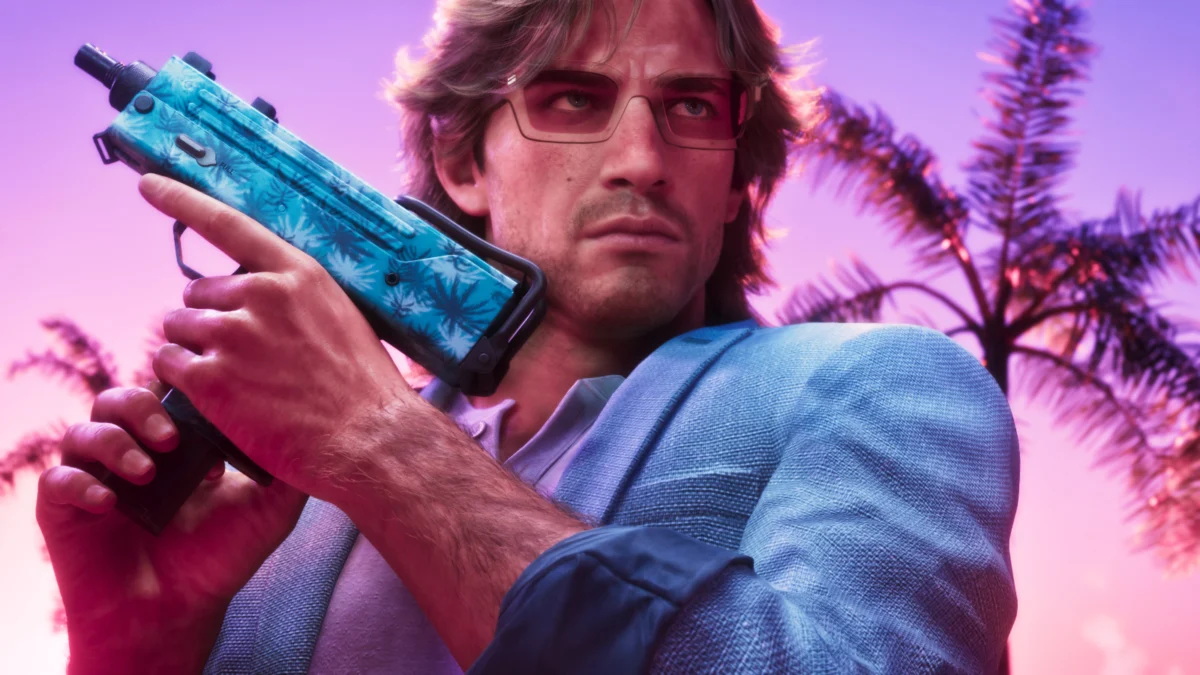
In a revelation that has sent shockwaves through the gaming industry, Twitch CEO Dan Clancy has seemingly confirmed what Rockstar Games has guarded with near-military secrecy: the arrival of a new, standalone GTA Online experience. Speaking from the floor of the Tokyo Game Show, Clancy—who has held high-level discussions with the leadership at Rockstar—suggested that the multiplayer component of the Grand Theft Auto ecosystem will receive a massive, transformative update next year.
While Grand Theft Auto VI is set to dominate the cultural conversation upon its November 19 release on PlayStation 5 and Xbox Series X/S, the multiplayer landscape remains a mystery. Clancy’s comments provide the first tangible timeline for the future of Rockstar’s most lucrative digital asset, marking a departure from the studio’s notoriously opaque communication strategy.
A Calculated Silence: The Rockstar Philosophy
To understand the significance of Clancy’s statement, one must first appreciate the climate of silence surrounding GTA 6. Rockstar Games is an entity that operates behind an iron curtain. They do not merely manage public relations; they curate anticipation through scarcity.
This protective instinct is not just for show—it is a core business strategy. Recent events have underscored just how volatile the environment is for creators and fans alike. Last month, streamer xQc found himself in the crosshairs of this policy when his reaction VOD for GTA 6 content was abruptly pulled from Twitch. While other streamers managed to keep their content live, the inconsistency of the enforcement highlighted the precarious nature of speculative coverage. Rockstar is not just protecting intellectual property; they are controlling the narrative flow of the most anticipated media product of the decade.
By attaching a year to the launch of a GTA Online sequel, Clancy has inadvertently stepped into the center of this controlled narrative, becoming the first industry insider with direct access to Rockstar’s roadmap to break the cycle of speculation.
Chronology of the GTA Online Phenomenon
To grasp why a sequel is such a monumental development, one must look at the trajectory of the original GTA Online, which launched in 2013.
- 2013: GTA Online launches as an add-on to Grand Theft Auto V. Initial technical hurdles are severe, but the concept of a persistent, evolving urban sandbox quickly captures the gaming zeitgeist.
- 2015-2018: The "Heist" era and the introduction of specialized business ownership solidify the game as a live-service juggernaut. It becomes a financial engine for Take-Two Interactive, consistently outpacing revenue projections.
- 2020-2023: The Cayo Perico update and subsequent expansions demonstrate the engine’s limitations. Despite this, the player base remains stubbornly loyal, proving that the social ecosystem of the game is as important as the mechanics.
- 2025: The buildup to GTA 6 reaches a fever pitch. Rockstar confirms a release date of November 19, 2026, after a series of delays from an earlier projected window.
- 2026 (September): Twitch CEO Dan Clancy, speaking at the Tokyo Game Show, suggests that while GTA 6 will bring a "big bump" to the industry, the launch of a new multiplayer iteration the following year will represent an "even bigger one."
The "Big Bump" Theory: Clancy’s Insights
During his interview with Bloomberg, Clancy was remarkably candid about the relationship between Twitch and the Rockstar ecosystem. He noted that he has "spent a lot of time talking with Rockstar about their plans," suggesting that the streaming giant is preparing its infrastructure for the massive influx of traffic expected over the next 18 months.
"You are going to see this big bump with GTA 6," Clancy noted, "but then an even bigger one next year when they launch multiplayer."
This timeline—a 2027 release for the new multiplayer mode—aligns with the industry’s expectations for a staggered rollout. By launching the single-player experience first, Rockstar allows the community to absorb the massive scale of the new map, mechanics, and narrative before transitioning the player base into a persistent online environment. It is a strategy designed to maximize the "shelf life" of the title, ensuring that interest does not plateau shortly after the initial launch.
Supporting Data: The Take-Two Playbook
While Rockstar remains silent, their parent company, Take-Two Interactive, has dropped breadcrumbs that support Clancy’s assertion. CEO Strauss Zelnick has historically been more forthcoming about the company’s philosophy regarding legacy titles.

In an interview with IGN, Zelnick pointed toward the company’s handling of NBA 2K Online in the Chinese market. When asked about the future of the current GTA Online post-launch of the sequel, Zelnick referenced the transition from NBA 2K Online (2012) to NBA 2K Online 2 (2017).
This is a critical indicator. If Rockstar follows the "2K model," it suggests that the current GTA Online may not be shuttered immediately. Instead, the company may opt to support both titles, or perhaps bridge the gap between them, ensuring that the years of progress made by dedicated players in the current iteration are not rendered entirely obsolete. This "legacy support" model would go a long way in soothing the anxieties of a community that has spent over a decade building empires in Los Santos.
The Implications: A New Standard for Live Service
The shift to a new GTA Online environment carries profound implications for the gaming industry at large.
1. The Streaming Economy
Twitch, as a platform, relies heavily on the "infinite content" loop that GTA Online provides. Clancy’s excitement is not merely that of a fan; it is the sentiment of a CEO whose platform stands to gain millions of hours of viewership from the launch. The "bigger bump" he predicts suggests that the new multiplayer experience will be designed with streamers and content creators in mind, potentially integrating deeper social features, better spectator tools, and more collaborative gameplay loops.
2. The Technical Leap
Transitioning to a new multiplayer engine will allow Rockstar to shed the technical debt of the current GTA Online, which is built upon the foundation of a game released on the PlayStation 3 and Xbox 360. A 2027 sequel will likely leverage the full power of modern hardware, offering higher player counts per lobby, seamless transitions between instances, and perhaps a level of world-reactivity that was impossible in the previous generation.
3. Market Saturation
Rockstar’s ability to sustain interest in a single multiplayer product for over a decade is unprecedented. By launching a sequel, they are essentially competing with themselves. The challenge will be to migrate the massive, entrenched player base of the current game to a new platform without alienating the "whales" and power users who have invested thousands of dollars and hours into their current characters.
Conclusion: Waiting for the Official Word
Despite Dan Clancy’s high-level insights, the gaming world remains in a state of suspended animation. Until Rockstar Games releases a trailer or an official press release, the "2027 launch" remains a highly credible rumor rather than a verified fact.
However, the history of Rockstar’s development cycles—marked by the, at times, agonizing silence that preceded the delay from the initial launch window to November 2026—suggests that they prefer to speak only when the product is ready to be consumed.
For now, the community is left to speculate. Will the new GTA Online be a direct evolution, or a complete reinvention? Will it share the same world as the single-player campaign, or exist as a separate, sprawling digital reality? As we move toward the November release of GTA 6, one thing is certain: the multiplayer future of the franchise is no longer a distant dream, but a calculated, impending reality. If Clancy’s insights hold true, 2027 will be the year the sandbox grows once again, and the digital streets of Los Santos will be reborn.

 Reynand Wu
 Jia Lissa
 Suro Senen
 Iffa Jayyana
 Pevita Pearce

 Lina Hope